
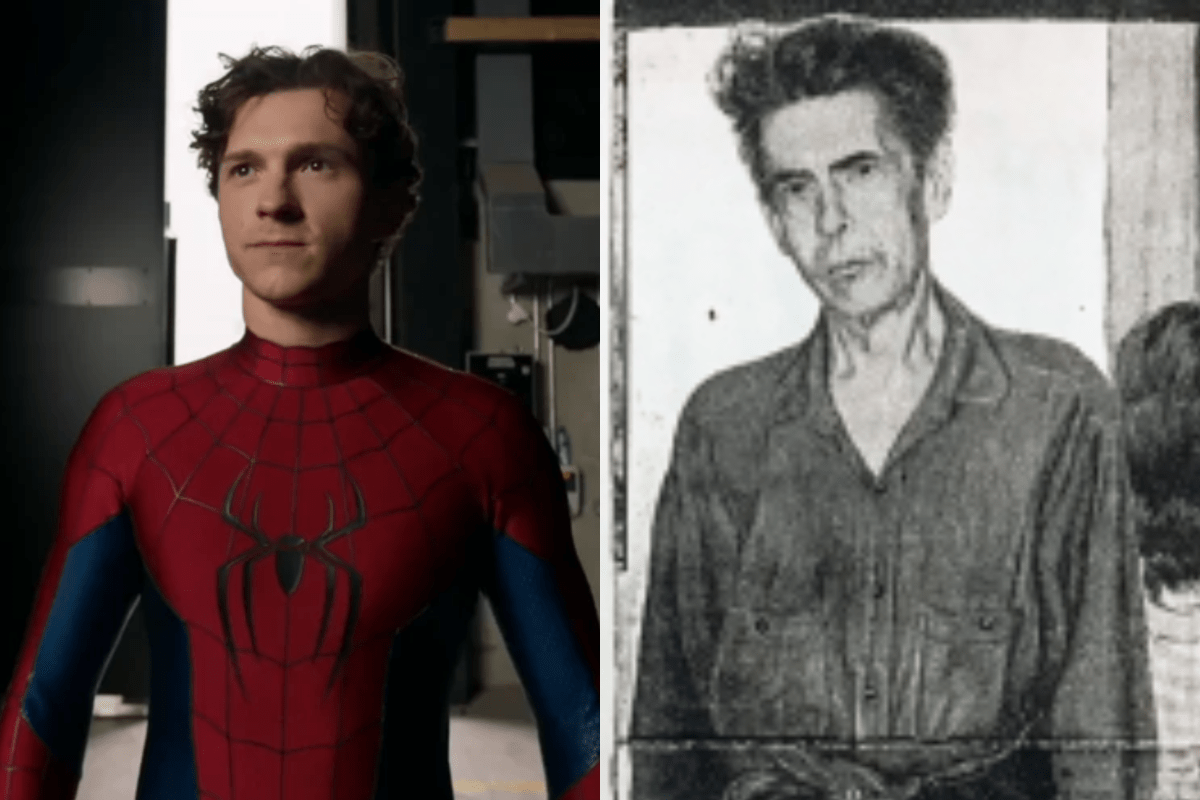
Sony/Denver Public Library

Audio By Carbonatix
Spider-Man has once again captivated the nation, with “Brand New Day” becoming the biggest domestic opening weekend in box office history. But did you know the friendly neighborhood superhero wasn’t the first to use the name Spider-Man?
Two decades before Spidey made his comic book debut in 1962, a Denver man was dubbed Spider-Man by the media, inspired by a strange and horrific murder case.
A 73-year-old man was found beaten to death inside his West Highland home in October 1941. The victim, Philip Peters, shared an eerily similar alliterative name to the comic protagonist, Peter Parker. Though unlike Parker, Peters lived a quiet life. The elderly husband and father had no enemies. He was home alone at the time of his murder, as his wife was hospitalized with a broken hip.
Police were stumped as to who would want to kill Peters, especially in such a brutal manner: He was struck 37 times with a cast-iron stove shaker, leaving blood splattered on the ceiling.
“Scores” of detectives were assigned to the case, the media reported at the time, but they had little to go on. There were no signs of a break-in or any physical evidence pointing to the killer. The trail went cold until July 1942, when a housekeeper spotted a ghostly, thin white hand reaching from behind a doorway inside the Peters’ home.
The woman screamed at the sight. She told police the hand then retreated behind the door and she heard footsteps hurry up the stairs. Officers searched the house from top to bottom and found no trace of the phantom. Detectives were assigned to watch the house in case someone returned.
During a search later that month, an officer heard a noise upstairs. Looking inside a closet, he discovered a pair of legs dangling from the ceiling, disappearing through a tiny panel that led to the attic. The officer grabbed the mysterious individual by the ankles, yanking him down before he could escape.
“The strangest looking human I had ever seen” landed on the ground, police told the media. It was 59-year-old Theodore Coneys, a tall man wearing torn clothes who was “thin as a wilted weed” and had skin the “unwashed gray [color] of an overcast sky.”
Coneys had been secretly living in the Peters’ home since September, nesting inside a cramped attic space measuring 27 inches high and 57 inches wide.
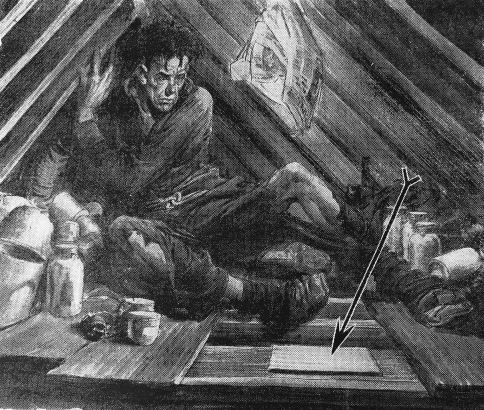
Denver Public Library
Coneys collected his waste inside of the tiny space, sneaking into the main house only to steal food when the Peters were away. An officer sent inside the attic vomited from the smell, proclaiming that “a man would have to be a spider to stand it long up there.”
Inspired by the quote, newspapers dubbed Coneys the “Denver Spider Man.” The title was strengthened by subsequent media reports that Coneys hated sunlight and preferred spiders over humans: “They’re friendly. People are cruel,” he was quoted as saying.
A homeless drifter, Coneys told police that he snuck into the Peters’ home to steal food and escape the cold when he discovered the panel leading to the attic. He reportedly met Peters at the Denver Guitar Club decades prior when Coneys was a child; he had been invited to the house on multiple occasions in his youth.
Coneys murdered Peters after the homeowner stumbled upon the intruder in the kitchen, mistakenly believing Peters had left the house.
Coneys was sentenced to life in prison in October 1942. He died in prison in Cañon City in 1967, but his troubling legend lives on to this day.