
Facebook screenshot

Audio By Carbonatix
Colorado Senate Bill 26-134 is scheduled for a second reading in the Senate at 10 a.m. today, April 27. A variation on the federal Credit Card Competition Act, the Colorado Swipe Fee Fairness and Consumer Safeguards Act is designed to address “swipe fees” on credit card transactions — and prohibit interchange fees from being applied to the sales-tax portion of electronic payment transactions.
It’s been championed by restaurateurs and other small business owners as a way to cut costs without affecting the consumer. “One major expense that’s quietly draining local businesses is credit-card swipe fees, the charges that Visa and Mastercard take from every transaction made at my restaurants. Over time, these fees have grown into one of our largest operating costs, after payroll and rent,” says Lauren Roberts, CEO of City, O’ City and WaterCourse Foods.
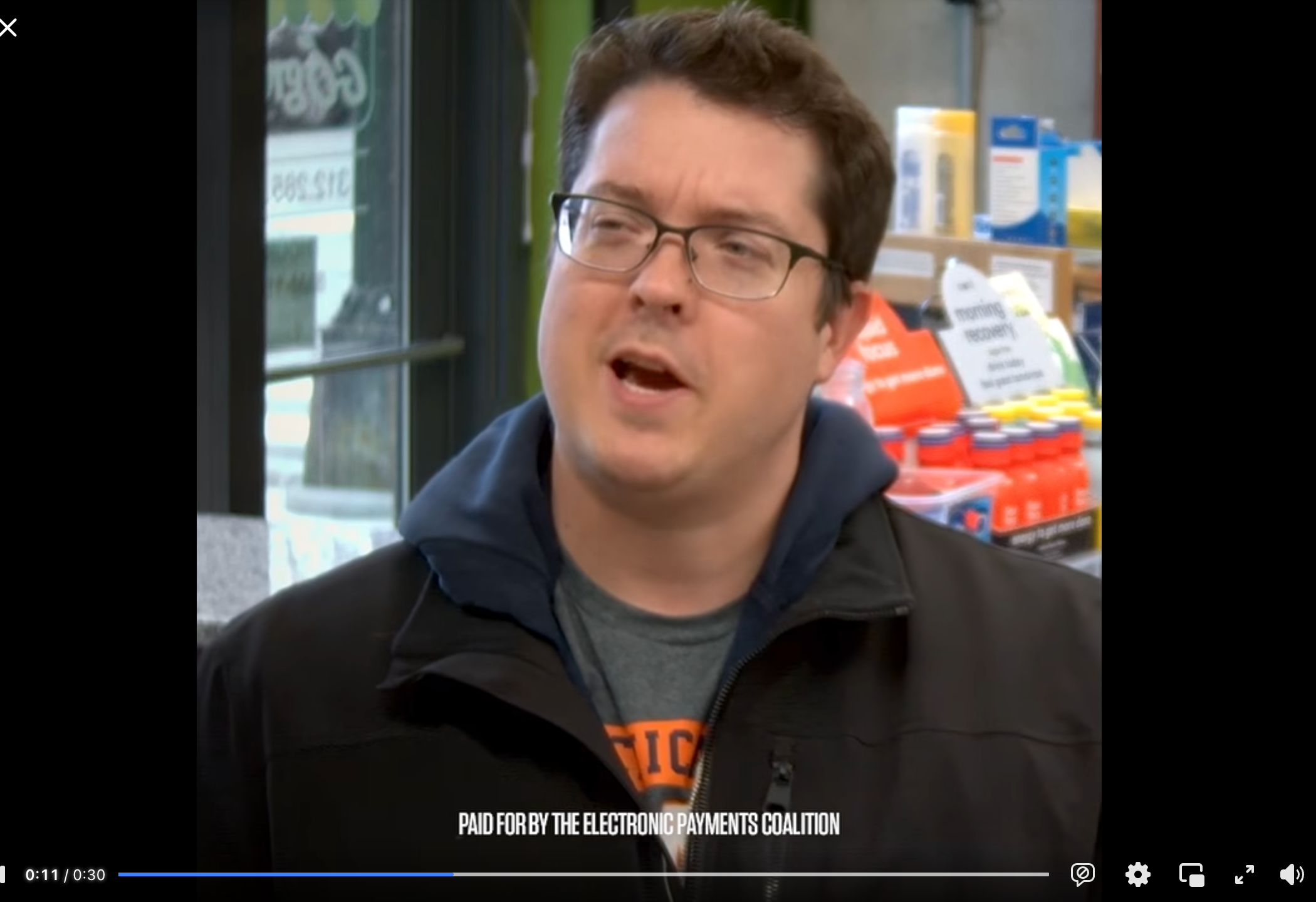
But an opposition ad circulating recently on TV and social media shows consumers getting a shocking surprise at the convenience store: When using a credit card, they have to pay the sales tax in cash with a separate transaction. Customers swear and storm out — all actors, of course, because that isn’t happening anywhere in Colorado. Not yet, and probably not ever.
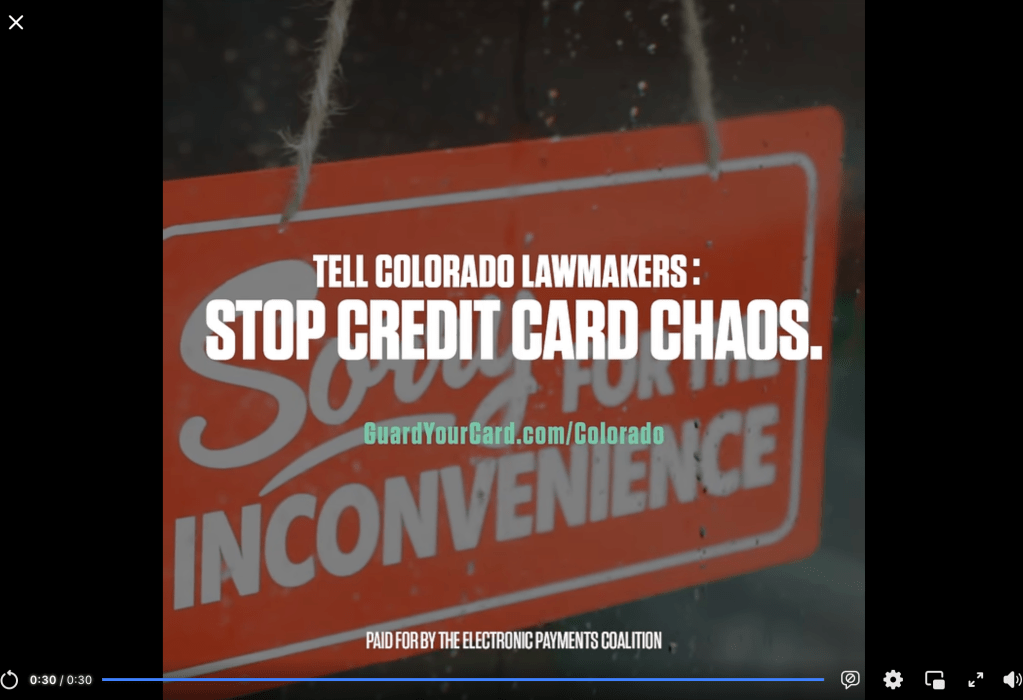
The ad, credited to a D.C. outfit named Electronic Payments Coalition (EPC), warns in all-caps that a “COLORADO BILL COULD FORCE YOU TO PAY TAX IN CASH,” with quotes from aghast alleged Coloradans suggesting that the bill could also require two transactions for purchasing anything and everything — something that is “just kind of crazy” to one lady, and “causes unnecessary anxiety,” according to a younger woman with colorful hair and a septum piercing designed to play to societal fears of Millennials and GenZ. “Whatever is happening,” says one guy in a ball cap, “it’s behind the times.”
Facebook Screenshot
Actually, misleading political advertising is a hallmark of our times, with misinformation king in 21st-century American government. A Brookings Institute study of the 2024 election directly addresses “how disinformation defined the 2024 election narrative,” and certainly not for the better.
This ad, for example, specifically avoids mentioning the actual legislation it’s targeting. Instead, it directs viewers to a website called Guard Your Card Colorado, which refers them back to the EPC.
“From a policy-level perspective, this is something we’ve seen for a few decades in dozens of state legislatures,” says Joe Adamack, senior vice president of Legislative Affairs for the GoWest Credit Union Association. “The concept itself is not new or unique to Colorado.”
But what might “seem simple on its face,” according to Adamack, “is anything but. It’s a global functioning system that does a number of processes nearly instantaneously, including verifying funds, varying security measures, fun stuff like that.”
While the proposed change could be helpful to small businesses, it could also hurt credit unions, which would see less revenue for work they’re already performing — and since they operate as not-for-profits, their margins are thinner. “As a small financial institution in the global system,” says Ben Metzger, vice president of Strategy for Canvas Credit Union, “we’re concerned that some of our members could be disrupted as merchants scramble to find compliant systems with Colorado’s new interchange regime.”
And are those systems predicted by the opposition ad? “That’s what struck me in seeing the commercial,” says Metzger. “I don’t dispute that it’s a possible outcome, that some merchants could ask their customers to pay the tax in cash” or “pay in two transactions, effectively doubling the traffic in the system. Think of a drive-thru at McDonald’s getting slowed down and the unintended consequences there.”
Adamack notes that “credit unions don’t control what merchants do, but as we’ve assessed what the bill could end up doing: multiple card swipes, separate payments in cash,” the cost might outweigh the benefits, he says, with even a possibility that some merchants or financial networks might choose not to work with a state that institutes such a policy.
But the bigger credit-card companies that collect billions from swipe fees, rather than credit unions, are the real target of the proposal, with small businesses positioned to be the beneficiaries, other groups counter. “It’s outrageous that multinational banks and credit-card companies that earn billions of dollars in profit every year are taking so much from small, local businesses, who are continuously being buried by runaway costs,” says Colorado Restaurant Association president Sonia Riggs.
Adamack and Metzger maintain that their organizations have absolutely nothing to do with the ad, or with the EPC running it in Colorado. But then, the EPC doesn’t seem to want to talk about it either: The contact form on its website doesn’t work, and both calls and emails went unanswered.
Will Coloradans have to pay sales tax in cash? Unlikely. But dealing with out-of-state ads can be taxing indeed.