Provided by the City of Aurora

Audio By Carbonatix
The Aurora City Council’s ill timing caused a public blunder.
Heard that one before?
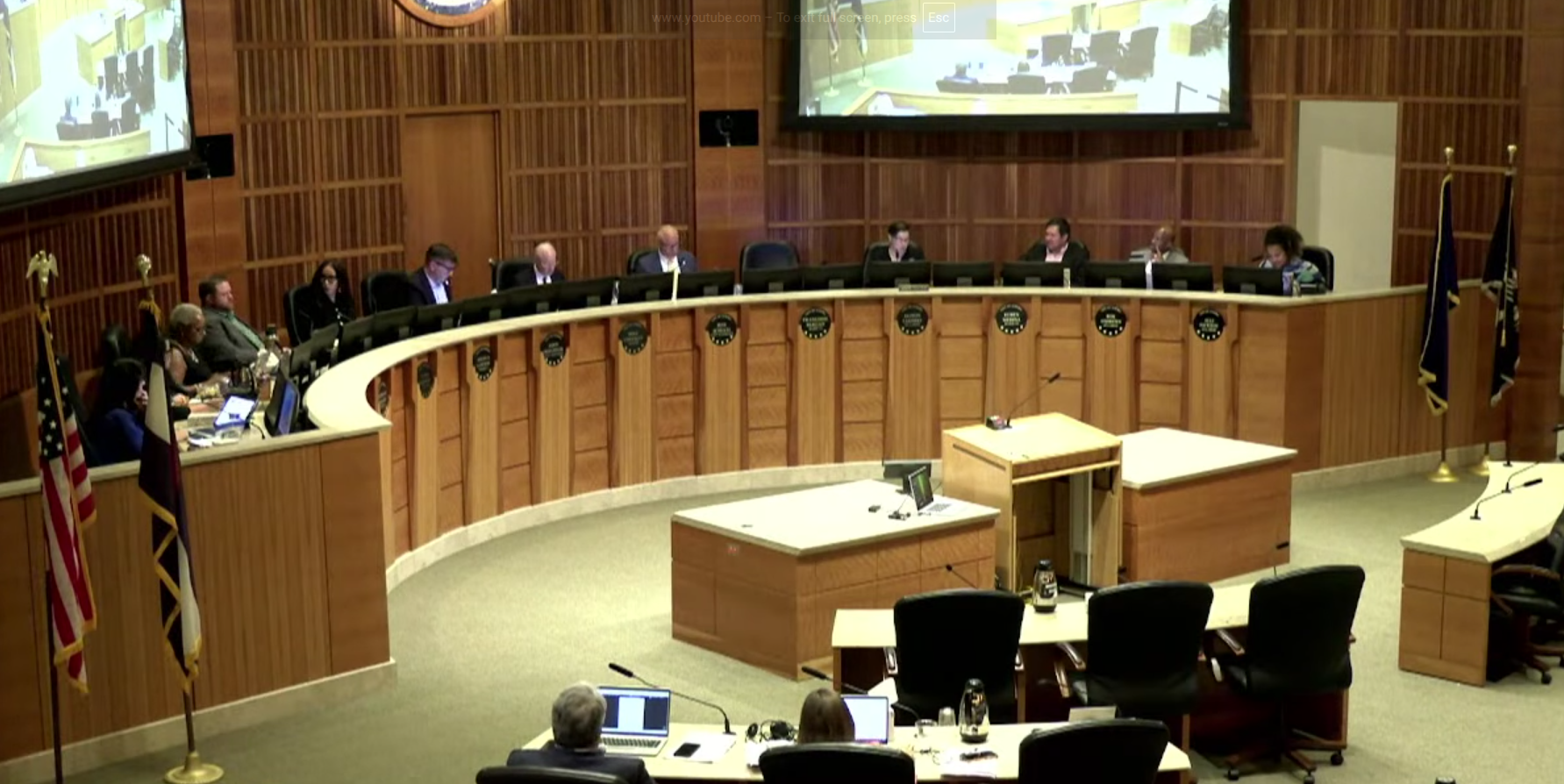
The city council voted to approve pay raises for police and firefighters on Monday, Aug. 24, the seventh anniversary of Elijah McClain’s death, and nearly within the same hour that McClain died at the hands of Aurora first responders.
Some council members offered accountability for missing the connection after residents raised the issue during the meeting.
“That was a damn fucked-up oversight on our part,” Councilmember Gianina Horton said after approving the two collective bargaining agreements, including pay raises for Aurora Police Department officers and Aurora Fire Rescue firefighters. “I’m sorry about my part in the lack of responsibility and attention to that.”
Councilmember Alison Coombs asked to pause the decision out of respect for the anniversary, but City Attorney Peter Schulte said they were on a tight deadline and not working quickly would appear in “bad faith” to the firefighter and police unions. He added that the unions could file a lawsuit against the council if they didn’t decide that evening.
“Today should have opened up with a moment of silence for Elijah and all of those murdered by APD. But today you are asking to vote on a raise for the police,” said Auon’tai Anderson, a Denver-area political activist who has protested the City of Aurora for years over multiple killings of unarmed Black people.
After public comment, another resident walked up to the podium unannounced and played N.W.A’s “Fuck tha Police” as councilors clambered for order.
Mayor Mike Coffman doubled down on the timeline, saying that the overall view of Aurora’s residents was “not reflected here in this chamber.”
“I believe that not only do (the councilors) support our firefighters, but they support our police officers,” he continued. He did not issue an apology at the end of the meeting, instead using his report time to call out Anderson for allegedly acting immaturely in the last meeting.
At the end of the day, the council voted to approve the raises. Councilmember Alli Jackson was the one “no” vote on firefighter raises, and Jackson and Coombs each voted “no” on police raises.
The collective bargaining agreements run from Jan. 1, 2027, through Dec. 31, 2028.
According to the Aurora Police Association’s website, Grade IV APD officers currently make $67,955 and Grade I officers make $91,450. Under the new agreement, Grade IV officers will earn $72,100, and Grade I officers will earn $97,961. A Grade IV firefighter currently earns $70,748 annually, while a Grade I firefighter earns $108,843. The new contract will bump that up to $72,870 for Grade IV firefighters and $112,108 for Grade I firefighters.
“I was caught up in another vote that we had recently. It’s no excuse. I apologize,” Councilwoman Amy Wiles said with tears welling behind her words. There was then an awkward moment of silence as she shook her head.
McClain, 23, was walking home from a convenience store on Aug. 24, 2019, when three Aurora Police Department officers confronted him for being “suspicious.” After tackling and holding McClain on the ground, McClain declared that he couldn’t breathe and begged for help. Paramedics with Aurora Fire Rescue were called to the scene and injected him with ketamine. McClain was later declared brain dead and taken off life support several days later.
Neither the officers nor the paramedics were criminally charged at first, but after a staggering amount of protests and a $15 million civil case against the city, Gov. Jared Polis appointed Attorney General Phil Weiser to reopen the investigation. This ultimately led to the trial and conviction of paramedics Peter Cichuniec and Jeremy Cooper. Cichuniec was found guilty of second-degree assault for administering drugs without consent and negligent homicide. Cooper was found not guilty of the second-degree assault charge, but was found guilty of criminally negligent homicide.
Both will receive a retrial after the Court of Appeals tossed out the jury verdicts in June.
The three police officers on the scene were also tried, with two being acquitted and APD officer Randy Roedema being found guilty of criminally negligent homicide and third-degree assault. Roedema was sentenced to 14 months in jail with work release and four years of probation.
“This was obviously not the day,” Coombs said of the timing of the bargaining agreement. “The murder of Elijah McClain has shaped our city; it has shaped my entire time on council. It deserved a different conversation.”
Residents were upset about both the timing and raises.
McClain’s death isn’t the only incident in which the city has paid for police misconduct against Black people. For example (and there are many), the city reached a $1.9 million settlement with a Black family of five after police wrongfully detained them at gunpoint outside a nail salon in 2020. The city paid out $400,000 to Preston Nunn III, a Black man, after excessive force during an arrest in 2021.
Aurora police are also facing an ongoing case brought by the family of Kilyn Lewis, who was shot and killed by Aurora SWAT while they were carrying out an arrest warrant on him in 2024. Earlier this year, an APD officer was indicted for second-degree murder and manslaughter after shooting and killing a 37-year-old Black man during a traffic stop in 2025.
The Aurora City Council approved the creation of an Office of Public Safety Accountability back in June in an attempt to help improve policing — five years after an investigation by the Colorado Department of Law as a consequence of McClain’s death found that APD had a pattern of illegal, racially biased policing and excessive force. The department entered a state-enforced consent decree for five years after the investigation, which is set to end at the beginning of 2027.