
Flickr/Matt Tillett

Audio By Carbonatix
Boulder County’s wildfire defense is about to become goated.
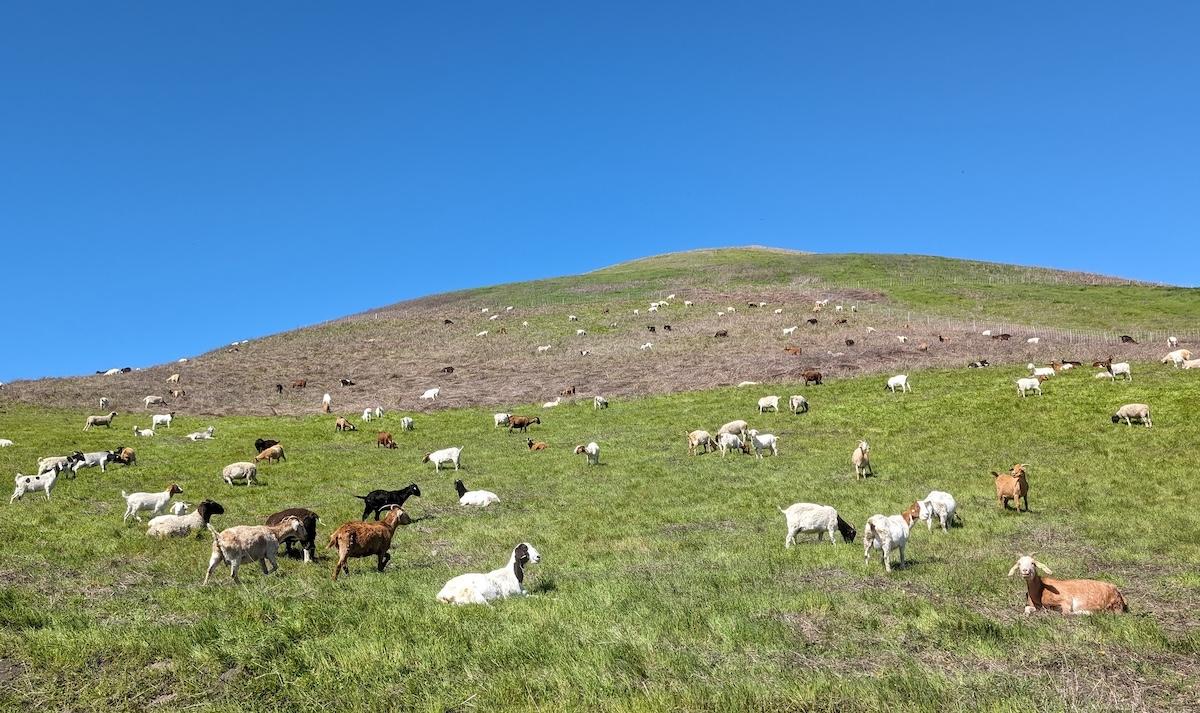
A request for proposal from Boulder County Parks & Open Space seeks “a vendor who can provide goat browsing” for general weed control and fire mitigation, as well as keeping native grass and weed pressure down in revegetation and restoration areas. The goat herder will work under a pilot program overseen by the county’s Noxious Weed Department, with about 89 acres to manage across various properties.
The experimental program is part of Boulder Parks & Open Space’s Integrated Weed Management Plan, an ongoing effort to fight weeds and invasive plants across approximately 34,000 acres of land, 120 miles of trail, and 685 miles of county-managed roads. “Goat browsing” areas of coverage include small slices of land around Twin Lakes Open Space, Mayhoffer Ditch and five other parcels. Some targeted browsing will occur in August or September “to reduce vegetative fuels moving into fall and winter,” according to the RFP.
Over 18,600 acres in Boulder County have been burned by wildfires since 2020, according to county data. This includes 2021’s Marshall Fire, which was responsible for two deaths, 1,091 destroyed structures and an estimated $2 billion in damage, as well as 2024’s Stone Canyon Fire, which destroyed over 1,500 acres.
The goat browsing program will be responsible for around 0.02% Boulder County’s weed management acreage, but those 89 acres still require quite a few goats. According to everyone’s favorite goat trade publication, Goat Journal, goats can eat anywhere from 4.4 to 7.65 pounds of dry forage per day on average. That can amount to several hundred to over 1,000 square feet of vegetation per day, depending on the type of goat and size of the herd.
Goats are some of the longest-domesticated animals on the planet, so using them to clear out grass, noxious weeds and wildfire risks isn’t exactly new to humanity. But the practice is coming back in more developed parts of the world, in a practice known on the internet as “goatscaping.”
Boulder County is accepting bids on the project through May 28, but it’s not going to accept any run-of-the-mill goat pusher. Per the county’s RFP, the herder “will be liable for any damage caused on either County property or private property by browsing activities,” with strict rules on what vegetation the goats can eat, where they travel and how to limit public interaction. Each goat needs to put in an honest day’s work, too: According to Boulder County, goats must browse for a minimum of eight hours per day.
There could be a surprising amount of competition for the contract. A quick Google search brings up several Colorado-based goatscaping companies, including Goat Bros, Goat Mowers and Goats on the Go. In fact, Goat Bros recently used a 300-goat herd to graze around 40 acres for the Town of Superior, which received its funding for the project from Boulder County.