
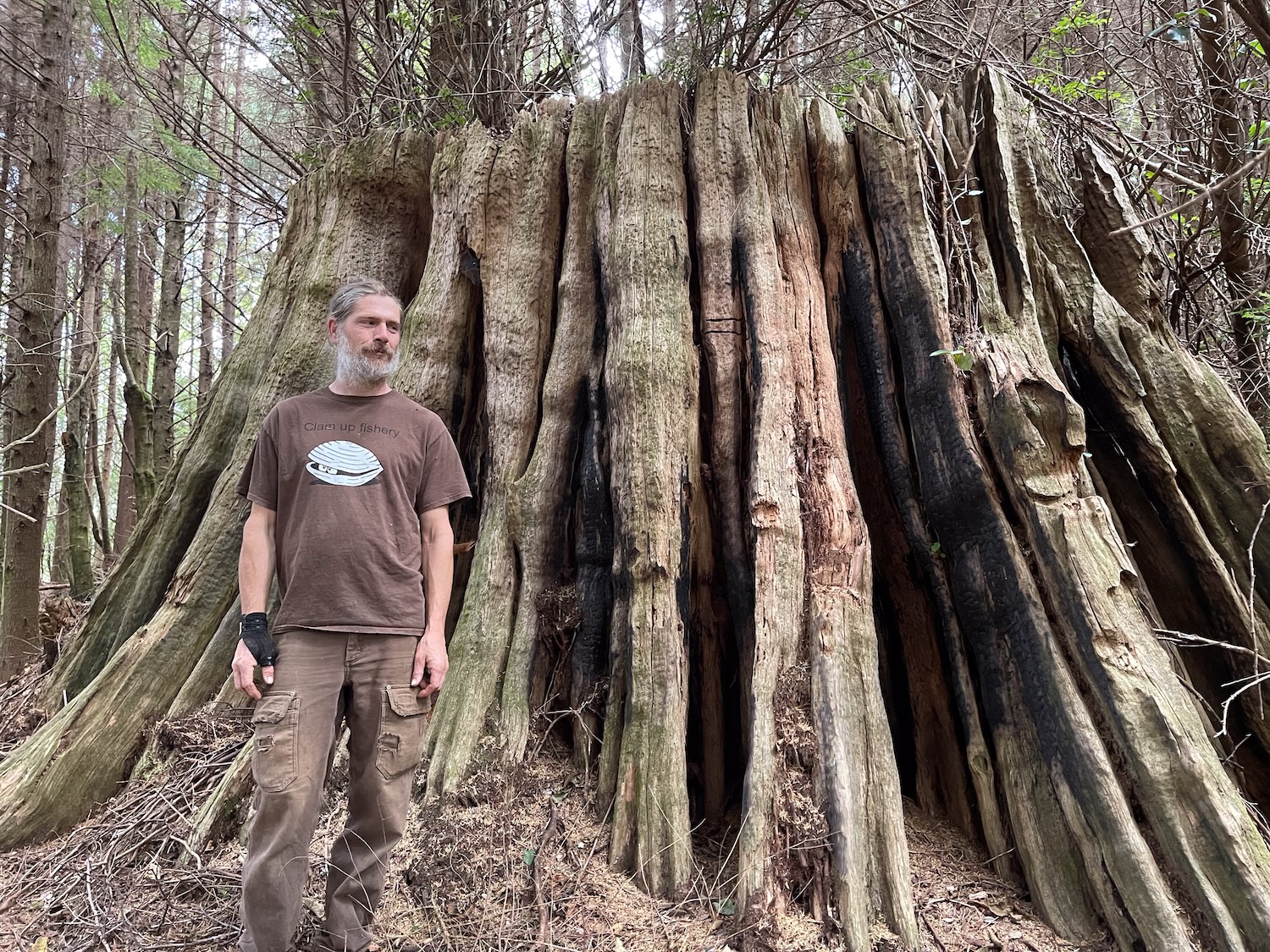
Courtesy Craig Andes

Audio By Carbonatix
Keep Westword Free
We’re aiming to raise $20,000 by April 26. Your support ensures Westword can continue watching out for you and our community. No paywall. Always accessible. Daily online and weekly in print.
Cue the Cyndi Lauper music: The discovery of a lifetime has been made…depending on who you talk to.
South of the mouth of the Columbia River in Oregon, on the beaches shadowed by Mount Neahkahnie (often called “the Mountain of 1000 Holes” by locals), could be the riches that captivated a nation after The Goonies was released in 1985.
Accounts of buried booty hidden near the mountain have been shared by natives for hundreds of years, with tales of Spanish shipwrecks and survivors hiding their trade goods along the coast dating back to the 1600s. Then Craig Andes, a child of Colorado, says he came along and found some of it: on a Spanish shipwreck dating back over 300 years.
But to him, it feels like the next chapter could take almost as long.
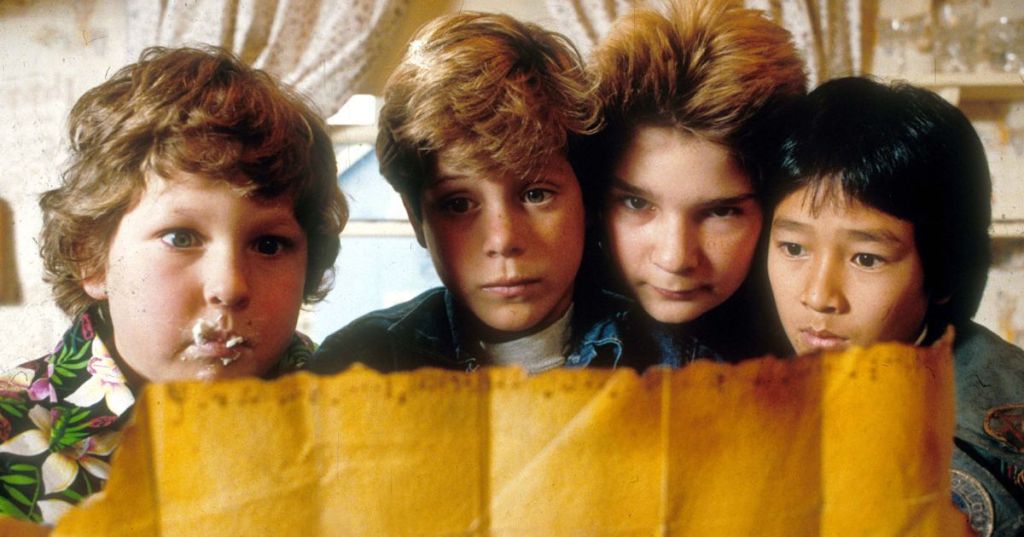
The Goonies inspired searches for buried treasure.
The Goonies
Spanish Shipwrecks and Stolen Gold
Stories of buried gold and lost ships full of treasure are prime for fans of The Goonies, the 1985 movie in which a group of kids follow a treasure map to the ship of notorious pirate captain One-Eyed Willie. The movie was set on the Oregon coast, and still brings thousands of visitors and their tourism dollars to the area every year.
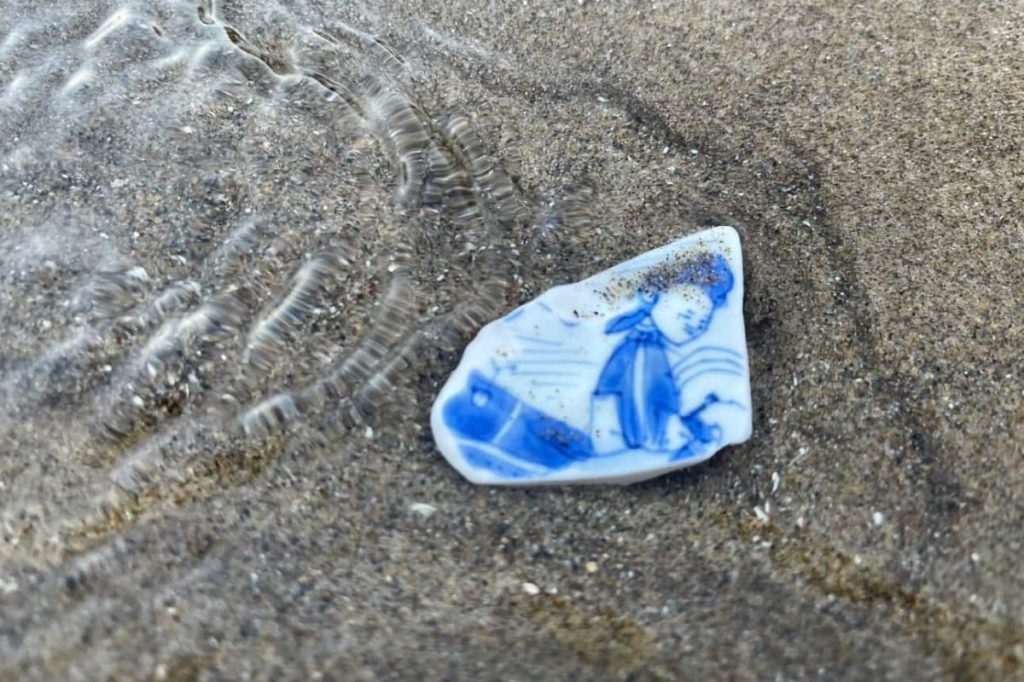
But there are real stories of lost treasure here, too. Spanish trade records show four ships unaccounted for during that country’s historical trading run from 1550 to 1850, with two Spanish galleons lost near the Pacific Coast: the Santo Cristo de Burgos, between 1693 and 1694, and the San Francisco Xavier in 1705. Both were traveling from the Philippines to Acapulco, Mexico, loaded with tons of silver, Ming Dynasty-era porcelain and liquid mercury.
Lore runs deeper, with legends of an even older treasure hidden at Mount Neahkahnie. In 1577, Sir Francis Drake, a English privateer, explorer and former slave trader, was sent by Queen Elizabeth I to wreak havoc on rival Spanish ports and exploit trade routes in the Pacific. He accumulated over 35 tons of gold, silver, religious relics and emeralds while raiding Spanish settlements from Chile to Mexico and then, with a ship springing leaks, took refuge along the North American coast for repairs.
After the ship was fixed, he sailed south and across the Pacific Ocean before returning to England – leaving behind rumors that Drake had stashed fifteen tons of the loot for safekeeping in what is now Oregon
Those stories were backed by native lore. The Chinook and Clastop people, who lived in the area before any explorers came through, tracked the arrival of the Spanish and their secrets long before colonial records were kept. Treasure hunters were even known to marry Chinookan wives in the hopes of gaining secret knowledge of treasures that was kept closely guarded by their people.
From Colorado to Oregon
Growing up “in the mountains between Gunnison and Crested Butte,” Andes says he developed his love of treasure hunting as a child, looking for minerals on the Western Slope of Colorado. He moved to the Oregon coast in 1987, when Goonies mania was still hot and the call to find One Eyed Willie’s treasure strong.
In 1999, Andes spent an inheritance left by his grandfather on a used crabbing vessel named Dark Star, to search Oregon’s treacherous waters for the shipwrecks…and whatever else he could find.
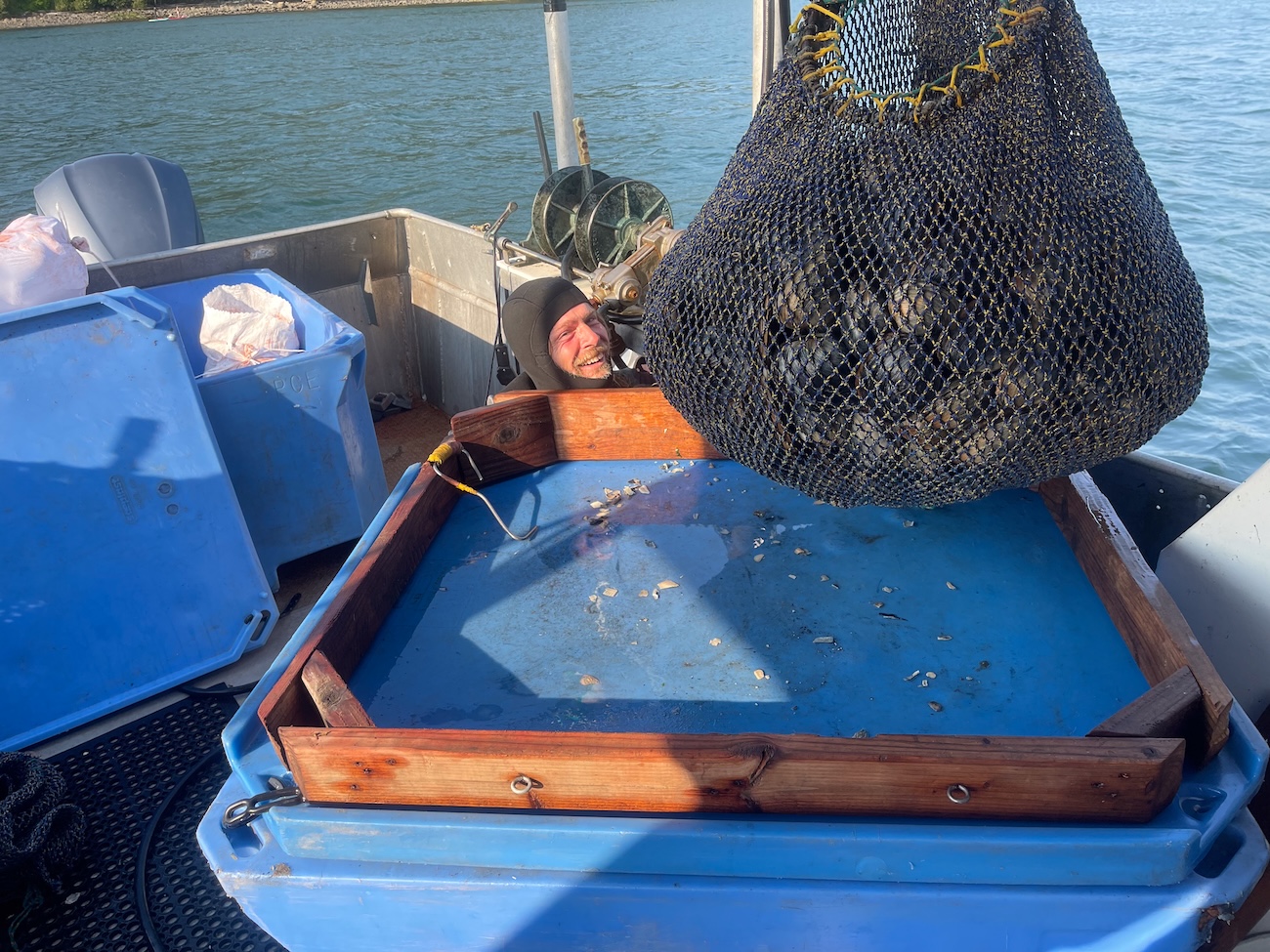
Courtesy of Craig Andes
“I did a lot of my research at that period of time where I was…scratching clams up in the winter, but then spending the rest of the day tracking porcelain down and stuff like that,” Andes recalls. “I did that for a long time, and then I worked my way out of it.”
Decades passed as Andes gathered priceless, unrecorded knowledge, such as potential coordinates of sunken ships from seasoned dredger logs or local clues passed down through generations. Eventually, all of that searching led him to caves at Cape Falcon in Oregon’s Oswald West State Park.
“There’s so many places I know about that I would like to further explore,” he admits, “just in this area off the beaten path, that I would never have time, and even with the rest of my life to accomplish it.”
But he may have already made the find of a lifetime.
Is This the Santo Cristo de Burgos?
A 2013 video shows Andes discovering waterlogged timbers preserved beneath boulders that fell off the cliffs by caves at Cape Falcon during the Cascadia Earthquake of 1700. However, he didn’t officially report his find to the Cultural Resources Program of the Washington State Department of Transportation in Olympia, which oversees much of the Pacific Northwest, including Oregon, until 2019.
Andes’s relationship with the state parks department is strained; he says he’s received little credit for the find.
Carbon dating and further examination verified the hardwood’s Asian origins in the fourteenth and fifteenth centuries, indicating the presence of multiple types of wood, potentially from ships, including a type of teakwood. According to Andes, the teakwood ship bones were the proof needed to finally validate the discovery of the Santo Cristo de Burgos shipwreck – and over thirty years of Andes’s work.
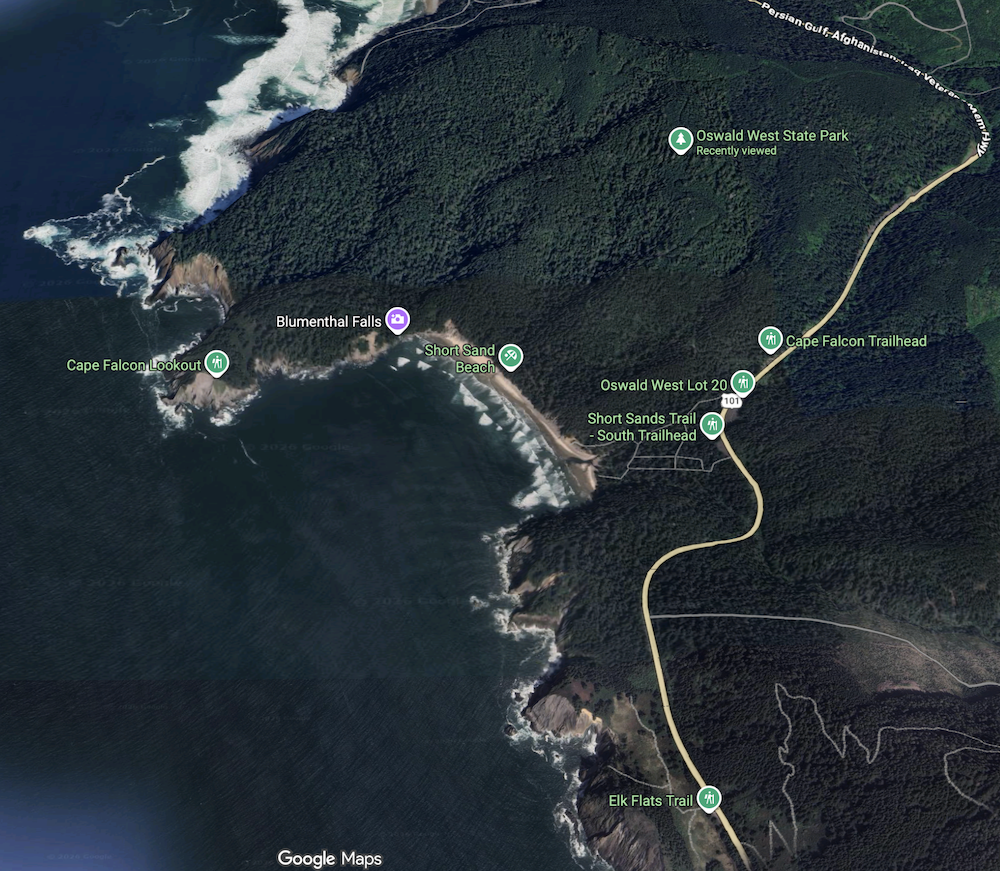
Google Maps screenshot
The Oregon State Historic Preservation Office, National Geographic, the Columbia River Maritime Museum and the Maritime Archeological Society all recognize the timbers as the first tangible evidence of the Santo Cristo de Burgo in Oregon, Andes says. But according to Oswald West State Park, the timbers are not proof of the Santo Cristo De Burgos shipwreck, and Andes is not credited by the park or many academics for the find.
In 2022, when the state was planning to recover more of the timber and National Geographic was preparing to document the process, Andes was asked to partner on the project, according to Scott Williams, the WSDOT cultural resources program manager at the time. Not only did Andes refuse, but Williams says he refused to share the artifacts he’d found nine years earlier.
Andes says he felt that the WSDOT did not have jurisdiction over the find, adding that he wanted to showcase his work at a museum of his choosing.
“Any comments the state made about me withholding artifacts is bogus, because I was never even officially asked to bring those up there,” says Andes, citing beachcombing laws. “None of the artifacts or items I ever found on the beach or from the site were artifacts, because no one would recognize them as such and it was not a wreck site officially until I discovered it. “
Although there can be no digging or excavation in Cape Falcon without a state-issued permit, you can walk the beach and see what’s protruding from the sand. You’re supposed to report any historical finds to the state, but the porcelain and beeswax pieces found in the sand are too common to receive much interest from state historians, according to Andes, and some beachgoers unknowingly pocket what could be historic finds.
Andes calls this “Oregon tradition,” but such activities became more aggressive after he went public with his find, with reports of amateur hunters and plunderers attempting to illegally access and search Cape Falcon for artifacts and riches.
Williams says he respects Andes, but sees both sides. “To many archaeologists, Craig is a ‘looter,’ or an artifact collector. Someone who collects artifacts for their own use and who destroys archaeological information by doing so…despite the fact that we’d know almost nothing about the galleon if not for Craig and other beachcombers,” he notes.
Williams says that the state doesn’t give anyone “blanket permits” to just collect things as they want, and that “even the Parks archaeologists can’t get that on Parks lands.”
“Craig has a lot of grief and trauma associated with this project, some of it caused by others — including me, I’m sure — but some of it caused by himself,” Williams adds.
Despite their differences, Williams credits Andes with discovering the first tangible evidence of the Santo Cristo de Burgos shipwreck, and even listed Andes as coauthor on research publications, “as an acknowledgment of his contributions”.
“Craig is super smart, and knows that coast and where shipwreck artifacts are likely to be found better than anyone else I know,” he says. “Unfortunately, Oregon Parks is not interested in finding artifacts or wreckage of the ship, and, I think, would prefer if it, and us, just quietly went away.”
Goonies Never Say Die
Park officials say the Cape Falcon caves had been fully excavated by 2022, but Andes believes more is down there. With earthquakes always looming, he fears that pieces from the wreck could disappear if excavation doesn’t continue.
Partnering with the Northwest Shipwreck Alliance to push for an excavation permit in 2023, Andes hoped to bring more publicity to the anticipated discovery — but without a permit, he feels stuck. “It’s basically the typical Goonie story where, ya know, we find these really cool things or we had these really cool things to do, but these stiffs come in and want to put a golf course on it,” he says.
Courtesy Craig Andes
Now isolated and hampered in future treasure-hunting efforts, Andes says he’s left “feeling like One-Eyed Willie.” He’d like to see the wreck properly preserved and a life-sized replica of the Santo de Cristo installed at the Nehalem Valley Historical Society’s museum in Manzanita, where some of his other discoveries are currently held for public viewing.
But Andes says he no longer trusts state officials or career academics.
“They pretty much ruined my life over that,” he says. “What could’ve been the most exciting, fun thing in my entire life turned into a shit show because of other butt-hurt, self-righteous archaeologists that want to kill me with the pricks of 1,000 needles over finding it, because they didn’t.
“I have bigger archaeological sites to expose that they’re gonna have to do cartwheels,” he adds.
There’s still no clear X on the map marking the Santo de Cristo find, but Andes continues his work.
As Mike Walsh said at a wishing well in 1985: “Goonies never say die.”