Mariusz Kielbowicz/Getty Images

Audio By Carbonatix
Coloradans may soon vote on a ballot measure that will pretty much make no difference whether it passes or fails.
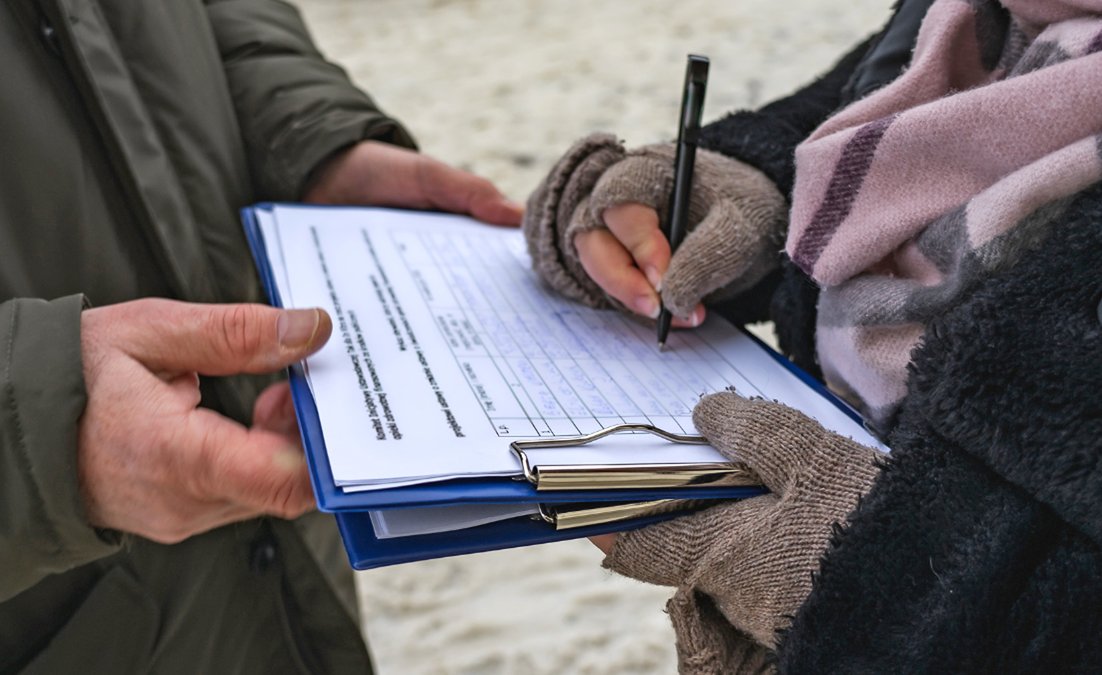
Proponents for Initiative 175 turned in over 188,000 petition signatures on May 26, in support of the proposal to require that certain transportation-related state taxes and fees be used to fund the construction, repairs and maintenance of roads and bridges. If the signatures are validated by the Secretary of State’s Office, the initiative will earn a spot on the ballot this November.
Supporters say the initiative is necessary to address the poor state of Colorado’s roads, directing around $700 million in annual funding without increasing taxes. Critics say earmarking funds without providing new revenue would require $700 million in cuts to critical services like education and Medicaid, at a time when the state is already facing recurring billion-plus-dollar budget shortfalls.
But none of that will actually happen if the ballot measure is approved. That’s because state legislators preemptively neutralized the proposal by passing House Bill 26-1430 on May 13.
If Initiative 175 passes in November, House Bill 1430 will offset its effects by temporarily cutting existing transportation revenue in several ways, essentially maintaining current funding levels for roads and avoiding making cuts in other areas. House Bill 1430 still needs final approval from Gov. Jared Polis to become law, but he has expressed strong support for the bill in the media. Polis has until June 12 to sign or veto the bill.
“Initiative 175 is a special interest group’s irresponsible solution to a legitimate problem,” said State Sen. William Lindstedt, a sponsor of House Bill 1430, in a statement. “We remain committed to doing more to fix our roads and secure sustainable transportation funding, but not at the expense of hospitals and schools. It’s time for the proponents of Initiative 175 to come to the table and work with us to chart a responsible path forward.”
The money taxpayers save from the bill’s temporary reduction in transportation-related taxes and fees would be largely offset by a reduction in taxpayer refunds, according to the legislative analysis. So all in all, it shouldn’t make a difference to the individual.
The bill’s changes will last until July 2030, giving legislators time to develop a longer-term plan to address the ballot measure’s impacts, the sponsors have explained.
But there is an alternative: Under the bill, if Initiative 175 is withdrawn, a working group will be established to develop recommendations on improving road and infrastructure funding.
Proponents of Initiative 175 have until June 15 to withdraw the measure, according to the bill’s guidelines. They had to submit petition signatures by May 27 to make the ballot. The proponents are still “engaging in good faith” to reach a compromise, says Karen Crummy, spokesperson for the Restore Our Roads group. But they’re keeping their options open.
“If, in the end, the legislature truly chooses to override the will of the voters, then that will be their decision to explain to the people of Colorado,” says Tony Milo, president and CEO of the Colorado Contractors Association, which is leading the initiative. “Our job is to make sure Coloradans have a clear choice and a real opportunity to be heard.”
As negotiations continue behind the scenes, Initiative 75 advances toward joining a handful of other measures on the ballot this November.
Measures on the ballot
Five measures have qualified for the ballot as of May 26, according to the Secretary of State’s Office. Unless sponsors pull the initiatives, Coloradans will vote on the following proposals:
Penalties for fentanyl crimes
Initiative 85 would increase the felony classifications for drug-related crimes for the distribution, manufacturing, dispensing, sale or possession of fentanyl and certain synthetic opioids. It would also narrow or eliminate sentencing exemptions and create mandatory treatment requirements for certain drug felony violations. The initiative comes from Michael Fields, president of the conservative advocacy group Advance Colorado.
Law enforcement reporting requirements to federal authorities
Initiative 95 would require Colorado law enforcement agencies to notify the U.S. Department of Homeland Security when a person who is not lawfully present in the country is charged with a violent crime, or charged with any crime if the person has a prior felony conviction. Current law prohibits state, county and local employees from disclosing personal identifying information to assist with federal immigration enforcement. The measure, which also comes from Fields, would require an amendment to the state constitution, so it must earn 55% of votes to pass.
Penalties for human trafficking of a minor
Initiative 108 would make the human trafficking of a minor for sexual servitude a class 1 felony instead of class 2, making the offense punishable by life imprisonment. The proposal comes from anti-transgender activists Erin Lee of Wellington and Michele Austin of Englewood.
Male and female participation in school sports
Initiative 109 would prohibit transgender students from playing on K-12 and college sports teams that don’t align with their sex assigned at birth. The measure is also backed by Lee and Austin.
Prohibit certain surgeries on minors
Initiative 110 would restrict gender-affirming medical care for minors, prohibiting “any surgery” to alter “biological sex characteristics.” The measure is backed by Lee and Austin, as well.
Ongoing proposals
Twenty other proposals are approved to circulate petitions. Proponents need to collect 124,238 signatures from registered voters to get their initiative on the ballot, and they only have six months after the bill title is set to do so.
Five of the petitioning proposals — Initiatives 240, 241, 242, 251 and 256 — concern congressional redistricting, in response to a wave of mid-decade redistricting across the country, spurred by President Donald Trump’s call for Republicans to reshape U.S. House districts to favor the party in the midterm elections. The first three initiatives are Democrat-backed and seek to let voters establish temporary maps that favor Democrats to “neutralize the partisan gerrymandering being undertaken by Republican-led states.” The latter two are Republican-backed and would prohibit redistricting that purposefully favors one political party.
Initiative 195 would enact a graduated income tax rate by increasing taxes on individuals and businesses earning more than $500,000 in annual taxable income, and lowering taxes on those earning less. A competing measure, Initiative 232, would establish a maximum tax rate, prohibiting both the individual and corporate income tax rates from exceeding 4.4 percent of one’s federal taxable income.
Initiative 283 would repeal the constitutional right to abortion, a right that Coloradans voted to enshrine in 2024.
Initiative 177 would enshrine the right to purchase and sell natural gas for cooking or heating in homes or businesses.
Initiative 302 would enshrine the right to hunt, fish and harvest wildlife.
Initiative 362 would require voters to include the last four digits of their Social Security number or state ID to submit a mail ballot.
Thirty proposals were approved by the title board but are not yet petitioning, while 12 are awaiting decisions from the Colorado Supreme Court before they can move forward. An additional 122 proposals have expired, been withdrawn or were rejected by the title board.
The final deadline to file an initiative petition for the 2026 election is August 3. Election Day is Tuesday, November 3.
This article has been updated to add information about House Bill 26-1430.