

Campaign courtesy photos

Audio By Carbonatix
In the nearly three decades that Diana DeGette has been in Congress, her seat has rarely, if ever, been at risk. She’s gone unopposed in ten of fourteen primary elections since she entered office in 1997. Her all-time most successful challenger drummed up fewer than half of DeGette’s votes in 2018.
That long-held job security is being put to the test this year.
DeGette was only nine votes away from being knocked off the primary ballot during a Democratic Party assembly on March 27. She was soundly defeated by political newcomer Melat Kiros, who received over 66 percent of delegate votes. DeGette received only 33 percent, narrowly clearing the 30 percent threshold needed to qualify for the ballot. It’s the first time DeGette has lost an assembly since she entered Congress, according to Kiros’s campaign.
“I’m never letting my foot up off the gas,” Kiros says. “This is going to be a fight until the very end, but I do think that Denver is ready. …We can win. We can usher in a new generation of leadership, not just for our city but, hopefully, for our country.”
Kiros isn’t DeGette’s only competition. University of Colorado Regent Wanda James also plans to run in the primary to represent Colorado’s First Congressional District. James filed over 3,000 petition signatures on March 18 to qualify for the ballot; the Secretary of State’s Office is currently verifying the signatures.
“Clearly, people don’t know when they should step down, when their time has come and gone, when they have outlived their effectiveness,” James says of DeGette. “It has been decades since we have seen any real leadership from her office.”
Kiros and James face a tough road ahead. Congressmembers are hardly ever unseated in Colorado. Republican Lauren Boebert is the only challenger to win a primary against a Colorado congressional incumbent this century, according to a 9News analysis. No Democratic congressperson in the state has lost a primary in more than fifty years, the analysis found.
DeGette’s struggles at the party assembly do not necessarily mean she’ll fail at the primary. Many candidates have lost at assembly but went on to win their primaries, including Republican U.S. Representative Ken Buck in 2022 and Democratic Governor Jared Polis in 2018.
The congresswoman has a major funding advantage, with over $713,000 raised by the end of 2025, compared to $204,000 for Kiros and $179,000 for James, according to Federal Election Commission records. DeGette also enjoys the name recognition of being the longest-serving member of Colorado’s congressional delegation. She will have represented CD1 in Denver for thirty years across fifteen terms by the time her term ends in January 2027. That’s the lengthiest run in the U.S. House for any Coloradan since Edward T. Taylor, who died in office in 1941 after serving 32 years.
DeGette says she is confident that she’ll see a sixteenth term.
“I’ve had a number of primary challengers over the years,” she says. “I frankly welcome the opportunity to reach out to my constituents and to underscore even more how I am working on their behalf. I feel the same way with this race. We’ll have some good, robust debate, and, based on what I see in my district, I think that most of my constituents agree with me.”
CD1 is a Democratic stronghold, so whoever wins the June primary election is likely to also win the seat in the November general election. Christy Peterson is the Republican nominee; she has not reported any fundraising, according to FEC records.
Here’s what you need to know about the Democratic candidates ahead of the primary election on June 30:
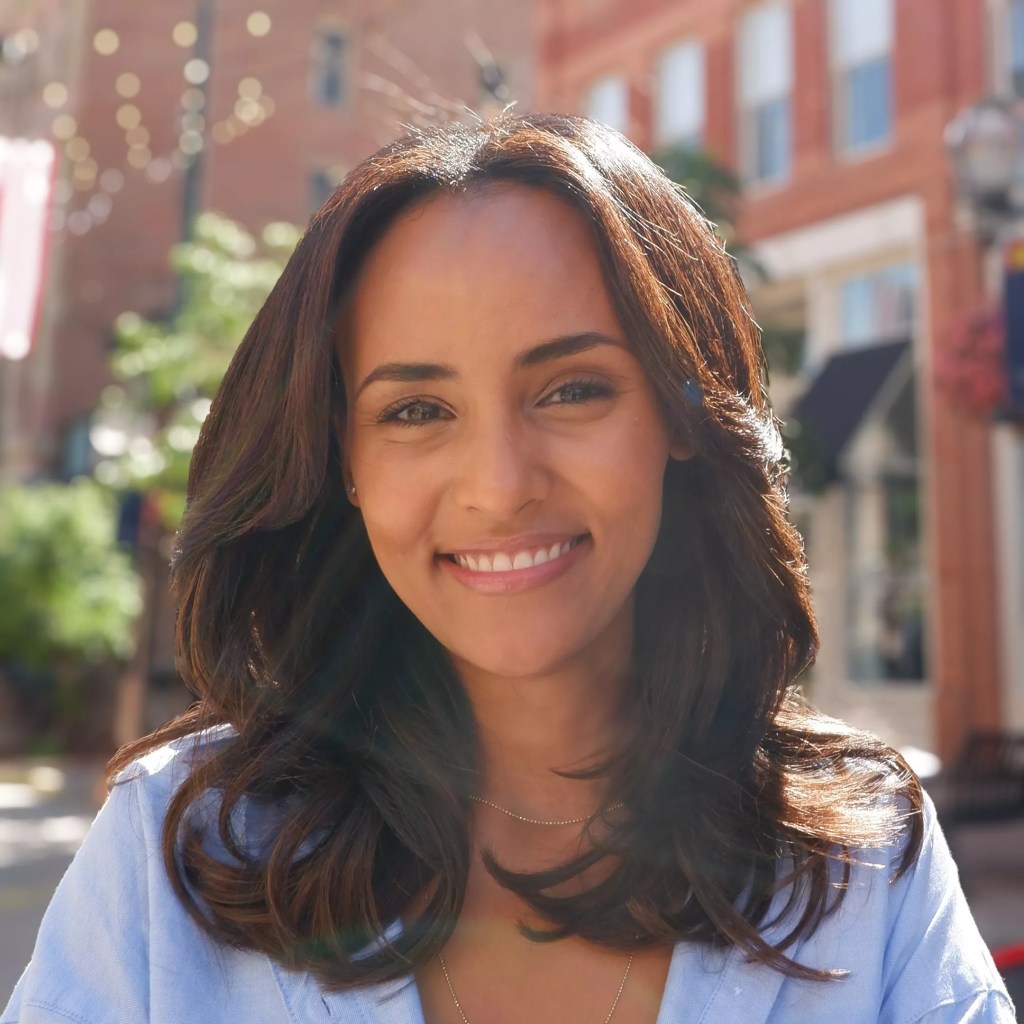
Courtesy Melat Kiros
Melat Kiros
Kiros is an attorney, Ph.D. student and barista running on a platform of reducing the influence of money in politics. At 28 years old, Kiros wasn’t even born when DeGette was elected to Congress.
Kiros has never run for elected office before, but she pulled off a stunning win during the Democratic assembly, winning 157 votes out of 236 — double the 79 votes DeGette received, according to the Colorado Democratic Party.
“The energy in the room was absolutely electric and so inspiring and exciting. I think that’s been missing from Denver for a while,” Kiros says. “What we’re going to need to do is push the party. We have a lot of work to do if we’re going to start winning elections again.”
Kiros adds to a national wave of Democrats from Generation Z pushing to unseat party elders after Republicans seized control of the presidency and Congress in 2024. Some young Democrats believe replacing longtime incumbents with new candidates will re-energize voters. They’re encouraged by the recent success of politicians like Zohran Mamdani, a 33-year-old democratic socialist who won the Democratic primary for New York City mayor over former New York governor Andrew Cuomo, age 67.
A progressive, Kiros views billionaires and corporate lobbyists as the primary forces preventing federal initiatives that she supports, including making housing affordable, providing universal health care and increasing the minimum wage.
“For a long time, people have believed that we will never get money out of politics,” Kiros says. “[I’m] convincing people that that’s not the case. We deserve to have a leader who’s going to be bold and imaginative.”
To remove big money from politics, she says four changes are necessary: Ban members of Congress from lobbying after leaving office, ban members of Congress and their immediate family from trading stocks while in office, establish eighteen-year term limits for members of Congress, and tax campaign contributions from super PACs to create a public-financing fund for congressional candidates.
“My message to every Denverite is that it does not have to be this way,” Kiros says. “We can elect people who say from the get-go that they will never take a dime of that kind of money and that they’re only going to be accountable to you. That’s my pledge to Denver voters: that I will only ever be accountable to the people of this city. That I will fight day and night to protect their dignity and protect their right to prosperity as the hardworking people who make this city as great as it is.”
Kiros was born in Addis Ababa, Ethiopia, and came to Denver with her family as an infant. They later moved to Aurora, where Kiros attended Eaglecrest High School. She studied political science and economics at Washington College, and earned a law degree from the University of Notre Dame in 2022.
After graduation, Kiros worked as an attorney at a New York law firm, doing securities regulation work. Then came the Hamas attacks against Israel in October 2023, and the start of Israel’s war on Gaza. When pro-Palestinian protests exploded across American college campuses, Kiros says she published an article in support of the protesting students, some of whom were being suspended, expelled or having job offers rescinded. Kiros says her employer told her to take the article down. When she refused, she was fired.
Kiros then moved back to Denver and began a public affairs Ph.D. program at the University of Colorado, to research policy solutions to reform the national political system. She decided to run for Congress after Donald Trump was re-elected in 2024, saying Democrats aren’t doing enough to resist harmful actions from the Trump administration or to offer a plan after Trump leaves office. That includes DeGette.
“It’s not about just experience for experience’s sake,” Kiros says. “We have a really small window here to prevent the worst outcomes from this administration. And I don’t know that DeGette has shown enough in her ability to actually challenge Trump with the thirty years of experience that she has.”
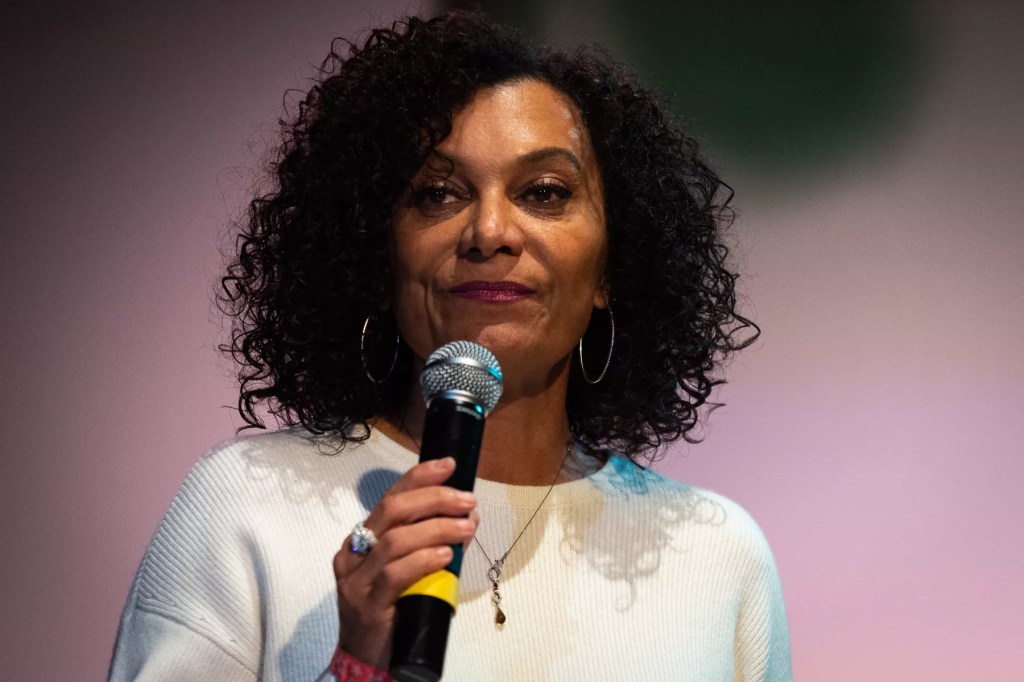
Ken Hamblin III
Wanda James
James represents CD1 on the University of Colorado Board of Regents and is CEO of Simply Pure, a cannabis business in Colorado and New Jersey.
She was the first marijuana business owner to win a major election in Colorado, the first Black woman elected to the CU Board of Regents in over forty years, the first Black woman commissioned through the university’s Naval ROTC program, and the first Black dispensary owner in the state. Now, she wants to continue breaking barriers in Congress.
“CD1 deserves different leadership right now,” James says. “This is what happens when you take people for granted, when you don’t show up in community, and when you don’t talk to the people whom you say you are there to represent.”
James was elected to the Board of Regents in 2022. It is her first public office, but she has a background in politics. James managed now-Governor Polis’s successful congressional campaign and worked on Barack Obama’s presidential campaign committee in Colorado. She’s served on the Colorado Tourism Board, in addition to work groups and transition teams for Polis, Denver Mayor Mike Johnston and then-Governor John Hickenlooper, according to her campaign.
An Air Force brat, James was partially raised in Colorado and graduated from CU Boulder in 1986 with a bachelor’s degree in sociology. After graduation, she served in the U.S. Navy for four years. James started Simply Pure in 2010 with her husband, Scott Durrah. The couple has also opened six restaurants across the state.
“There is only one candidate in this race who is bringing lived experience,” James says. “Only one candidate in this race has served this country in uniform. Only one candidate has worked for a Fortune 100 and a Fortune 500 company. Only one candidate has created jobs for twenty years through numerous different entrepreneurial outlets. Only one candidate has been there for the communities that we’ve talked to.
“I’m not just telling people what I think I can do or what sounds like a good idea. I’m actually talking about things that I have done and the kind of fighter that I will be as I become the next congresswoman.”
James says her top policy priorities include protecting voting rights, restoring Congress’s constitutional authority over war, and improving affordability by funding Federal Housing Administration loans, expanding child tax credits and supporting Medicare for All.
“It is time for different perspectives. Denver is not even remotely the same city it was in 1997 when Diana was elected,” James says. “Nobody should be in office for thirty years. Nobody. …What is [DeGette] going to do in year thirty that she wasn’t able to do in year twenty? Or year 25? Or year eighteen?”
The Board of Regents voted to censure James in July after she objected to a university public health campaign about the risks of marijuana use. James questioned the science behind the campaign and called the illustrations depicting Black babies and teenagers racist. The illustrations were later removed and the university president issued an apology. However, her fellow board members censured James for violating her duties to the university by calling for the education program to be defunded. The censure sparked community backlash and opposition from the state attorney general.
James uplifts standing against the campaign as a highlight of her tenure as a regent. She also celebrates helping to reform the university’s procurement system to make it more accessible and equitable for local, women and minority-owned businesses. She would not be the first CU regent to make the jump to Congress, either. U.S. Representative Joe Neguse of CD2 previously served on the board.
“Do I believe that we are going to win this race? Yes, I do,” James says. “If the current congresswoman does not know that her level of effectiveness is no longer effective, then it’s time for us to help her retire.”

Hannah Metzger
Diana DeGette
In the face of the most serious challenge of her congressional career, DeGette projects confidence, if not indifference.
“I’d really rather talk about my message going forward and what I’m doing,” DeGette says when asked about her reaction to the assembly results. “I’m on the ballot and that’s what’s important.”
DeGette’s competitors frame her lengthy congressional career as a negative, but she touts her institutional knowledge as invaluable. The ranking Democrat on Congress’s Health Subcommittee, in addition to sitting on the Oversight and Investigations Subcommittee and the Energy Subcommittee, DeGette is also co-chair of the Diabetes Caucus and the Reproductive Freedom Caucus.
Republicans currently control Congress, but if Democrats take back the U.S. House in November, DeGette says she will be chair of the Health Subcommittee, which all health care-related legislation goes through.
“Health care costs are growing in this country, prescription drugs are out of control. We need somebody in there who knows how to put together coalitions to pass legislation to reduce costs. That’s my intention,” DeGette says. “It would be a very bad choice to pick somebody who has never even served in Congress or a legislature. …When they came to Congress, they would not even be on this committee, much less have the gavel and be able to shape things.”
As chair of the Health Subcommittee, DeGette says she would put together a coalition to advance a single-payer system or Medicare for All. She would also use her subpoena power to access documents detailing the Trump administration’s research cuts and bring in Health Secretary Robert F. Kennedy Jr. to “explain why they’re undermining science, why they’re putting kids at risk with their vaccine denial.”
As co-chair of the Reproductive Freedom Caucus, DeGette says one of her top goals is to immediately introduce a bill to reinstate the protections of Roe v. Wade. She believes Democrats will have enough votes to pass such a bill in the House after the election, and says she’s working on a strategy to pass it through the Senate.
“We need people who can lead the fight,” DeGette says. “Pushing back against [Trump’s] efforts to undermine democracy, but also pushing for affordable health care for everybody, like Medicare for All. Pushing to defund and to dismantle ICE, pushing for reproductive rights for everybody, pushing for environmental justice — I’m actually in the position of leadership to do it.”
DeGette presided over the House debate for Trump’s first impeachment trial in 2019, and served as one of nine impeachment managers during the second trial in 2021. Before she was elected to Congress, DeGette worked as a civil rights attorney and served in the Colorado Legislature for four years. She is part of a litigation task force that monitors court cases challenging illegal actions by the Trump administration. DeGette says she writes amicus briefs to support such lawsuits, and over one hundred lawsuits have resulted in federal actions being fully or partially blocked by courts.
“We need new fresh voices, but I also think we need people who know how to do this fight and have the leadership positions to actually make something happen once we take the majority,” DeGette says. “Everybody’s frustrated. I’m frustrated every day when Donald Trump releases unconstitutional executive orders. …I understand people’s frustration, but there are several ways to fight back against this.”
DeGette prides herself on bringing federal resources to her district — citing funding she secured for Urban Peak’s residential program serving homeless youth — and on supporting younger politicians, noting that she has worked closely with New York Congresswoman Alexandria Ocasio-Cortez and helped her get a spot on the Health Subcommittee.
While DeGette is the most senior member of Colorado’s congressional delegation, she is not even close to having the longest congressional tenure nationwide. Ten sitting members have been in Congress for more than forty years, including 92-year-old U.S. Senator Chuck Grassley of Iowa, who has retained office for 51 years.
“Now is the time when we really need strong leaders in Congress,” DeGette says. “That’s why they should vote for me.”