
Colorado Department of Agriculture

Audio By Carbonatix
Denver has a new invasive species, and it looks very similar to your standard earthworm.
In a series of public announcements this week, the state Department of Agriculture confirmed the presence of amynthas agrestis in Colorado soil. Better known as the Asian jumping worm, the intruding invertebrates are aggressive compared to native earthworms and European nightcrawlers, and are “rapidly spreading across the United States,” according to the CDA.
Also known as “Alabama jumpers,” “Georgia jumpers,” and “crazy worms,” jumping worms are more active than nightcrawlers and often thrash or move erratically when disturbed in soil. According to the USDA’s National Invasive Species Information Center, jumping worms originated in Asia and have been in the U.S. since at least the late 1800s, mostly in the southeast part of the country, but they have been actively spreading north and west as of late.
The CDA first received reports of jumping worms in towns surrounding Denver, such as Boulder and Castle Rock, but a confirmed detection in Denver was made late last year.
Threats Posed by Jumping Worms
Jumping worms “rapidly” change the health and structure of soil, devouring organic matter while stripping soil of a “critical” top layer that supports forest ecosystems and provides essential nutrients to plants, the CDA says. Without that top layer, soil is more susceptible to water erosion and nutrient loss.
“The hyper-activity of the worms breaks down nutrients too quickly for plants to absorb,” the CDA adds. “The resulting granular soil texture can harm plant roots and accelerate soil drying, creating a ‘nutrient-poor paradox’ at the surface where nutrients are present but unavailable to plants.”
The invasive worms grow up to six inches long, while nightcrawlers can reach up to ten inches and even longer. However, jumping worms produce asexually, unlike nightcrawlers, and are voracious eaters — but since jumping worms only eat the top soil, their burrowing does more harm than good for vegetation, wildlife experts note.
“They live only on the surface and in the leaf litter, providing none of the deep soil aeration or water infiltration benefits of European nightcrawlers, which they are displacing,” the CDA says.
How to Spot a Jumping Worm
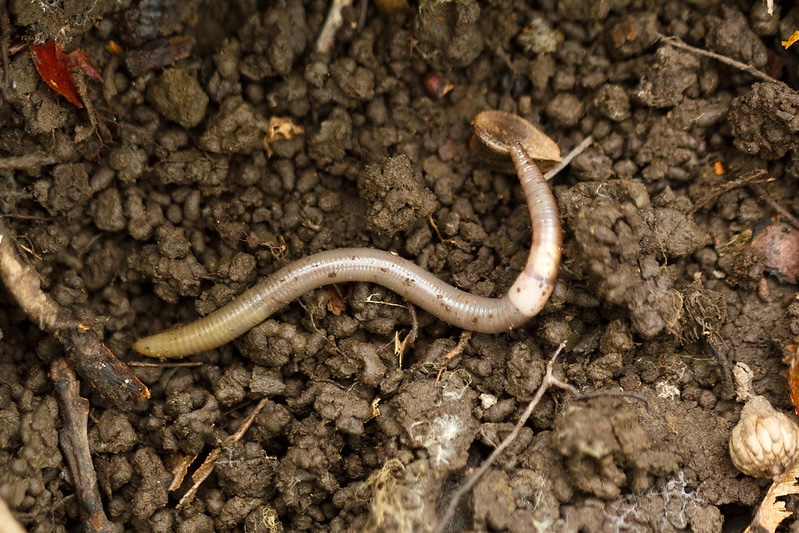
According to the CDA, jumping worms are red-to-brown colored and their bodies sometimes appear metallic. Jumping worms are also more active than nightcrawlers and native earthworms, and are usually found much closer the soil surface or even in leaf litter. And, unlike nightcrawlers, jumping worms have a “distinct” band around their bodies that is milky-white to light-gray in color.
Jumping worms often thrash violently when disturbed, almost like a snake, and their burrowing and feces creates a fine soil texture similar to coffee grounds.
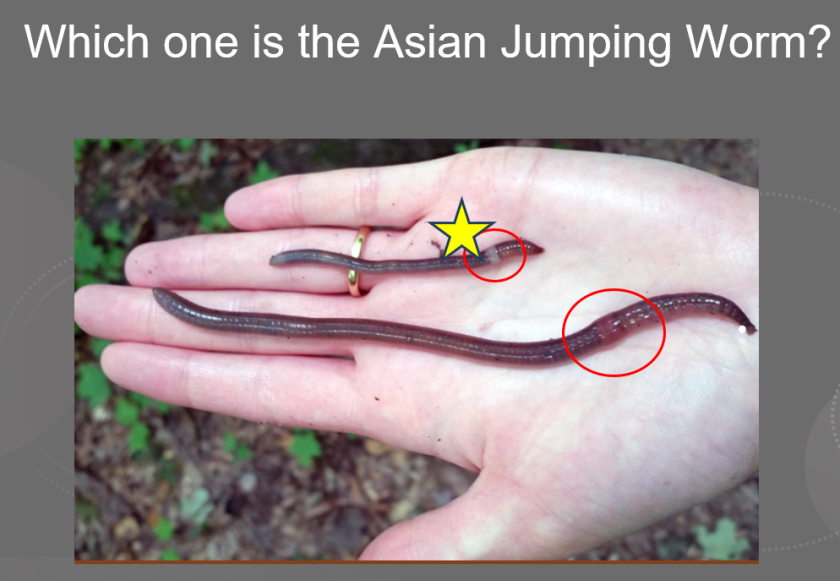
Marie Johnston/ UW–Madison Arboretum
What to Do If You See Jumping Worms
The CDA strongly advises against using jumping worms for fishing bait or composting. Anyone who spots a jumping worm should reach out to the CDA by emailing pest survey program manager Aja Bos at aja.bos@state.co.us, calling the CDA tip line at 303-229-8144, or filling out this report form.
If you think your compost, yard, or pots are infested with jumping worms, the CDA warns you to avoid moving anything outside of your yard, as their cocoons spread easily. Colorado gardeners and landscapers should inspect new potted plants, compost, and mulch before bringing them into a yard or property, according to the CDA, which also encourages gardeners to buy bare-root plants instead of those in potting mix. If you do purchase bulk compost or mulch, the state encourages a heat treatment “by a reputable producer” for three days to kill the cocoons.
And don’t forget to vaporize those invaders. Pouring a mixture of ground yellow mustard seed and water into soil will drive the worms to the surface, and then it’s time for removal and disposal. However, jumping worms can regenerate when certain fragments are chopped off, so put them in a clear plastic bag and place them in direct sunlight to suffocate/bake them to death, or drop them in rubbing alcohol or soapy water.