
Broadcast Professionals of Colorado via YouTube

Audio By Carbonatix
The Colorado Broadcasters Association has announced its 2026 induction class, and six of the nine selectees slated for enshrinement later this year earned the honor for noteworthy work in front of cameras and microphones.
The class includes the late Alan Berg, a controversial radio-talk-show host whose 1984 assassination has inspired multiple Hollywood films; Berg protege turned legendary shit-stirrer Peter Boyles; high-profile yakker Steve Kelley; groundbreaking TV icon Reynelda Muse; sportscaster turned news anchor Ron Zappolo; and Bob Martin, a KOA stalwart and onetime voice of the Denver Broncos who died in 1990. They’ll be joined by two late media executives: Bob Gourley, who led San Luis Valley Broadcasting, and longtime area iHeart marketing director Stu Haskell.
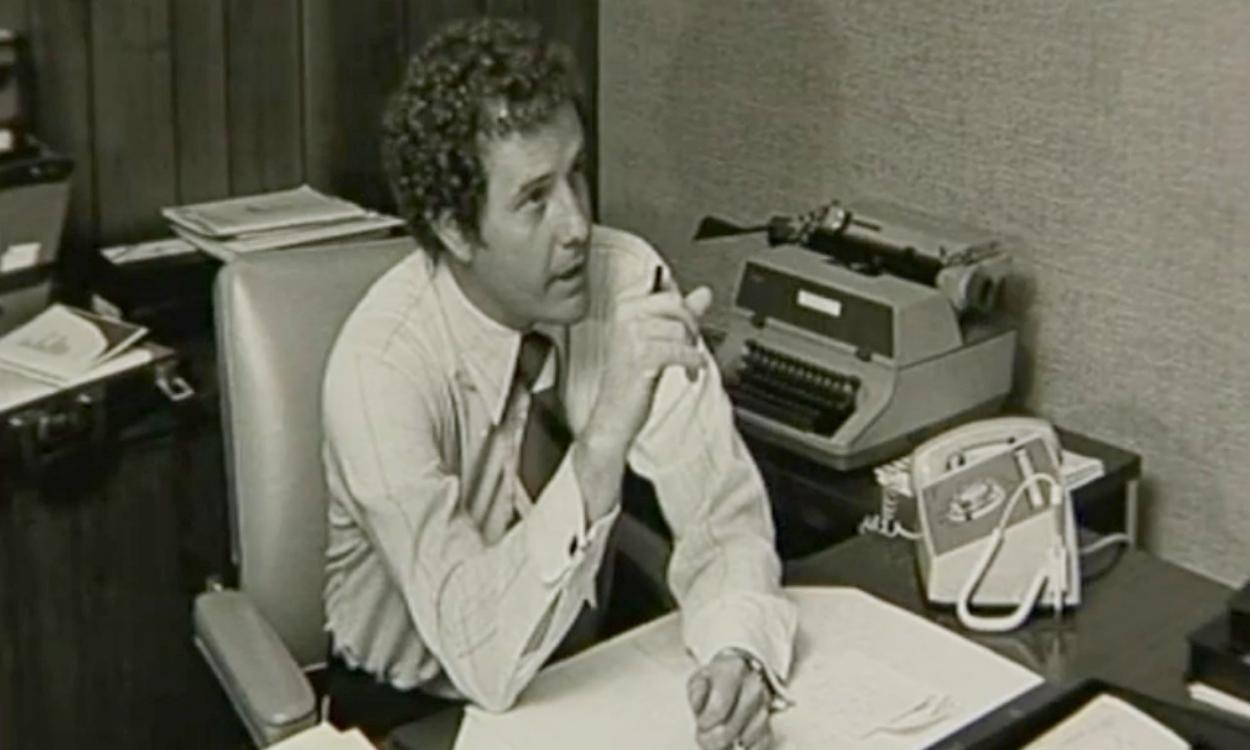
And then there’s Roger Ogden, who began his radio and TV journey in up-front roles but found his stride behind the scenes. He is largely responsible for turning 9News into one of the most successful local television outlets in American broadcasting history
Today, Ogden is officially retired, although he’s hardly sitting idle. He owns Krystal 93, a radio news and weather purveyor located in Frisco, plus sibling mountain signals C-ROCK and Summit Country. Additionally, he’s a keen observer of the current media landscape, which has undergone mammoth shifts since what he calls “the golden age” of local TV, which he helped define. And while many observers feel that even enterprises as storied as 9News are bound for the grave, he’s not ready to start shoveling dirt on them quite yet.
“If you get the product right and promote it right, I think there’s still a business there,” he says. More concerning to Ogden is the deterioration of standards he views as central to the field.
“I think establishing what journalism is all about today, in a way that’s factually based, in a world where there are people who call themselves journalists but clearly come from a different approach, and having the public understand the distinction, is really critical,” he says. “And right now, I’m not sure we’re at that point. There are a lot of people who call themselves journalists but who are really subjective when it comes to reporting the news at the local level. And establishing that distinction will be more and more important as we move on.”
Ogden’s upbringing hardly seemed apt to produce a future broadcasting titan. He was born in Colorado Springs, but grew up “mostly in Westminster, where my parents were part of the Pillar of Fire Church,” he divulges.
“I was born into this organization, which has an old-time Methodist doctrine with a lot of strict rules: no dancing, no playing cards, and we had to go to chapel for Wednesday night testimony service and two or three services on Sunday. And when I was 13, I thought, ‘I don’t mind going occasionally, but this is a little much.'”
KBTV/Colorado Broadcasters Hall of Fame
The 800-acre Pillar of Fire campus included a dairy and a garage. “You could work at either of those,” Ogden continues, “and you were expected to work as a youngster. But they also had a radio station, KPOF, and I raised my hand and said, ‘I could do that,’ since my voice was changing. And after reading the AP news for a while, I got more and more interested in journalism.”
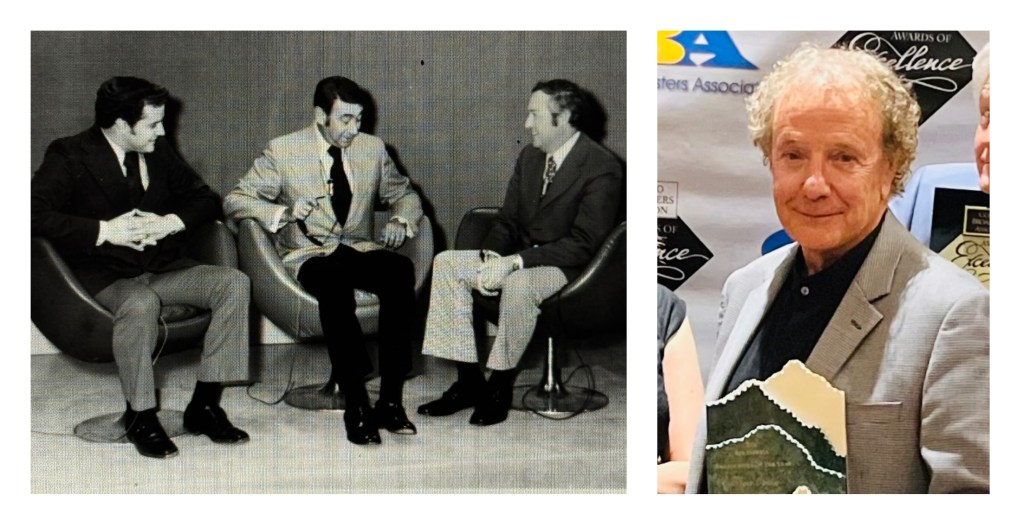
He contributed to KPOF until he was a junior in high school, by which time he’d developed enough skills to land a gig at KLIR, a Denver AM-FM station that was the precursor of KIMN. He got six years of seasoning there before making the leap to KBTR, the first all-news radio station in Denver, as well as the radio partner of KBTV, as 9News was known at the time.
“I went there and applied and got a job as part of the initial KBTR team. I was a reporter and did on-air stuff, anchoring the newscast, But right across the glass door from the station at 1089 Bannock was the TV newsroom, and I figured it would be more fun to add pictures to what I was doing,” he recalls. “So I spent about a year on the radio side, then moved to the TV side, where I worked as a reporter, assignment editor and, ultimately, news director,” with a brief stint at WLKY in Louisville, Kentucky in between.
With Ogden sailing the ship from a news perspective, Channel 9 eventually overwhelmed the competition during the 1970s by minting local stars such as Ed Sardella and Mike Landess and heavily hyping side projects such as the 9Health Fair, which went a long way toward establishing emotional links between the station and its audience. Such do-good branding efforts were widely imitated not just locally, but from coast to coast.
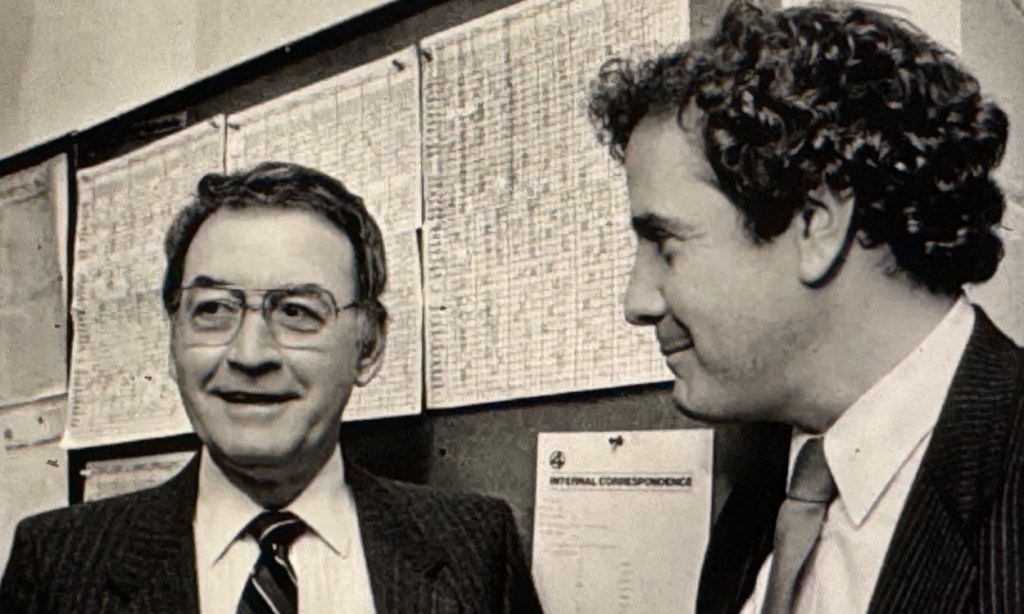
In 1981, after fourteen years at KBTR/KBTV, Ogden was given the rare opportunity to become general manager of what is now KCNC/Channel 4. The GM position generally goes to individuals on the sales side of the operation, and he maintains that “I don’t think I’d heard of a news director who became a general manager.”
But thanks largely to the news division that Ogden was instrumental in fashioning, KBTV had become a money machine. At its peak, “Channel 9 did $100 million in (annual) revenue, because TV stations could get a 50-55% margin,” he reveals. “You couldn’t find a business that did better than that.” Moreover, when Ogden left his news director post, he says Channel 9 had a 52 share of local news, meaning that more than half the viewers of such programming in greater Denver were tuning in his offerings. By contrast, “Channel 4 had a 13 share, and that was kind of the attraction. I thought I could definitely improve on that.”
Over the next 14 years, Ogden brought the fight to his former employer, and if he didn’t succeed in surpassing its ratings, for which he’d built much of the foundation, he further burnished his reputation. Then, in 1995, he explains, “all the Denver stations changed ownership and networks, with Channel 4 becoming a CBS affiliate and NBC moving to Channel 9. I was going to stay at Channel 4, but the more I was exposed to the CBS crowd, the more I thought I wasn’t where I needed to be.” So he took an opportunity to move to Great Britain, where he helmed NBC London for two years before returning to 9News, this time as general manager.
Despite technological changes that chipped away at the primacy of legacy media writ large during this period, he kept the station at peak-performance levels until 2005, when he was promoted to president and CEO of Gannet Broadcasting, the firm that owned 9News at the time. Two years later, he retired, but he hung onto the aforementioned radio properties, which he had acquired in conjunction with his former wife during the late 1980s.
Today, many local television stations are struggling financially owing in part to the de facto end of what was once shorthanded as appointment viewing. Simply put, folks no longer have to sit down in front of a TV and watch a half-hour news-headline roundup anymore. Moreover, those who continue to do so out of habit tend to fall into an older demographic most advertisers don’t favor. The coveted younger crowd, meanwhile, uses their phone to stay up to date, and while network affiliates have taken multiple shots at adapting to this model, the fierce competition for eyeballs typically results in fewer dollars for everyone.
In Ogden’s opinion, this scenario contains at least as many plusses as minuses: “It kind of depends on which lens I want to look through. If I look through the lens of people being informed better today than when we basically had three TV stations doing local news, I think it’s a good thing.”
Courtesy of KCNC
Still, even with the troublesome fiscal headwinds local TV stations face, he sees reason for at least limited optimism. After all, “it’s not just the five and ten o’clock news and the morning shows now. There’s the digital and streaming business. All the stations are trying it, but the margins aren’t the same, so you have to run the business much more tightly. … If you have a 10-15% margin, that’s pretty good. But adjusting from a 50% margin is a difficult thing. I think some stations will be successful at it, and others probably won’t.”
Consolidation won’t solve all the problems local TV stations face, he stresses. As an example, he references the proposed purchase of TEGNA, presently the parent company of 9News, by conservative-tilting Nexstar Media Group, owner of Fox31 and scads of other broadcast outlets in the U.S. The deal was put on hold in March by a federal judge, but plenty of observers expect it to go through sooner or later. Ogden, for one, isn’t thrilled by the prospect.
“I don’t think it’s a good thing,” he says. “I don’t think it works without a massive reduction in head count, and I think that’s bad for journalism. It’s a merger that doesn’t economically make a lot of sense, especially when you’re looking at millions of dollars in debt. It seems to me that’s going to be very difficult to make work over time.”
Nevertheless, Ogden wouldn’t necessarily dissuade budding reporters from going into the news biz. He’s confident that “top-notch journalists are always going to have some role in local TV, if they have a unique way of storytelling and can create a following of their own”
“You have to take a survey of your own skill set to decide if you can be unique enough to really provide value to a local station,” he continues. “Some people have that ability, and some people don’t.”
Ogden sees 9News’ Kyle Clark as a prototype for a future generation of television journalists, calling him a “unique player, and I think that’s an example of the extreme.”
Regarding his impending entry into the Colorado Broadcasters Hall of Fame, Ogden expresses his gratitude for the nod, and the circumstances that led to it. “Life has been good to me,” he says. “I know I was in the right place at the right time and was able to do some things that worked. I have very few complaints about a really terrific career.”
The Colorado Broadcasters Hall of Fame 2026 induction ceremony takes place at 7:15 p.m. on Friday, Oct. 23, at The Dome at AMG, 6295 Greenwood Plaza Blvd., Greenwood Village. Tickets begin at $100.