
Provided by Denver Housing Authority

Audio By Carbonatix
Chad and Jen Gauerke always thought of placing an accessory dwelling unit (ADU) on their property in Sunnyside. Their eldest son is facing the adult world and, despite working full time, cannot afford to live on his own.
The couple’s idea felt simple: Build a small home on their land, let their son rent it until he moves on, and then rent it out to someone else in need of an affordable spot.
“Regis University is nearby, and we could rent to a student or another teacher,” Jen says. “There are so many people that this could help. We want to open that space so people can live in a thriving community and create more density, with all different kinds of people who can afford to live in the city, not just rich people.”
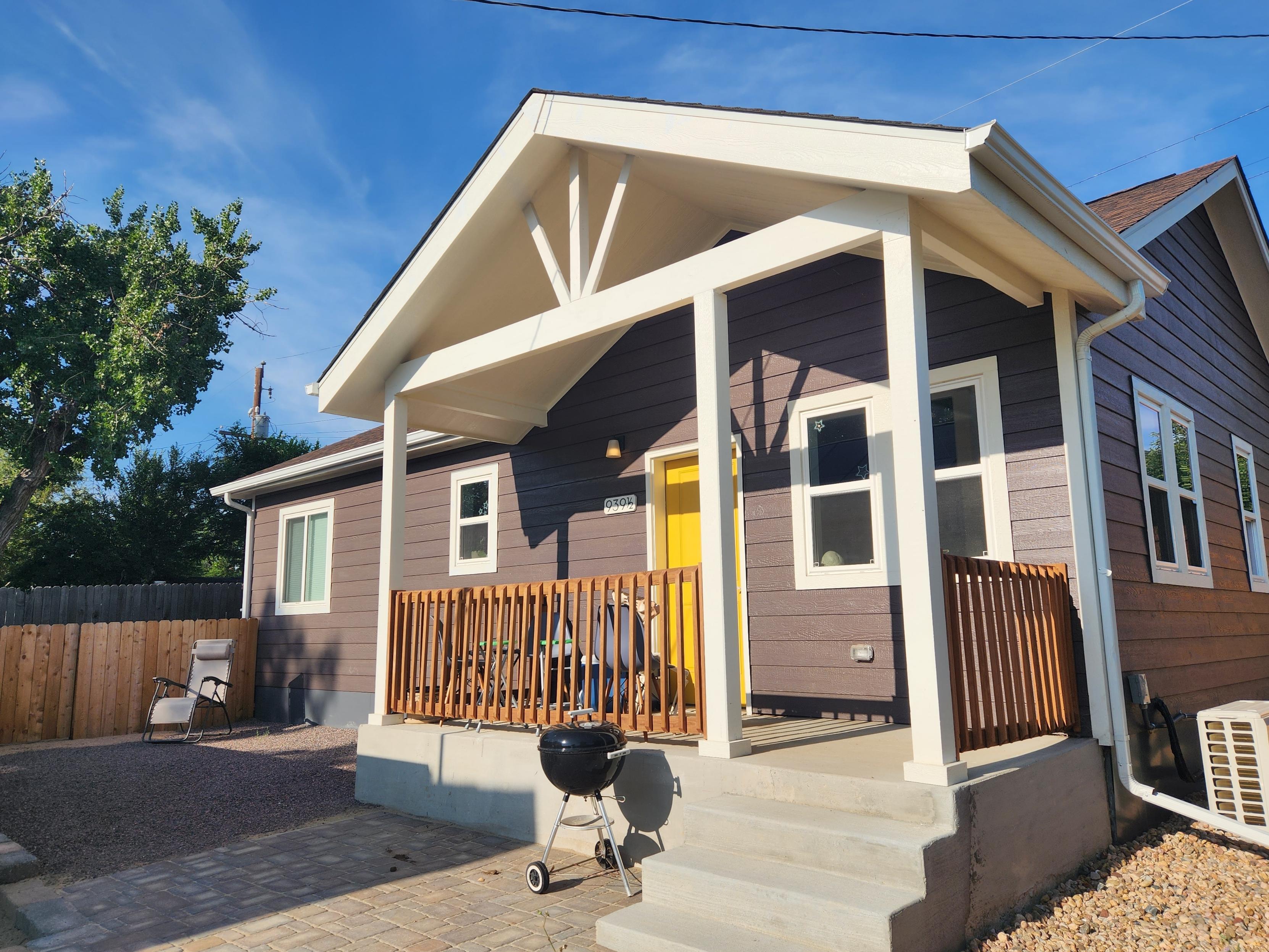
Denver’s Single Family Plus ADU initiative, often called “SF+,” began with humble origins in 2019. The Denver Housing Authority (DHA), West Denver Renaissance Collaborative (WDRC) and Habitat for Humanity teamed up to create a program intended to make the addition of smaller, single-family residences on existing properties easier through a hub of city services.
The effort resulted in a five-year pilot program at the city level in 2021, which includes pre-designed floor plans and help with project management and contractor coordination. Denver homeowners can apply for technical support and up to $55,000 for ADU construction costs, generating up to $85,000 in cost savings, according to WDRC. (Those ADUs must be rented at affordable rates, with a cap on rents for households earning up to 80% of Area Median Income.)
The program requirements matched what the Gauerkes were trying to do. When ADU support and zoning laws expanded across the city in 2024, they jumped aboard. But now the program is set to expire at the end of the year, and the Gauerkes are still stuck in the pipeline.
The Denver Department of Housing Stability (HOST), which funds the program, is seeking an extension for SF+, but a significant portion of ADU funding is expected to be cut, potentially halting new building opportunities. According to HOST, the pilot program hasn’t lived up to snuff.
“What we’re facing is that the committed funding is proposed to be reduced,” Renee Stone, the chief strategy and planning officer for both DHA and WDRC, says. “Without the city’s participation, we cannot continue the program in a situation where we do not have the funding to help homeowners reduce the cost and make ADUs affordable.”
In five years, the SF+ program has completed 26 ADUs in the city, with each ADU costing around $50,000 in city funds. The new builds charge an average rent of $1,200 a month, well below the 80% AMI, according to Stone. When the contract first started in 2021, the program was supposed to create 28 ADUs by the end of 2026 — but in 2024, the projection was expanded to 44 after an influx of city funding and updated zoning laws allowed ADUs in all of Denver, not just portions of the west side. That’s not fast enough for HOST.
“Denverites cannot afford to wait for affordable housing, and that’s especially true for families who fear their children or grandparents will be pushed out of the city by rising costs,” Julia Marvin, spokesperson for HOST, tells Westword.
Still, DHA and program applicants, like the Gauerkes, believe that Denver should remain committed to ADUs, even if timelines haven’t been as efficient as expected.
“The whole thing is designed to create urban density and aging in place. And with Denver becoming one of the most expensive cities in the nation to live in, it will really cause more harm to people trying to age in place or create the urban density that the city wants,” Chad Gauerke tells Westword.
The Gauerkes heard of the SF+ program as it got off the ground in 2019, but their area was not zoned for ADUs yet. That all changed in 2024, when a state law mandated that local governments allow single ADUs on single-family residential lots. In response, the Denver City Council passed a citywide zoning amendment allowing ADUs in every residential zone district across the city.
The idea was to help address a statewide housing shortage, which is currently at over 106,000 homes, according to a recent study by the Colorado Department of Local Affairs. In Denver, the median home price tops $600,000, which is about 54% above the national median.
The Gauerkes want to build a garage with a one-bedroom home above it.
“It just seemed like it was such an easy turnkey process. We didn’t want to pick floor tiles. I didn’t want to pick fixtures. I just wanted something easy,” Jen says.
They attempted to do it themselves, but were shocked by the sticker price. Working with the ADU program will cut the cost in half, according to the couple.
But now things are getting murky. The Gauerkes’ ADU plans are completed, but construction has not started. Stone says at least six households, including the Gauerkes, are in the pipeline for assistance, with nine more in talks.
“If we pulled that funding away, if it were no longer committed, those projects would not be able to move forward,” Stone says.
When the city passed the ADU zoning amendment, the purpose was to create more affordable housing for residents. The topic was discussed often during council meetings and town halls. But then a $200 million budget deficit struck the city in 2026, causing a plethora of layoffs and direct cuts to substantial departments like the Department of Transportation and Infrastructure and Parks & Recreation.
According to the city’s General Fund, HOST’s budget stayed flat, at around $72 million. Meanwhile, the housing stability department’s Special Revenue Funds dropped by $86.2 million (38.7%) year over year, with total staffing down about 13.5%. Much of that drop is due to COVID/ARPA emergency funding running out rather than an active cut, but it all equates to bad timing for the SF+ pilot program as it rounds out its final year.
“The agreement was set to end this year, and HOST is recommending an amendment to extend the contract timeline and adjust the program scope so DHA can complete the ADUs currently in the development pipeline,” Marvin says.
According to the DHA, HOST initially proposed removing $600,000 of the $890,000 remaining funds budgeted for the program. After discussions, HOST eventually decided to remove $250,000, bringing the total down to $640,000; that would ultimately affect three applicants in their early stages, according to HOST.
The program would need to stop accepting new applicants by the first quarter of 2027 if the budget remains this low, according to the DHA. Organizers would then have to apply for more funding after the first quarter, which could jam up the 100-plus people interested in building an ADU.
“I think one of the things that happens when you’re working towards balancing a budget and cutting funds is that there’s a little bit of a difficulty in seeing the practical implications of a program,” Stone says.
“The pilot program was launched during a period that included a global pandemic, construction cost volatility, and other significant headwinds creating uncertainty,” she adds, also pointing toward city-wide ADU zoning not being approved until over halfway through the contract.
Furthermore, when the Colorado bill for ADUs was approved, the state allocated $8 million in funding from the Colorado Housing and Finance Authority to directly help homeowners in ADU-supportive jurisdictions. Stone says Denver is not considered a supportive jurisdiction, so the ADU program’s lending partners cannot access that funding. She estimates that tapping into those resources could have led to another $18,000 to $25,000 in assistance per ADU project.
Jen Gauerke says Denver’s cutting more than money from the housing efforts if it gives up on ADUs.
“I feel like it’s important, especially for kids who have grown up in these neighborhoods and can’t afford to live there after graduating from college,” she says.
The amendment of the current contract is underway and will be reviewed by HOST before it goes to the city council in the fall, according to Marvin.