
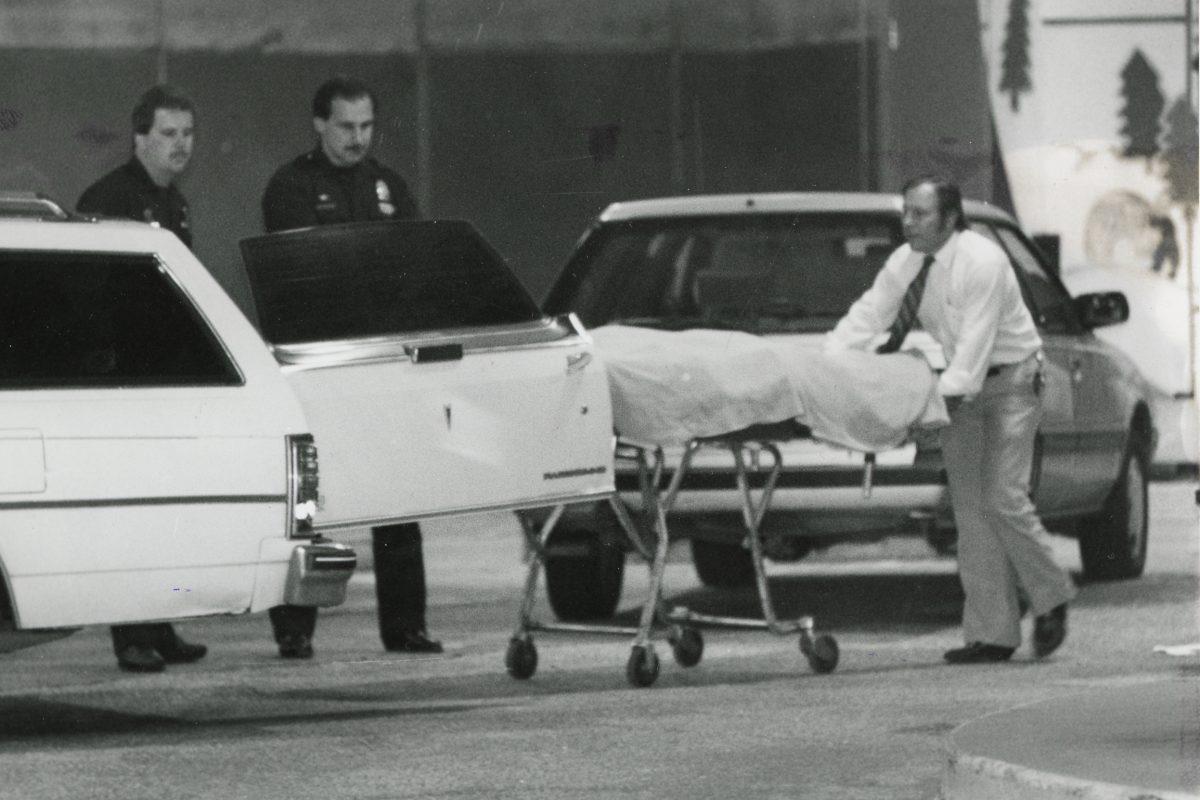
Denver Public Library Special Collections, WH2129

Audio By Carbonatix
Scott McCarthy wasn’t supposed to be at United Bank on the day of his murder.
The 21-year-old new hire didn’t have a security guard uniform. He wasn’t even on the bank’s payroll yet. But as his supervisor later recalled, McCarthy pleaded to begin early because he was eager to join his best friend, Todd Wilson, who had started as a guard two weeks prior. Wilson, also 21, was the best man at McCarthy’s recent wedding. The pair met in high school while working as dishwashers, and now they were about to work together protecting Denver’s largest bank.
McCarthy’s first day on the job was Father’s Day, June 16, 1991. He and Wilson arrived at the downtown Cash Register building at 6 a.m., joining two weekend guards: 41-year-old Phillip Mankoff, a father of four who worked for Child Support Services, and 33-year-old William McCullom, who worked in computer operations at an insurance company.
By 9:30 a.m. that morning, all four of the men were dead, ruthlessly gunned down in a bizarre robbery that has haunted Denver ever since.
A well-dressed man with a thick mustache and a bandage on his cheek called the guard monitor room from the loading dock at 9:14 a.m., identifying himself as a bank vice president. He requested an escort to his office. After McCullom responded to the dock, the assailant held him at gunpoint, led him to the sub-basement, and killed him. Using McCullom’s keys, the gunman then systematically maneuvered through the building and fatally shot each of the other unarmed guards before anyone even realized he was there.
With all of the guards dead and no one in the bank aware of the situation, the mysterious man went to the cash vault. He held up the tellers, making off with nearly $200,000 and leaving the employees locked in the vault’s mantrap.
National Gun Violence Memorial
This Tuesday, June 16, marks 35 years since the quadruple homicide, which came to be known as the Father’s Day Massacre.
No suspect has ever been convicted for the crime, and no suspect ever will be. The Denver Police Department ended its investigation in 1991, with no intention of reopening it, a DPD spokesperson confirms. As far as law enforcement is concerned, they found the guilty party decades ago, explains Steven B. Epstein, author of “Deadly Heist: The True Story of the Mile High Bank Massacre.”
“No one else is going to be prosecuted for this crime,” Epstein says. “Sometimes a guilty man does walk free.”
A guilty man?
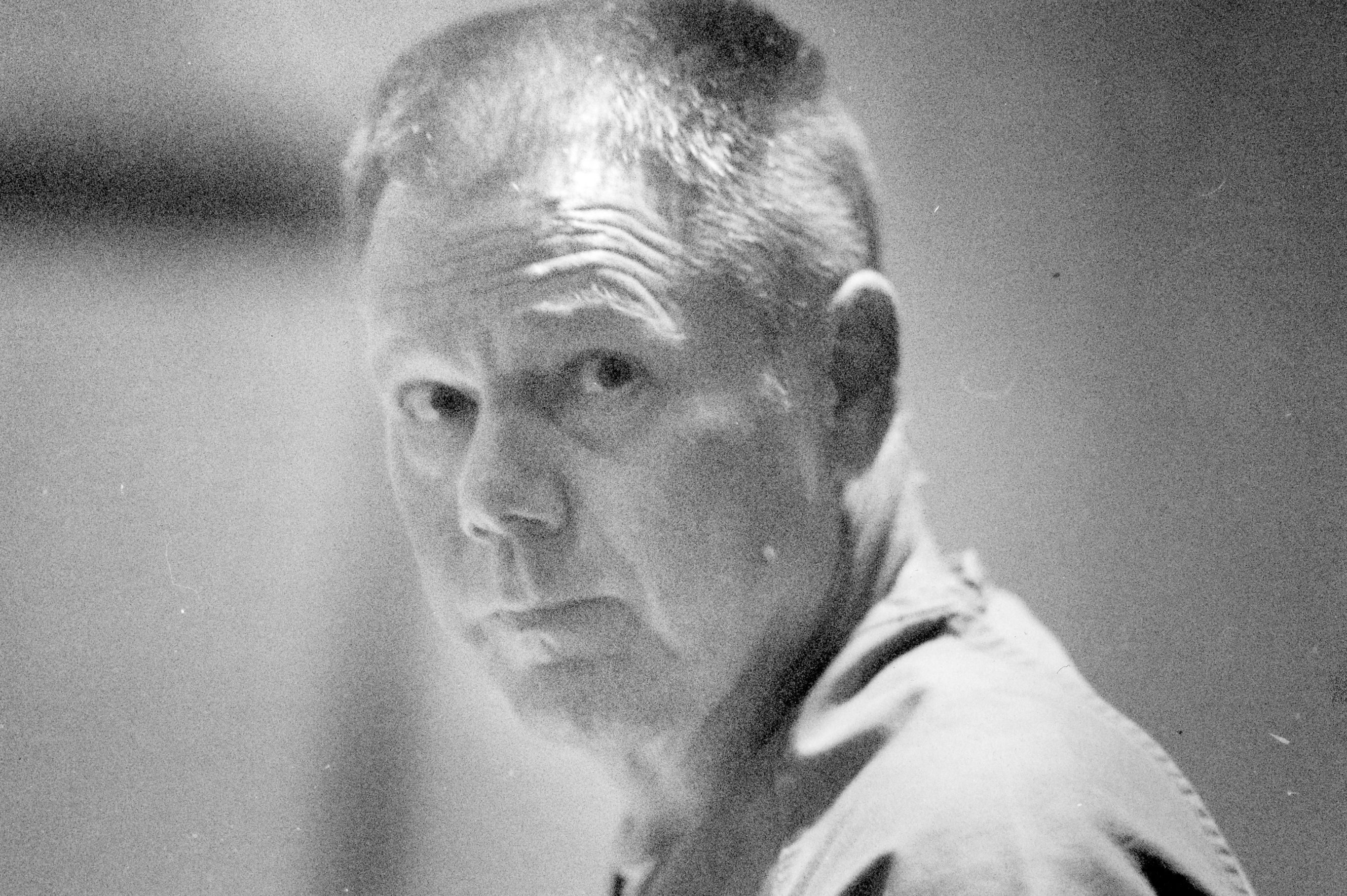
Seventeen days after the bank slayings, Denver police arrested a shocking suspect: one of their own.
James King was a 54-year-old retired police officer and father of three, living in Golden with his wife and son. He had served on the DPD for 25 years, retiring as a sergeant in 1986. He had also served as a security guard at United Bank for thirteen months, leaving the job in August 1990.
The case was already a spectacle. With King’s arrest, it became a circus. News outlets from across the country jumped on the story of the killer cop. The courtroom was packed with spectators every day of King’s month-long trial in May and June of 1992. Available seats were raffled off by sheriff’s deputies each morning, with “those having their names called celebrating, as if they’d won the grand-prize lottery,” Epstein reports in his book.
“It was one of the most significant criminal trials in Colorado history,” Epstein says. “You have a quadruple murder and a 25-year veteran cop charged with the crime. He was facing the death penalty, and he had not a single parking ticket or anything like that in his entire life. Why would he do something like this? Why would his own former colleagues charge him with something like this? The police department was on trial on both sides of the case.”
Investigators believed the deadly robbery must have been an inside job; only a current or former security guard would have the knowledge necessary to maneuver the bank’s security procedures.

Denver Public Library Special Collections, WH2129
Among the guards who could have committed the crime, King fit the bill. He matched the physical description of the suspect, had access to the firearm and ammunition used in the killings, and lacked a solid alibi. Perhaps most damningly, King upgraded to a larger bank safe-deposit box on June 17 — the day after the robbery — and returned to the box six times in the following two weeks. After King’s arrest, police didn’t find a single dollar inside, nor any items large enough to justify the upgrade, Epstein reports.
King was in substantial debt and had worsening health issues that made work difficult. But beyond needing the money, he had a personal score to settle with United Bank. During his time as a guard, King criticized the bank’s security protocols and recommended improvements that went ignored. He disapproved of the company’s recent decision to disarm guards, choosing to carry a weapon on duty even without authorization, according to Epstein. In February 1990, King was reprimanded for refusing to let a moving crew into a secure area without confirming their clearance.
“Somebody was trying to teach somebody a lesson,” Epstein speculates. “[King] had gone from graduating first in his class as a police cadet and thinking he would one day become the chief of police, to having such a lackluster career. He failed the lieutenant’s exam, he was told he didn’t have the chops to be a lieutenant. … Every time he tried to improve security at the bank, he was told basically to mind his own business.
“It makes sense that this man wanted to prove to all of these people — both at the Denver Police Department and United Bank — that he was right and they were wrong. That the life he was forced to live was their fault, not his.”
The story adds up, but there was no physical evidence to back it. After killing the security guards, the perpetrator took all of the security footage tapes that would have captured the crime. No fingerprints or DNA evidence were left at the scene. And both the murder weapon and the stolen money were never found.

Denver Public Library Special Collections, WH2129
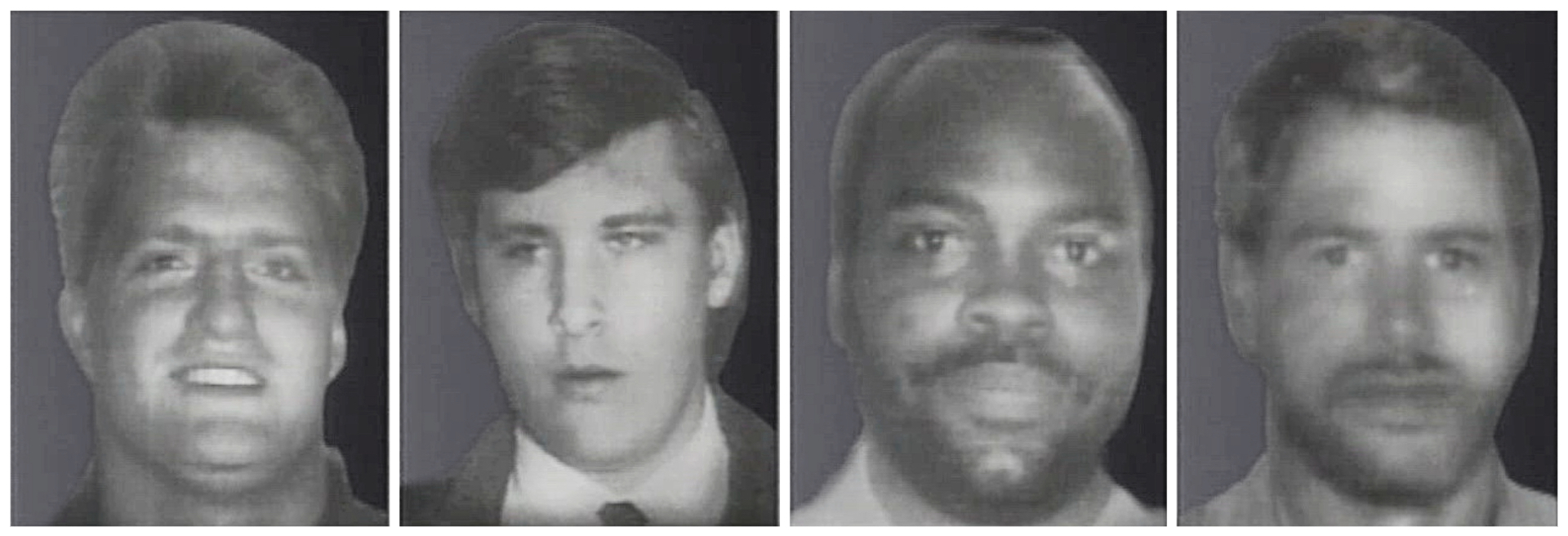
During King’s trial, prosecutors relied heavily on eyewitness testimony from the bank tellers, which proved unreliable. The suspect had obscured his face, wearing a fedora, sunglasses, a cheek bandage and a mustache that could have been real or fake. King’s defense attorney highlighted the effectiveness of the disguise by showing witnesses a photo of a mystery man wearing the same accessories. None of the witnesses could identify the man. In a dramatic gamble, the attorney revealed that the disguised man was the famous movie star, Harrison Ford.
After nine days of deliberation — the longest in state history at the time — jurors found King not guilty. Many of the jurors would go on to say they believed King was the killer, but that the prosecution failed to prove his guilt beyond a reasonable doubt.
“Anybody who was on the police and prosecution side of this case, it’s kind of haunted them all these years,” Epstein says. “What they believe was a guilty man escaped the grip of law.”
King died from dementia in May 2013, at 76 years old. He maintained his innocence to the end, taking whatever information he may have had to the grave. Now the city can only speculate on the many unanswered questions left behind.
Inexplicable alarm
Four hours before the killer arrived at United Bank, something strange occurred that prosecutors never managed to explain.
Just after 5 a.m., one of the bank’s motion-activated alarms was set off in a record storage area. Someone in the security monitor room manually turned off the motion detector without investigating the cause of the alarm, violating standard protocol. Then, at 9:33 a.m. — minutes after all four guards had been murdered — the motion detector was rearmed, Epstein reports. This discovery plagued the investigation.
“Detectives couldn’t make heads or tails of these pieces of evidence. Not on Father’s Day. Not ever,” the book notes.
King was at his Golden home at 5 a.m., so who was lurking inside the bank? Why would someone in security deactivate the motion detector? Why would the killer later rearm it? “I don’t have the foggiest clue,” Epstein says. “It’s inexplicable. There are a lot of things that are hard to explain.”
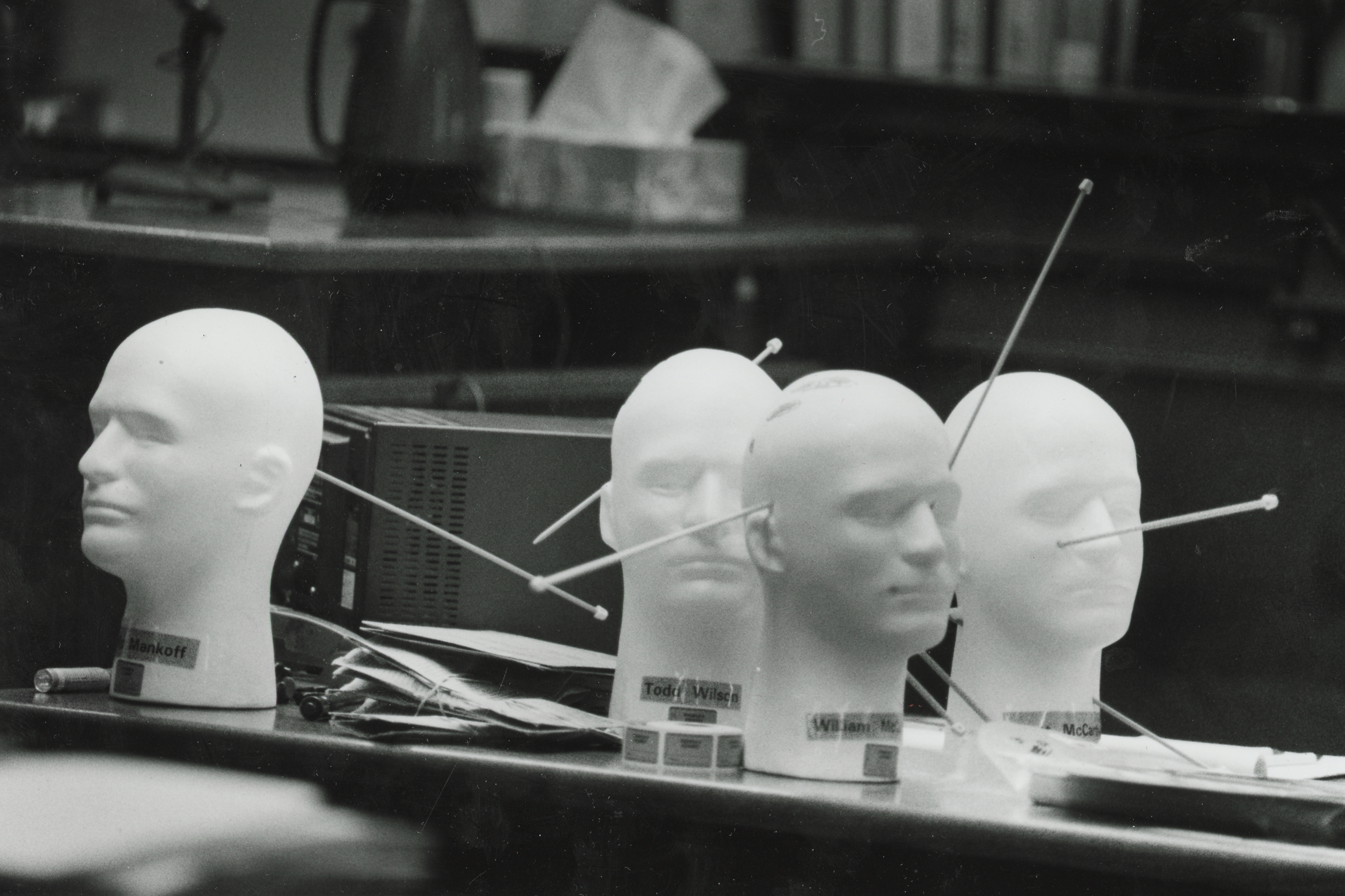
Denver Public Library Special Collections, WH2129
King’s defense team used the alarm incident to insinuate that one of the murdered guards working that morning — Mankoff or McCullom — had colluded with their soon-to-be killer, helping to plan and execute the robbery before being double-crossed. Both of the men had taken the weekend guard job to help pay down considerable debts.
Another former bank guard also seemed a more likely suspect than King.
Paul Yocum was a weekend guard at United Bank from 1985 to 1990. His employment ended after being charged with stealing nearly $30,000 from the bank. He went to trial and was found not guilty, but the accusation was enough to force him out. On the morning of the Father’s Day Massacre, Yocum’s neighbor told police she saw him heading toward downtown holding a duffel bag, wearing a hat and sunglasses. After investigators questioned him about the robbery, Yocum was caught trying to dispose of a bag full of incriminating evidence, Epstein reports.
At Yocum’s home, police found a stockpile of firearms, burnt remnants of papers with “United Bank of Denver” printed on the top, and a diary detailing Yocum’s outrage over being falsely accused of theft and vowing to “get even eventually.” But investigators ultimately concluded that Yocum did not match the physical description of the robber provided by witnesses.
A different suspect confessed to committing the massacre: Serial bank robber Dewey Baker wrote three letters to King’s lawyers during the trial while he was imprisoned in California, taking credit for the Denver robbery, Epstein reports. “I don’t want that poor guy’s life on my mind,” one of the letters read, referring to King’s potential death sentence. Baker was out on parole at the time of the crime. Beforehand, he had reportedly told a friend he had “a big job in Denver” coming up.
Investigators found Baker an implausible suspect because he was an outsider lacking the internal knowledge they believed was necessary to pull off the Denver heist. Baker later recanted his confession.
If either of the men were involved, their time to face justice has passed. Yocum died of a heart attack in 1992, four months after King’s acquittal. Baker died in 2017.
Unsolvable cold case
It’s not unheard of for Colorado crimes to be solved decades after the fact. Nearly thirty years after Terri Turachak was murdered in her Denver home, her killer was finally convicted this year.
Turachak, 35, was found dead in her apartment in October 1996, killed by strangulation and blunt-force trauma to her head. In March, 65-year-old Ricky Dawson was sentenced to life in prison for the murder after his DNA was matched to the crime scene. New DNA technology also linked Dawson to three other murders in California, Florida and Washington.
This is just one of over 130 cases solved by the Denver Integrated Cold Case Project since it launched in 1999. The closed cases include rapes and homicides dating as far back as the 1970s. But the Father’s Day Massacre will not join these success stories.
Denver police concluded their investigation into the deadly robbery in 1991 with King’s arrest. They have never reexamined the case, according to the DPD.
“While the jury ultimately determined the case had not been proven beyond a reasonable doubt, the investigators and prosecutors involved believed the correct individual was prosecuted,” DPD says in a statement. “A case would only be reopened following a not guilty verdict if additional evidence indicated another person was responsible for the crimes. This case was not reopened after the trial, and will not be reviewed by the DPD Cold Case Unit.”
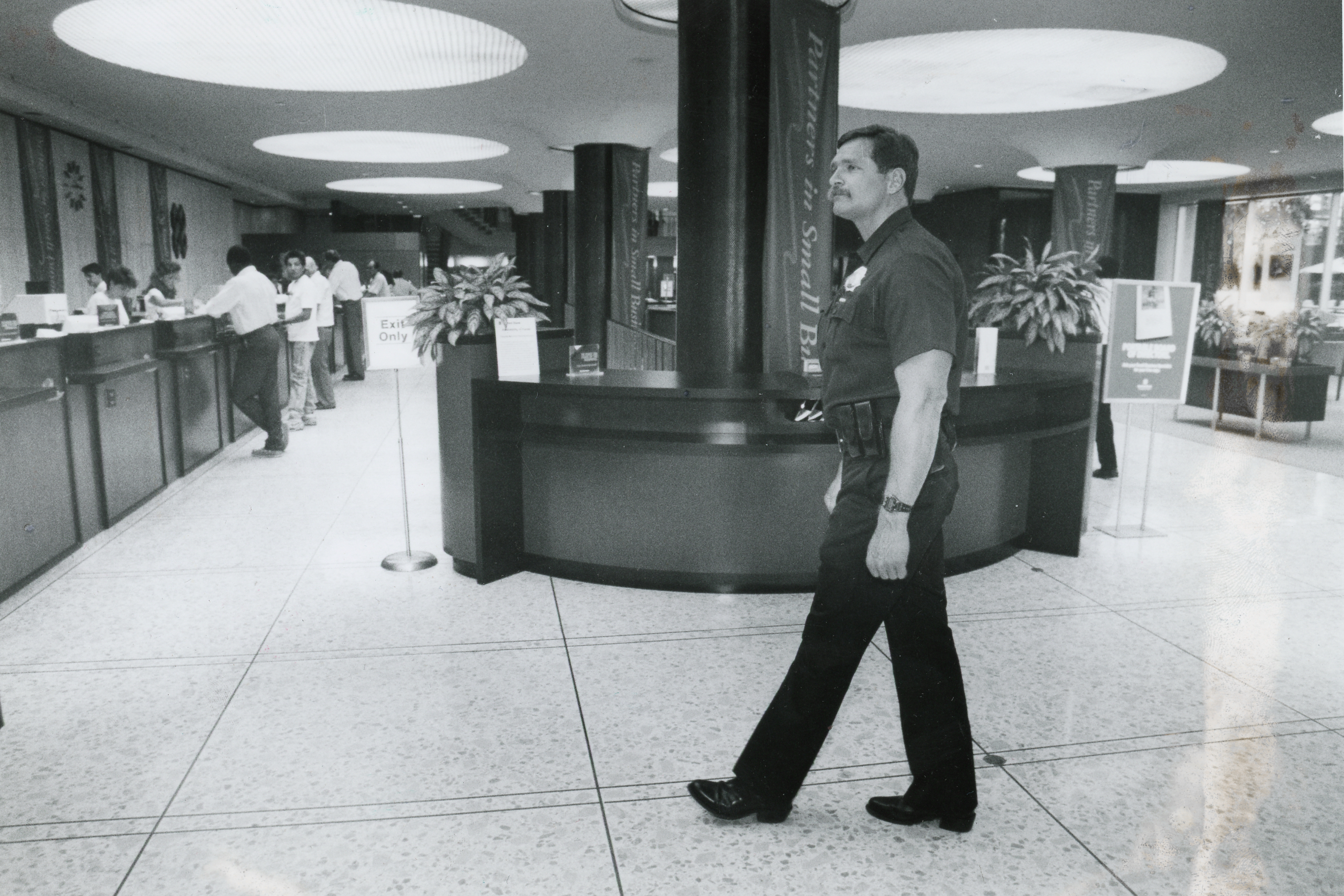
Denver Public Library Special Collections, WH2129
The FBI continued its investigation into King after his acquittal, monitoring him for years and offering a $100,000 reward for information about the case in 1993. Federal prosecutors could have charged King with civil rights violations to get around the issue of double jeopardy. However, the FBI’s case was ultimately unfruitful and presumably ended with King’s death.
The Colorado Bureau of Investigation has its own cold case unit, but the state would only take up the case if DPD requested its assistance, explains CBI spokesperson Rob Low.
Even if a law enforcement agency did re-examine the case, there would be little to go on. Most recent cold case solves are thanks to advancements in DNA testing technology, allowing investigators to retest evidence collected at the crime scene. No such evidence exists here. As King’s defense attorney Scott Robinson described it, “There was no hair, there was no fiber, there was no DNA at all.”
“The crime will never be solved,” Robinson said in a 2021 interview marking the 30th anniversary of the massacre. “I don’t think it will ever be solved unless we have a deathbed confession from someone yet unidentified.”
Lead prosecutor William Buckley offered a different perspective in an interview that same year: “I believe and will believe until my dying breath that James King killed those four guards.”
Poetic justice
Epstein’s true crime books cover contract killing, spousal murder and mysterious disappearance. But the Father’s Day Massacre at the center of “Deadly Heist” is uniquely disturbing to the North Carolina-based lawyer.
“This is the only book I’ve written that did not have the satisfactory end of justice being delivered,” Epstein says. “It’s a disturbing, unsatisfying result in our criminal justice system, but it is a better result than an innocent man being convicted for a crime he did not commit. The jurors in this case were grappling with that very question: Should a guilty man walk free, if in fact James King is guilty, or should we convict a potentially innocent man … to have him die in the execution chamber?
“They decided that it was better to set a possibly guilty man free.”
Epstein spent a year researching and writing “Deadly Heist.” He watched gavel-to-gavel video footage of the trial, tracked down paper records, read every published article and gathered first-hand accounts from involved parties, including law enforcement investigators, jurors and attorneys on both sides of the case.
He believes King is guilty, less because of the evidence and more because of King’s own stories.
At the time of the crime, King claimed to have driven to a community center seeking to play chess and returned home when no one was there — but King hadn’t played chess at the center in seven years and the chess club no longer met at that location. King claimed to have trashed his gun in August 1990, long before the crime, because it was damaged — but he said he discovered the damage in June, meaning he would have carried it on the job for months in a dangerous condition. King said he got the bigger safe deposit box to store floppy disks containing a book he was writing — but police found no floppy disks inside when they searched the box.
Denver Public Library Special Collections, WH2129
Epstein’s book criticizes investigators for their over-reliance on eyewitness identifications, and prosecutors for failing to emphasize King’s potential motives. He questions the rush to make an arrest without employing tactics like surveilling King or wiretapping his phone.
“When I talked to folks involved in law enforcement, they can remember, to this day, the amount of community and media pressure there was to arrest somebody, to set the community at ease,” Epstein says. “I empathize with that … but the shortcuts to get there haunted their ability to successfully prosecute him.”
The result is four families left without justice and one city left without closure, even 35 years later.
Though it wasn’t a happy ending for King, either. For Epstein’s book, 9News reporter Paula Woodward shared never-before-released notes of her interviews with King after his acquittal.
King lamented that he could not get a job because of his infamy. He lived a meager lifestyle in the same house he’d owned before the robbery; if he had stolen the $200,000, he hadn’t spent it. He knew he was being monitored by the FBI, complaining, “I can’t even go into my own backyard without feeling I’m being watched.”
King spent the remainder of his life living as a recluse and was treated as a pariah whenever he ventured out of the house.
“Ironically, he even had iron bars installed behind every window,” the book notes.
A prison of his own making.