

Monika Swiderski

Audio By Carbonatix
Over a century ago, Antonio Pavoni helped craft some of Colorado’s most iconic structures from his north Denver studio. The illegitimate son of a Venetian count, Pavoni moved from Italy to the United States in 1887 and established himself as an artist and stonecutter. He contributed to the Colorado State Capitol, the Cathedral of the Immaculate Conception, the Cheesman Dam and more.
Though his work adorns the state to this day, Pavoni’s studio and home on West 24th Avenue were demolished long ago, replaced with an apartment complex. They’re among countless Italian landmarks lost in Denver, from modern community staples like Pagliacci’s and Carbone’s Italian Sausage Deli to historic buildings such as the Holy Trinity Italian Evangelical Church and the Our Lady of Mount Carmel Grade School.
Now, some local Italians are trying to stop the bleeding by designating a Little Italy historic district in north Denver.
“It’s important to preserve what we have and recognize what was here,” says 33-year-old Jenna Peccia, one of the leaders of the effort. “North Denver was predominantly Italian at one point. Italians were a huge part of the city’s development, but you don’t really know this unless you’re Italian.”
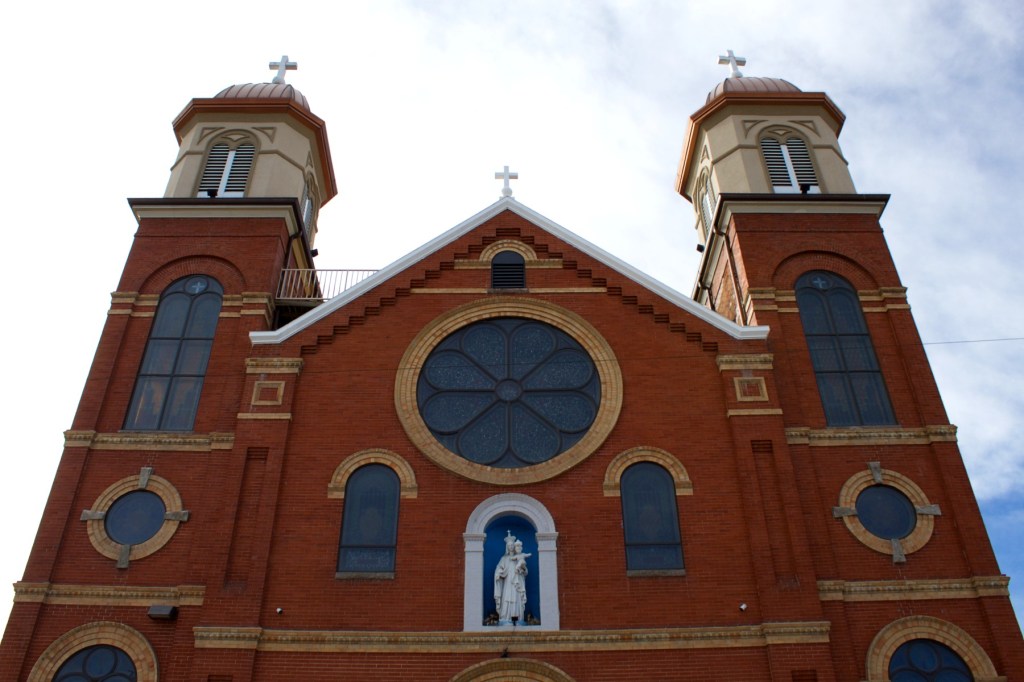
The Little Italy district would preserve culturally-significant properties in the area, extending from West 38th Avenue to West 32nd Avenue between Zuni and Lipan streets in the Highland neighborhood, according to the proposal. The area is roughly centered around the Our Lady of Mount Carmel Italian Catholic Church, which is already a protected Denver landmark.

History Colorado. 2006.91.1.
It would be a thematic cultural historic district — the first of its kind in the city — meaning only select properties would be included, rather than every property within the district’s boundaries. So far, Peccia has identified around fifty properties of Italian cultural significance that could take part, including the Potenza Lodge (Denver’s oldest Italian lodge), Leprino Foods (the headquarters of the world’s largest mozzarella producer, founded in Denver) and the home of builder Frank Damascio.
The properties would have to adhere to certain design guidelines, which would restrict demolition or significant external changes. Beyond just shielding buildings, supporters say Little Italy would strengthen the community, attract more Italian businesses and honor the local history.
“I’m a third-generation of north Denver. From Italy, my family came right here to Denver,” says 26-year-old Dominic Ursetta, another leader of the initiative. “I have so much pride for it. It’s everything I do and everything I represent in my life. …Doing this is a recognition that even though it’s not as big as it was, we’re still here.”
But this isn’t the first time someone has tried to establish a Little Italy in Denver, and the effort faces a long road ahead.
A Family Affair
Peccia and Ursetta met just four years ago, at an Italian American Future Leaders conference. But Peccia grew up walking on sidewalks laid by Ursetta’s great-grandfather. His name, Carelli, is stamped into the concrete directly outside of Peccia’s childhood home.
“The history of the whole community is out here,” Ursetta says. “Bonding over north Denver, we decided to jump on board and bring the historic district back again.”

Courtesy Jenna Peccia
In 2016, residents launched a similar effort to designate Little Italy in north Denver. Peccia’s mother, Crystal, was one of the leading members of that initiative. According to Crystal, the then-pastor of Our Lady of Mount Carmel put together a committee of supporters, but it fizzled out without making much progress.
At the time, Peccia made a Little Italy Facebook page to promote her mom’s proposal. Though the effort ended, she kept the Facebook going, later adding Instagram and X accounts, as well as a YouTube channel. She’s used social media to maintain public interest in the project and in Denver’s Italian community, sharing historical photos, immigration stories and local events. Some videos have garnered upwards of 90,000 views, including features on the feast of Our Lady of Mount Carmel and the city’s Italian properties.
“To see her step up and do these things that I think are important, too, it’s great. It’s the greatest thing ever,” Crystal says of her daughter. “I think we have a really good chance this time to get it right. I’d love to see it come to a finish. I’m keeping my fingers crossed.”

Courtesy Jenna Peccia
They’ve already made more progress this time around. Peccia has collected fourteen letters of support for the district, held a community meeting on February 26 to discuss the proposal, and connected with the district’s city council representative, Council President Amanda Sandoval, who attended the community meeting.
Peccia is currently in the process of applying for a grant to fund research and application costs from Historic Denver, which has expressed support for the Little Italy historic district.
“We think this could be a really good thing for the community,” said Sam Crowley, director of research at Historic Denver, during the meeting. “The Discover Denver citywide building survey is currently working in Highland right now. So we’re documenting buildings and we’re researching them. Meeting people in the neighborhood, I think there’s a lot of support and interest in learning about the Italian history.”
However, so far, no property owners in Little Italy have signed on for preservation. There is still plenty of time to do so; the historic district application and approval process typically takes at least a year, according to Denver’s Landmark Preservation Commission. But the hesitancy could spell trouble for the proposal’s future.
“The Italian community is pretty fragmented, especially in Denver,” Peccia says. “This would help unite us. It would help us to get back to our history.”
Italians in Colorado
In 1922, roughly one in five people living in Colorado was Italian. In 2024, that number was still as high as one in twenty.
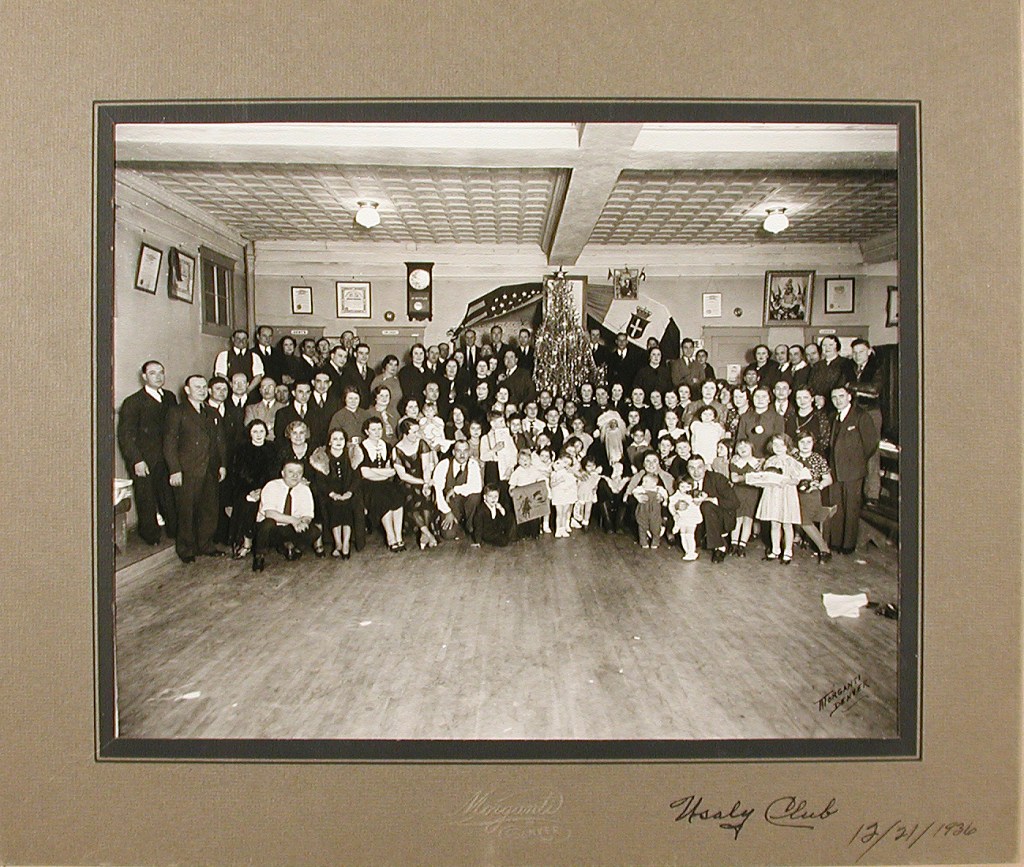
Italians started settling in Colorado in the late 1850s, with many of them moving to the United States during Italy’s unification period. They were drawn to Colorado because of its similar climate and landscape, as well as the opportunity for work in the mines and on the railroads, explains Alisa DiGiacomo, the retired director of curatorial services at History Colorado.

History Colorado. 2005.47.2.
“Oftentimes, when people think of Italians, they don’t think of Italians in the West or, specifically, in Colorado,” DiGiacomo says. “Italians were targeted in Colorado, really ‘encouraged’ to not speak Italian. It was a push for them to Americanize. …After World War II, there was a lot of anti-Italian sentiment. Italians had to register as aliens; there was a POW camp for Italians in Trinidad; many people made assumptions that you were part of the mafia, you were fascist, you were clannish. Italians were targeted by the Ku Klux Klan because they were Catholic. So people didn’t want to talk.”
Italians primarily concentrated in Denver, Pueblo and Trinidad.
“The community ends up taking care of itself,” DiGiacomo says. “They have their own paper, their own restaurants, businesses, banks…Little Italy is this enclave of an insulated community where people feel safe to practice their own religion, speak their own language, have their customs, and not be targeted.”
Most early Denver Italians lived downtown in “the bottoms” along the South Platte River, because it was close to manufacturers and the railroad, and cheap due to flooding. The population gradually shifted to north Denver, seeking better housing and closer proximity to Our Lady of Mount Carmel, amid the building of the Valley Highway in the 1940s and ’50s and the development of downtown, DiGiacomo explains.
Many Italians began leaving north Denver’s Little Italy by the ’70s, again seeking bigger homes in more suburban areas, she says. By the ’90s, most had moved away, today concentrating in Arvada, Wheat Ridge and Welby — but they left their mark.
Italian Denver residents made numerous notable contributions to the city, such as builder Damascio, who worked on the Brown Palace Hotel and the Cathedral of the Immaculate Conception; Lillian Covillo, who founded the Colorado Ballet; and Genevieve Fiore, who founded the United Nations Educational, Scientific & Cultural Organization Association of Colorado.

History Colorado. 2006.91.5.
DiGiacomo led a five-year project to document the history of Colorado’s Italian community and wrote the book Italy in Colorado: Family Histories from Denver and Beyond. She is a fifth-generation Italian-Coloradan who previously lived in north Denver.
“I’m so happy that the younger generation is also recognizing the need. If the community wants to persist…there has to be this work to preserve it and document it,” DiGiacomo says of the Little Italy historic district. “There’s still so much to share and learn and discover. I think it’s a really beautiful opportunity.”
DiGiacomo adds that the initiative is particularly important now, saying she recognizes trends from past anti-Italian-immigrant rhetoric reemerging toward other immigrants today.
“There’s a lot that we can learn in appreciating how much Italians have contributed,” she says. “Anything that can help people find commonality and a shared sense of history or community is incredibly important right now.”
The Italian-American Dream
Dozens of people gathered at Our Lady of Mount Carmel’s event hall on the evening of February 26 to discuss the proposed Little Italy district over cannolis.
It’s uncharted territory for Denver. The city has designated two thematic historic districts — Downtown Denver in 2000 and University Park in 2024 — and three cultural historic districts: Five Points in 2002, La Alma Lincoln Park in 2021 and La Raza Park in 2023. But this would be the city’s first thematic cultural historic district, according to the Landmark Preservation Commission.
Hannah Metzger
Unlike in traditional historic districts, property owners would have to opt in to join the Little Italy district and abide by the preservation restrictions. That presents a challenge. While there is no minimum number of buildings needed to apply for the designation, the existing thematic districts have between 17 and 28 contributing buildings.
“If you’re doing a district like this, you need enough buildings to tell that story of the area,” said Kara Hahn, Denver’s landmark planning and regulatory supervisor, during the meeting.
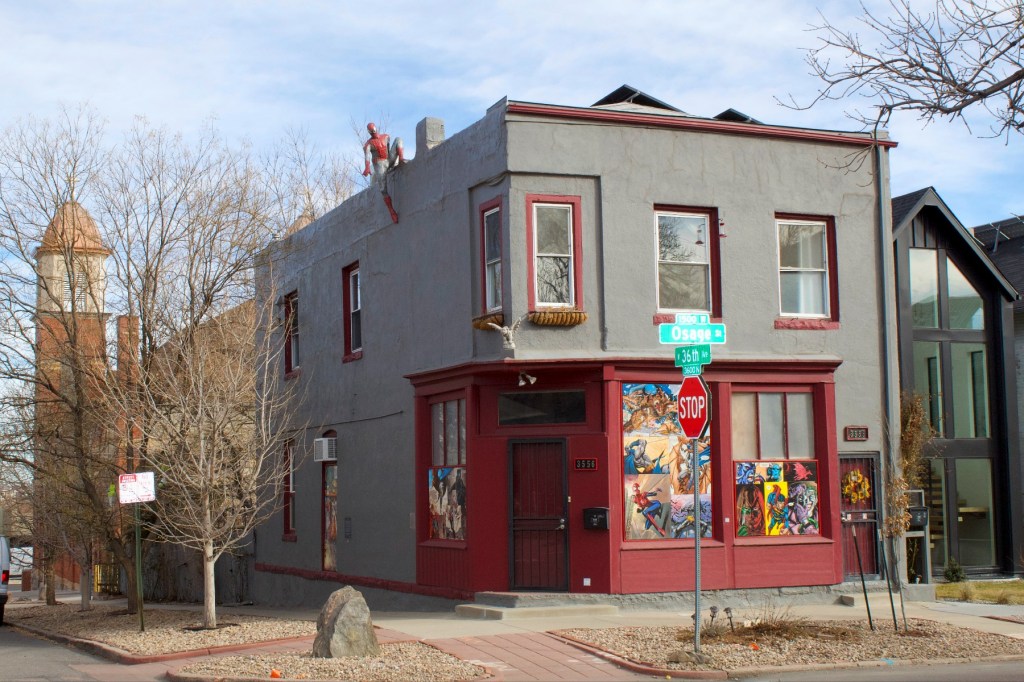
None of the owners of the fifty-plus properties identified as culturally significant to Little Italy have signed on to be part of the district yet. John Bonath owns one such building: the historic home of the Italian Marranzino family, including then-Denver City Councilman Ernest Marranzino. Under the Marranzino family, the house on Osage Street served as a bathhouse, brothel, underground speakeasy and TV repair shop. But these days, Bonath has made it his own, adorning it with a life-sized Spider-Man statue and covering the former shop windows with murals of other comic heroes.
Bonath says he’s wary of the added time and costs that a historic designation would impose on making repairs and renovations to his home.
“I support the idea of it, but there are also realities,” Bonath says. “The restrictions that come with it may tie my hands. …I’ve thought about this for probably 25 years. I’ve always had the opportunity to [get individual landmark designation], but I’ve always pulled back.”
When a property is designated, all exterior changes that require a building or zoning permit must first be reviewed and approved by the Landmark Preservation Commission, Hahn explained at the meeting. “It’s not preserved in amber. We don’t care what color you paint your house, we don’t do anything with your vegetation,” she added. “But if you need to change your roofing, we would be part of that process. The entire goal is to preserve the character of the building.”
Hannah Metzger
The designation also comes with perks to offset the added costs. Properties that are part of Little Italy would be eligible for various grants and tax credits to pay for repairs, restorations and system upgrades, according to the commission.
Though cautious, north Denver residents showed support for the proposal. During the meeting, the discussion shifted from questioning regulations and timelines to brainstorming ways to spread the word as organizers prepare to embark on the year-long research, outreach and application process. Right now, they’re putting together their Historic Denver grant application and gathering additional letters of support from the community. They will eventually hold more community meetings and, in the final phase, seek approval from Denver City Council.
Even business owners who expressed hesitancy about joining the district offered to hang flyers in their windows promoting the Little Italy effort. Some attendees suggested installing Italian-themed fountains and painting fire hydrants with the Italian flag.
“That would be the dream,” Peccia laughed.
History Colorado. 2004.56.3.