Bennito L. Kelty

Audio By Carbonatix
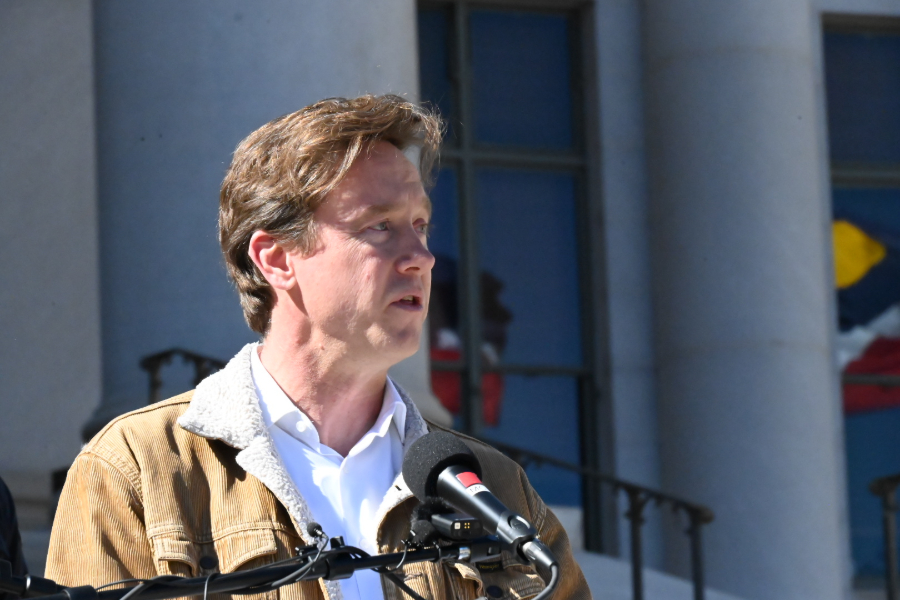
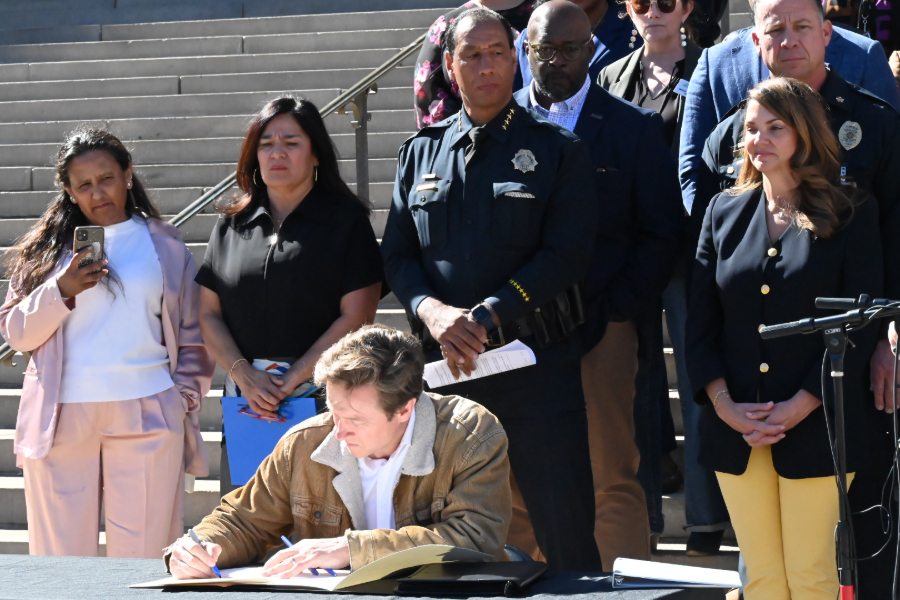
Denver Mayor Mike Johnston signed an executive order to expand local protections against Immigration and Customs Enforcement (ICE) during a press conference on Thursday, February 26. Johnston said the policy is meant to reassure fearful residents.
“My first job is to run this city, but in today’s America, that means answering questions from our residents about what happens if ICE troops descend on our community,” Johnston said. “Our goal is not to provoke, but to protect.”
Executive Order 152 comes a month after a large, violent federal immigration enforcement operation in Minneapolis that Johnston called an “invasion” earlier this month.
Earlier this year in Minneapolis, two protesters with ties to Colorado, Renee Good and Alex Pretti, were fatally shot by federal immigration officers “for peacefully raising their voices,” Johnston said on Thursday. “And Denverites ask me everyday, ‘What will we do if that chaos comes to Denver?'”
Bennito L. Kelty
The four-page executive order bans ICE agents from City of Denver property unless they have a judicial warrant and court order. Johnston said that ICE agents have entered federal buildings in Denver, “but we have not had anything recent” where agents are on city property, including schools.
“Protected spaces” will include public schools, libraries, senior centers, shelters, stadiums, churches, courthouses and hospitals, but the mayor’s order is vague about what the “protected” designation means. It also calls on city marketing to “reiterate existing guidance” for city employees at those protected spaces.
The policy lays out the responsibilities of the Denver Police and Sheriff’s departments in the case “a surge in ICE agents or other federal law enforcement.”
Local law enforcement will “try to maintain the peace and de-escalate” and should “immediately render aid to anyone injured at the scene of any immigration enforcement action,” the order reads. According to Johnston, that could even mean DPD arresting an ICE officer.
“No ICE officer gets to stand in our way of saving someone’s life,” he said. “If we see any ICE officer using excessive force against a Denver resident, we will step in to detain that officer and remove them from that situation.”
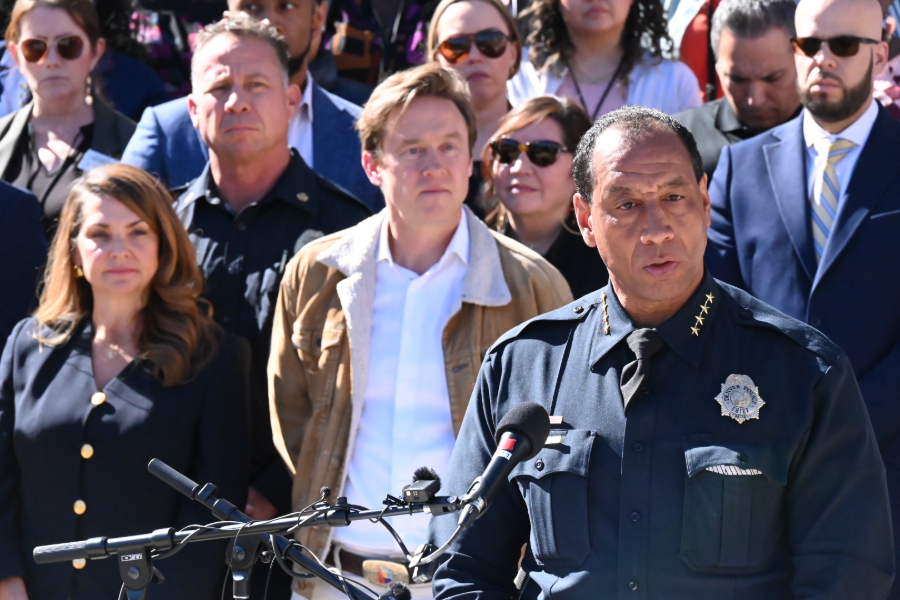
Denver Police Chief Ron Thomas was asked at the press conference if his officers will arrest an ICE agent. Although he said “the law allows us to,” Thomas stressed that “we will lead with de-escalation. That is our primary concern, to maintain the peace.”
Denver police have “table-topped a number of exercises” to consider different scenarios where his local law enforcement has to confront ICE agents, Thomas said.
Local law enforcement will have to document ICE activities and investigate any “reports of violence, property damage, high-speed chases” by federal agents in Denver, per Johnston’s order. Unlawful acts by agents will have to be reported to the Denver District Attorney of Colorado Attorney General, according to the order.
“If an ICE agent assaults or shoots or kills a civilian in Denver, we will investigate and prosecute that crime,” Johnston said. “Regardless of what the federal government does, we will not abdicate our responsibility to investigate crimes in the city.”
Bennito L. Kelty
The executive order prohibits ICE agents from stopping, detaining, questioning or searching anyone “based on location, occupation, language, accent, race or ethnicity,” in a section meant to stop racial profiling.
It also bans DPD from allowing ICE or any agency from the Department of Homeland Security access to its databases or technology without a judicial warrant, subpoena or court order.
Johnston said the city doesn’t know of any federal plans to send immigration enforcement to Denver at the moment. The new executive order comes as Denver City Council is prepared to vote on a bill that would ban ICE agents from wearing a mask while operating in the city, which is expected to pass on Monday, March 2.
The Denver School District is considering a policy that would expand protections for immigrant students and staff. A draft of the policy suggests leaving ICE agents at the door at any DPS-sponsored events or school property unless they have a judicial warrant.
City Council President Amanda Sandoval said on Thursday that councilmembers, DPS and the Mayor’s Office want to create “an ecosystem of protections” from ICE.
President Donald Trump already considers Denver a “sanctuary city” because of 2019 policies that prohibit city employees, including DPD, from cooperating with ICE or handing over residents’s personal information. The United States Department of Justice is suing both the city and the State of Colorado to undo their sanctuary laws.
Johnston stressed on Thursday that “we’re not trying to provoke” a federal response with the executive order, but Denver residents want to “know exactly what protections are in place” in case of an ICE invasion.
“In this moment, this is one of the biggest questions we have from Denver residents,” Johnston said. “We have people that are afraid, that are nervous, and our job as city leaders is to answer those questions with the best of our ability.”