Sage Kelley

Audio By Carbonatix
The AfterHours church and nonprofit ditched pews for pints over a decade ago, moving services into local bars.
Logan Robertson, pastor and director of AfterHours, describes the nonprofit and nomadic Methodist church as a “bit out of step.”
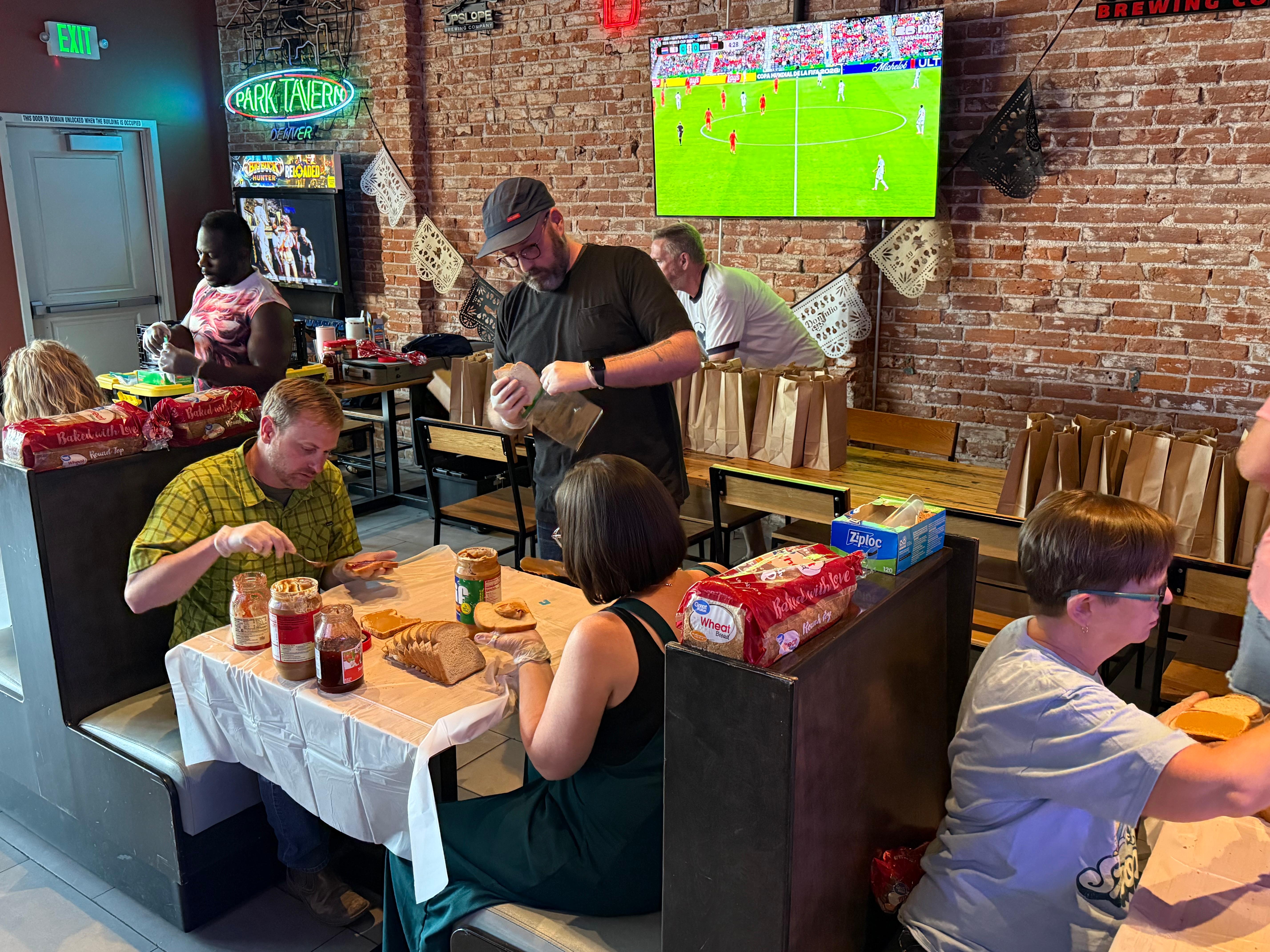
“We’re just meeting people where they are,” he tells Westword — but the group isn’t just a roaming church that holds newfangled services and discussions. AfterHours also meets every week to make 100 bagged lunches, which are then handed out by local partners to people experiencing homelessness in Denver. The experience is one part religious community, one part giving back to the community … and one part beer.
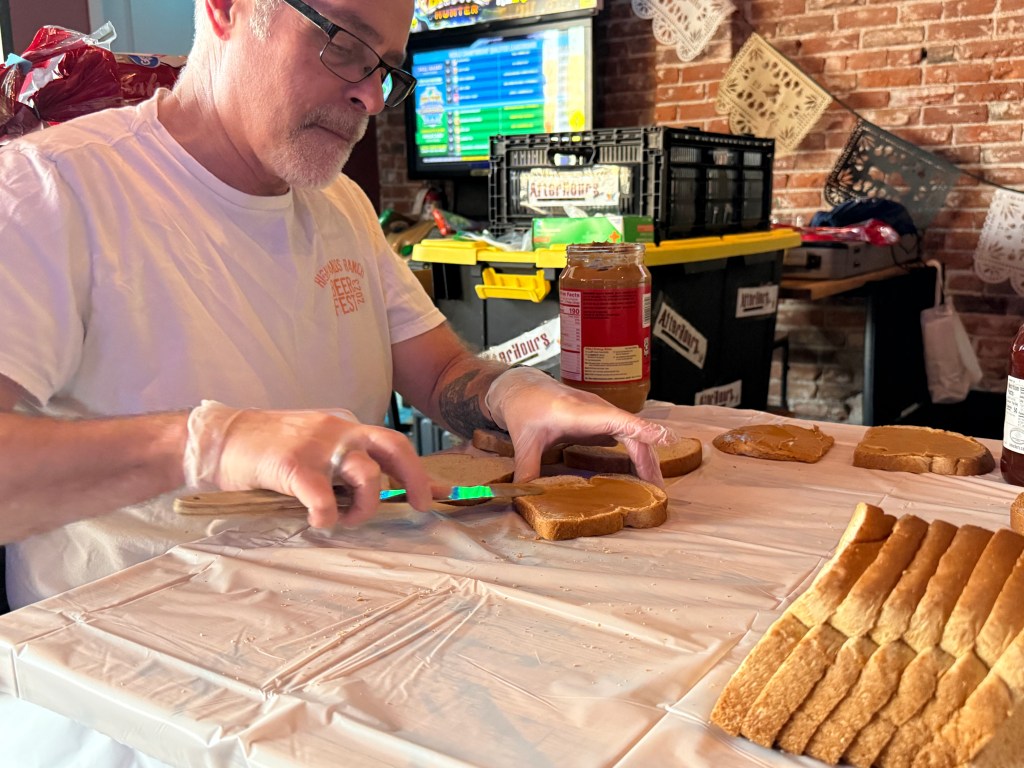
“It’s kind of experimental, still,” says Jim Francis, volunteer coordinator for the organization since 2014. “You’ll hear different cities do bar church, but a lot of them try to make it feel more like church. Instead of standing up and singing a hymn at the beginning of the service, we make 100 lunches.”
Countless years and sandwiches
AfterHours was founded by Highlands Ranch pastor Jerry Herships back in 2011. Herships, a barfly and former stand-up comedian, would hold service and bless communion off of covered pool tables at Don’s Club Tavern in Capitol Hill on Christmas Eve, according to Francis.
The idea started to catch on, so Herships started holding small church services in neighborhood watering holes on Monday nights, when bars are usually slow. Then the group decided to pool their charitable efforts by preparing donation lunches at the start of every get-together.
“That’s kind of our sacrament around here. Other churches take communion, we get together, and the first thing we do is make those peanut butter and jelly sack lunches as an expression of love for folks who are struggling in Denver,” Robertson says.
Herships eventually stepped away from the nonprofit, with Robertson taking over around 2021, helping continue the path that had grown from one bar to many over 10 years. Now, every Monday, the church makes bagged lunches, which are then given to the Denver Public Library and Network Coffee House to distribute to unhoused people in the city.
Some of the bars include Don’s, Locales Taco + Tequila Bar, Dive Inn and BurnDown on a rotating schedule. According to Robertson, the spots love to have them, and it spares him the pain of maintaining a church.
“I don’t have to worry about the boiler in the basement exploding. I just have to worry about treating these people well,” he says. “We take their example of hospitality as an example for us in the way that we need to be hospitable in the world.”
The nonprofit also holds two large events toward the end of each year, distributing supplies and other warm clothes on Thanksgiving and Christmas.
Both Francis and Robertson say that being out in the real world, and not locked behind stained-glass windows in church rooms, makes their work feel less transactional and more authentic.
“I look at AfterHours as a missional church,” Francis says. “We’re not pew sitters. We get out.”
“We see you, we want to know you, and we want to be a part of your life,” Robertson says. “Not so that we can reform you or so that we can pluck you out of something; just so we can meet each other as human beings. We hope that means we can grow closer to them and that we can walk in solidarity toward something better, not just for somebody experiencing homelessness, but for ourselves.”
Francis notes that before AfterHours, he was going on mission trips abroad, inadvertently ignoring the need for help at home.
“We’re going outside of the country to go help people, and on the way to the airport, we’re passing people standing on a corner with a sign saying, ‘I need help,'” he recalls. “So I decided to kind of focus on what’s right around the corner from us.”
Sage Kelley
Thirsty congregation
After the group jams out 100 lunch bags like a well-oiled, well-jellied machine, the 15-30 people grab drinks and sit around a table as Robertson begins the sermon. Well, it’s not really a sermon, but more of a religious discussion filled with progressive ideas and theology — and what better place for a conversation than a bar?
The discussion on June 29, held in the back of Locales Taco + Tequila Bar, featured Christian “vibes,” jokes about Discord servers and a modernized Bible scripture, all in an open discussion with Robertson at the helm, no preaching.
Robertson says that people aren’t looking to religion to tell them directly how to live anymore, instead seeking out community to ask questions and ponder answers about existence. To him, discussing these things as a group is better than any sermon he could give.
“Let’s dive into these questions together rather than, like, handing down golden tablets from above,” Robertson says. “I’ve checked. I don’t have any golden tablets. I keep checking, and they never show up. All I have are good questions.”
“I couldn’t tell you how many times, as a kid sitting in church, I was listening to the father tell us what’s happening and what we should believe and everything, and never feeling like I could question anything,” Francis says.
The progressive nature of the get-togethers aligns directly with the locals.
Robertson says that he receives Facebook comments asking why he’s having meetings at such places. Why not meet at more holy locations? Why bars?
“Jesus went off with prostitutes and sinners. He was not a moralist. He was about meeting people where they are,” he retorts. “It’s a little more comfortable to walk into a space like this, especially if you’ve experienced negative things with church in the past before, which a lot of people have.”
He adds that local bars and restaurants, especially smaller, locally owned places like Don’s, are just as much a part of the community as a church. So, combining the two can only help build up that neighborhood’s morale. Plus, it gives businesses more business on Mondays, and AfterHours members make sure to tip well.
“[The bars] meet something that the neighborhood needs and just welcome people in,” Robertson says. “That’s also how I think Christians should be in the world. We should be looking at our neighborhoods and saying, ‘What does this neighborhood need, and how can we be as welcoming as possible to get people in here and just know that they’re loved and that we love the neighborhood.'”
Francis gave an example of seeing a man he usually gives lunches to at Network Coffee House hanging around outside of one of the bars one night. While it was just a coincidence and the man was not there to participate with the church, it still gave Francis the opportunity to say hello and be friendly outside in the real world. That wouldn’t have happened if he were making sandwiches inside a church.
“I feel like I have a connection with the person much more so than if I just hand them a bottle of water out of a car window, which I hope means something to them,” Francis says.
Anyone can come join in on the lunch-making fun, regardless of religious denomination. Robertson says they’ve had people who believe in atheism, Judaism and agnosticism join, bringing together a “very eclectic group.”
The weekly schedule is on Afterhoursdenver.org, along with a contact link for anyone who wants to donate food or winter gear for future giveaways.
“Just show up, and we’ll put you to work,” Francis laughs.
And who doesn’t get thirsty from work?