Denver Public Library

Audio By Carbonatix
Reader support matters more than ever
We're in the final stretch of our summer campaign. Our goal is to raise $25,000 to support the journalism our community relies on. Reader support is helping shape the future of local news.
Walter Hagen arrived at Wellshire Country Club in October 1928 to compete in Golf’s World Series, a barnstorming tour that pitted the reigning Champion Golfer of the Year against the most recent winner of the U.S. Open, Johnny Farrell.
The greatest American golfer of his era, Hagen was the only figure in the sport whose celebrity rivaled that of Babe Ruth – who, coincidentally, was also in Denver that day for an exhibition. The match at Wellshire Park, a private development south of downtown, was meant to show off Colorado’s newest world-class golf course to both reporters and locals, but an ill-timed snowstorm kept the gentlemen from teeing off. Instead, the golfers – “almost as well known for their sartorial perfection as their magical skill in making a golf ball perform,” according to the Denver Post – held court in front of eager locals to tell golf stories and start spinning the legend of Wellshire, which celebrates its 100th anniversary next month.
Built on the former Diamond Jo Ranch, named after Jo Reynolds, a merchant and builder known for his line of river steamers, Wellshire was founded by developers George Olinger and Lloyd “LC” Fulenwider as a luxury community to appeal to “those who desire quiet, comfort and protection from invasion by undesirable classes.” The neighborhood, built off Colorado Boulevard a half-mile south of Denver city limits, advertised generous open space, as well as horseback riding, tennis, and golf, of course.
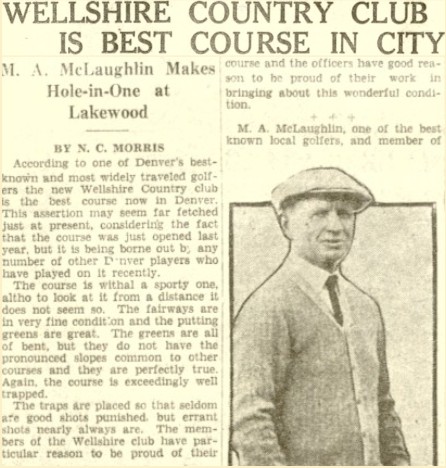
The original plans included a $40,000 clubhouse, whose cost nearly doubled by the time of its completion, and a $260,000 golf course laid out by the Scottish-born Donald Ross, who designed more than 400 golf courses throughout the United States during golf architecture’s Golden Age. Ross’s layouts include more than a dozen courses that have hosted men’s and women’s major championships, including this week’s PGA Championship at Aronimink. Ross was the most prolific golf architect of his era, and had already designed Lakewood Country Club and a golf course at the Broadmoor Hotel in Colorado Springs, but he declared Wellshire “a natural golf field” that “will be one of the finest, most interesting golf courses in the world.”
With snow falling on Wellshire, Hagen, perhaps feeling competitive sharing the town with the Great Bambino, predicted that golf in America would one day rival baseball in popularity through the democratic power of municipal courses. “We are firm advocates of the municipal links,” he told the Post. “It puts golf within the reach of the poor man as well as the rich.” It was an ironic declaration at a private club advertised by its founders to exclude “undesirable classes,” but also a prescient one: Four years later, Wellshire filed for bankruptcy, and within a decade it was purchased by the city. The club soon transformed from an elitist enclave into the crown jewel of Denver’s municipal golf courses.
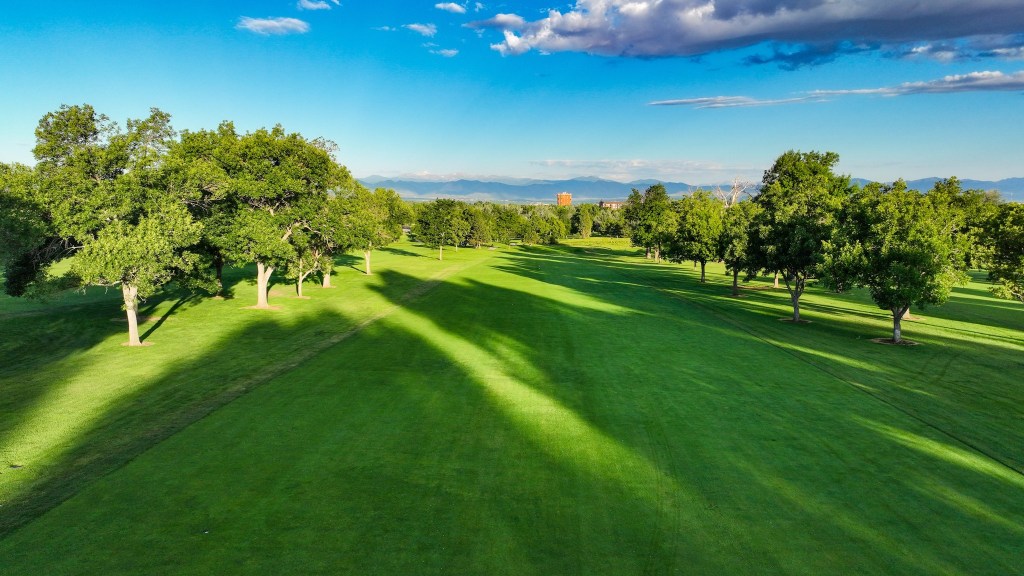
On a clear day, you can see Red Rocks from Wellshire Golf Course.
DPR Facebook
Denver Buys Wellshire Golf Course
The city acquired Wellshire for just $60,000 in the fall of 1936, supported by funding from the New Deal’s Works Progress Administration. The purchase was part of a planned golf course swap by George Cranmer, Denver’s parks manager, which included abandoning the lease on the north half of the City Park Golf Course. But Cranmer’s plan met with fierce resistance from his constituents: City Hall hath no fury like golfers facing the loss of their home course. Civic and links organizations gathered thousands of signatures protesting the decision to relinquish nine holes of the neighborhood course. One speaker argued that City Park Golf Course “has been an inspiration to the young manhood of Denver. Young men who could not afford to drive cars have been able to enjoy golf and get wholesome exercise.” Others noted that the course operated at a profit and helped fund the City Park Zoo. Under pressure, Cranmer relented and renewed the lease after negotiating with the state land board for additional funds to preserve City Park in its entirety as well as purchase Wellshire.
In its early days, Wellshire had hosted a steady stream of local competitions. All of Denver’s municipal courses, as well as some of the private ones, were home to clubs that faced off in a year-long series of matches. After President Franklin Delano Roosevelt signed the Cullen–Harrison Act, a precursor to the end of Prohibition, the Wellshire tournament committee suggested a Scotch foursome tournament where the winner was entitled to a “scoop” of beer, while the losers got only a sniff. And when the brash reporters at the Post used a few inches of column space to challenge any business organization in the state to a match at Wellshire, a telephone company accepted their offer and delivered the scribes a “Max Baer knockout to the whiskers.”
Now, as the new caretaker of one of the finest municipal courses in the country, and one of the few “munis” able to host top-tier golf tournaments, Denver sought to capitalize on its new asset and attract national competitions. The city employed 75 workers to improve course conditioning and planted more than 300 trees in an effort to make the layout more challenging, a renovation Ross likely would have frowned upon. “As beautiful as trees are, and as fond as you and I are of them, we still must not lose sight of the fact that there is a limited place for them in golf,” he wrote in his memoir Golf Has Never Failed Me. “We must not allow our sentiments to crowd out the real intent of a golf course, that of providing fair playing conditions. If it in any way interferes with a properly played stroke, I think the tree is an unfair hazard and should not be allowed to stand.”
Despite — or perhaps because of — the arboreal additions, Wellshire was chosen to host a string of amateur and professional tournaments over the next few decades. The United States Golf Association awarded Wellshire the 1942 National Public Links Championship – also known as the Publinks – which was the third most important tournament run by the USGA at the time. It offered public golfers a chance at a national championship, since private club members were not allowed to enter. There would, however, be no tournament at Wellshire or anywhere else in 1942. The U.S. entrance into World War II postponed the tournament until 1946, when Wellshire was reaffirmed as the host. Members of the USGA tournament committee praised the “ideal physical setup of the clubhouse and well as the course itself for the site of a national championship.”
America’s New Pastime Grows, And Stars Emerge
In 1947, the East Denver Golf Club, an all‑Black organization, asked the city to let it use Wellshire to host the Central States Golf Association Championship, an annual tournament for Black golf clubs from Midwest cities. Although City Park Golf Course was the East Denver Golf Club’s home, Wellshire was Denver’s premier venue and could accommodate the more than 200 golfers expected. Newly-elected Mayor Quigg Newton welcomed the visiting clubs, praising Wellshire in the tournament program as “one of the finest municipal golf courses in America.” East Denver members wrote that they were “delighted and proud” to host “the greatest golfing event among negroes” in their city. The championship was ultimately won by East Denver’s Benny Collier, a law clerk who celebrated at a post‑tournament dance in the Wellshire clubhouse.
As the popularity of golf grew across the country, a new nonprofit called the Denver Civic Golf Association raised funds to host a professional golf tournament, the Denver Open. While the inaugural event was held at a nearby private course, Cherry Hills Country Club, the DCGA turned to Wellshire to host the 1948 Denver Open. Golf legend Ben Hogan was a surprise late addition to the field, which attracted some of the best players in the country. Hogan had planned to skip the event, but reversed course much to the delight of the host committee. On the final day, more than 3,000 paid customers, including future President Dwight Eisenhower, whose wife was from Denver, flocked to Wellshire to watch Hogan chase down the leader and win his astonishing sixth tournament in a row.
Despite emerging victorious, Hogan left the Mile High City arguably less popular than when he arrived. During an early tournament round, Hogan had a cameraman removed from the event for defying the sacred rules of golf etiquette. Then, despite winning, Hogan was a no-show at his own trophy ceremony. Trailing the leaders when he finished his final round, Hogan packed up his clubs and headed back to the Brown Palace. When Fred Haas Jr. lost the lead on the back nine, Hogan was nowhere to be found.
Denver sports reporters did not appreciate the perceived snub to their city. One noted that the “prima donna” refused to sign autographs for a seven-year-old. Columnist Jack Carberry said Hogan’s actions were “no different than Marie Antoinette.” “It was a great tourney,” he wrote, “despite Ben Hogan.”
The DCGA, which sponsored the Denver Open, withdrew its support for the tournament after only two years. Robert Shearer, owner of the Park Hill Golf Course and president of the DCGA, claimed that a deficit in the Open fund made it difficult to attract top-tier golfers.
The Pros Return to Wellshire
Professional golf would elude Denver for another decade, before the launch of the Denver Centennial Open, which was hosted by Wellshire in 1958 and included a field of top golfers, including Arnold Palmer. Although intended as an annual event, it, too, proved short‑lived and marked the last time Wellshire hosted a high‑caliber professional tournament.
In 1959, Wellshire once again hosted the Publinks, won by Seattle native Bill Wright, who rode a hot putter to become the first Black golfer to win a USGA title. Carrying only twelve clubs instead of the standard fourteen, Wright used a Spaulding Autograph putter to one‑putt 23 of 36 greens in his final match. Wright needed the putter to perform because he was playing with irons that he hated. “I don’t really like these irons…but I brought ‘em here because I still owe $65 for them,” he said.
Years later, Wright admitted that he was caught off-guard when a Seattle reporter asked him how it felt to become the first Black USGA champion. “That shocked me,” he told the Colorado Golf Association. “My dad (Bob Wright) had taught me how to play, and our goal wasn’t to be the first anything. The goal was to make sure that I not get embarrassed. So I was thinking that I had won the tournament. I wasn’t thinking about (being the first Black champion) at the time. That was not my goal. But I’m glad it was accomplished and it’s nothing but a good feeling.”
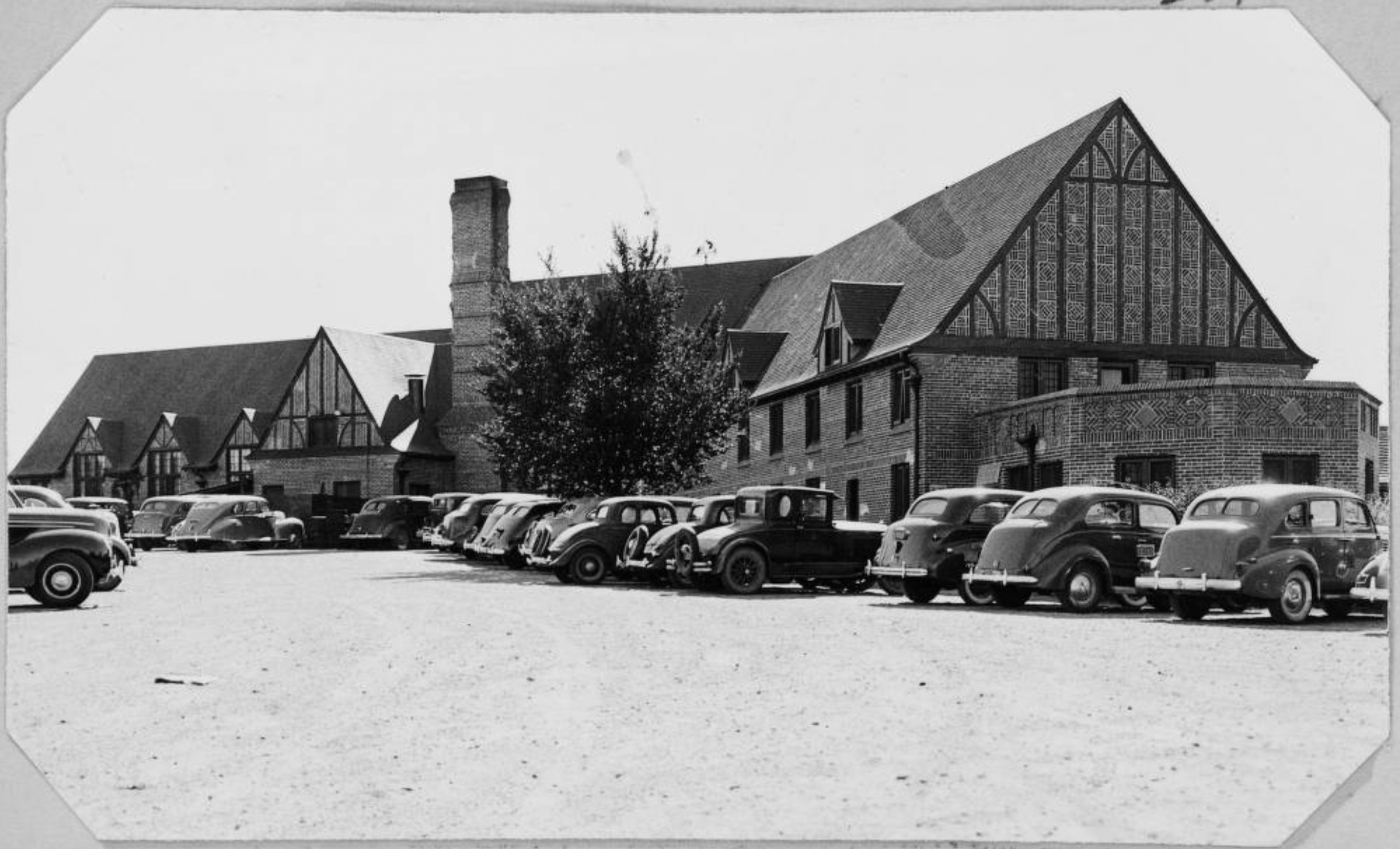
The action moved off the course in 1962, when a fire tore through the original Tudor Revival-style clubhouse, designed by Denver architect G. Meredith Musick, causing massive damage to the second floor and roof. The city rebuilt the facility, remodeling it to accommodate a golf shop and restaurant, a few of which cycled through the space until 1977, when legendary Denver restaurateur Leo Goto took over the concession contract.
Backed by businessmen Howard Torgove and Larry Atler, an East High classmate of Goto who’d also partnered on his popular downtown restaurant Leo’s Place, the space got a makeover that turned it into the Wellshire Inn, which thrived as a fashionable dining spot and meeting place for the community.
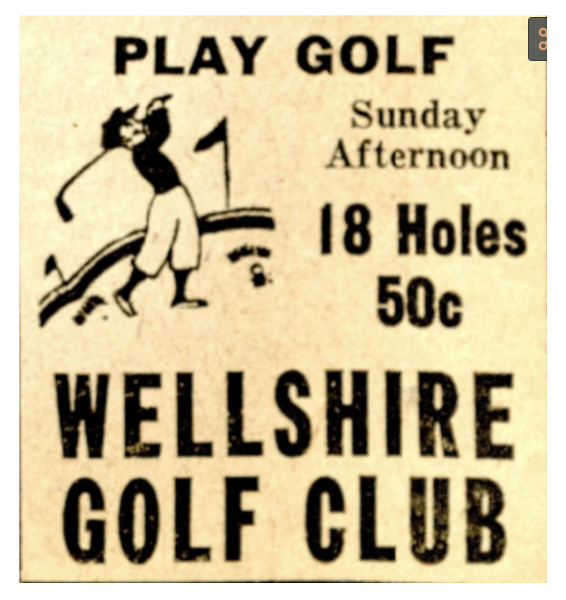
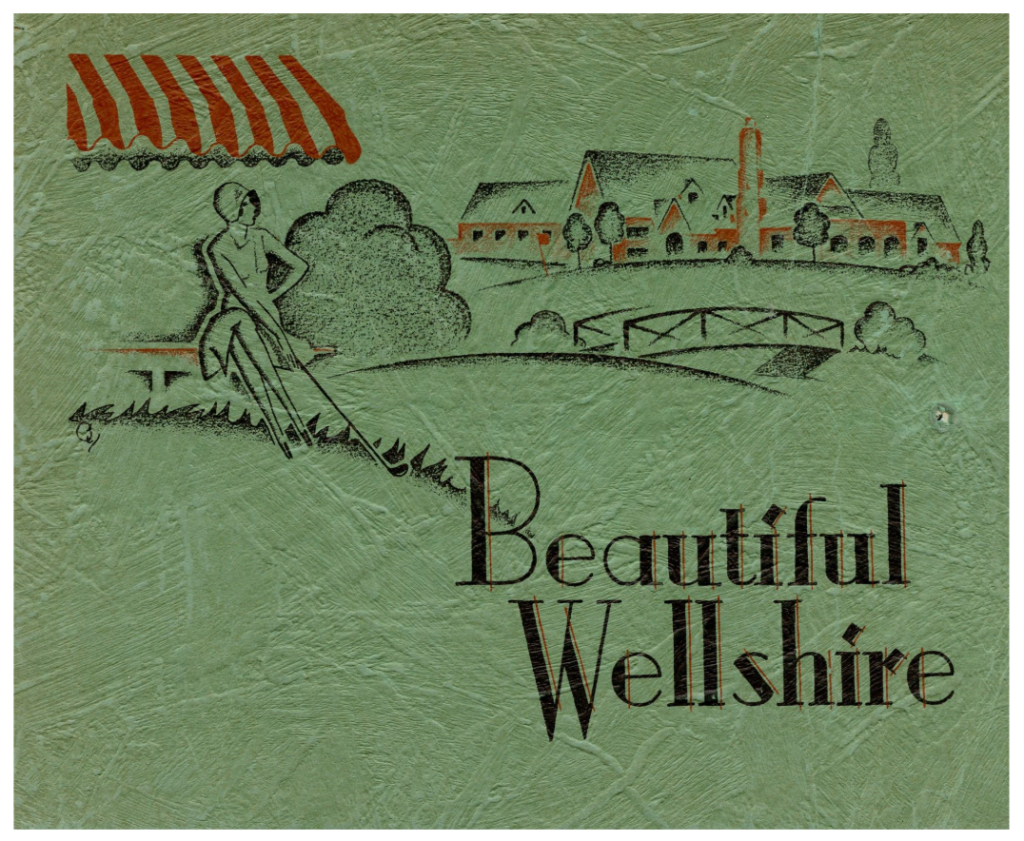
The Bradford-Robinson Printing Co., ca. 1928.
The Wellshire Inn was known as a classy place with a gracious host. Future Mayor Michael Hancock was once a waiter there. It was where John Elway took his family on Christmas Day and where former Senator Gary Hart chose to end his 1988 campaign for president. Goto built a reputation as the consummate front-of-house man. Alter, who was married to former Miss America Marilyn Van Derbur, and Torgove were known as business and philanthropic leaders who sat on a number of civic organizations.
After the market crashed in 2008, Torgove bought out Goto’s interest in the Wellshire Inn and transformed the clubhouse from a community staple into an event space no longer open to the public, but is frequently used as a wedding venue and a host for corporate events. Wellshire LLC, the concessionaire, owns the contract through 2043. It currently pays $100,000 per year to book and operate the venue, which also includes the Golfer’s Pub, a small restaurant and bar adjacent to the pro shop that offers patio seating with folding chairs and checkered tablecloths.
“I know community members, golfers and non-golfers, would love to see a restaurant and bar again in the Wellshire clubhouse,” says Kendra Black, a former Denver City Councilmember who represented the area. “This was a perennial topic with my constituents. Many remember the Wellshire Inn where they dined and the big bar that was a community gathering space.”
Losing the Inn Crowd
With the loss of the Wellshire Inn, the neighborhood lost an iconic hot spot – but that did not stop golfers from filling up the tee sheet. Before a recent round at Wellshire, Denver resident and frequent Willis Case golfer Geraud Gonzales educated his playing partners on the course’s bona fides. “Did you know this is a Donald Ross course?” Gonzales asked. “They used to host PGA events here back in the day.”
Modern golfers using modern equipment have rendered Wellshire obsolete as a championship-level course. At around 6,600 yards from the back tees, Wellshire would be the shortest course on the PGA tour, and the lack of space between the fairways would make it extremely difficult to accommodate spectators. It is unlikely the course will ever return to the days of hosting players like Palmer and Hogan, but its place in the local golf community has not wavered. This Labor Day, Wellshire will host its 83rd annual Wellshire Four-Ball Championship, the longest-running tournament in Colorado.
“There are several four-ball tournaments in Colorado, but Wellshire is one of the most prestigious,” says Tom Woodard, the former head of Denver Golf and a past winner of the Wellshire four-ball. “It’s amazing. You get the best players in the region teaming up. It’s so much fun to play in and quite an accomplishment to win.”
Denver municipal golf courses operate as a self-sustaining enterprise fund, meaning no general‑fund dollars or tax revenue support their operations. Course and facility improvements are paid for by revenue from greens fees, cart fees, concessionaire contracts, and merchandise sales at the city’s six public courses.
In September 2021, O’Brien led an audit of the city’s golf operations, which recommended that course managers address big-picture issues by creating a strategic plan for the future. None have materialized, much less one that calls for restoring the Wellshire Inn.
In fact, the most high‑profile project underway at Wellshire is a new driving range, a plan launched in 2018 — before the audit — that required draining Skeel Reservoir and is on track for completion next year. A current list of capital improvements on the Denver Parks & Recreation website also includes cart‑path repairs and a new roof for the pro shop at Wellshire.
In a 2016 audit of Denver Parks & Recreation, O’Brien had been critical of some of the terms of the Wellshire concessions contract. “Fifty years is way too long in my opinion. If this is a nuclear power plant, I could understand 50 years, but not to operate a concession at a golf course,” he told Denver7. (He declined to discuss the contract this round.)
According to that 2016 audit: “The Director of Finance and Administration explained that, in this instance, the lengthy term was justified because the concessionaire is responsible for significant investment related to maintenance and repair costs of the facility, which is aging.”
No major renovations have been made to the Wellshire golf course since Ross drafted the layout in 1924. Bunkers, which can often be the most expensive part of a course to maintain, have been added and removed throughout the years, and natural growth has transformed the shape of the fairways and greens.
A kids’ course called Hogan’s Alley was added in 2006. Named after Denver golf legend Dan Hogan, a lifelong public golfer (and not golf’s Marie Antoinette), Hogan’s Alley is free for kids and supports local First Tee youth programs.
Wellshire Turns 100
Turning 100 in 2026, Wellshire is operating with much the same physical structure it had when it opened in 1926. Meanwhile, City Park Golf Course recently underwent a major course renovation, aided by funding from a flood-control project, that included a rerouting of the golf course, a new kids’ course, and a brand-new clubhouse where locals and out-of-towners come to dine and take in the views; a display case at the main entrance tells the history of its course and the influential leaders who walked its fairways.
Denver Golf recently announced a new clubhouse at the Kennedy Golf Course, a $30 million renovation supported by the enterprise fund to make the facility a more family-oriented community hub. But there are no big plans for Wellshire…beyond a celebration of its 100th anniversary.
“Wellshire is one of the most beautiful courses in the region, and the history of its clubhouse is also so important to Denverites who for decades dined at the Wellshire Inn or enjoyed drinks at the elegant bar. We celebrated many special occasions there. Business leaders and city officials used to negotiate deals at the Wellshire Inn,” says former councilmember Black, a member of the Wellshire 100th Committee. “Wellshire’s 100th anniversary is a cause for celebration. Its history not only helps to tell golf’s story, but also reflects the growth and optimism of our young and growing city.”
The Wellshire 100th Committee is hosting a tournament at Wellshire Golf Course on Friday, June 5, to raise funds to create a historical display case that will reside between the pub and the pro shop. Tournament spots are currently sold out, but there will be a public community celebration from 5 to 8 p.m. Learn more at cityofdenvergolf.com.