
History Colorado-Denver, Colorado / Getty Images

Audio By Carbonatix
Colorado became a state 150 years ago today, on Aug. 1, 1876. But Denver was already the place to be by the time the Centennial State made it official.
Denver was founded nearly two decades prior, in 1858, during the Pikes Peak Gold Rush. Tens of thousands of people called the city home by 1876, laying the groundwork for the Mile High City to become what it is today. A few landmarks from that time can even still be found around town.
Here are fifteen early photographs of Denver, plus modern pics of what the locations look like now:
Cityscape
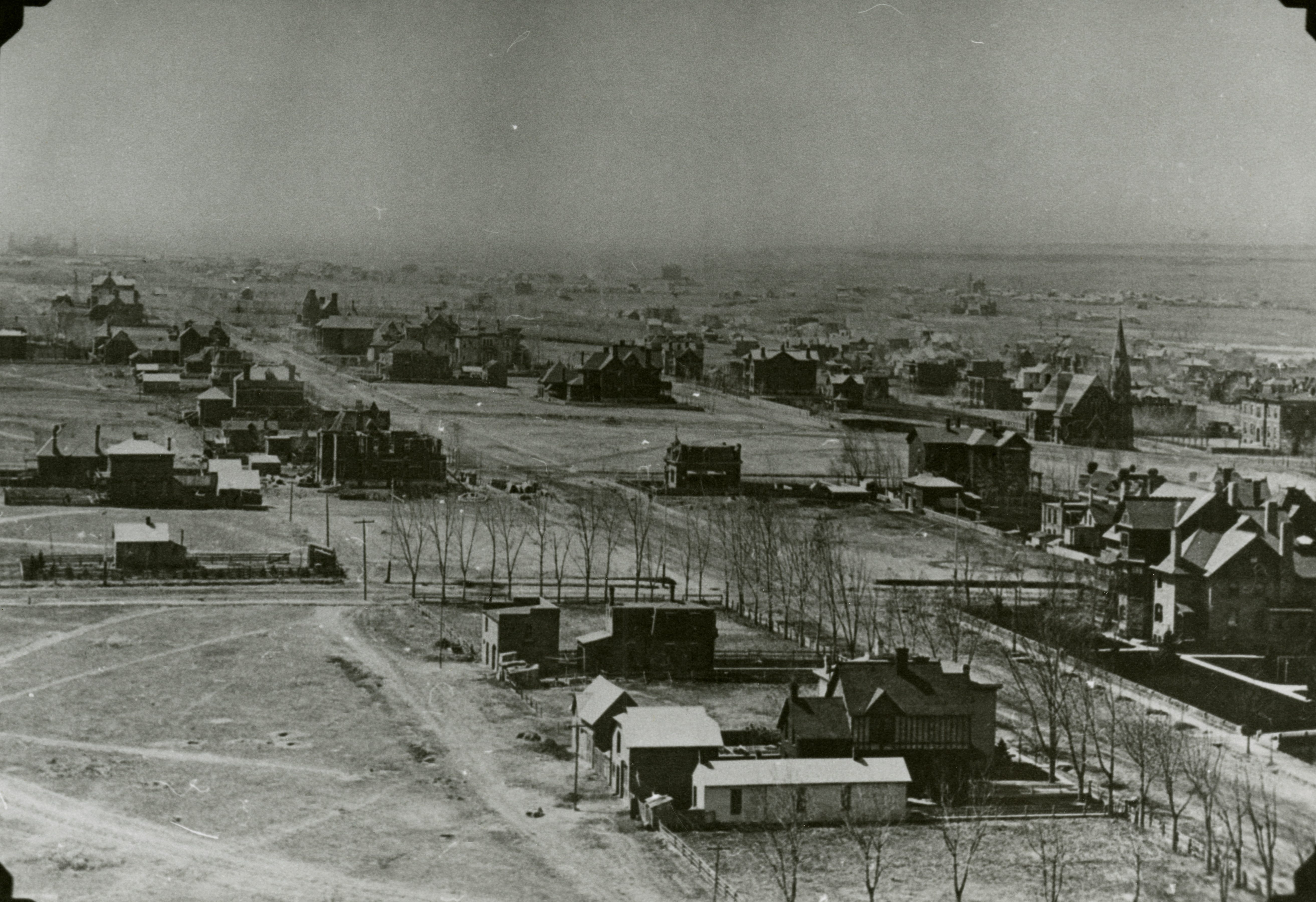
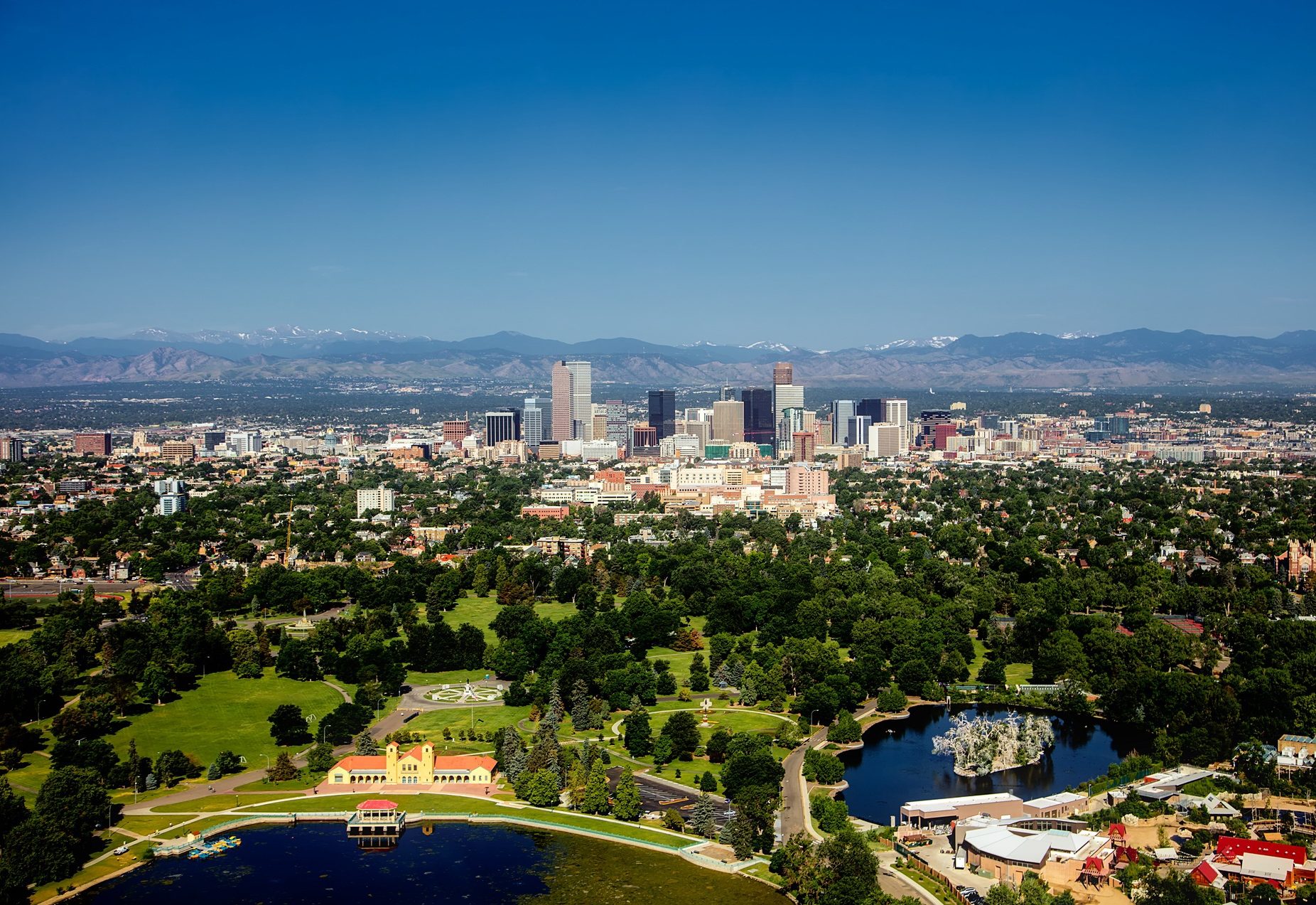
The left photograph shows Denver’s sparse city landscape sometime between 1870 and 1880, with dirt streets, residences and a church. Denver’s population was just 4,759 in 1870. It jumped to over 35,000 by 1880. The city’s current population is 746,590, making it the 20th-largest city in the United States, according to World Population Review.
Union Station
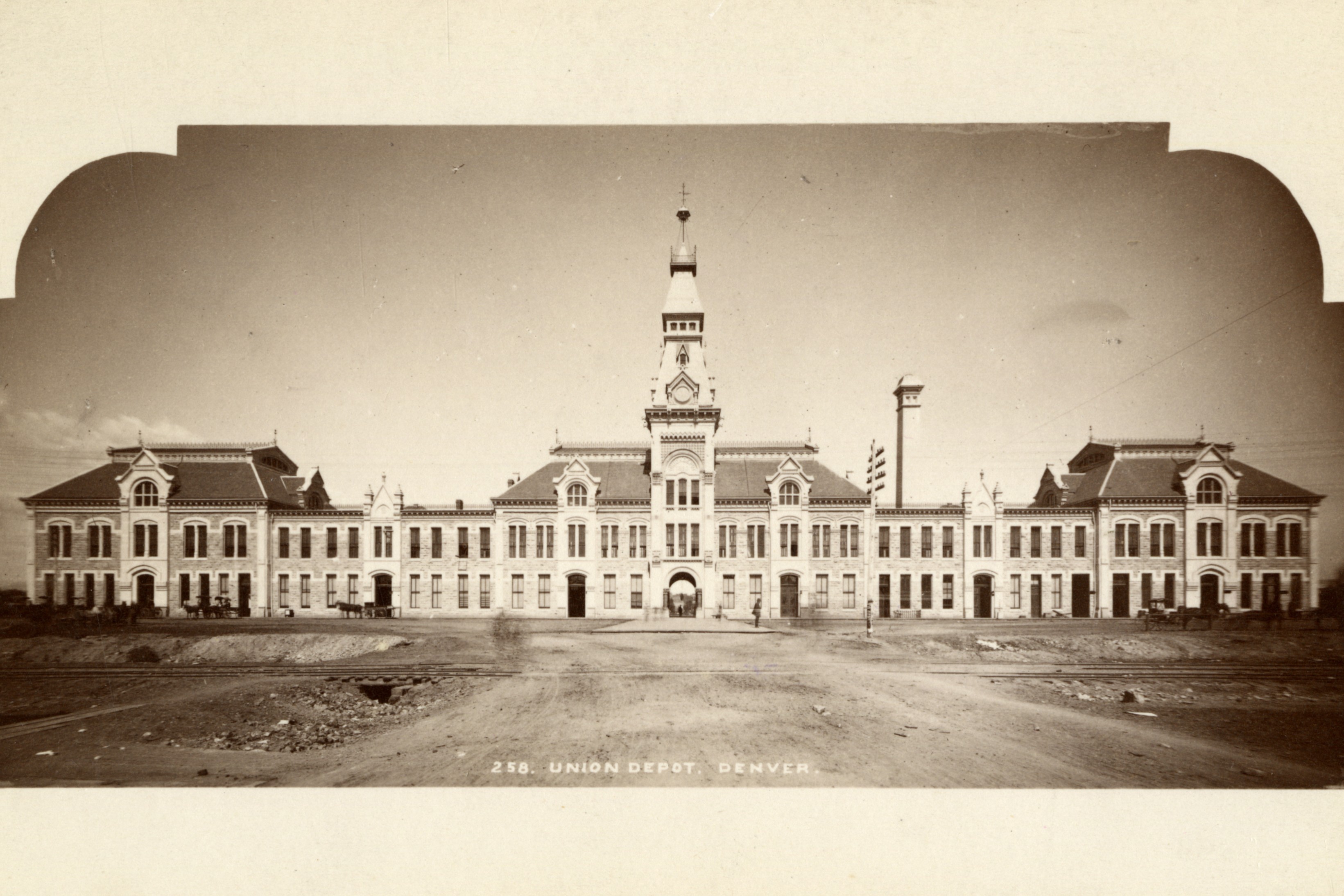
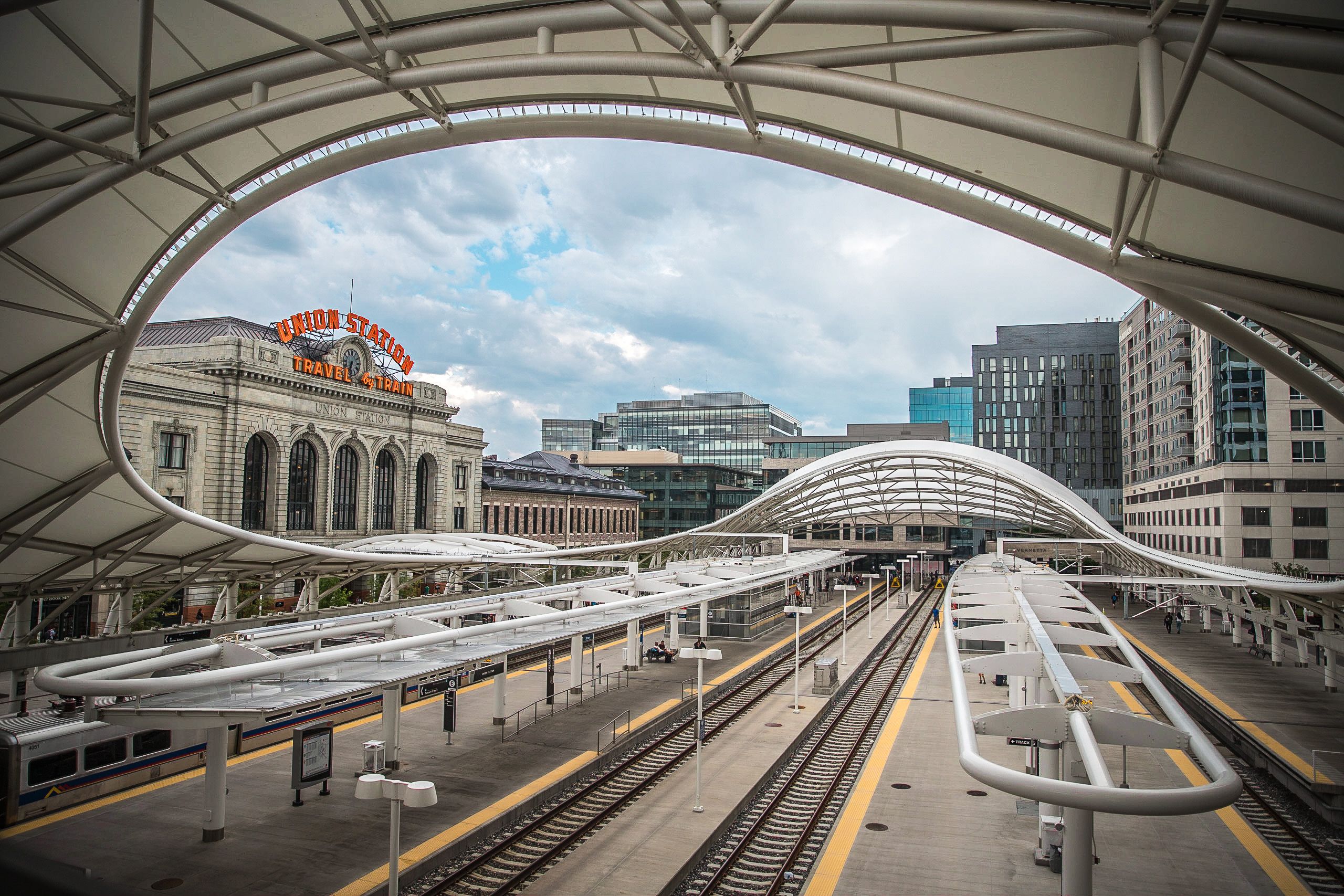
The original Denver Union Depot opened in 1881. The central hall and clock tower were destroyed in an electrical fire in 1894. The depot was rebuilt, but the city quickly outgrew the modest structure. A redesigned Denver Union Station opened in 1914 and was again renovated in 2014. It continues operating to this day.
City Hall
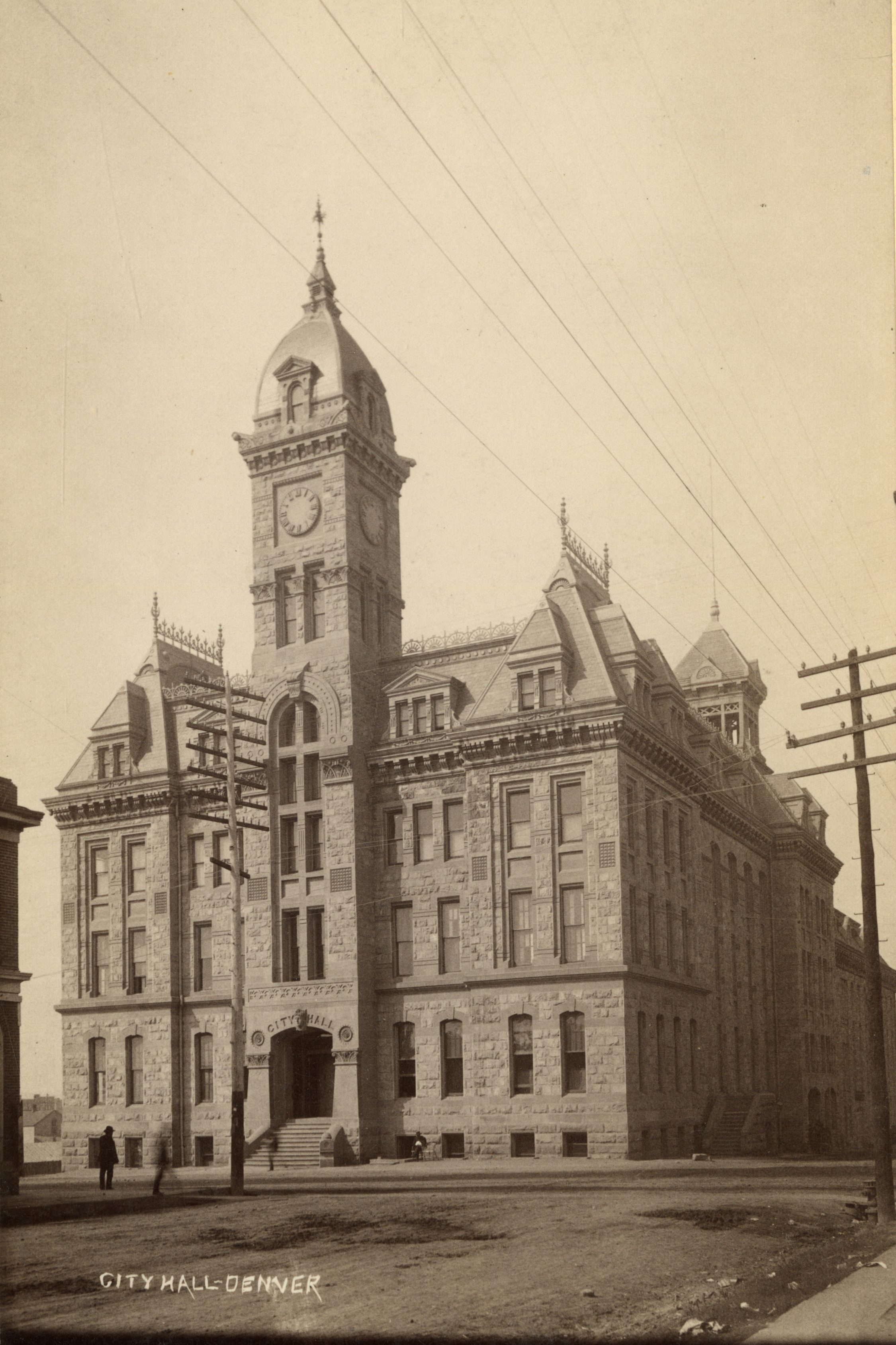
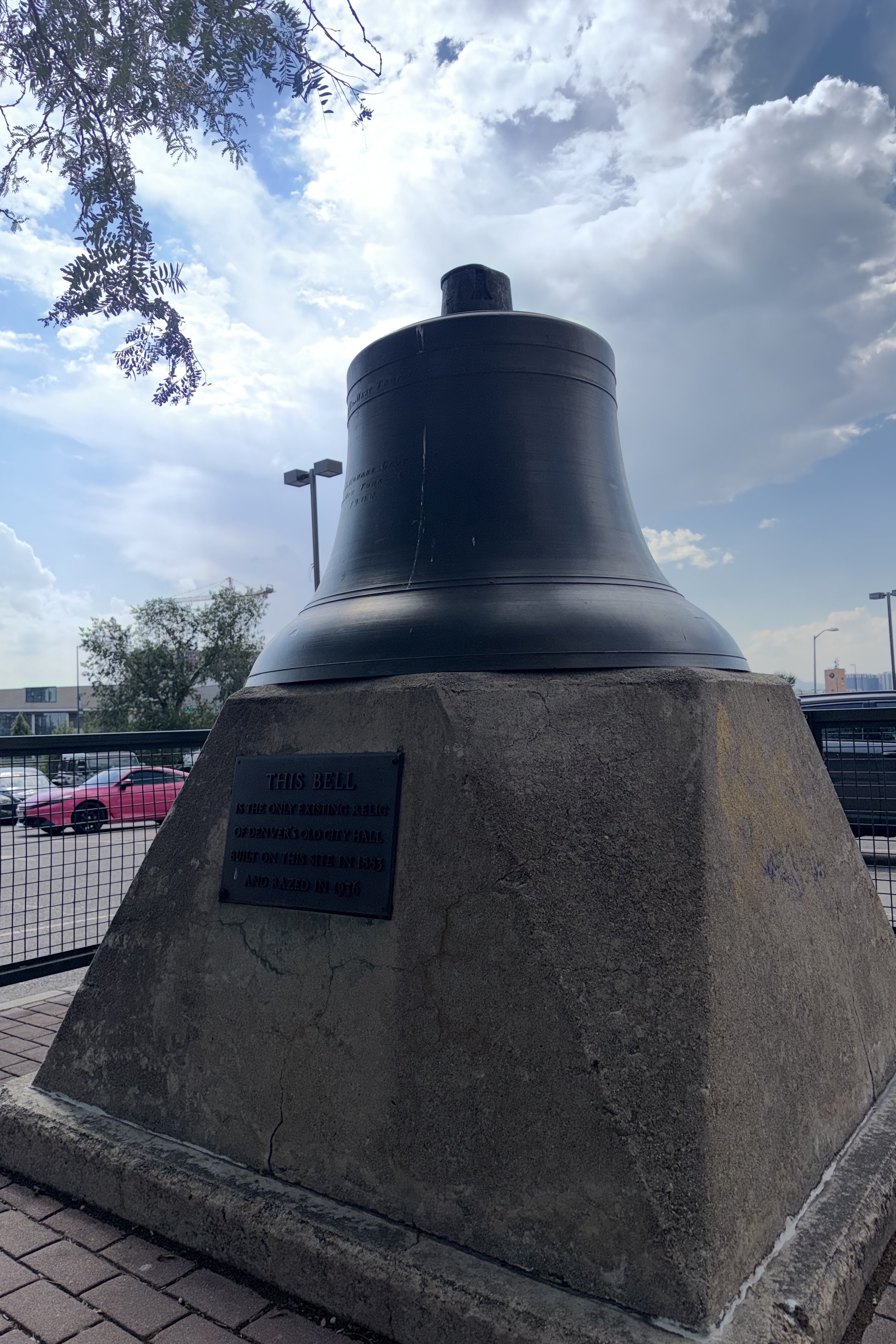
The old Denver City Hall, pictured in the late 19th century. The building, located at 14th and Larimer streets, was built in 1883 and demolished in 1936. The old City Hall bell is still displayed at 14th and Larimer streets to commemorate the building — the only existing relic that remains. The current city hall, called the Denver City and County Building, is located a mile down 14th Street on Bannock Street.
Larimer Street
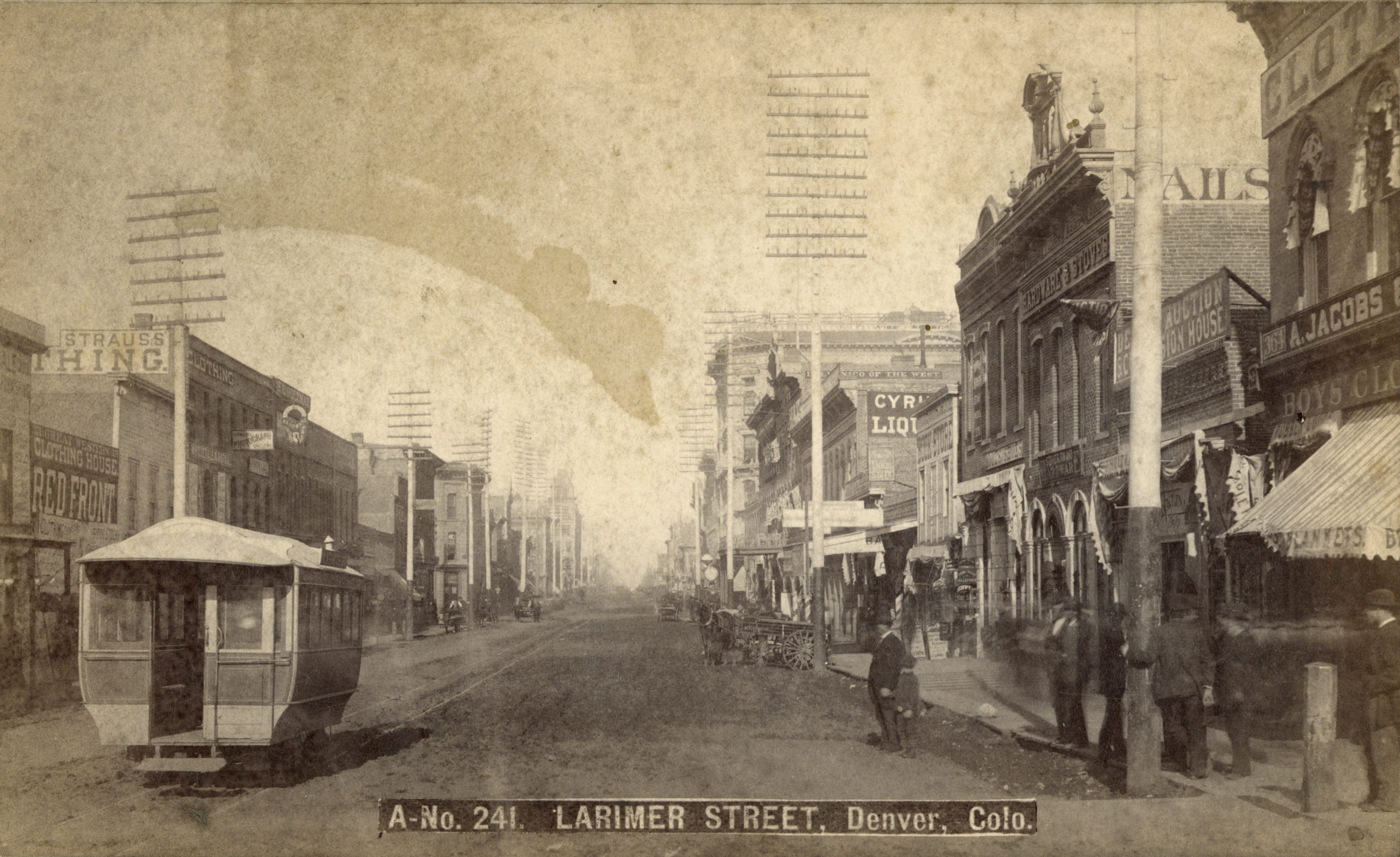
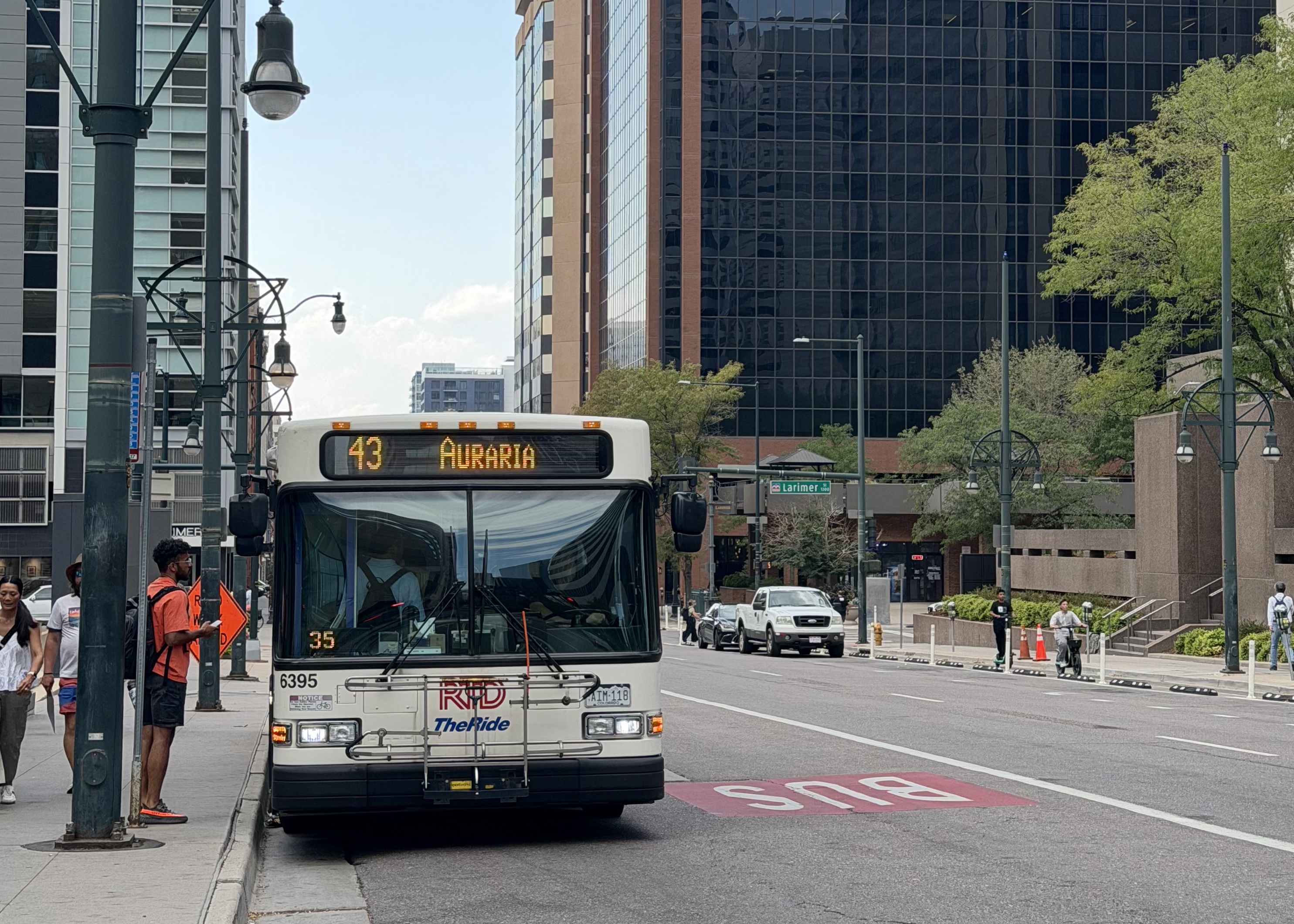
A streetcar photographed on Larimer Street between 1875 and 1885. Denver’s first streetcar line was laid in 1871 from Seventh and Larimer streets to 27th and Champa streets. Some lines were horse-drawn. Some were operated by coal-powered cable, and later came the electric streetcars. These days, residents rely on light rail and buses for public transit. The last of Denver’s effective. streetcar lines ceased operation by 1951, although there is still a small line along the Platte River that departs from Confluence Park and stops at the Denver Aquarium and Children’s Museum of Denver.
Union Brewing Company

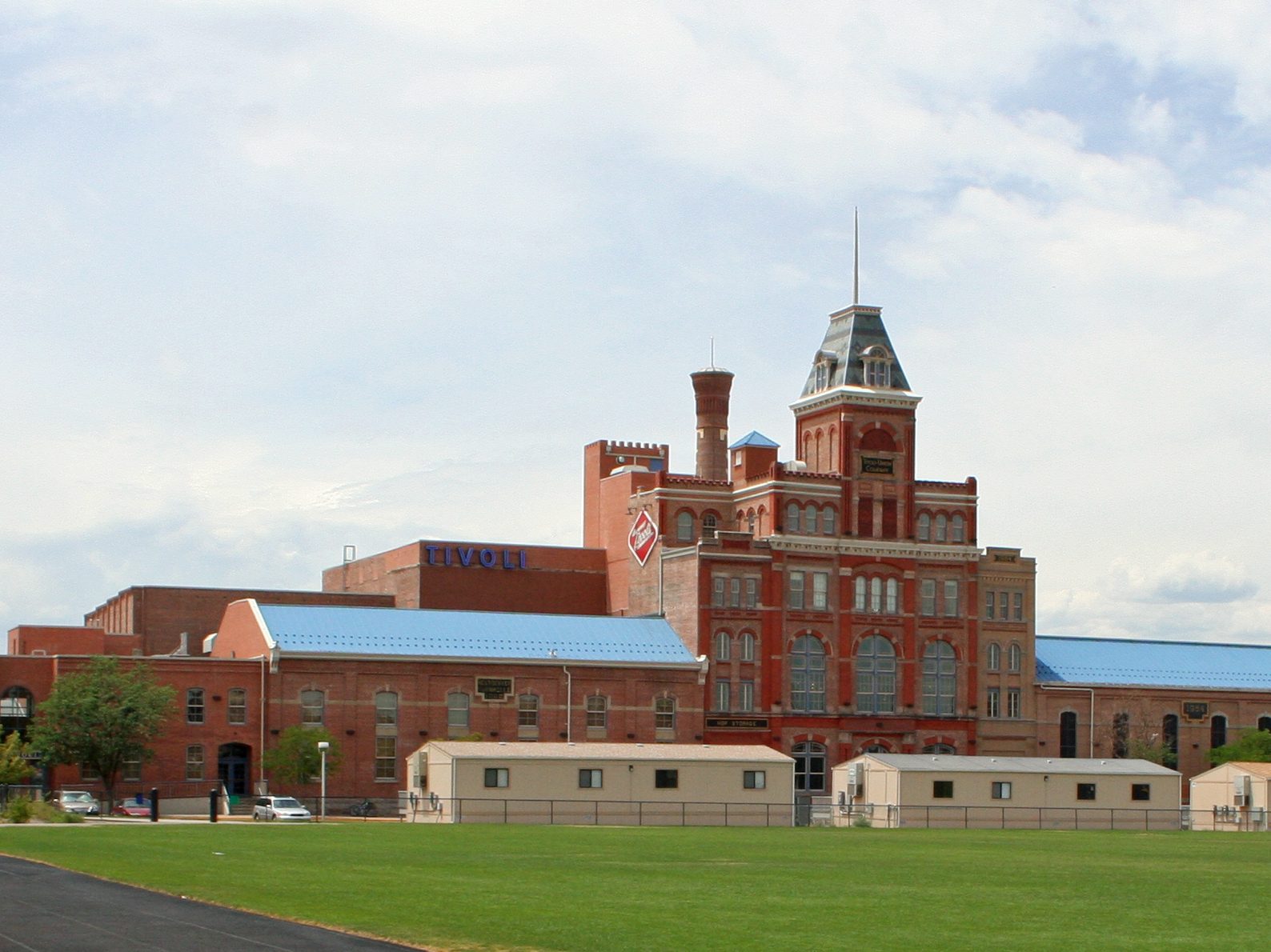
Employees of the Union Brewing Company, pictured sometime between 1870 and 1900. The company merged with Tivoli Brewery in 1901 to form the Tivoli-Union Brewery Company, which operated until the mid-1960s — and then again from 2012 to 2023. Today, the building houses the Tivoli Student Union on the Auraria Campus, serving students of the University of Colorado Denver, Metropolitan State University of Denver and the Community College of Denver.
17th Street


The view down 17th Street from Wazee in the late 19th century, with Denver Union Depot at the end of the street and the Hendrie & Bolthoff Manufacturing Company to the right. Today, the area around 17th and Wazee streets is an entertainment hub, lined with restaurants, bars and cafes, and nestled between 16th Street and Coors Field.
Barth Hotel
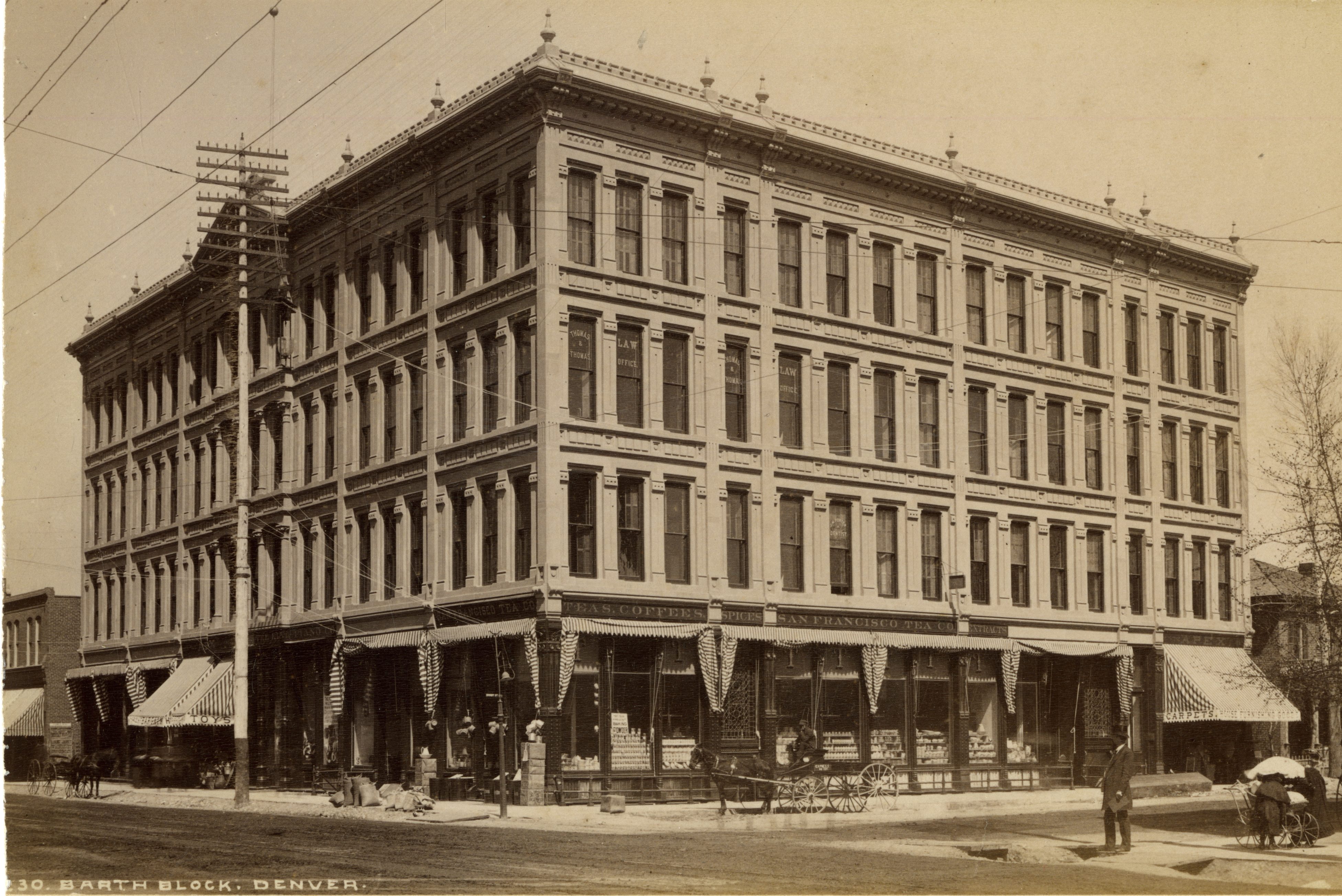
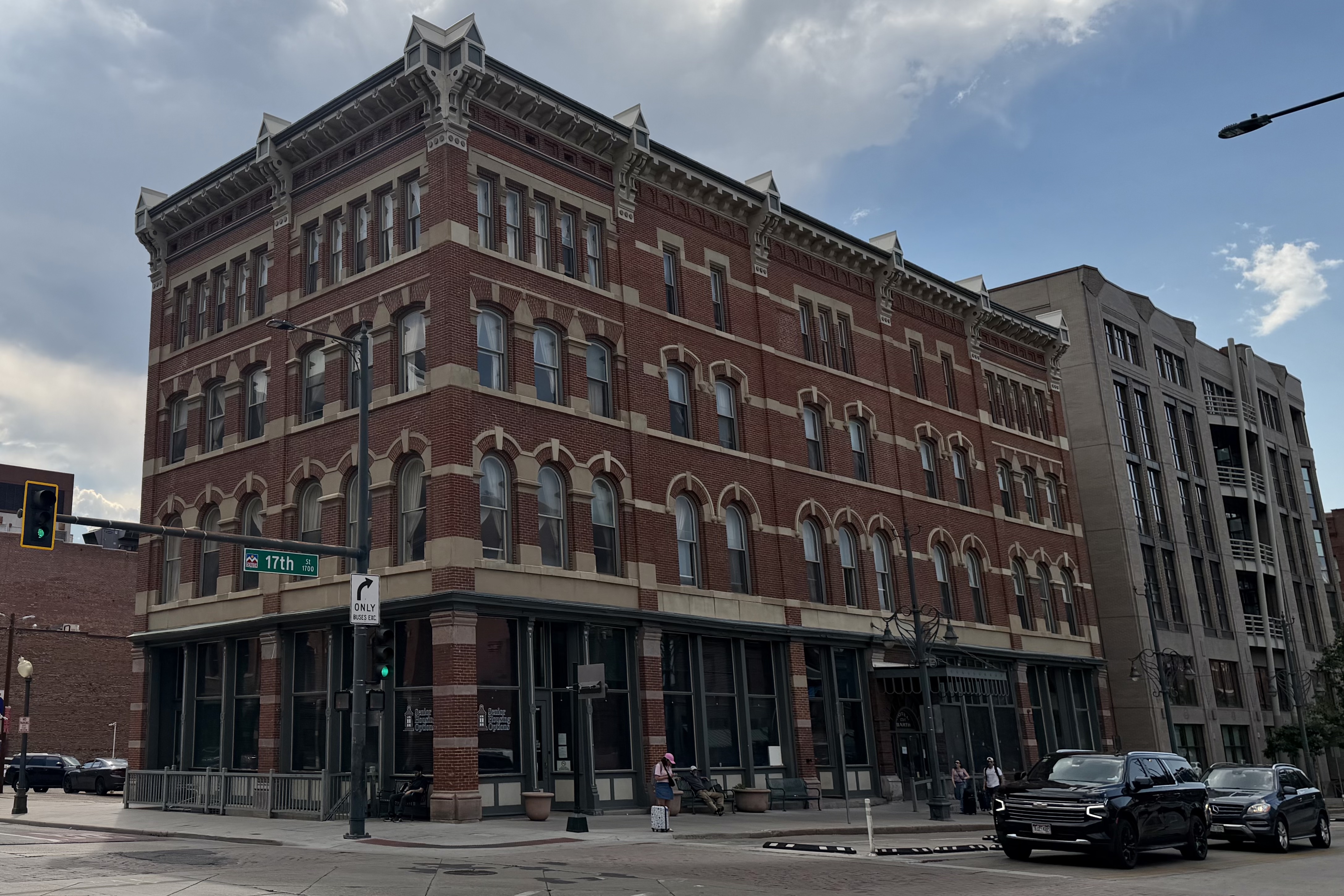
Barth Block at 17th and Blake streets in the late 19th century. Built in 1882, the building was first used as a warehouse before being converted into a hotel. By 1980, it was the oldest continuously operated hotel in Denver. The Barth Hotel was converted into an assisted living facility in 1981. It shut down in January 2025, with plans to be redeveloped into senior housing.
16th Street
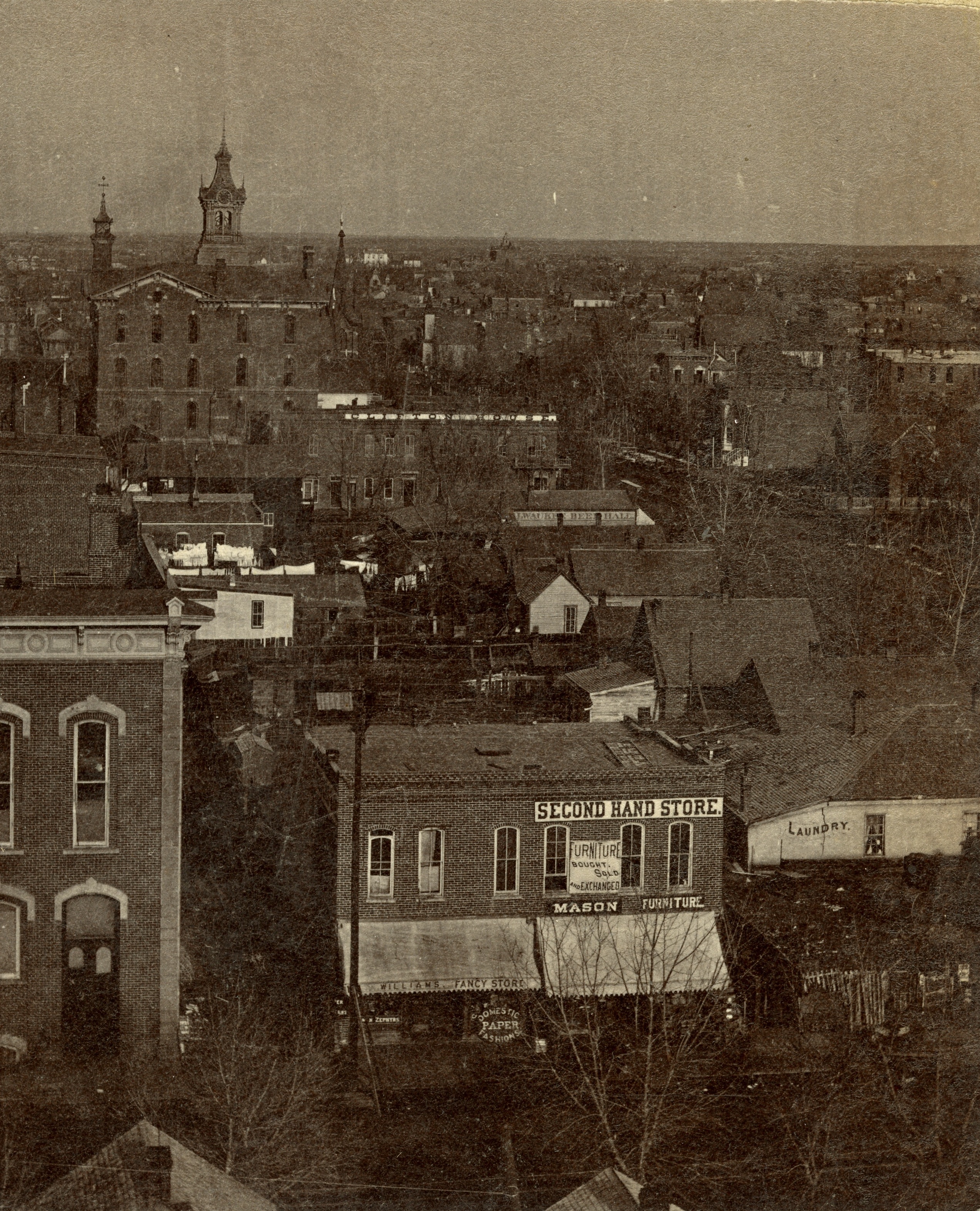
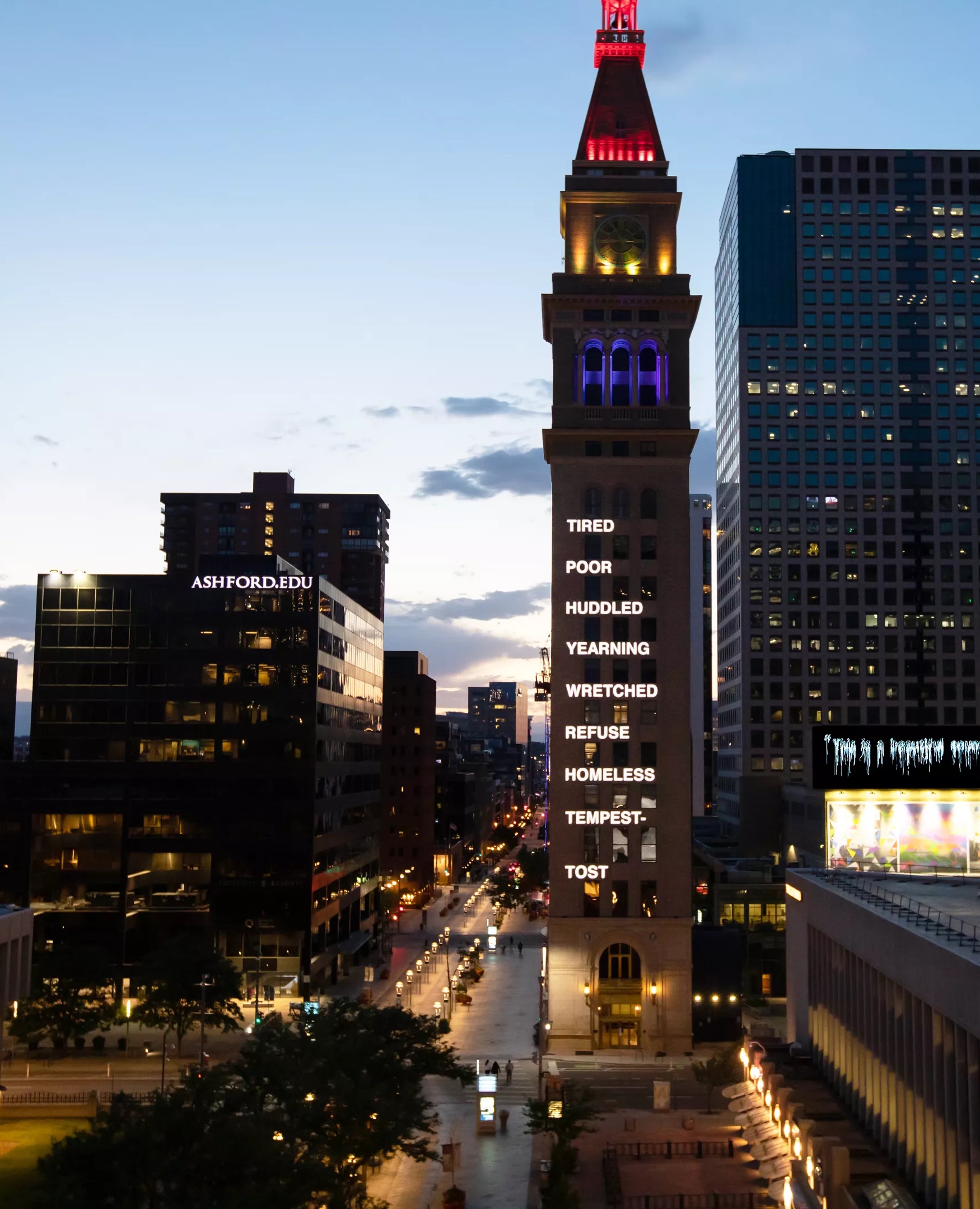
An albumen stereoscopic view of Denver between 1870 and 1890. A second-hand store, laundry facility and “fancy store” are visible looking northeast near 16th and Arapahoe streets. Today, the Daniels & Fisher Tower can be found at that intersection.
Tabor Block
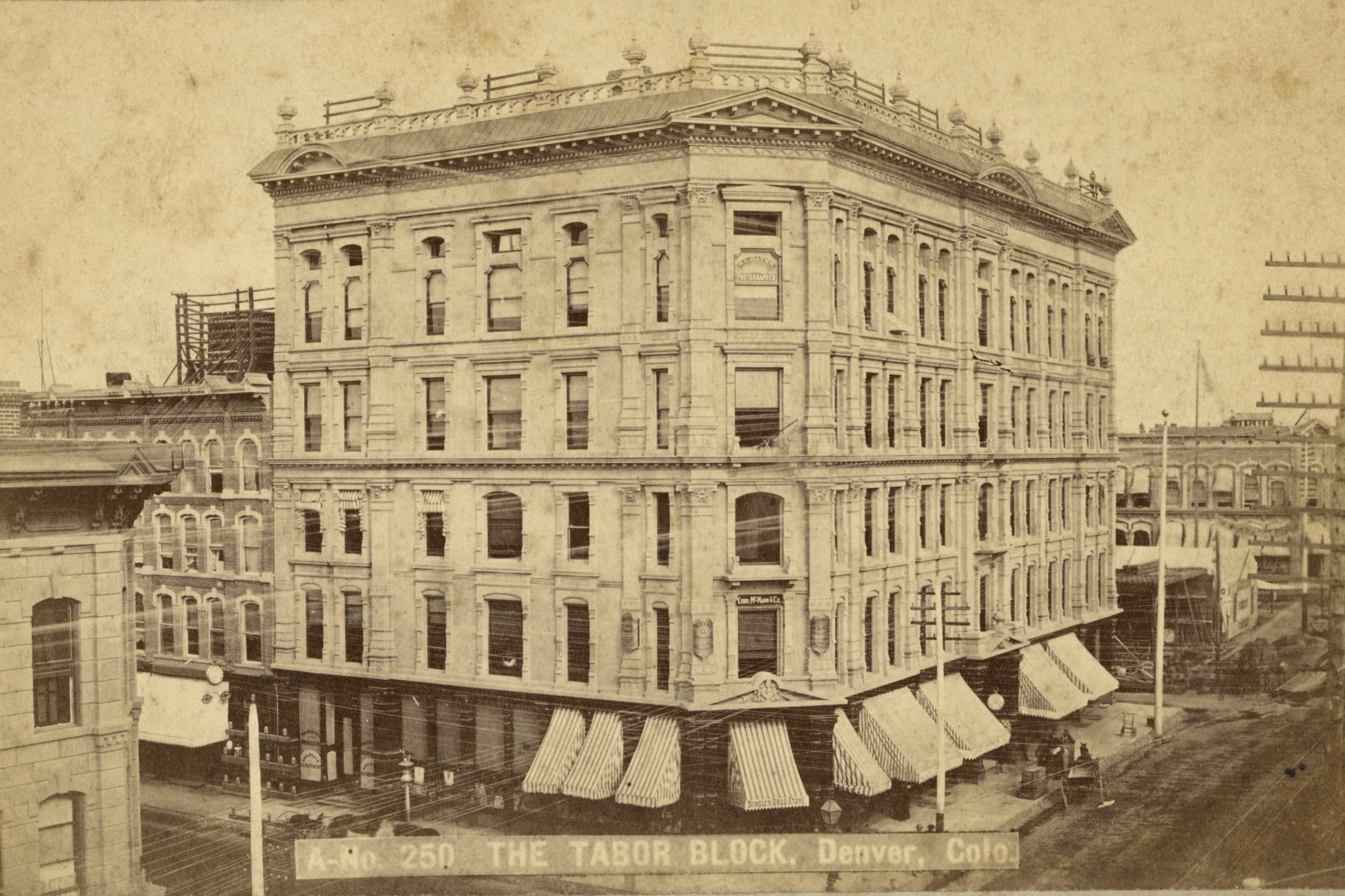
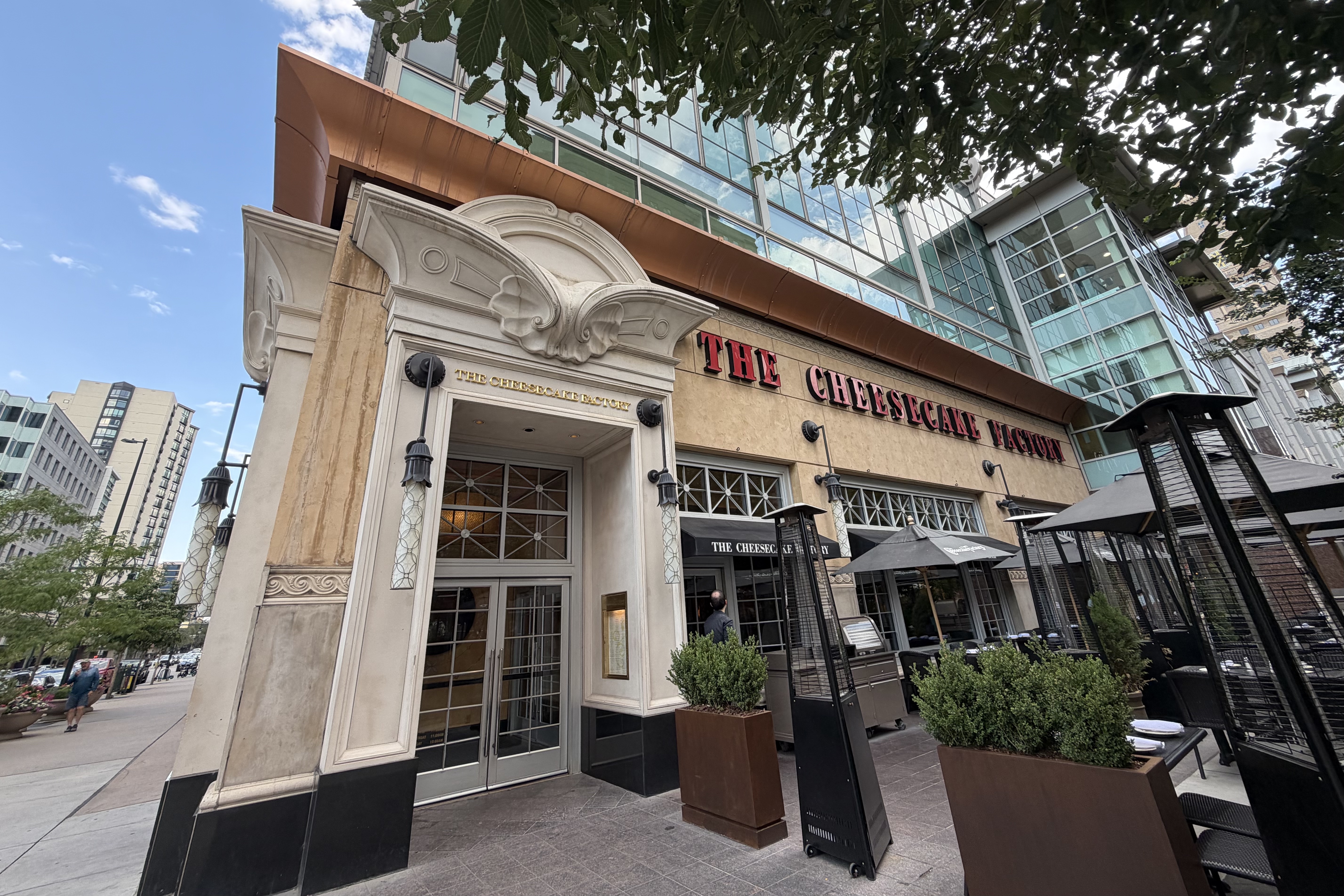
The Tabor Block at 16th and Larimer, between 1879 and 1885. The building, constructed in 1879, contained numerous businesses, including a jewelry shop, drug store and insurance and loan office. The Tabor Block was demolished in 1972. Today, a Cheesecake Factory stands in its place on the southeast corner of 16th and Larimer streets.
Capitol Hill
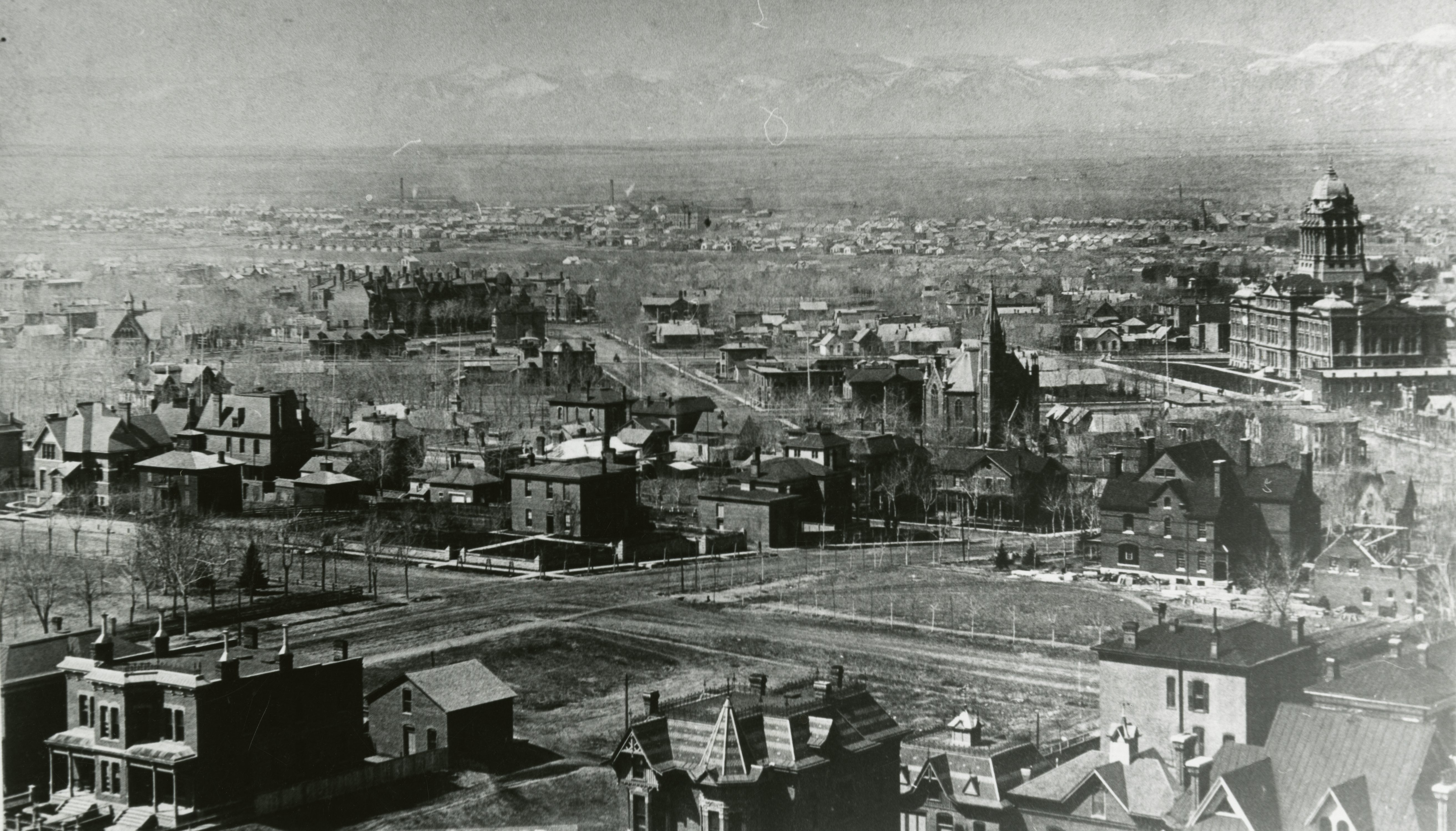
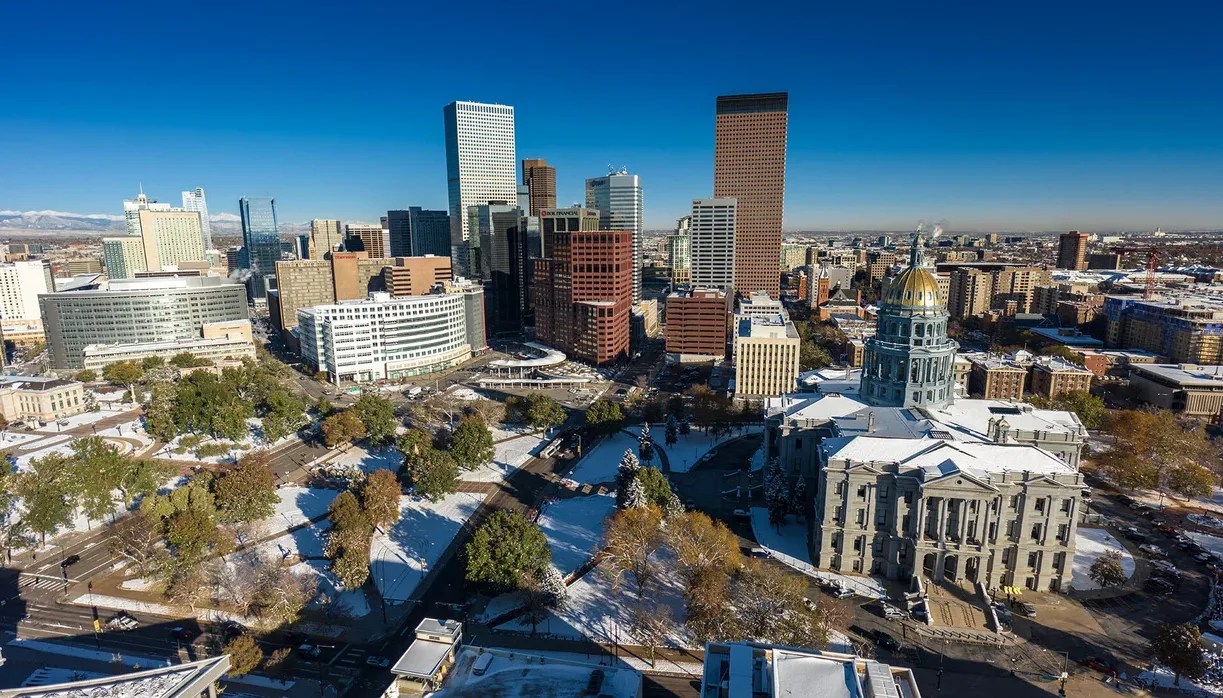
A bird’s-eye view of Denver in the early 1880s, looking southwest. The Arapahoe County Courthouse is visible on the right, then located at Court Place and 16th Street. Often mistaken for the Colorado State Capitol building, the courthouse was built a decade earlier, from 1881 to 1883. It was demolished in 1933. The courthouse’s block is now occupied by the Sheraton Denver Downtown Hotel. The Colorado State Capitol, opened in 1894, stands half a mile away.
15th Street
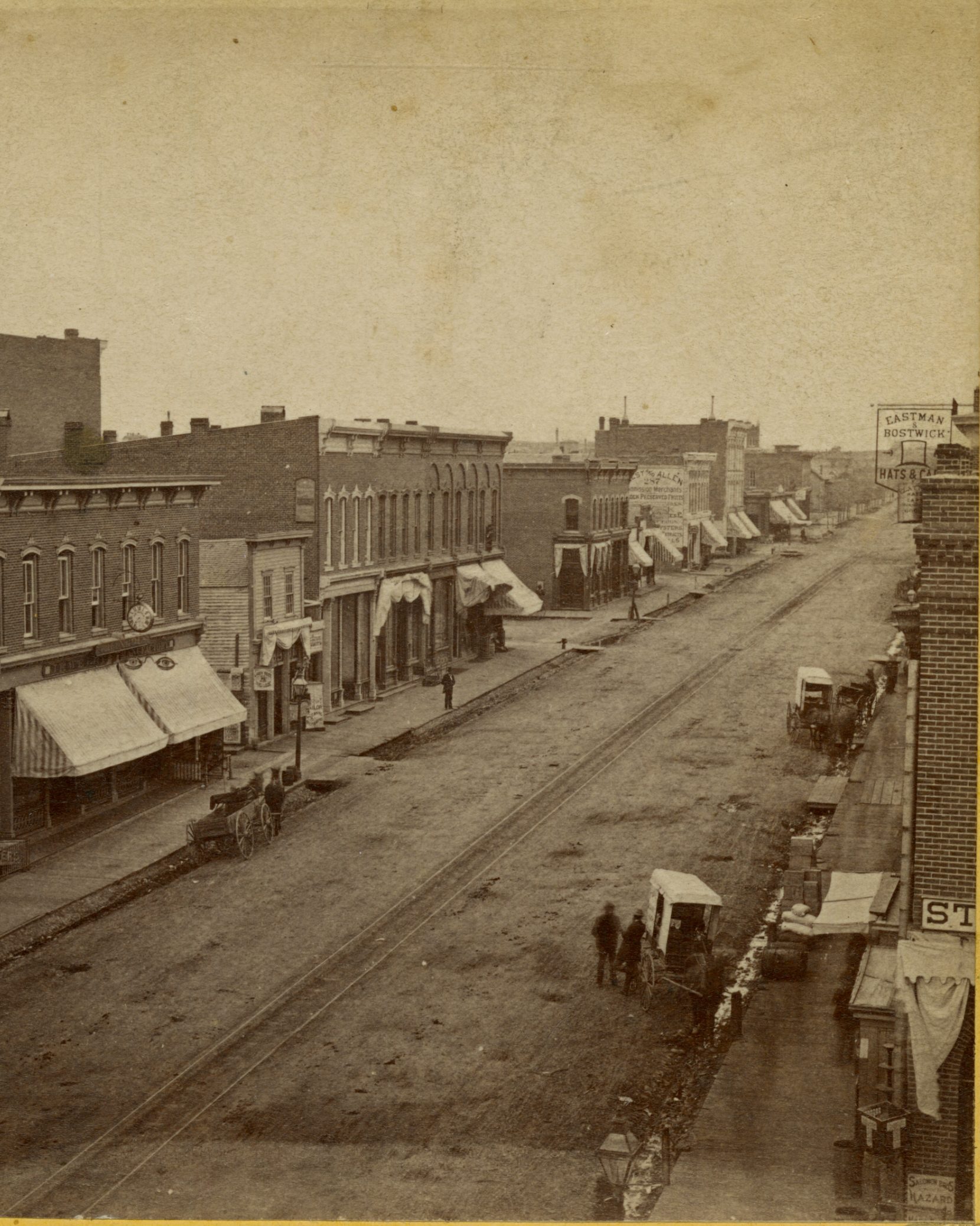
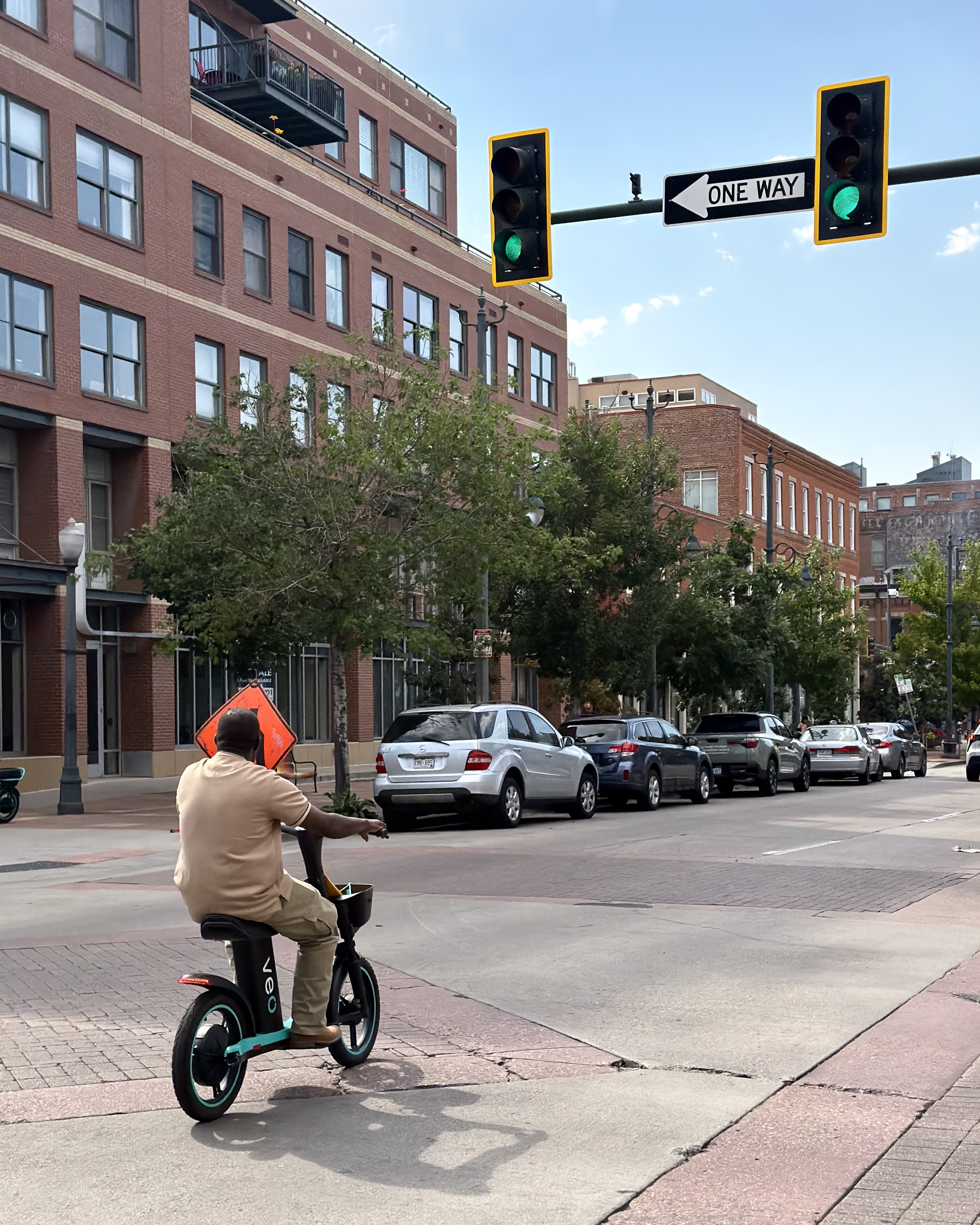
A stretch of 15th Street in 1870, featuring horse-drawn carriages and the Eastman & Bostwick Hats & Canes shop. Rather than horses, 15th Street is filled with cars and electric scooters these days.
Winter landscape
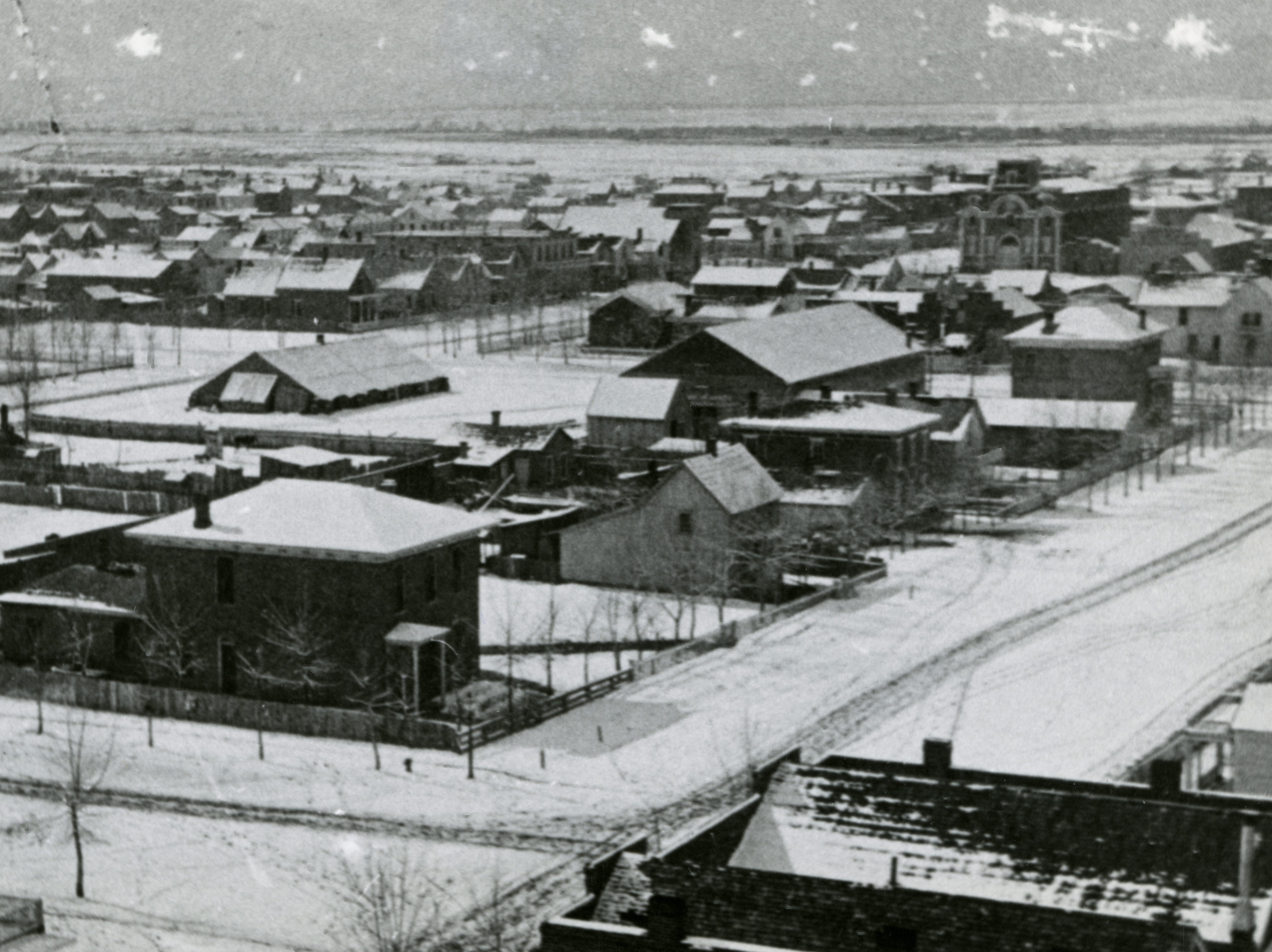
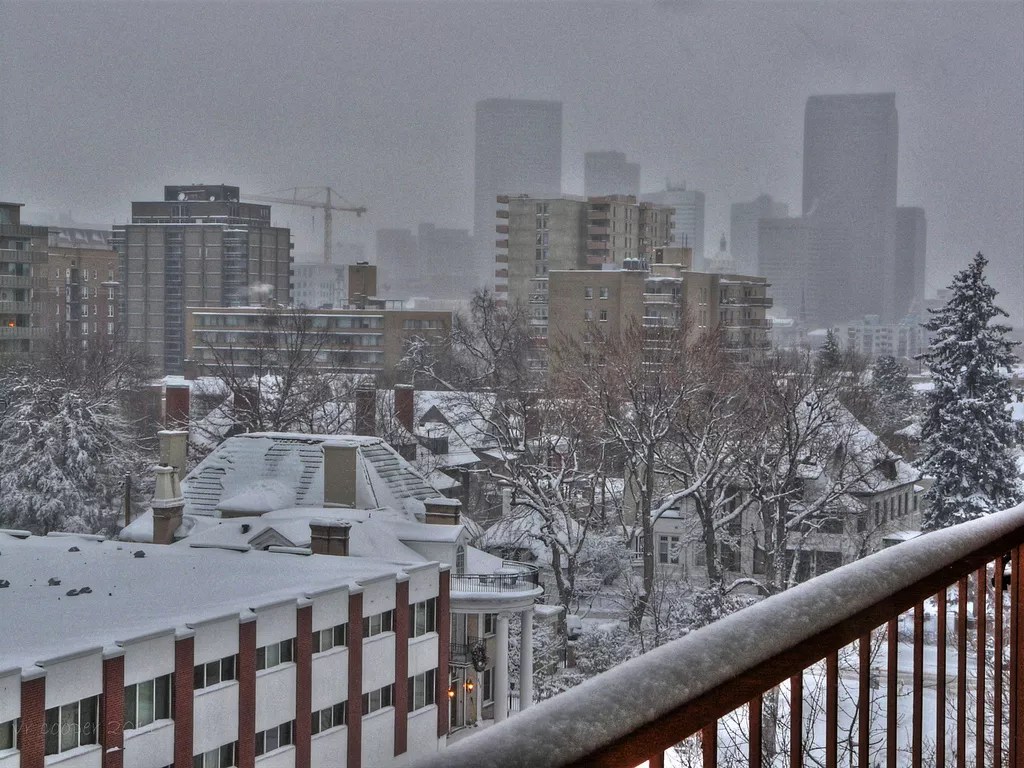
A rooftop view of early Denver between 1870 and 1890, with various homes covered in snow. In the 1880s, downtown Denver received 37.7 inches of snow per year on average. So far in the 2020s, Denver has received an average of 51.6 inches of snow per year. However, the National Weather Service moved the location for its snowfall measurements from downtown to the Denver Stapleton Airport in 1950, and then to Denver International Airport in 2007.
Market Street
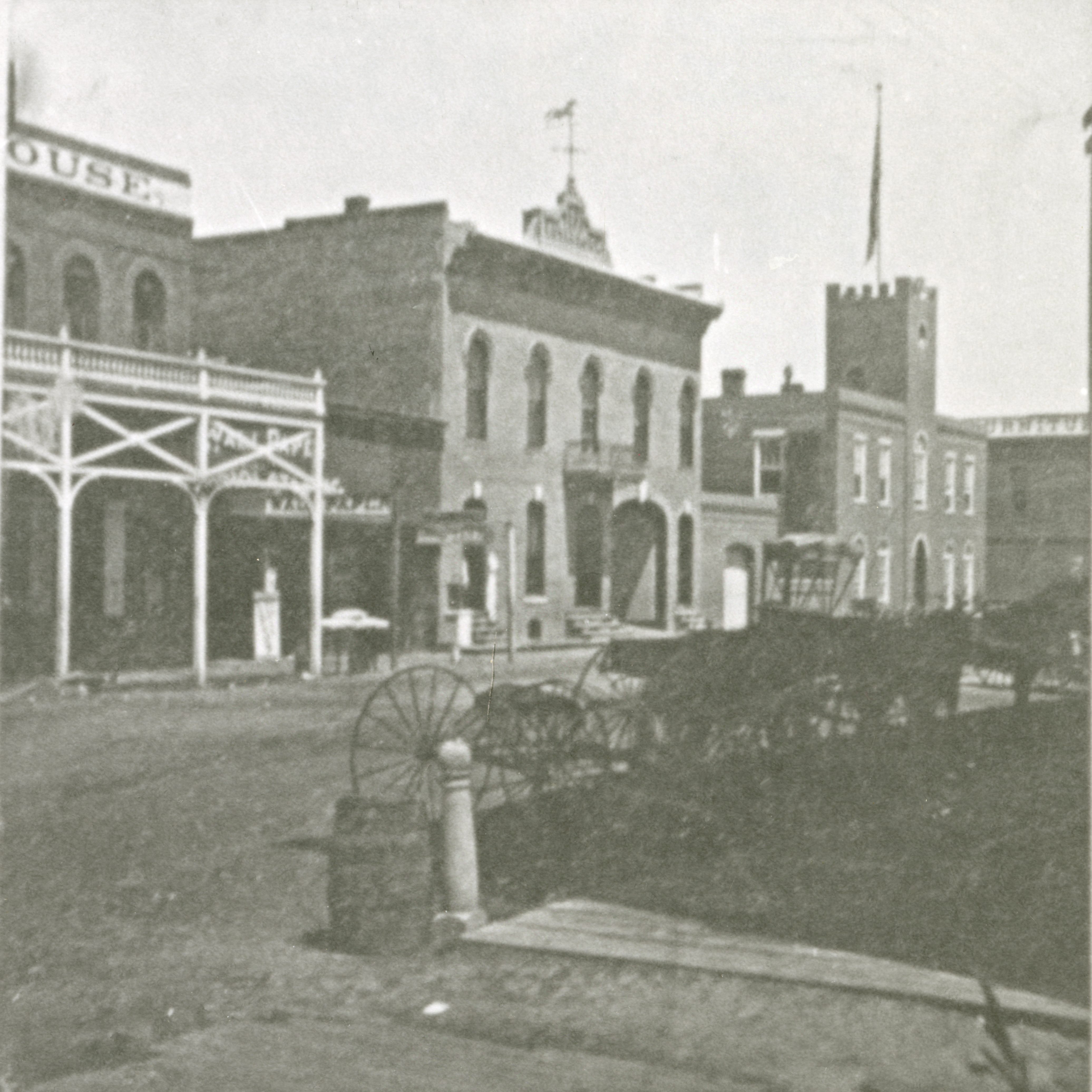
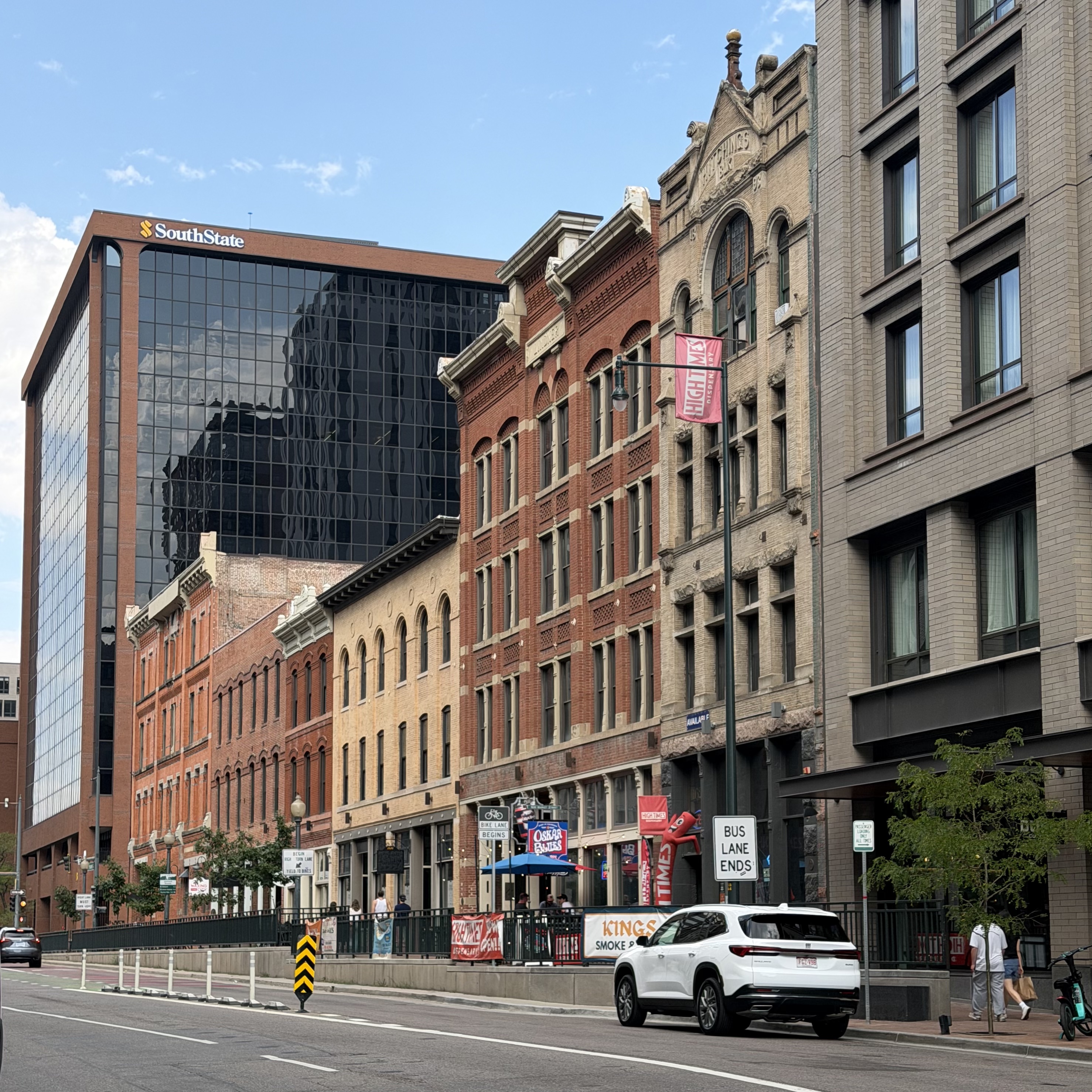
Holladay Street near the intersection with 16th Street between 1870 and 1880, featuring the Estabrook Livery and the first Denver Mint. Holladay Street was renamed to Market Street in the late 1880s at the request of the descendants of Ben Holladay, a transportation businessman for whom the street was named in 1866. Holladay’s family was angry that the street had become home to gambling halls and prostitution houses.
Lawrence Street
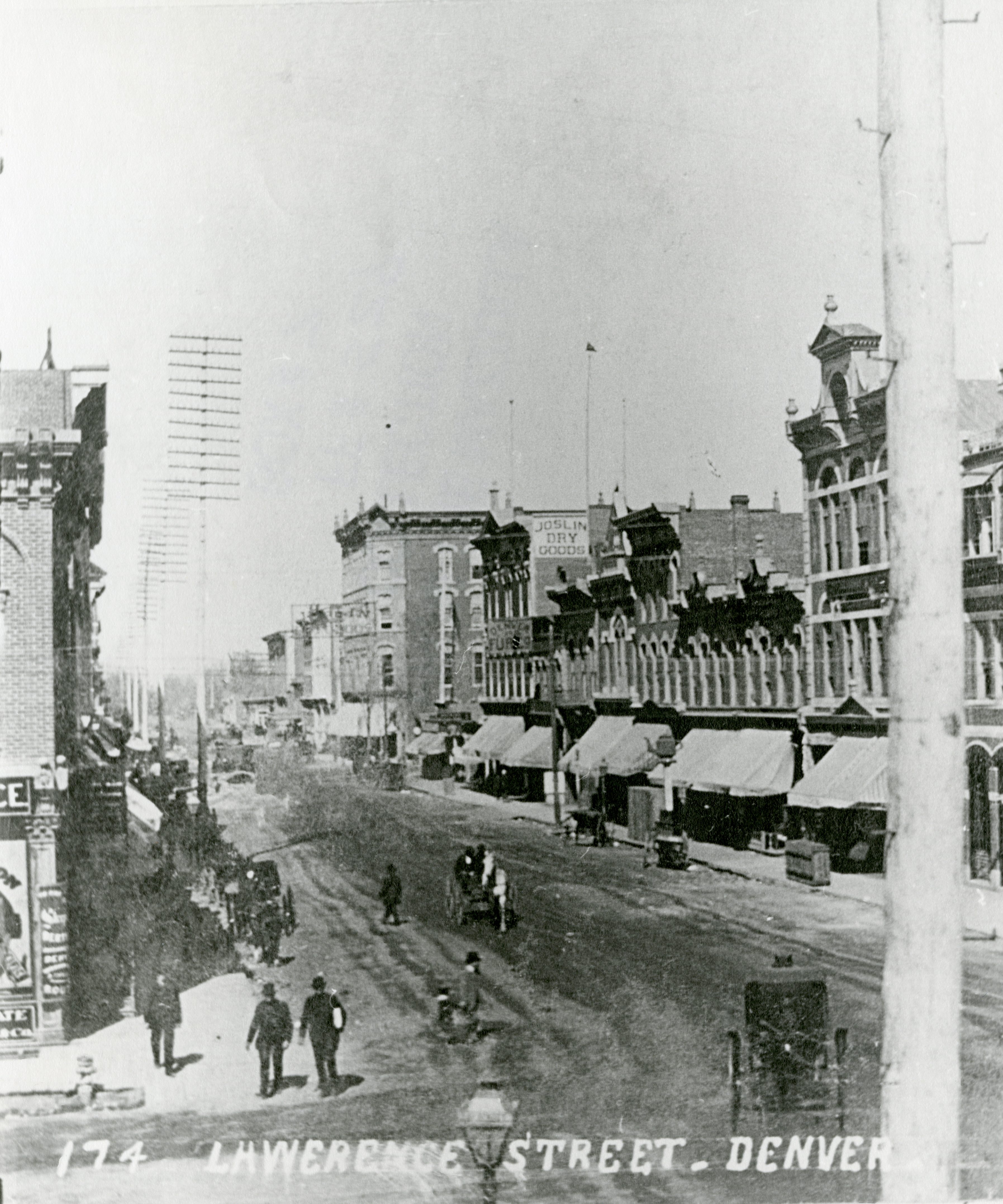
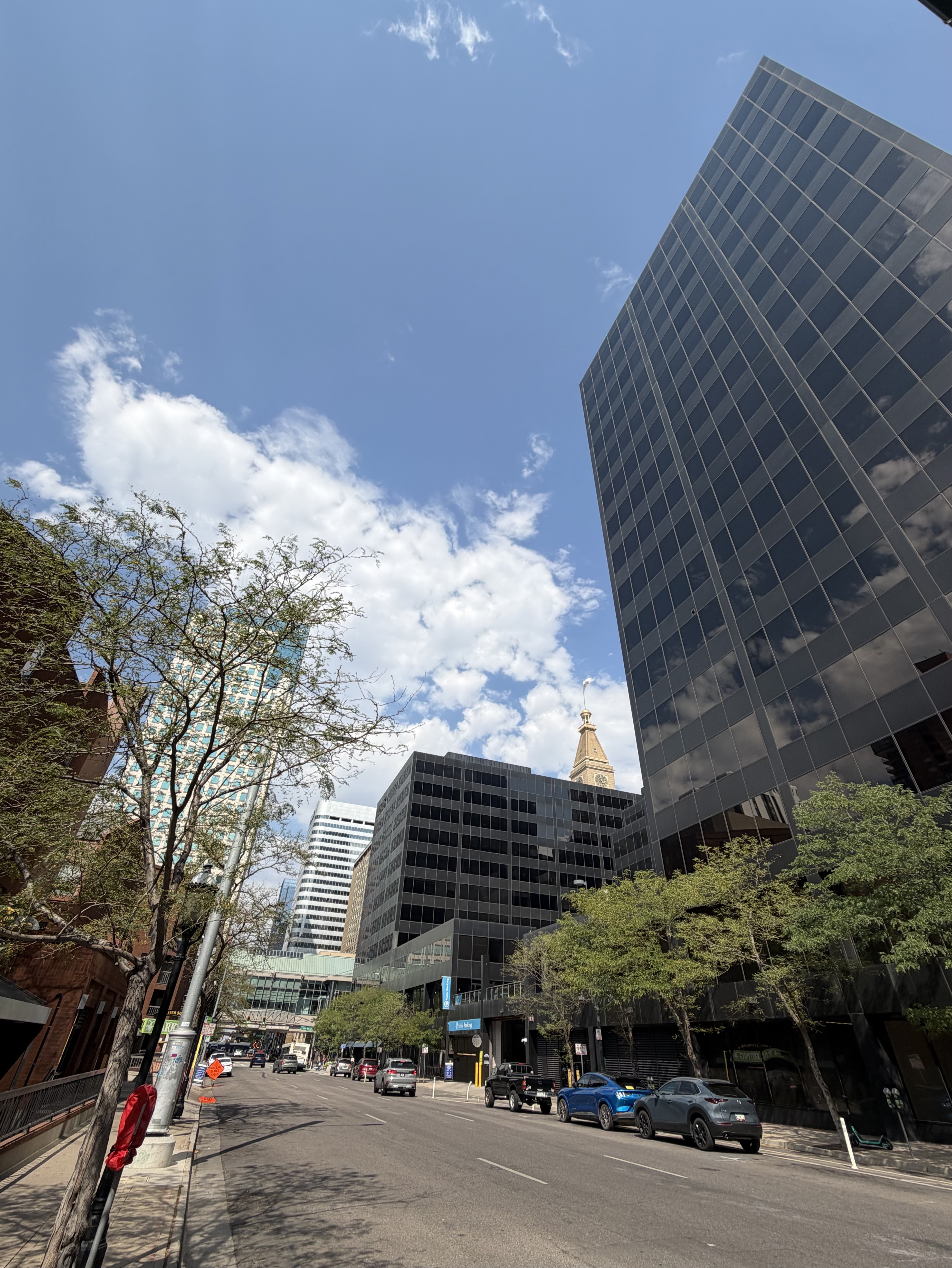
Lawrence Street looking north from 15th Street, with dirt roads, buggies, and Joslin Dry Goods and Daniel & Fisher stores visible in the distance. Today, that stretch of road is comprised of office buildings, parking garages and businesses like Front Porch bar and Ike’s Love & Sandwiches.
Longs Peak
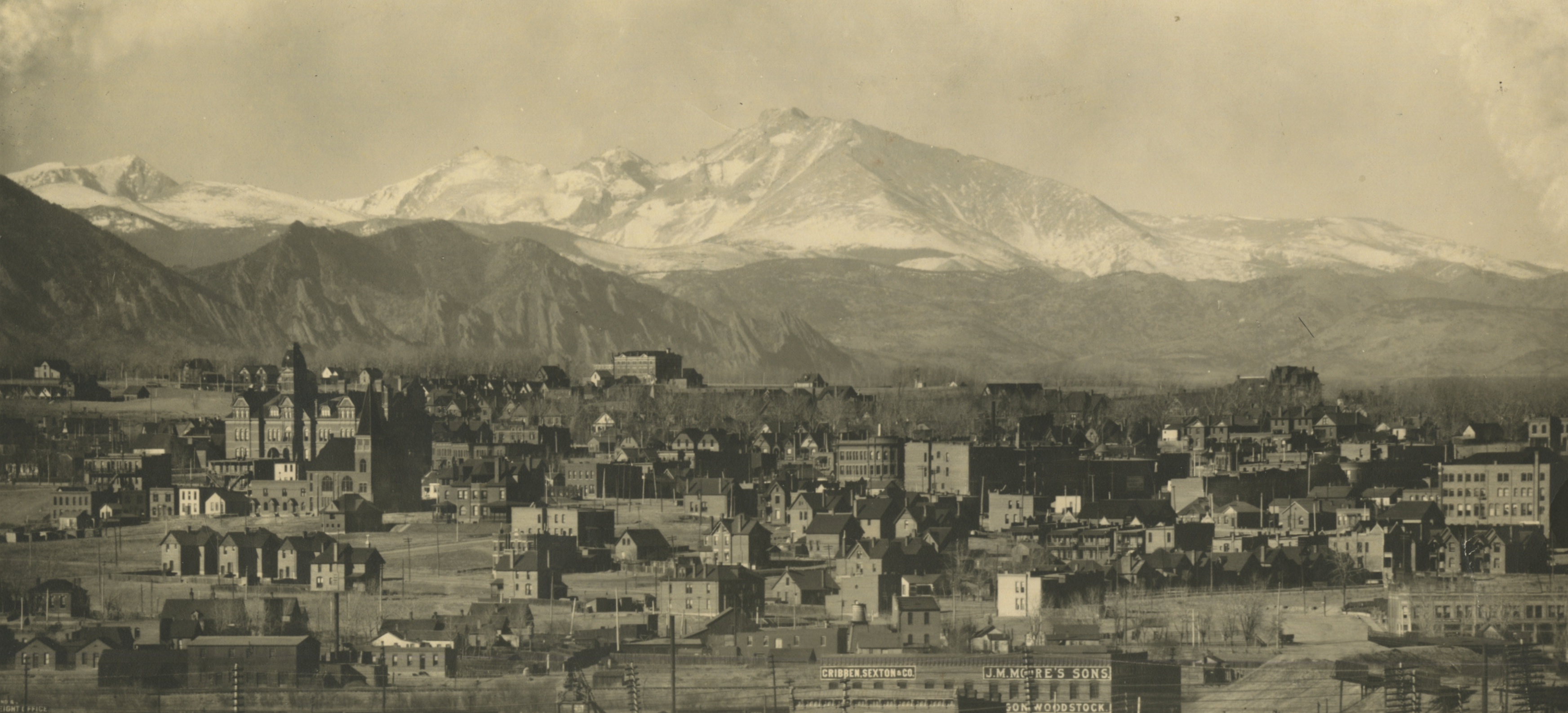
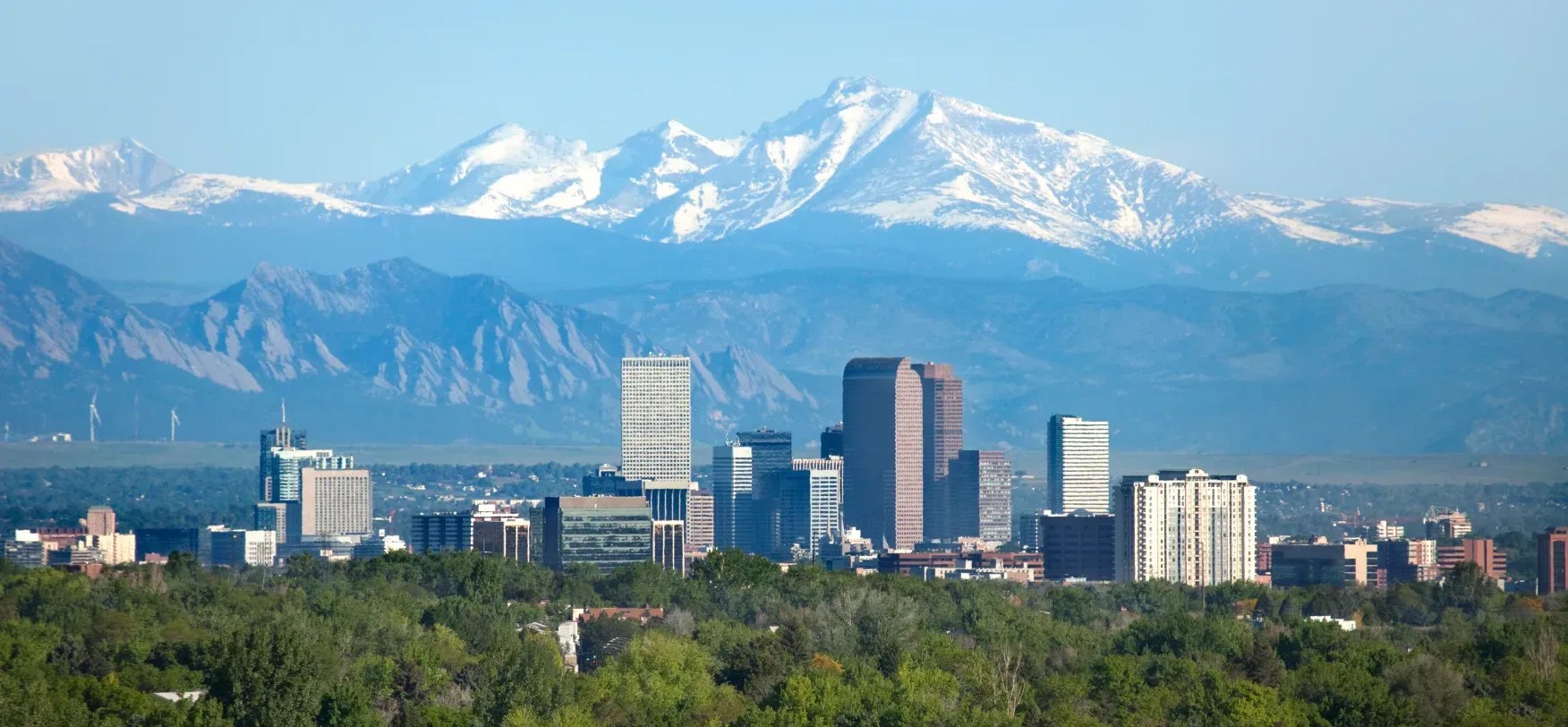
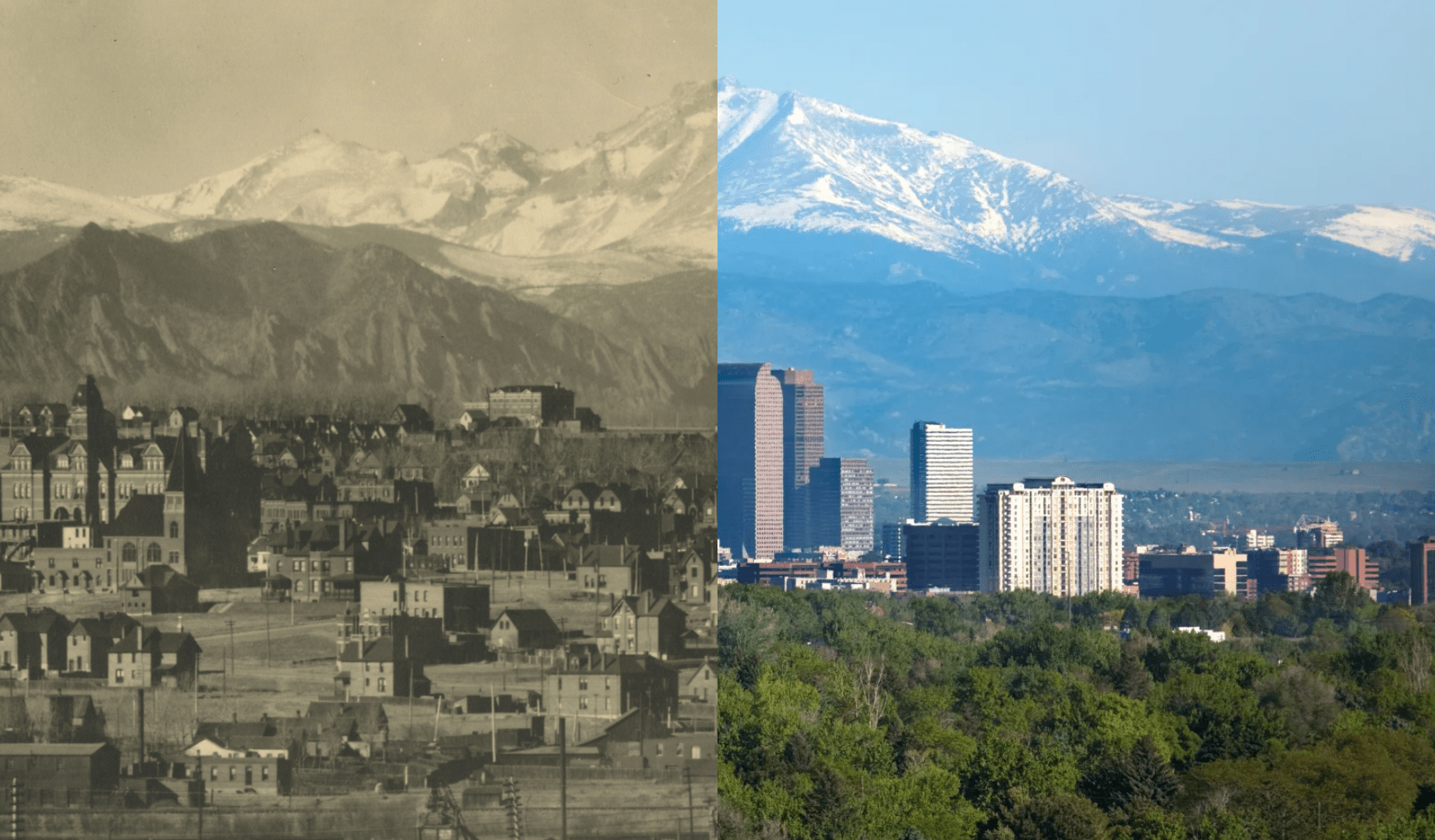
Longs Peak visible in the skyline above Denver, pictured sometime in the late 19th century. The view remains iconic to this day.