
Conor McCormick-Cavanagh

Audio By Carbonatix
It’s getting a little rocky for Kroenke Sports & Entertainment.
On July 8, Denver District Judge Chris Baumann ruled to certify part of former Denver Nuggets mascot Drake Solomon’s lawsuit as a class action, allowing other KSE employees to join the claim that the employer violated the Protecting Opportunities and Workers’ Rights (POWR) Act in its severance agreements.
There are expected to be 24 employees overall, including Solomon, listed in the lawsuit.
“We know Kroenke is a big employer here and they use a template severance agreement, so all of the violations that were in Drake’s severance agreement, we have a pretty strong basis to believe would be in additional ones,” Virginia Hill Butler, attorney at Rathod Mohamedbhai, tells Westword.
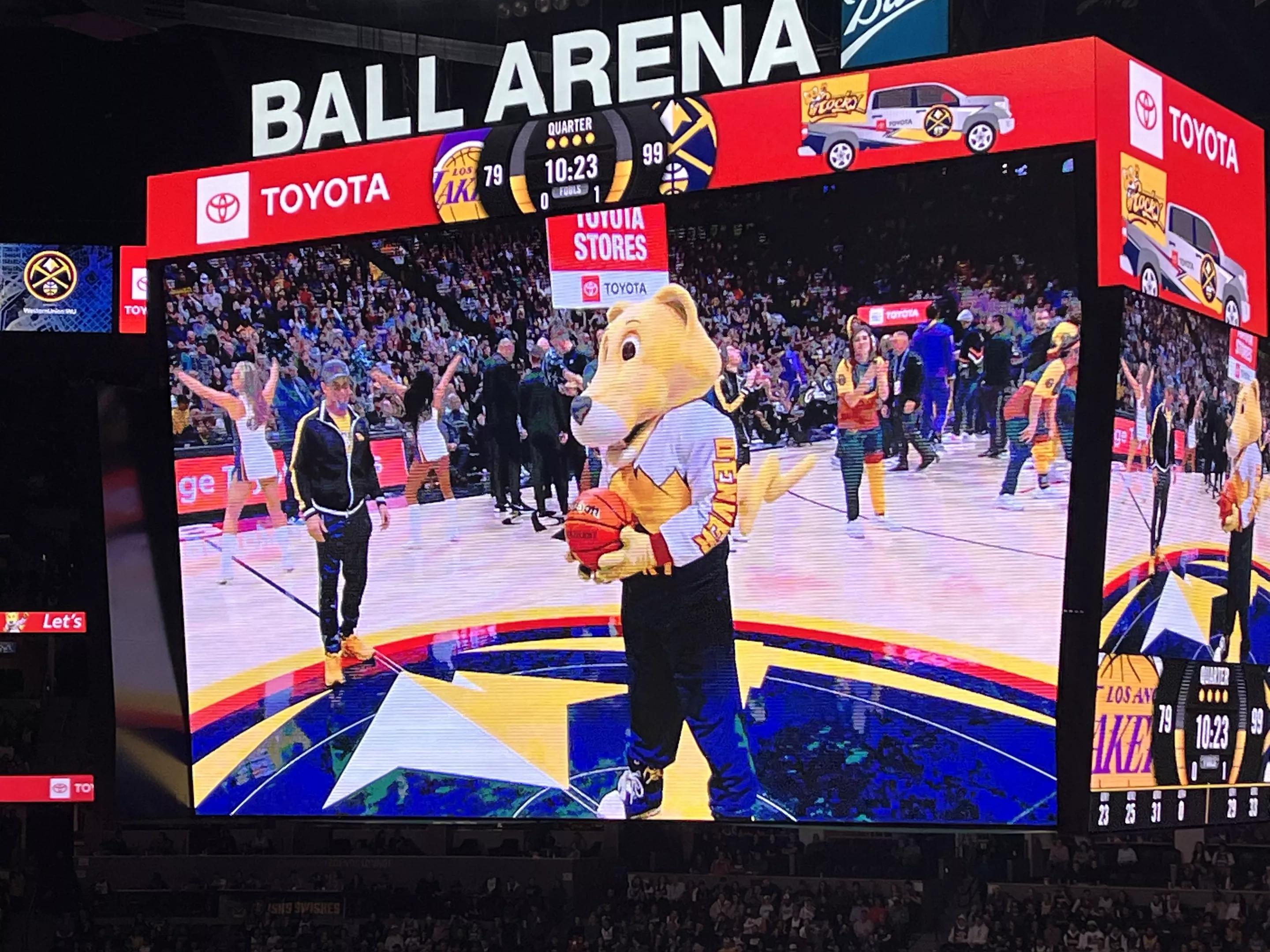
After Rocky’s 1990 introduction, the high-flying yellow mountain lion quickly became the most popular mascot in Colorado sports. Solomon’s father, Kenn, was employed by the Nuggets as Rocky for over 30 years and was responsible for many of the antics and acrobatics that made the mascot so beloved.
That legacy was passed on when Drake Solomon took up the Rocky suit after his father retired in 2021.
But the younger Solomon began experiencing hip pain after a bout of COVID during the Nuggets’ 2022-2023 championship run. According to his lawsuit, Solomon’s hip pain eventually led to a diagnosis of avascular necrosis, a condition in which bones aren’t getting enough blood flow, causing bone tissue to die. In 2024, Solomon was forced to undergo a double hip replacement, he says.
Solomon’s lawsuit alleged that supervisors Steve Johnston and Craig Dzaman told him they would hold tryouts for his replacement, regardless of the outcome of the hip replacement. According to Solomon, he worked over the summer, right after his surgery, despite never being screened by the medical staff. He alleges that his supervisors asked him to teach replacement applicants how to dunk.
“I never took a vacation. I never wanted anyone else to step into that costume,” Solomon said after the lawsuit was filed in August 2025.
Attorneys representing KSE responded in a court filing last September, claiming that the termination was not discriminatory because Solomon “does not have a physical or mental impairment that substantially limits one or more major life activities and, as a result, does not have a disability.”
Solomon’s complaint also claims that the organization violated the POWR Act, a 2023 law that specifies what employers can write into severance agreements. The agreement included nondisclosure, non-disparagement and confidentiality provisions that violated state law, according to Solomon’s lawsuits. Now that POWR violation claim is a class action lawsuit.
“The statute is really clear about what a contract that has non-disclosure agreements has to include,” Butler says. “Now we have the opportunity to make sure all of these employees’ rights are being vindicated.”
Solomon’s lawsuit seeks economic and compensatory damages, punitive damages, attorney fees and $5,000 per violation for everyone in the lawsuit who received a severance agreement around 2024. Attorneys representing the former KSE employees expect a trial around spring 2027, which would ultimately determine both the class-action POWR violations and Solomon’s individual discrimination claims.
Another Rathod Mohamedbhai attorney on the case, Matthew Cron, says the POWR Act was created to protect employees, with those working for large and powerful corporations, like KSE, in mind.
“Employees are often not going to know what exactly Colorado law provides in what protection it affords,” he says. “It’s a privilege to be able to help a bunch of people at the same time and to make sure in the future that Kroenke and other employers know they have to follow Colorado law.”