
Claire Oberon-Garcia

Audio By Carbonatix
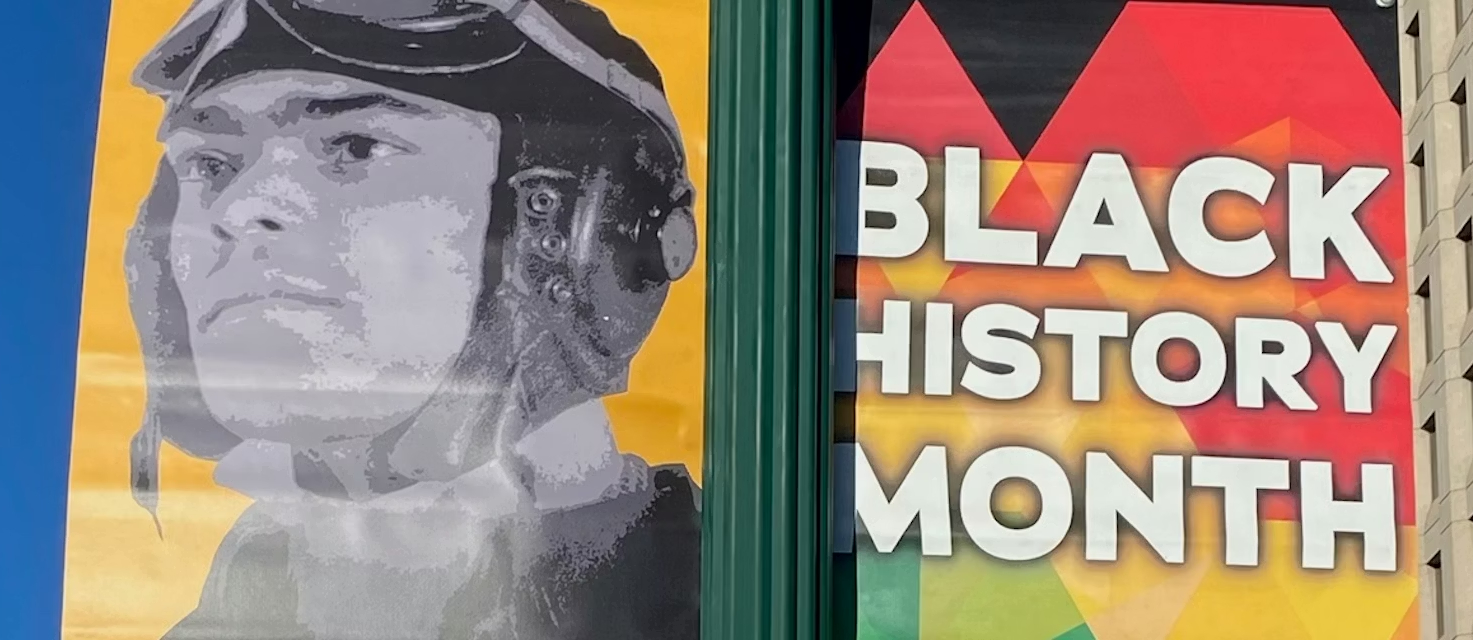
For the past eight years, the Colorado Springs City Council has issued proclamations and recognitions paying homage to the achievements of its African American citizens.
In 2005, the Colorado Springs City Council and Mayor Yemi Mobolade jointly issued a Black History Month proclamation.
This year, the mayor’s office issued its own statement alluding to Mobolade’s identity as the city’s first Black and first immigrant mayor. It also praises the positive effects of past and present African American achievement in Colorado Springs.
The City Council was slower to act, finally succumbing to pressure to approve their own proclamation two weeks later.
Why did a routine symbolic gesture — one performed by public and private institutions across the nation — become questionable in Colorado Springs?
I’m a Black Studies scholar. I’ve been personally and professionally affected over the years by the changing attitudes and policies surrounding the preservation and sharing of African American history.
Currently, I serve on the State Historian’s Council with History Colorado. I also sit on the Black Coloradan Racial Equity Study Committee, which oversees research required by Senate Bill 24-053. This bill seeks to examine how state and local policies in areas such as education, health, housing, the criminal justice system and business have affected Black Coloradans past and present.
I wondered if this local controversy was symptomatic of recent pressure from the current White House administration to erase, misrepresent or repurpose the experiences of Black Americans. What I found behind the controversy is more complicated.
Colorado Springs City Council Controversy
The controversy was sparked when City Councilman Dave Donelson walked out of the council meeting. He did so after several local faith leaders made critical comments about Immigration and Customs Enforcement actions across the country on Martin Luther King Jr. Day.
Reverend Josh Rumple, who leads the First Congregational Church in Colorado Springs, was one of the speakers. He said King’s messages have been whitewashed over time to appease people who disagree with him, according to public radio station KRCC.
Donelson refused to participate in the rest of the proclamation program because he was “offended” by criticism of ICE. “I find what was said here offensive,” he said.
Angela Stevens, president of the Colorado Springs chapter of the NAACP, the nation’s oldest civil rights organization, was angry that the proclamation could not get enough support at that meeting.
“We see you as a body playing it safe,” she said. She added that the inaction of city council was part of a “national pattern of de-emphasizing Black history.”
Reverend Candace Woods organized the anti-ICE comments at the meeting. She saw the comments as consistent with King’s values and constitutional issues regarding civil rights. “I don’t know how you cannot see the connections,” she said. “Dr. King called us to stand up for our neighbors in the face of incorrect, immoral laws.”
Local opinion columnist Rachel Stovall regarded the protest as “hijacking” a “special moment.” She believes that the protest drew attention away from Black history.
She claims: “There is a difference between principled protest that seeks to highlight injustice and disruptive antics that undermine the very institutions meant to serve the community. The line between the two is always clear.” However, the tactics of the civil rights protests of the 1960s often received the same criticism.
For me, this local controversy highlights a central question: What is the meaning of Black history to broader communities? What good is sharing knowledge about what African Americans have accomplished against the odds?
Colorado’s Black History
Living in a state where Black people have been a small minority with only a few concentrations in a handful of cities and towns, Black history at first glance may seem a simple acknowledgment of barrier-breakers and proof that democratic values — though won with much suffering and blood — can ultimately come to fruition.
Taking the time to learn more about the different perspectives expressed by this seemingly simple action by the Colorado Springs City Council reminded me to think about the history of Black Coloradans with more nuance.
This year, as the United States marks its 250th birthday, Colorado is marking 150 years as the “Centennial State.”
The Centennial State’s birthday programming and activities, such as the America 250 – Colorado 150 Commission, offer an opportunity to examine how Colorado’s Black history relates to other debates about freedom, harm, rights and social justice.
One of the commission’s goals for Colorado’s birthday year is to create and share a more inclusive history of the state through the Heritage for All program. The program will add 150 new historic signs and markers representing the histories of usually underrepresented groups.
Phillip Gover III of History Colorado took on legislatively mandated work to research and assess the harm done by Indian boarding schools in Colorado. He has asserted that the most fundamental question of the project is to clarify “who owns the story” of minority communities’ oppression and resistance.
A Story About All of Us
Knowledge must be centered on the affected groups’ experiences, perspectives and histories, but these are shaped by and entangled with larger stories and conflicting perspectives. Ultimately, these stories are about all of us, not just the oppressed groups.
Colorado’s own Black history is full of examples of the influence of Black Coloradans in making the state what it is today in ways that are more interesting than simple narratives of oppression and triumph. The stories are as individual as the people and the Colorado communities that experienced them.
Archive Photos/via Getty Images
Consider the case of Black frontiersman John Taylor, who was dubbed “the first white man in Pine River Valley.” A formerly enslaved man who served in the Union Army, Taylor settled in the Ute Borderlands, which is where he married an Indigenous woman. According to the scholar Louis Gregory McAllister, in this area of southern Colorado at the time, the only racial categories were “white” or “Indian,” so Taylor was accepted and treated as white by both communities.
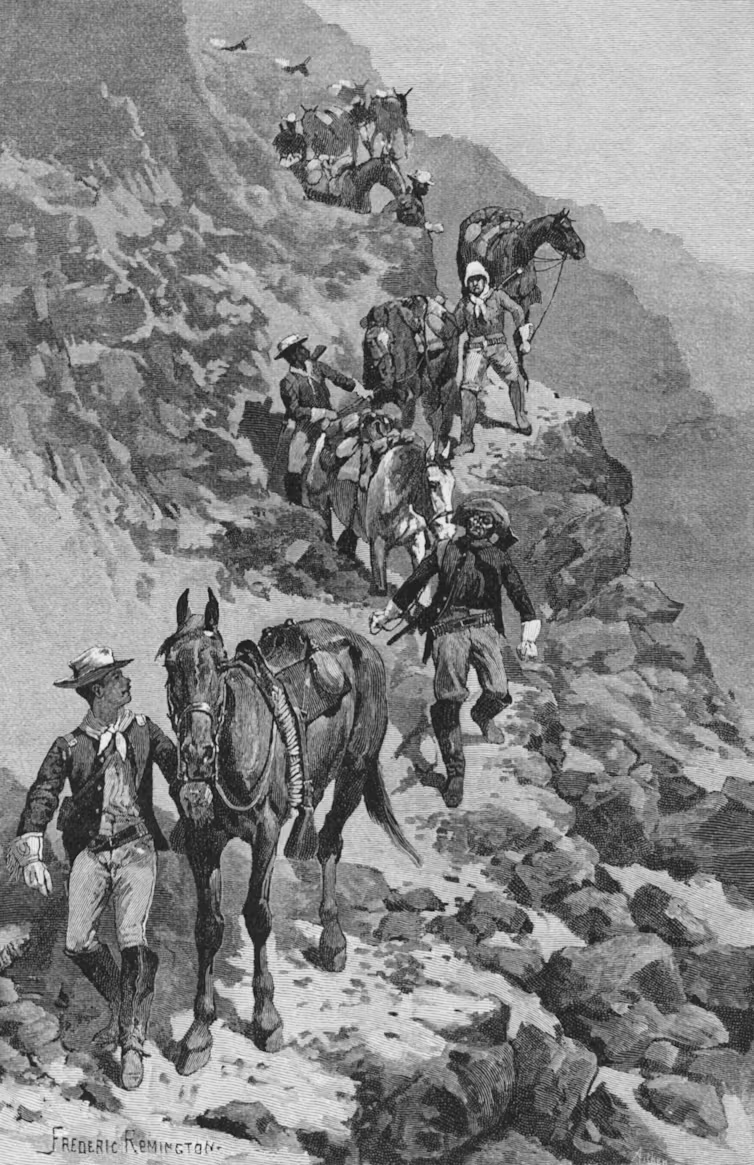
The Buffalo Soldiers were among the first African Americans to have their stories included in Colorado history. They have been honored as heroes for their military service at Fort Garland and as proof of Black presence in the familiar mythologizing of Western expansion. Established in 1866, they were commissioned to patrol federal lands.
Recent scholarship has complicated the heroic picture, showing how they were underpaid and mistreated by the army they served. They themselves played a troubling role in the suppression and inhumane treatment of Colorado’s Native peoples.
Anniversary Reckoning
So what does Black Colorado history have to say to all Coloradans – and the nation?
Increasing our knowledge of Colorado’s Black history involves confronting complicated truths, dismantling easy binaries between the oppressors and the oppressed, and understanding how the experiences and suffering of particular communities are meaningful to us all.
Coloradans can celebrate hard-won achievements and contributions to the betterment of Colorado society, but we must also acknowledge and commemorate the inhumane, shameful and ambiguous parts of our shared stories.
Is Black Colorado history useful for recognizing and addressing current injustices and what some see as similar moral dilemmas? Or is the recognition of Black History Month more appropriately seen as a “thank you” card from institutions and organizations?
This article is republished from The Conversation under a Creative Commons license. Read the original article and other pieces about Colorado.