
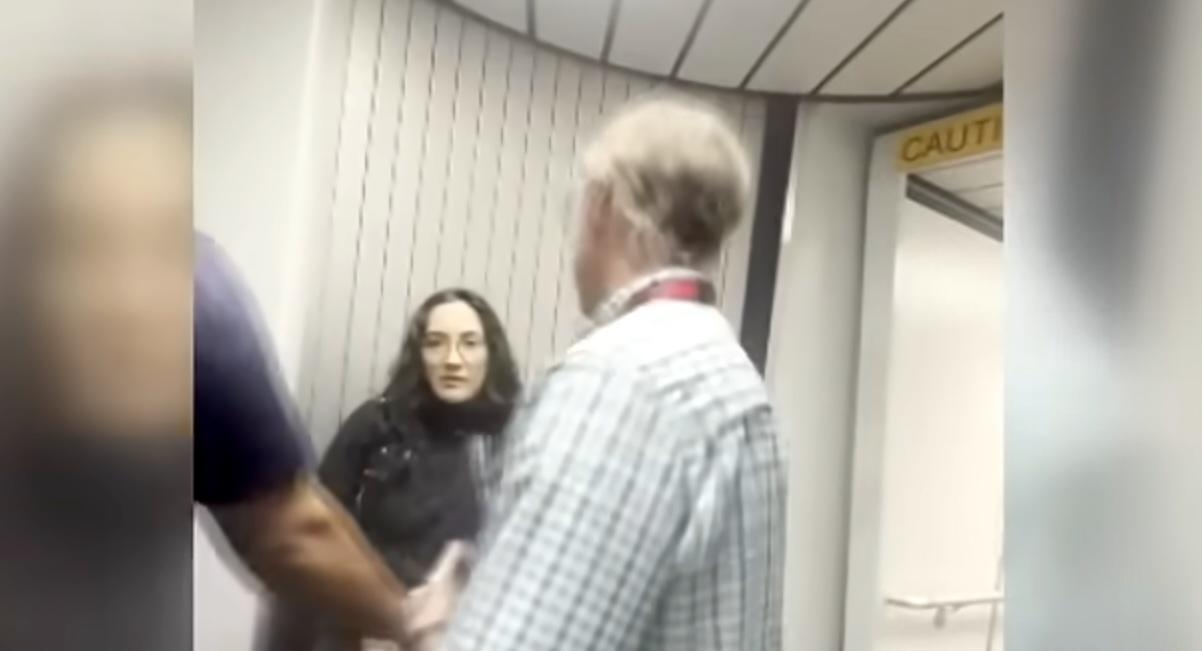
Screenshot of video by Alicia Dantzker

Audio By Carbonatix
This story was first published by American Community Media, a national nonprofit that reports on America’s diverse communities from the inside out.
A federal immigration judge on Tuesday ordered a bond release for Chantal Morales Rojas, the 27-year-old Ecuadorian woman arrested and detained the week prior by ICE at Denver International Airport.
The case is drawing national attention as an example of the administration’s increasingly aggressive efforts to deny detained immigrants their due process rights.
“This administration is doubling down on weaponizing detentions,” said Rojas’ attorney, Laura Lichter, shortly after the July 28 bond hearing during which Judge Bobbie Masters agreed to release Rojas pending processing of a $3,000 bond.
Rojas, a former au pair and current software engineer living in Oakland, California was returning home after traveling to Denver for an ultimate Frisbee tournament. She had been held at the GEO Detention Facility in Aurora, Colorado since her detention. The site has come under scrutiny amid fears of a potential tuberculosis outbreak.
At approximately 1:00 pm, observers filed into the small courtroom where Tuesday’s hearing was held. Rojas’ face registered a small flash of relief when she saw her friends take their seats behind her. Wearing facility-issued khakis, a navy polo, and a weary expression, the week in detention appeared to have taken a toll.
The hearing marked the latest step in a habeas case filed by Lichter, who said in a press release the case is not about whether Rojas can legally remain in the country, but rather the “government’s decision to arrest and jail her without a proper arrest warrant and without an individualized determination that detention was actually necessary.”
Habeas Corpus has been a cornerstone of U.S. law and democracy since the country’s founding. Habeas cases address whether an arrest occurred lawfully. Immigration lawyers have increasingly turned to habeus to free clients being held in immigrant detention.
Two key components that must be assessed during legal proceedings involving habeas corpus are the threat of danger and documented flight risk. Data show an overwhelming majority (70%) of the approximately 65,000 people now in immigrant detention have no criminal record.
Hours before Rojas’ hearing, DHS successfully appealed a bond order in a separate case from 2025. In the ruling, the judge wrote, “The fact that an alien has filed, or intends to file, an application for relief from removal does not meaningfully indicate that the alien will comply with a future order of removal” and that “speculative future eligibility for relief … does not materially diminish flight risk.”
For Lichter, the decision suggests that following the rules is no longer seen as an indication that someone will continue to follow the rules, an assertion the Department of Homeland Security (DHS) is using to deny or overturn bond orders for release.
An amicus brief in an unrelated case filed by several high-profile national immigrant advocacy organizations, including The American Immigration Council and The American Immigration Lawyers Association, warn that such a precedent could “moot a noncitizen’s habeas petition by fast-tracking their removal before a court could hear their claims—or even after a court hears their claims.”
“This is yet another precedent decision that makes it almost impossible for people to establish the ability to be released from detention,” said Lichter.
Historically, individuals like Rojas who have complied with all the requirements of the immigration process have not been considered a flight risk. Complying with all paperwork and applications has been a way to display transparency and cooperation with government requests.
Shortly after Tuesday’s hearing began, DHS lawyers acknowledged, “We are not in a position to argue danger,” adding, “we are just going to argue flight.”
When Judge Masters asked what amount DHS would suggest for bond, the response was, “Your Honor, we aren’t allowed to say that. Our position is no amount of bond.” The DHS attorney then suggested perceived flight risk stems from Rojas’ “minimal income” and “short amount of time in the US.”
Rojas legally entered the US in 2023 on a J-1 visa, issued to foreign nationals participating in approved work-study programs. Her visa expired January 4, 2025, according to DHS.
Lichter says before the exchange program ended, Rojas filed an application with immigration authorities to remain in the country. Her application was pending at the time of her arrest, video of which quickly went viral on social media.
The encounter has raised concerns over immigration agents increasingly collaborating with the Transportation Safety Administration (TSA) in targeting airline travelers at local airports.
“This case is bigger than immigration policy,” said Lichter, noting Rojas’ removal proceedings will continue. “It’s about whether the government can take away a person’s liberty first and ask questions later. Habeas corpus exists to make sure that doesn’t happen.”