Bennito L. Kelty

Audio By Carbonatix
Keep Westword Free
We’re aiming to raise $20,000 by April 26. Your support ensures Westword can continue watching out for you and our community. No paywall. Always accessible. Daily online and weekly in print.
The City of Lakewood recently completed one of the last steps in a state-funded plan to open five “navigation” centers or programs across the Denver metro area to connect homeless residents to resources and beds.
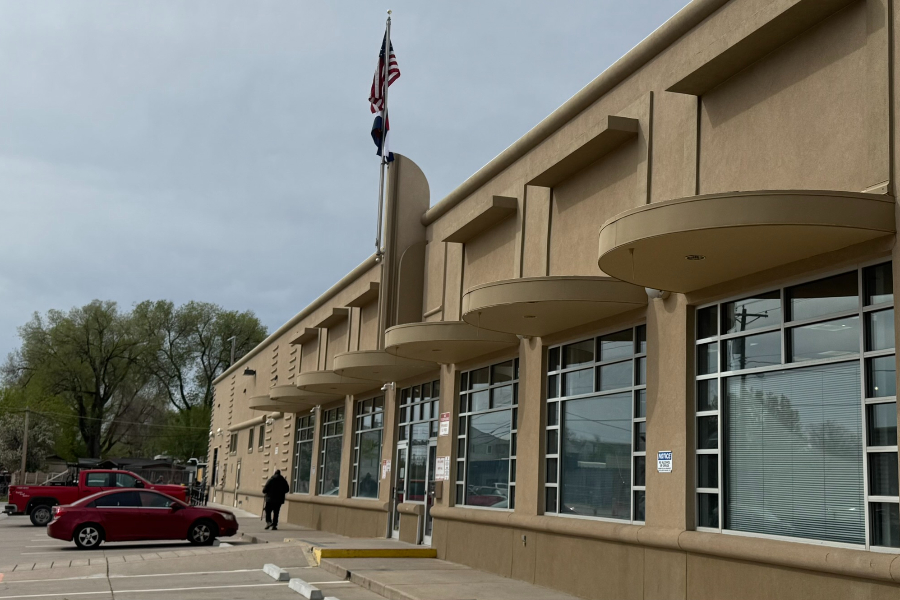
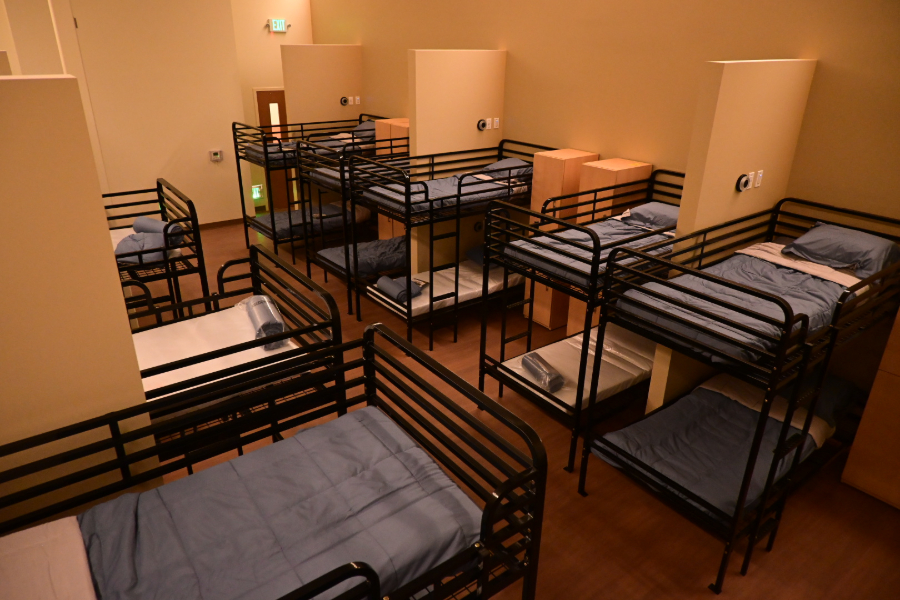
Open since March 10, the updated Lakewood Navigation Center at 8000 West Colfax Avenue allows homeless residents to sleep overnight in dorms, connect to case managers, shower, eat and do laundry thanks to renovations dating back to April 2025.
“This is the very first overnight, navigation facility in [Jefferson] County. We’ve never had a shelter operating 365, 24/7,” says Chris Conner, the housing and thriving communities manager for the City of Lakewood. “Our outreach workers can navigate folks to ongoing, site-based case management and resources, which is something that’s never happened out here.”
The City of Lakewood, which owns the property, and the contracted facility manager, Volunteers of America Colorado, are still scaling up operations to serve 100 people a day, but Conner estimates that more than sixty people have received homelessness services so far.
Over the past couple of years, facilities offering a combination of shelter beds and on-site resources, like addiction recovery or job training, have been opening in the Denver area as a result of a $52 million state grant program created in 2022. The facilities are referred to as “navigation” centers or campuses.
The Aurora Regional Navigation Campus is also newly open and trying to increase its capacity, while Denver’s navigation center is better known as the former DoubleTree Hotel at 4040 Quebec Street. Both have been subject to plenty of headlines and scrutiny at times for allegedly poor conditions and nearby crime in the area.
Lakewood’s facility is smaller than those two, but larger than fellow navigation centers in Englewood and Boulder. The Lakewood Navigation Center is meant to serve all of Jefferson County, which has the largest homeless population in the metro area outside of the City and County of Denver, according to the federally mandated Point in Time (PIT) Count. Jeffco had about 1,200 homeless residents sleeping on its streets and in its shelters in January 2025, compared to 7,300 in Denver, the latest Denver PIT data shows, and had the largest jump in homelessness rates across Denver’s seven-county metro, increasing 27 percent from 2024 and 2025.
“We have a high mandate for a 100-guest program to really be able to make a difference,” Conner says. “We understand that this isn’t necessarily the full and complete resource that’s going to turn everything around, but we definitely consider it a strong thing we’ve never had.”
The City of Lakewood and state lawmakers hope the new navigation center leads Jeffco and the western metro area towards a decrease in homelessness, but those running it are still piecing together an operational philosophy. Denver and Aurora haven’t gone in the same direction with their navigation centers, with Denver favoring a “housing-first” philosophy of immediate shelter and services and Aurora favoring “work-first” incentives and job training. Lakewood, the third-biggest city in the metro behind those two quasi-rivals, isn’t favoring either.
“The debate about housing versus work first, my sense is the debate is a bit overwrought,” Conner says. “Everybody’s interest is in the shortest pathway to housing. For some people, that’s going to be vocational support. For other folks, it’s going to be meeting behavioral health needs. Other folks can immediately go into housing.”
Courtesy of the City of Lakewood
Navigating Back Home
In the world of trying to solve homelessness, the term “navigation” usually means referring people to services that can lead to permanent housing, whether that be therapy, reunification with family members or rental assistance. For the past couple of years in Denver, “navigation” has been finding its way onto the name of publicly-funded shelters in the metro area after a 2022 bill passed by state legislators set aside more than $45 million in federal COVID relief for facilities or programs throughout the region that would centralize resources for homeless residents. Another 2022 law, House Bill 1304, added an additional $7 million to the effort.
Conner credits the grant program for solidifying the new framework.
“The ‘navigation center’ framing should indicate and signify that this is a resource-rich environment, that our staffing of the program is not going to just be the central direct service staff who provide the direct care,” he says, “but the professionalized skills of case management, another layer of professionalization.”
In 2023, the Colorado Department of Local Affairs selected projects in Denver, Aurora, Lakewood, Boulder and Englewood that, for the most part, were already backed with city or county funding.
Boulder received about $1.3 million to expand emergency services at the Boulder Day Service Center, the city’s largest shelter (also known as the All Roads Shelter). Englewood received $1.6 million to open the Bridge House Tri-Cities Navigation Center in May 2025 to serve Littleton and Sheridan, as well.
The City of Denver received $17.4 million in DOLA navigation grants in late 2024 to buy 175,000-square-foot Aspen shelter at 4040 Quebec Street, a former DoubleTree hotel where the city was already running a shelter with wraparound services in partnership with the Salvation Army. The city’s resolution accepting the grants refer to the shelter as the “Denver Navigation Center,” a term that Mayor Mike Johnston briefly used in 2024, as well. The city also used its own left over COVID relief funds to cover the rest of the $43 million needed to buy the former DoubleTree hotel from Rocky Mountain Communities, a nonprofit in September 2024. It’s the largest city-funded homeless shelter in the Denver, with space for more than 300 people and more room during cold weather emergencies.
The Aurora Navigation Campus is even bigger, at 600 beds; it was built with $15.4 million in navigation grants from DOLA. A former Crowne Plaza hotel and convention center, the 200,000-square-foot space was similar to the purchase price of the Aspen in Denver, at about $40 million. The City of Aurora and Arapahoe, Adams and Douglas counties pooled $25 million of their own COVID relief funds to top off the state grant.
Similar to the Aspen, the Lakewood Navigation Center was already in use as the RecoveryWorks Navigation Center when the city received the DOLA grant to expand operations, convert it to an all-year overnight shelter and bring in a new operator. RecoveryWorks, which specializes in addiction and homelessness services for Lakewood, operated the facility before VOA took over, from November 2023 to April 2025, as a one-stop shop for homelessness resources open to anyone, but it was previously offered as an overnight shelter mostly during cold weather emergencies.
The City of Lakewood used a $9.3 million navigation grant from DOLA to buy the 22,000-square-foot in October 2024 for $4.3 million and renovate it into a habitable space with the remaining $5 million. Lakewood also awarded VOA Colorado a one-year, $3 million contract in November 2025, funded by city dollars with an additional $250,000 DOLA award to operate the center. Another $3 million from Jefferson County is in the works to support the current renovation and a second phase of renovation for the north hall, according to city spokesperson Stacie Oulton.
The city and VOA have been “slowly ramping up” how many people the Lakewood Navigation Center serves since opening a month ago, Conner says. The shelter currently takes in about eight people a day, “but it’s usually a little less than that,” he says, noting that the center’s overnight shelter is about 60 percent full.
Fork in the Road?
The City of Lakewood still has to decide how it wants the new navigation center to run long-term, and Aurora and Denver haven’t exactly been ideal role models.
The Denver facility was the site of an unsolved double murder in March 2024, before the city bought it. After that, the shelter’s lack of safety and expensive operating costs were subject of a damning audit, and helped push out the Salvation Army as the shelter operator. Denver’s navigation center is now run by Urban Alchemy, which is based in California.
The Aurora Navigation Campus and its operator, Advance Pathways, have been plagued with complaints about poor and unsanitary living conditions, a spike in 911 calls and an old, dysfunctional building since it opened in August; Advance Pathways has publicly said it regrets opening too soon.
The Lakewood Navigation Center has a few qualities in common with Denver and Aurora, but Conner says the city prioritized “deep” personalized service and balancing what it can offer with limited resources.
“We’re intending to serve 100 people more deeply at any given time,” Conner said. “When these folks arrive in the program, they’re getting tailored case management and service availability that reaches that ultimate positive outcome and identifies a permanent exit into housing.”
Access to housing and services at the Lakewood Navigation Center requires referrals from the city’s street outreach teams or from nearby jurisdictions, like Arvada, Golden and Wheat Ridge. Similarly, Denver’s Aspen shelter doesn’t allow people to just walk in and begin living there, requiring a referral from the city’s own outreach team or local service providers. One of the key elements of the Aurora Navigation Campus, however, is the promise that anyone can walk-in 24/7 to receive services, and anyone can request at least one night on a cot there.

Courtesy of the City of Lakewood
Conner says the City of Lakewood wants to focus on serving the 100 people living at the shelter at a time, rather than running a shelter and service center simultaneously, like Aurora does; Mean Street Ministry, five blocks away at 8500 West Colfax Avenue, offers walk-up homeless services. By restricting admission to referrals, the center hopes “to mitigate the broader neighborhood impacts” and “mitigate some of the costs in terms of what security would entail, how hard the building gets used,” he adds.
Lakewood residents complained about an uptick in crime while the building was closed, the Denver Gazette reported last June, but the Lakewood Navigation Center hasn’t dealt with similar reports since opening.
Other key questions facing the City of Lakewood: How long it’s going to allow each guest to stay at the navigation center, and how it’s going to ensure people are moving into permanent housing.
The Aurora Navigation Campus requires people to prove they’re seeking employment while staying sober to keep their spot and earn more privacy and space. Advance Pathways plans to enforce a maximum length-of-stay policy of about two years for employed, sober guests.
Denver’s Aspen shelter is a low-barrier shelter, which means anyone should be able to stay with a referral. It has no maximum length of stay, but the city adopted a new “performance-based” contracting model last year to pressure operators to move people through the housing pipeline quicker. Urban Alchemy will have to prove Aspen guests are using case management and moving onto permanent housing in order to receive reimbursements for the hefty cost of running the site.
According to Conner, the Lakewood Navigation Center will work with guests to determine on a case-by-case basis how long they need to stay, but the city is still mulling its policy. Lakewood also considered the idea performance-based contracts, like Denver, but it wants to respond to what guests need, Conner says.
“We may be serving them for upwards of a year or more,” Conner says. “There are other folks who may be in kind of a suburban experience of homelessness, who may arrive and we may resolve that much quicker. They may be gainfully employed but haven’t had a coordination of resources.”
Conner hopes this housing and services pathway the city is paving can be a model for others, and good things take time.
“We’re not necessarily building it as we’re flying it, but we’re learning as we go,” he says. “This is very much a new thing for Jefferson County, so a big part of my goals is that as a demonstration center, we’re going to show that this can work and be sustainable.”