Bennito L. Kelty

Audio By Carbonatix
Power outages, backed-up plumbing and locked doors have stopped Aurora from fully opening its Regional Navigation Campus, a 600-bed, $40 million homeless shelter and resource center, according to Advance Pathways, the nonprofit running it.
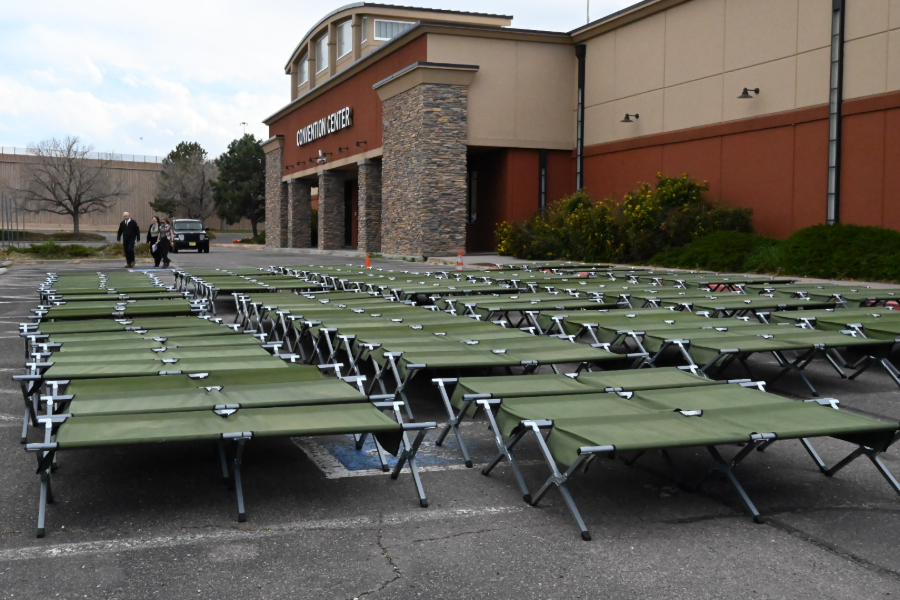
Formerly a Crowne Plaza hotel and convention center, the Aurora Regional Navigation Campus has cots, sleeping pods and private rooms surrounded by on-site services. Meant to get homeless residents into permanent, stable housing, the services include addiction counseling, legal help, vaccinations, job training, resume building and obtaining people’s vital records. It opened on November 17 after years of anticipation by Aurora elected leaders like Mayor Mike Coffman, who highlights the “work-first” housing model the campus is trying to bring to life.
The money to build the campus came from $15 million in funding from the Colorado Department of Local Affairs and $25 million in federal COVID relief funds, mostly from the American Rescue Plan Act (ARPA). Adams, Arapahoe and Douglas counties contributed most of those ARPA funds.
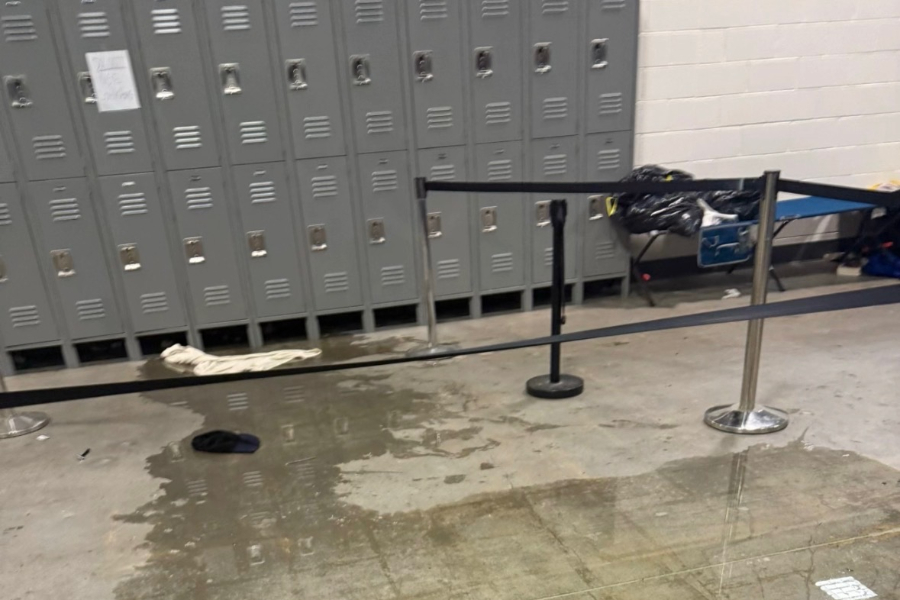
The first two months have been slow and rocky for Advance and the campus, though. Fewer than half the rooms were in use during that period, and sewage backed up, forcing bathrooms to shut down. Photos of messy scenes have since surfaced.
“Our operational success has been challenged, for sure, by unforeseen challenges with this forty-year-old business that’s being renovated,” says Jim Goebelbecker, the CEO and president of Advance Pathways. “It’s not a question of if there will be challenges. It’s more of a question of how we as an organization will double down on what seems to be working and what we know works when innovation gets tough.”
Advance is only responsible for small repairs while the city is in charge of major repairs, according to city staff and Goebelbecker, who says that the campus is running fine despite recent obstacles.
“Given the challenges we’ve already experienced that were unpredictable but also typical with an older building, we’re actually doing quite well,” Goebelbecker says. “Give us some grace as we’re leaning into a bold vision to do something that hasn’t been done before. All innovative ideas have challenges.”
The campus is set up so anyone can walk in and ask to speak with a case manager or get a room for the night. They can stay as long as they want and come back any time, but the amount of privacy and quality of beds vary based on how committed they are to getting a place of their own. The tier system is meant to incentivize homeless residents to seek a job with a pathway to a better room, Coffman has said.
If someone needs immediate shelter, they’re given a cot on the “compassion” tier inside a former hotel convention center space. If they’re working with case managers and looking for training for a job, they can get a sleeping pod, a bed with a couple of walls and drawers, on the “courage” tier located adjacent to the cots.
If they have a job, “continue toward long-term self-sufficiency” and are sober, they continue staying in a private room but on the “commitment” tier, according to Advance’s website. Goebelbecker says someone can stay in tier-three housing for up to two years, but everyone can return and start from tier-one any time.
Founded in 2020, Advance started out running four sober living facilities in Aurora and the Day Center, which offered homelessness services like food, laundry and peer support. The Aurora City Council brought the organization on as the campus’s operator through a three-year, $6 million contract in 2024. Goebelbecker says that Advance ended operations at its other facilities, “so all of our attention is on the navigation campus today.”
Based on problems Advance has bumped into its first three months, it sounds like attention is needed.

Bennito L. Kelty
An Old, Empty and Broken Building
From November 17 to December 1, the average nightly census on the campus, or the number staying each night, was about 159 people, according to data from the City of Aurora.
“It’s dignified and based in evidence-based principles,” Goebelbecker says. “We want to encourage movement. It’s based on readiness and stability, not arbitrary timelines. Early on, we’ve seen progress. We’ve seen engagement. We’ve seen progress. We’re trying to create that meaningful movement even though the facility continues to be a challenge as we’re going into full capacity.”
Goebelbecker blames the facility’s age for backed-up plumbing earlier this month. In response to a records request, the City of Aurora reported “tier two was not open in November due to an issue with the locks to get into the tier…tier three has also been unable to fully open due to ongoing elevator and plumbing issues.”
According to Goebelbecker, key cards to access tiers two and three weren’t working because the city hadn’t finished installing the building’s security system, including on the elevators. Goebelbecker says that should be fixed within the next two weeks.
Work related to the plumbing issue began on Thursday, January 22, and is expected to finish by the end of next week, “assuming no additional unforeseen issues arise,” Goebelbecker adds.
The campus opened before the city finished renovating the building, but Goebelbecker says Advance didn’t know how many problems were awaiting staff, so no warnings were sent to people staying there.
“Because these issues were unforeseen, there wasn’t an opportunity to issue specific warnings to guests about these issues prior to opening,” Goebelbecker says. “While we were aware that some city-led renovations were still being finalized, the full scope of the unforeseen issues was not apparent until after the campus opened.”
A power outage on Tuesday, January 20, was caused by an Xcel Energy service interruption and “was unrelated to the campus renovations,” Goebelbecker says, noting the outage lasted three hours before power returned.
Tier two remained empty through November and late into December, but four people who were transitioning out of one of Advance’s sober living homes did get to stay in tier three private rooms, according to the city. Goebelbecker says those four used to be homeless and met the criteria to stay in tier three.
“If it wasn’t but for us, they would be homeless, and they’re sober, and they have a job. Then they’re eligible,” Goebelbecker says. “The model is, as they’re coming off the street, and they’re progressing, and they’re eligible for tier three, that’s going to take time, but it doesn’t make any sense to leave rooms empty, waiting for the progression of people who walk through the front door. We want to work with people.”
In December, the average census on tier one increased to 264 people per night. Goebelbecker says that January has seen about 350 people a night on tier one.
Regional Navigation Campus.
Courtesy of Kristin Mallory
The city and Goebelbecker have conflicting data about tier two. According to the city, tier two opened on December 23, and three dozen people moved in from tier one. At the same time, the city reported that the average nightly census on tier two between December 23 and 31 was about ten people.
Goebelbecker says that no one moved into tier two until January, and the city’s data might refer to the number of people enrolled in Workbridge, the job training program run by Advance and required for the tier two sleep pods. According to Goebelbecker, the average census on tier two in January is about 55 people a night.
Tier three remained limited “due to ongoing construction, including plumbing and elevator key card issues,” but had a census of about five people per night, according to the City of Aurora. According to Goebelbecker, five people are still in tier three this month.
According to Goebelbecker, the city is still renovating the hotel. It opened in November because the city wanted an emergency shelter available in case of severe cold weather or heavy snowfall this winter, but the weather has been pretty dry and mild. As a result, the campus has seen fewer people than expected, Goebelbecker says. When 150 people showed up on the first night of the campus’s opening, Advance had planned for 200, “so we were staffed just right,” he says.
“We never anticipated those former hotel rooms to be used right away,” Goebelbecker says. “We were just getting up and running, and we had three holidays for Thanksgiving, Christmas and New Year’s, so we were really looking at the first week of January at launching more deeply into our program.”
Heightened Scrutiny
With more than half the beds now in use at the campus, Advance is hiring two case managers to prepare for more people in the coming weeks. Goebelbecker says that it will take at least two months before he expects anyone to leave for permanent housing, but describes that timeline as “aggressive.”
On January 12, the Aurora City Council unanimously approved about $300,000 in grants for Advance to hire case managers and more security guards. Councilwoman Alison Coombs said that she heard from people who said they were confused about how to move up from tier one, and they lacked access to hygiene products or working washers and dryers.
“The basic level of services that are part of the contract, it sounds like, are not being provided,” Coombs said. She also suggested suspending Advance’s contracts if these problems continue.
Councilwoman Angela Lawson criticized city staff for the plumbing issues.
“That’s pretty inhumane. That should be an emergency,” Lawson said to Jessica Prosser, the city’s director of housing and community services. “There’s a sewer problem. It’s creating backup, and people are unable to go to the bathroom.”
Lawson asked where people are going to the bathroom, and Prosser said that twelve port-a-potties are set up for homeless residents at the campus. Prosser also noted that the toilets are only broken on the tier-one side.
The campus then got negative press after Kristen Mallory, a first-year Aurora School Board member, shared photos from the campus of piles of dirty clothes in the lobby and puddles in various rooms. She tells Westword they were sent to her by people who stayed at the campus.
“This is a space we were promised would offer dignity,” Mallory said during council public comments. “Instead, the photos show soiled towels left on the floor, plumbing issues that appear unresolved, food waste on the ground. …What, exactly, are we paying for?”
Goebelbecker says that the pictures don’t capture the whole campus and what it’s like. He describes the inside of the campus as “very peaceful and calm” and says that homeless residents recognize it “as very different from anything else that is out there.”
“There’s a surge over a short period of time that has us at about 350 folks,” he says. “You’ll see in the next couple of months more people in tier three, and in the next six months, you’ll see a regular flow of our programming, and we’ll finally be able to talk about success stories.”