Veo

Audio By Carbonatix
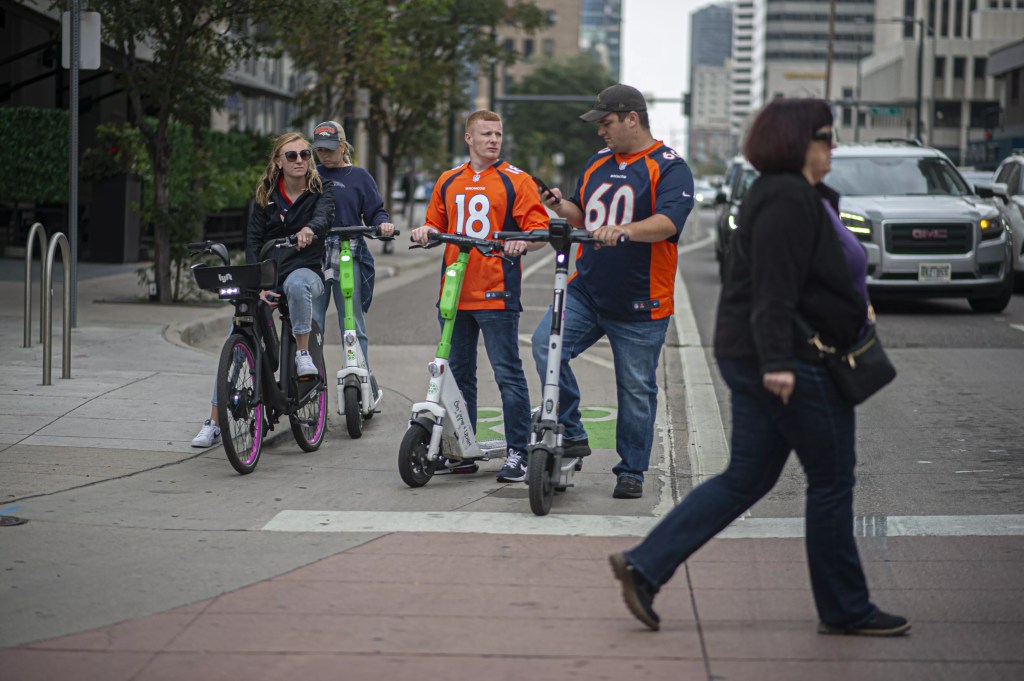
Thousands of rentable electric scooters in Denver will be swapped out this spring, as the city plans to dump Lime and Bird for a new, exclusive contract with Veo.
Veo is a micromobility company founded in 2017, currently providing shared e-scooters and bikes in dozens of cities and on college campuses across seventeen states. Negotiations are ongoing for Denver, but city officials say they intend to enter a three-year license agreement with Veo beginning around May, when the city’s contracts with Lime and Bird expire.
The change comes amid Denver City Council’s push to improve the safety and organization of scooters.
“Denver’s micromobility program is one of the most successful and popular in the nation,” says Amy Ford, executive director of the Denver Department of Transportation & Infrastructure. “Our goal is to build on that success with an emphasis on safety for riders and pedestrians, keeping sidewalks clear and organized, and expanding access to micromobility to serve more residents.”
In May, city council passed an ordinance requiring mandatory scooter parking zones in certain neighborhoods, technology that detects when users ride on sidewalks, and compliance tests that riders must pass before being able to rent the vehicles.
Veo was partially chosen because of its ability to comply with these new regulations, according to DOTI. That means residents can expect renting scooters to look very different come spring, besides just needing a new app to do it.
“Veo stands apart by building micromobility programs that are accessible, affordable and built to last,” says Paige Miller, spokesperson for Veo. “In Denver, this approach will deliver one of the nation’s largest mixed fleets, an affordable program for residents, and a meaningful opportunity to reduce car dependency at scale.”
Evan Semón Photography
The city’s contract negotiations with Veo are expected to last several months, according to DOTI. Once the proposal is finalized, it will need approval from Denver City Council.
Here’s what we know about the expected changes to come:
More Rules for Riders
One of the biggest differences in scooter operations will be the implementation of city council’s new regulations.
Veo’s vehicles will be able to detect when users ride on the sidewalk or ride with multiple passengers (both of which are illegal in Denver). A sensor system will also detect sudden movements and swerving, alerting riders of unsafe behavior in real time and through post-ride feedback.
Riders who commit repeat offenses will be suspended from the platform, according to DOTI.
Veo will also use an “AI Parking Coach” to determine whether riders properly park their vehicles and offer corrective coaching. Riders who continually park incorrectly will be fined.
Before users can rent a Veo scooter or bike for the first time, they will have to pass a quiz about Denver’s riding laws. Periodic retakes will be required and additional quiz completions will earn users ride credits, according to DOTI.
Scooter Numbers, New Vehicles
Though Veo is taking over for two operators, the company plans to match the current inventory of scooters and bikes in Denver. That means around 9,000 vehicles will be deployed initially, according to DOTI — but the types of vehicles will be more varied.
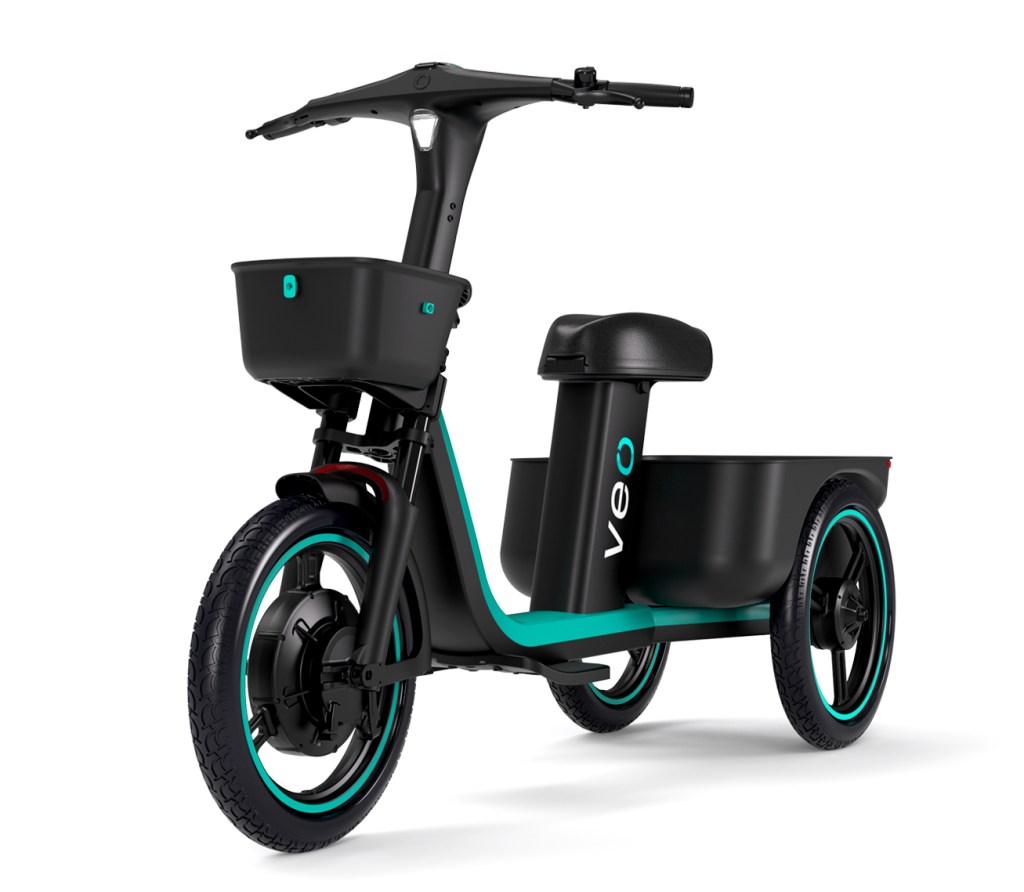
“In Denver, more than half of Veo’s fleet will be seated vehicles with large tires, a low center of gravity and a throttle, features designed to expand access for riders of different ages and abilities,” Miller says. “Veo also plans to make Denver the first city in the country to deploy its new trike, further broadening who micromobility can serve.”
These seated vehicles are intended to “expand access for riders of diverse ages and abilities,” she adds.
The trike is a three-wheeled, self-balancing vehicle for riders with mobility impairments and those who need to carry large cargo loads. Veo’s fleet also includes an e-bike that is configurable with a rear cargo rack or a second seat for tandem riding.
Veo
Rental Prices
Granting Veo a monopoly over Denver’s scooter operations could risk leading to higher rental prices. However, the city intends to establish fixed prices with the company that will remain in effect for the entirety of its contract.
“The city is negotiating rider pricing rates with Veo, and looking to lock in the prices riders will pay for the duration of the contract,” says Cyndi Karvaski, spokesperson for DOTI.
The city is also requiring Veo to provide “significant” discounted rates for Denver residents and for riders in “key equity-focused areas,” Karvaski adds. Veo offers additional discounts for riders who wear helmets during their ride, according to DOTI.
The specifics of the pricing will be determined during the contract negotiations.
Low-Income Program
Denver is currently home to Lime’s largest equity program in the world, offering free scooter and bike rides to users who receive government subsidies, like SNAP and Medicaid. It is Lime’s only equity program in the country that provides rides completely for free, rather than at a discounted rate.
That specific program will end with Lime’s exit from the city. But officials say Veo will provide some form of a replacement.
“Veo will offer an Access Pricing model to insure low-income riders have free and affordable riding options,” Karvaski says. “The city required proposers to communicate an ability to provide free rides to income-qualified Denverites. The details on the thresholds and model for providing those free rides are under negotiation with Veo and the city.”
“We look forward to providing more details as we shape the exact program with our partners at DOTI,” Miller adds.
For Denver residents enrolled in Lime and Bird access programs, DOTI plans to release instructions on transferring to Veo later this year.