


Audio By Carbonatix
Home prices and values are dropping across Denver, according to real estate reports, with the latest data showing the Mile High metro leads the country in another scary statistic.
Denver home values dropped 2.2 percent from February 2025 to February 2026, the steepest slide of any metro in the country, according to the S&P Cotality Case-Shiller Price Index, a monthly barometer for real estate professionals. Denver’s fall is worse than those of Tampa (2.1 percent), Seattle (2 percent), Phoenix (1.8 percent) and eight other metros. It’s also far from the national average of change in home value, which went up 0.7 percent on an annual basis in February.
According to experts at S&P, the housing market downfall originated in the Sunbelt region, which roughly extends from central California to Virginia, but declining prices are starting to creep beyond that. Colorado is just outside the Sunbelt, and the state’s rough housing market has been widely covered for over a year now.
Although still relatively high compared to non-coastal cities, Denver home prices and rent rates have been consistently dropping, with real estate agents pointing to large increases in property insurance prices and real estate inventory, and a steep decline in Denver’s condo and townhome market.
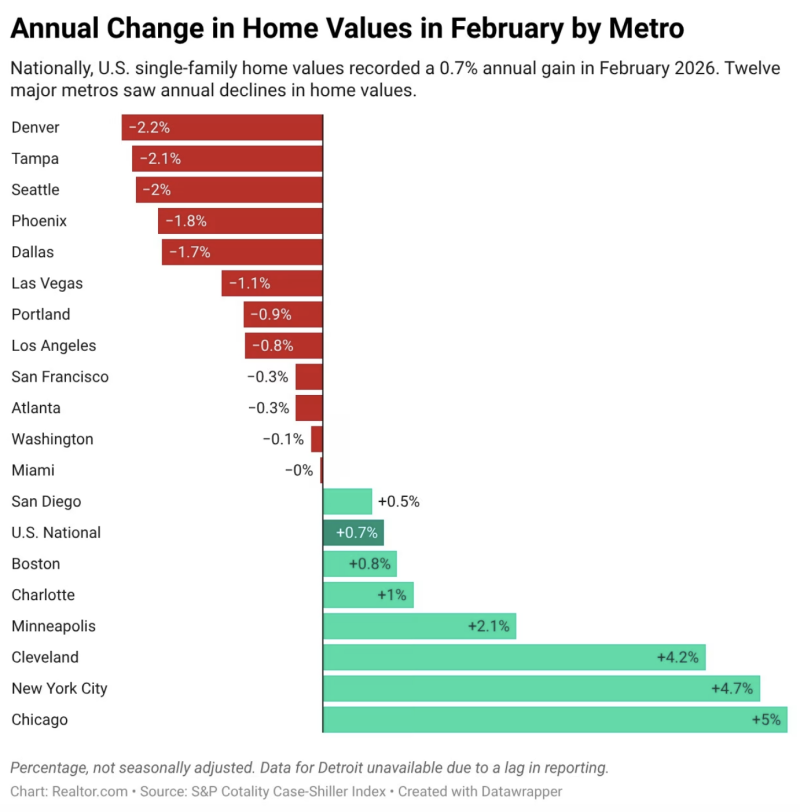
Realtor.com
“The slowdown in Denver’s market has been long forecast by experts, with Realtor.com reporting last spring that the market had seen an explosion of inventory that presaged falling prices,” an April 28 Realtor.com report states.
According to a market report based on January 2026 data, almost 16 percent of Denver’s active home listings underwent at least three price cuts after the properties first went on the market, compared to a 10.7 national average.
A report from the Colorado Association of Realtors showed that multi-home units lost around 7 percent of their value from November 2024 to 2025, and single-family homes spent a week longer on the market before they were sold, at an average of forty days. The median sale price of condos and townhomes has increased slightly since then, according to data from March, but their inventory also increased by over 10 percent, while single-family homes spent an average of fifty days on the market before sale.