
Sage Kelley

Audio By Carbonatix
A Denver woman is suing the city after a crumbling sidewalk slab sent her — and her patience with municipal upkeep — crashing to the ground.
Lanczie Lewis filed a lawsuit against the city in Denver District Court on Aug. 26 after a spill in the Golden Triangle neighborhood caused her to suffer “permanent physical disfigurement, disability and impairment, emotional injury and loss of enjoyment of life,” according to the complaint.
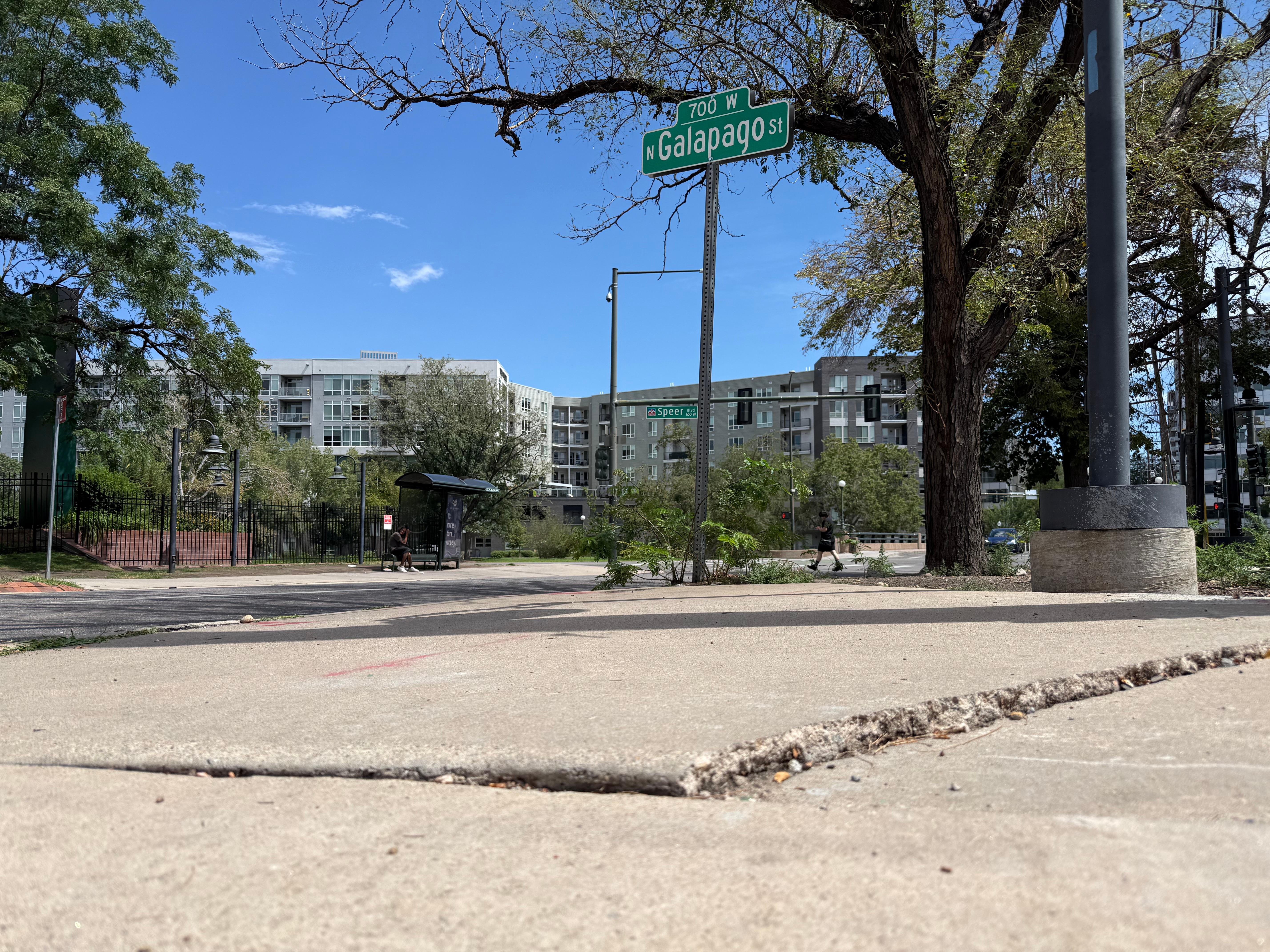
The woman was walking on the sidewalk near the southeast corner of Galapago Street and West 13th Avenue on April 12, 2025, when she “encountered and tripped on an uneven piece of sidewalk,” the complaint reads. The woman then fell to her face and knees, causing the undisclosed injuries.
The area is behind the King Soopers off Speer Boulevard. There are various cracks and uneven portions of concrete on the walkways.
Because Denver owns and maintains all sidewalks and no business sits directly in front of the specific corner, the lawsuit places the city at blame, claiming that it failed to properly maintain the sidewalks in a safe condition at the time of the incident. All in all, the complaint seeks relief based on two grounds: premises liability and common-law negligence.
“Plaintiff’s injury was the direct and proximate result of a dangerous condition on defendants’ property, namely the broken and/or uneven sidewalk, which Defendants knew of and/or should have known of by the use of reasonable care,” the complaint continues.
All in all, the plaintiff is looking for financial compensation for injuries, economic losses and court fees. The total is set to be determined at the time of the trial. Westword reached out to Lewis’ lawyers for comment, but did not hear back by the time of this report.
It’s not the first time people have complained about Denver sidewalks, though.
The Department of Transportation and Infrastructure (DOTI) rolled out its Denver Sidewalk Program around a year ago after sidewalk construction and repair fees were approved by voters back in 2022. The fees hit every property owner for $150 annually, except owners with over 230 linear square feet of sidewalk and a high impact on the sidewalk network. Those owners will pay an additional impact fee of $3.50 for every foot over 230 linear feet.
DOTI says those fees are expected to generate around $37.6 million in revenue for the city in 2026, helping go toward the program’s goal of repairing 1,200 blocks of sidewalks, filling 300 miles of missing walkways and widening more than 1,100 miles of sidewalks that are deemed too narrow at less than 5 feet wide.
The department did see the largest funding drop in the 2026 city budget, which looked to make up for Denver’s $200 million deficit, with $21.3 million cut from 2025 to 2026, or 17.7%. The department also suffered the largest number of layoffs across all city departments last summer, with 31 employees axed and 108 vacant positions eliminated. But the sidewalk side of the department didn’t see any cuts. Actually, sidewalk capital improvements saw an over $12 million boost between 2025 and 2026.
Denver’s sidewalks used to be the responsibility of individual property owners until voter’s approved the Initiated Ordinance 307 in November 2022. Because it was once up to the owners, the city’s sidewalk network is often disconnected, in states of disrepair or too small to comply with Americans with Disabilities Act requirements. During the push to move responsibility over to the city, titled the Denver Deserves Sidewalks initiatives, proponents argued that placing the ownership on the city would help alleviate issues quicker.
“The point of this ordinance was voters felt that the city was not building out the sidewalk network fast enough,” Nick Williams, spokesperson for DOTI, said back in 2024. “When we give ourselves the flexibility here, that doesn’t mean we just kick our feet up and say we’ll see you in 300 years. No, you guys will see updates on progress.”
The department does have a website that tracks progress, and residents can report issues to the city’s 311 line, but residents have also complained about 311’s lack of response times since budget cuts sliced through DOTI this year.
In DOTI’s 2026 budget presentation to the city council last year, the department predicted that residents would see longer response times to 311 calls, as reported by Denver7.
“How are we going to be able to address the needs of our residents and the things that they see and care about if we’ve got these longer wait times, and we’ve got less staff and kind of less ability to be responsive to it?” Councilwoman Sawyer said during the Sept. 26, 2025 city council meeting.
Still, the department says it widened around 10 miles of sidewalks and repaired approximately 31 miles of sidewalks in its first year, according to Denver7.
In 2026, the program has “remediated” about 540 sidewalk trip hazards and replaced over 75,200 linear feet of sidewalks, according to a spokesperson at DOTI.