Denver Public Library

Audio By Carbonatix
The Denver Broncos have an opportunity that goes beyond what happens on the field on Sundays. The Walton-Penner Family Ownership Group has the resources, the platform and — by their own stated words — the intention to do right by this community and this city. This is the moment to prove it.
It would be in the best interests of the ownership, the franchise and the City of Denver for the Broncos organization to commit — formally, publicly and with binding architectural and financial specificity — to integrating permanent monuments, educational edifices and dedicated public spaces into the new development that honor and explain the full layered history of this ground.
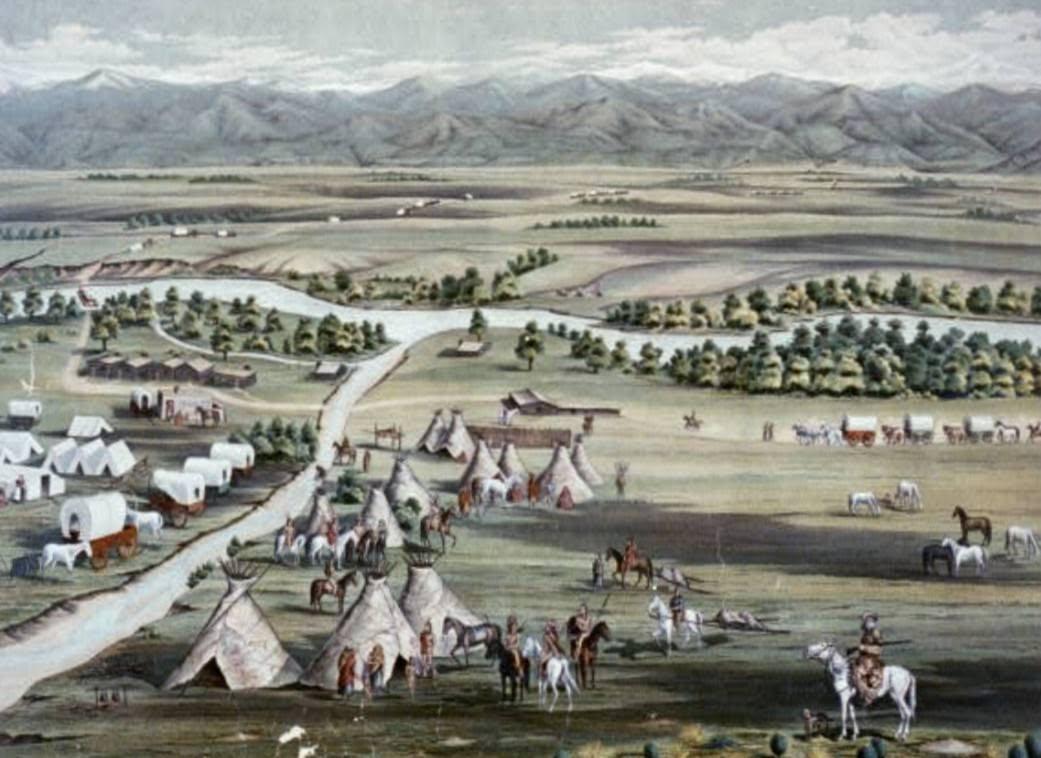
What that could look like is not difficult to imagine. A permanent interpretive museum or learning center within the mixed-use district — designed in consultation with the Cheyenne and Arapaho tribes of Oklahoma, the Northern Cheyenne of Montana and the Northern Arapaho of Wyoming — could tell the story of the South Platte gathering grounds as the tribes themselves remember them: not as a footnote to conquest, but as a civilization. Oral histories, artifacts, maps and tribal voices could fill a space that would draw visitors and students year-round, independent of any game-day crowd.
Monuments to Black Kettle, to White Antelope, to Left Hand and to the other chiefs who walked this ground in peace and were repaid with betrayal should stand prominently in the public plazas of the new district — not tucked into a corner, but placed with the same prominence given to any Broncos championship trophy or Ring of Fame inductee. These were men of extraordinary courage and dignity. They deserve to be remembered as such, within sight of the ground where they made their last bid for peace.
The story of Burnham Yard’s workers — the women who replaced the men who went to war, the Black laborers who found in the railyard one of the few places in mid-century Denver that would employ them — deserves its own dedicated space as well. The Backshop’s survival is a start. It should become a living exhibition of the working-class history of this neighborhood, of the Denver & Rio Grande, of what industry and sweat and dignity looked like in this corridor across 150 years.
The story of the 1st Colorado Volunteers and their march to Glorieta Pass — the men who left from this very ground and saved the American Southwest for the Union — should be told in bronze and stone, not left to a weathered marker at 8th and Vallejo streets that most people drive past without reading.

History Colorado
And the Villasur expedition, that doomed Spanish column that traveled the South Platte corridor three centuries ago on an errand of empire, should find its place in the historical narrative of the site — a reminder that this ground has been contested, traversed and fought over by every civilization that reached it, and that none of them owned it any more permanently than the last.
Beyond monuments and museums, there is something even more powerful that the Walton-Penner ownership could offer: a living, breathing, annual return of the people who were here first.
The Denver Broncos organization should formally invite the Cheyenne and Arapaho tribes of Oklahoma, the Northern Cheyenne of Montana, the Northern Arapaho of Wyoming, the Southern Ute, the Ute Mountain Ute and other nations historically tied to this land to host an annual pow wow on the grounds of the new development — a multi-day cultural celebration, planned and led entirely by the tribes themselves, with the franchise providing the venue, logistical support and promotional reach of one of the most recognized sports brands in America.
A pow wow is not a performance or a pageant. It is one of the most significant expressions of living Indigenous culture — a gathering where drum groups and dancers from dozens of nations come together to honor their traditions through song, regalia and competition; where tribal elders pass knowledge to the young; where families separated by geography and history reconnect across generations. It is exactly the kind of gathering that the ancestors of these nations held along this very stretch of the South Platte River for centuries, before the soldiers and the settlers and the railroads arrived and told them to leave.
To bring that gathering back — annually, publicly, on this ground — would be an act of genuine and meaningful reckoning. It would not undo what was done at Sand Creek or at the Camp Weld Council. Nothing can. But it would be a public acknowledgment, repeated every year in the most visible possible way, that this land has a history older and deeper than any franchise, that the people who were displaced from it are still here, still sovereign and still worthy of honor.
The economic and cultural benefits to the surrounding community would be substantial. Pow wows draw thousands of attendees, support Indigenous artisans and vendors, and generate the kind of authentic cultural engagement that no marketing campaign can replicate. For the tens of thousands of visitors who come to the new district each year for events and entertainment, an annual pow wow on this ground would offer something irreplaceable: a direct, human connection to the history beneath their feet.
The Broncos did not create the history of Burnham Yard. They did not demolish the buildings that CDOT erased. They did not make the promises that were broken at Camp Weld in 1864. But they are now the stewards of this ground. That stewardship is a responsibility, and responsibilities can either be honored or avoided.
A stadium that draws three million visitors a year, anchored by a district that tells this history honestly and fully — through monuments, museums, living cultural events and the annual return of the people who called this ground home long before it had a name in any European language — would be something genuinely rare in American sports: a civic institution that makes the community smarter, more connected to its own past, and more honest about what was taken and from whom.
It would be good for the franchise’s reputation, good for the neighborhood, good for Denver’s long-overdue relationship with the tribal nations whose ancestors gave this city its original meaning — and it would be the right thing to do.

Richard Rael
The marker at 8th and Vallejo streets is small, weathered, and nearly invisible. The drum of a pow wow carries for miles. Let them hear it on this ground again. That is the kind of legacy that outlasts any season.
Westword.com frequently publishes opinion pieces and commentaries on matters of interest to the Denver community; the opinions presented belong solely to the authors, not Westword. Have one you’d like to submit? Send it to editorial@westword.com, where you can also comment on this essay.