Bennito L. Kelty

Audio By Carbonatix
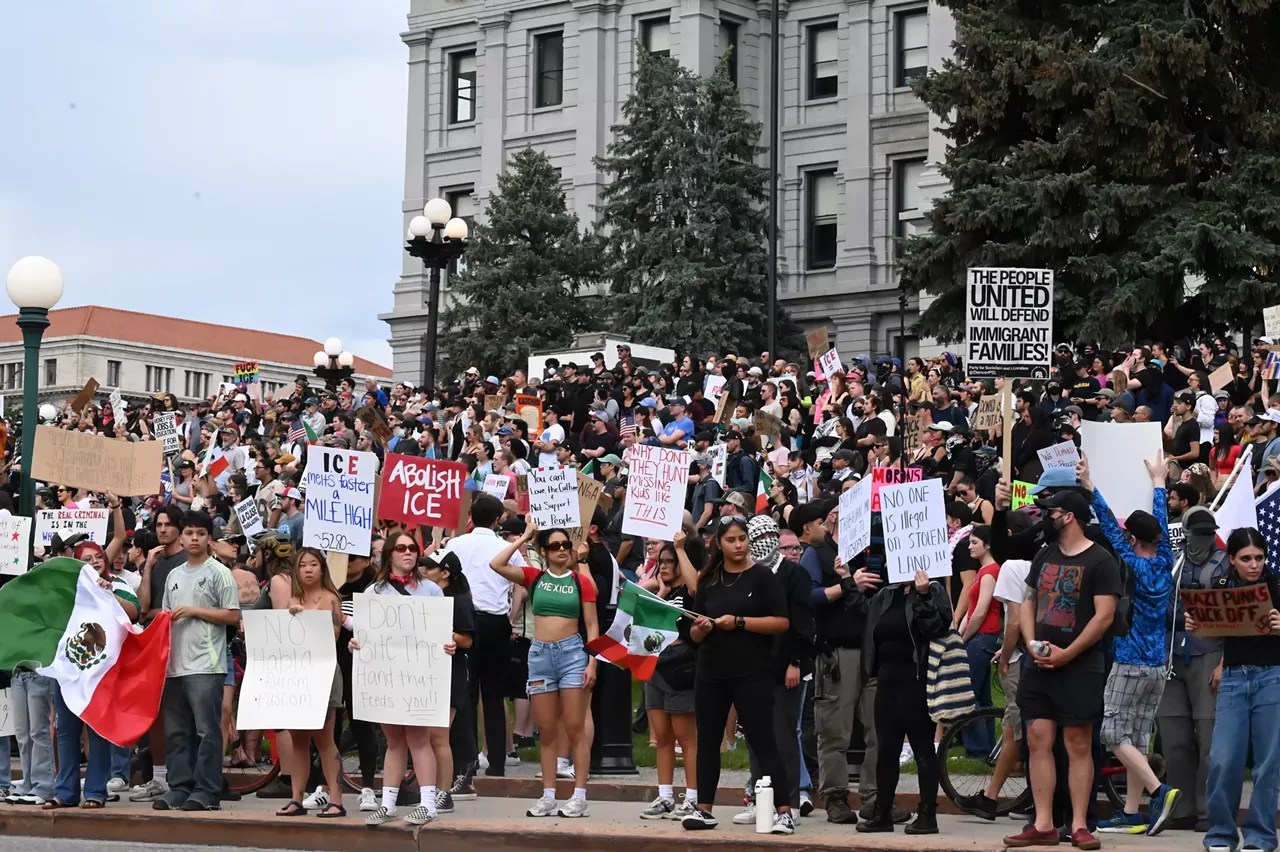
Does the solidarity of people showing up for their communities, marching, protesting and fighting for what’s right, outweigh the harm of watching others unite through open racism, cruelty and the turning of neighbors against one another? What got us to this point?
Is my desire to leave the U.S. a longing to finally feel accepted and secure, or is it simply running away? Is leaving a failure to stand up, a refusal to participate, a betrayal of what it means to be American and part of a collective resistance?
I have carried a long desire to belong. Even after finally obtaining my green card, that sense of arrival remains unfinished. I find myself questioning whether the belonging I chased for so long actually exists.
At times, I feel the weight of being so aware of what is happening. I did not fully grasp how much hatred existed. I am torn between gratitude for the truth being exposed and the quiet heaviness that comes with holding it fully. What hurts most is coming to terms with the fact that the systems meant to protect us have allowed this hatred to grow, and that I am expected to trust those same systems with my safety.
I feel ungrateful and guilty for living my life as normally as I can. Living in a decent neighborhood, where most people are still just people, not entirely defined by politics. And yet, I carry a quiet unease, aware that our differences exist even when they are unspoken. By naming that discomfort, am I the one creating division? Am I the problem?
I’ve been told my entire identity is, or was, being undocumented and Mexican. How dare you? How dare you bring me down for living my truth, my struggle, my pain? Yes, being Mexican and, more specifically, a first-generation immigrant, is huge. It has been, and continues to be, my identity.
How dare I? How dare I remain behind a screen and not speak out? How dare I keep my head down, careful not to draw attention to myself? How dare I continue with ordinary life as if ordinary life is still allowed? How dare I read for pleasure? How dare I speak from a place of privilege?
How dare I?
Is this the American experience? Think about it. America has long been shaped by revolutionaries, people who fought, endured, and were often only understood or honored long after they were gone.
How many more people have to die before their fight is recognized as meaningful?
Would I isolate myself if I moved away from the U.S.? Would the pain follow me? Would distance or dissociation fix anything at all? Is my mental health meant to endure here or survive somewhere else? Do I push through?
My sanity. At this point, it feels like I’m forced to choose between two options: Ignore what’s happening for the sake of my sanity, or choose to know for the sake of my sanity.
I assumed that spaces built around reflection and imagination might be different. That people who read stories about war, power and injustice would recognize those patterns when they appear in real life. In books, we follow the main character. We feel their anger. We understand the message. And yet, I struggle to understand how that recognition stops at the page. How what enrages us in fiction does not alarm us in reality. Some remain unafraid. Some remain agreeable to what is happening.
Legality has become the central talking point. People preach about “doing things legally” while supporting forceful actions that are anything but legal, all in the name of keeping the country safe. Killing. Hurting. Stripping away humanity.
We are told that taking sides is what creates division. Still, it is difficult not to feel that stepping away from a place where you no longer feel safe is often framed as the true source of division, rather than the conditions that made it unsafe in the first place.
My stance is clear, but I genuinely want to understand: When does the opposing side begin to question what is happening?
Can we not agree that truth remains truth? That laws exist, and that if we choose to side with the law, we cannot pick and choose when it applies? Consistency matters. Principle matters. Revoking human rights, enabling violence that costs lives, and placing untrained individuals into positions of power violates a moral boundary that should never be open to debate.
I am in disbelief at how easily facts can be dismissed or distorted when those in power control the narrative. Evidence exists everywhere. The contradiction is hard to ignore.
Can we consider the evidence, all of it? Can we acknowledge when we are being lied to? Can we stop weaponizing inconsistent information to justify decisions that lack both sanity and humanity?
What is the excuse?