
Denver.gov

Audio By Carbonatix
April was World Landscape Architecture Month, and though the profession is small and usually anonymous, it’s still worth recognizing. It’s especially worth recognizing here in Denver, in part because our city is about to witness a growth spurt. That growth is thanks to the Vibrant Denver Bond. Landscape architects are not the only ones who will be called upon to ensure Denver’s upcoming construction is the best it can be. Plenty has been written about the Vibrant Denver Bond, but as a profession that believes in the importance of public engagement, we decided to speak to you directly about why it’s not only very important, but very cool for you to participate!
Landscape architecture is the design of any outdoor space; the work ranges from public parks, to waterfronts, streetscapes, residential properties, plazas, campuses, gardens, skate parks, playgrounds and more. Our work finesses the intersection of art and utility. For example, a public plaza must manage stormwater, accommodate underground utilities, reduce heat island effect, permit fire-truck access, and feel welcoming whether there are a dozen people or a hundred. It also must look good doing it.
Denver is about to benefit from a surge of publicly funded projects that will trigger long-term benefits for our city. “For many neighborhoods, this means safer streets, more accessible parks and recreation spaces, and infrastructure that better supports daily life. Just as important, it represents a coordinated investment in the public realm – one that can improve quality of life while also strengthening Denver’s long-term resilience and connectivity,” says Chelsea Gieryic, associate at Livable Cities, AICP and president of the CO/WY ASLA chapter.
Very soon, we will see the orange tape, the piles of soil, and the rolling cement trucks in our neighborhoods, our civic spaces, and our transportation routes. Because this work influences our quality of life, our daily routines, and sometimes our health, another job for landscape architects is to communicate directly with citizens of Denver. This could be through survey responses, open houses, or community meetings, to list a few. Our goal is to deliver the amenities, aesthetics, and benefits that a community truly wants.
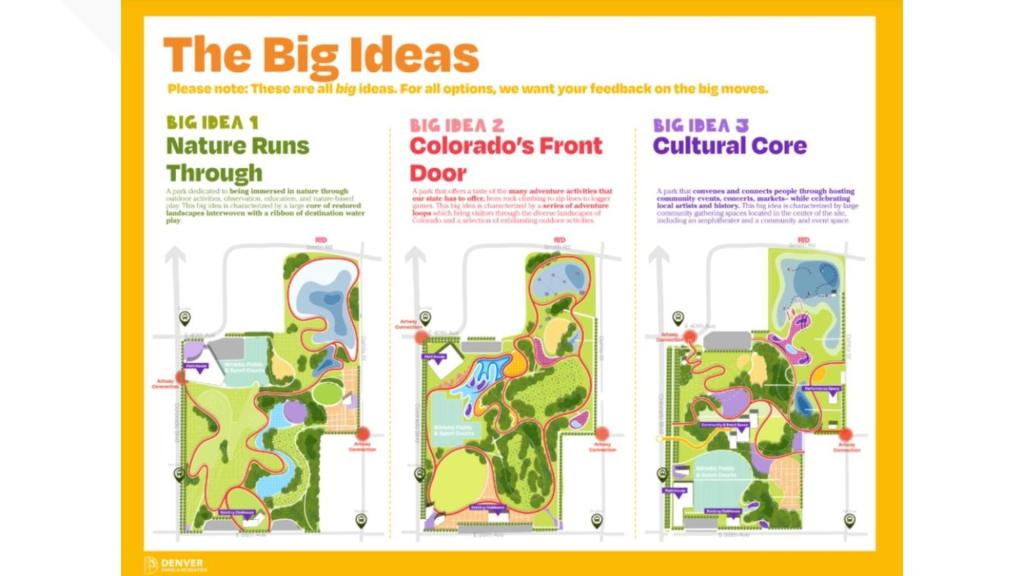
Because public space is for everyone, landscape architects and the City of Denver spend time on public engagement to hear from people who will live with these spaces. As Laura Swartz, communications director for the Department of Finance, worked on the Vibrant Denver Bond, explains: “We started by asking the community and the public where the most needs were in their neighborhoods. There are always more needs than there are dollars to support them. So we spent over six months working with the public to get it right.” Swartz and her team engaged people via community meetings, digital surveys, printed surveys, community-led subcommittees, an ongoing project dashboard; they received over 6,200 responses and 1,100 people attended in-person town hall meetings.
The Vibrant Denver Bond was approved in November 2025 and generated $950 million of bond funding for 58 public projects – your projects. After interviewing some prominent figures in the architecture and planning field of Denver, this is our message to you:
“Thank you for being generous with your time. All feedback helps shape the results, and if you can show up with constructive ideas, that’s huge,” says Megan Jones Shiotani, associate principal of Dig Studio.
“We understand there can be ‘engagement fatigue,’” says Jesse Clark of Stream Landscape Architecture and Planning. “We have families and dogs and how do you prioritize which 5 p.m. meeting to go to? It can be hard. But definitely get involved. Be a voice. It makes a difference.” And he’s right: sometimes a single voice alters the course.
Megan Jones Shiotani experienced that firsthand while working on the Civic Center Plaza. Originally, the Gang of 19 Memorial was not part of the plan. “A stakeholder from a local theater group reviewed the planned accessibility strategy for the Greek Theater and kindly said, ‘It seems like it should be better.’ That became a call to challenge the typical constraints of a historic structure, especially important so near the site of the 1978 Gang of 19 demonstration.” It became the perfect opportunity to transform the new space into a monument for their activism. The Gang of 19 Memorial is under construction right now.
These projects will be built – with or without your input. But there will be plenty of ways to engage with these upcoming projects, “from highly interactive – like helping the city narrow down a design concept – to more informal like talking with city staff at neighborhood meetings, says Swartz.
Anyone interested in learning about future opportunities for participation should sign up for the Vibrant Denver Bond newsletter at denvergov.org/vibrantbond.
As your neighbors and as your designers, we ask you to help us build Denver.
Westword.com frequently publishes commentaries on matters of interest to the Denver community. Have one you’d like to submit? Send it to editorial@westword.com, where you can also comment on this piece.