
Getty Images

Audio By Carbonatix
President Donald Trump has always had a rocky relationship with Colorado. There was that ugly spat on the slopes of Aspen between wife No. 1 and soon-to-be wife No. 2 back in 1990. His bid to redevelop Union Station 20 years ago was rejected, and his alternative plan to build Denver’s tallest building also fell flat.
And then he lost the Colorado Republican Party’s top slot in the 2016 presidential primary to Ted Cruz. The state’s election system was “rigged,” Trump pouted in what would become a familiar refrain.
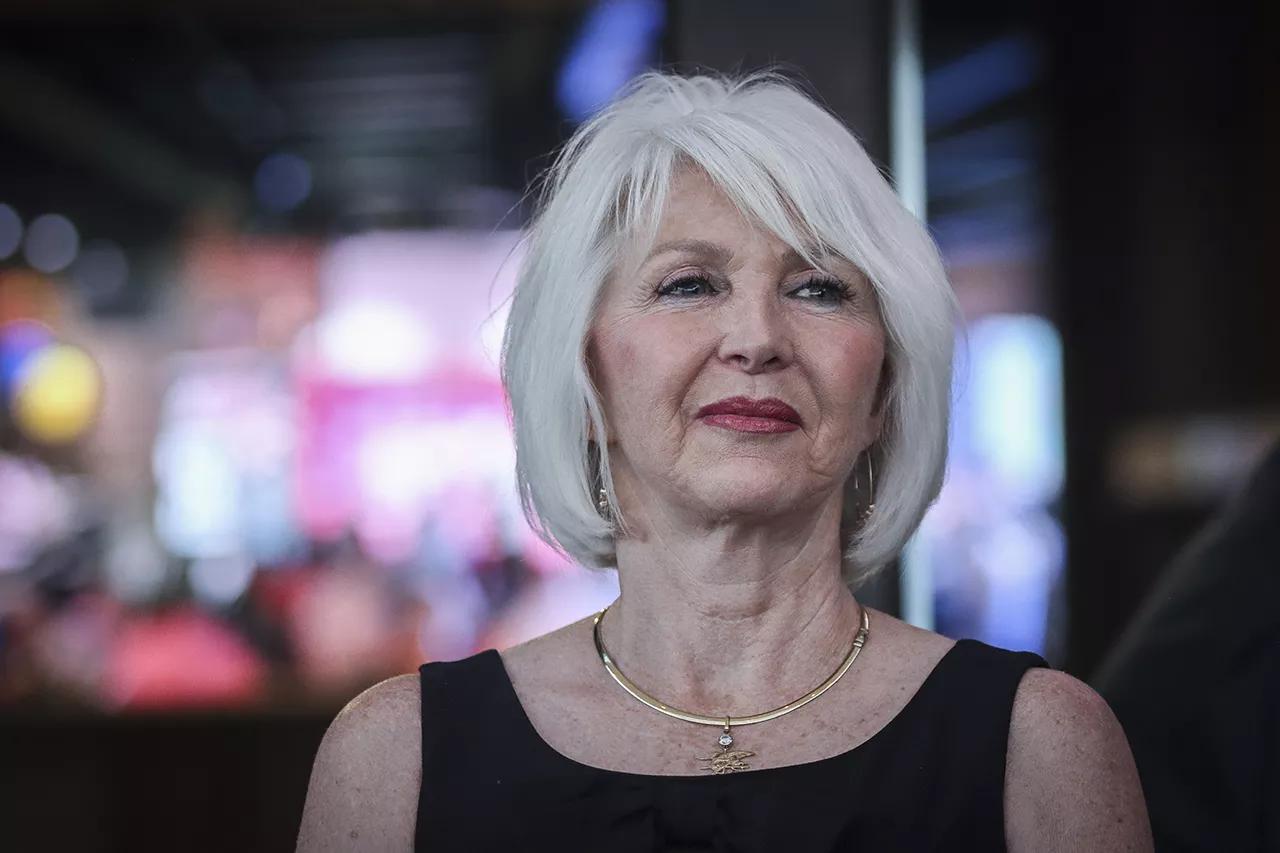
Trump was back on the beat a year ago, bemoaning the treatment of poor Tina Peters — then 10 months into her almost-10 year sentence after the former Mesa County clerk was convicted on seven criminal counts, including four felonies, for the election-system data breach she’d executed at her own office to get evidence that the 2020 election had been stolen from Trump … who’d won Mesa County in 2020.
“FREE TINA PETERS, a brave and innocent Patriot who has been tortured by Crooked Colorado politicians, including the big Mail-In Ballot supporting the governor of the State, Let Tina Peters out of jail, RIGHT NOW,” Trump demanded of Gov. Jared Polis in a post on Truth Social on Aug. 21, 2025.
“She did nothing wrong, except catching the Democrats cheat in the Election,” declared Trump, who’s voted by mail himself. “She is an old woman, and very sick. If she is not released, I am going to take harsh measures!!!”
He did. As Trump kept up his public campaign — suggesting a transfer to federal prison (not possible for a state crime), issuing a presidential pardon (ditto), slapping “weak and pathetic” Polis — he was taking those harsh measures in private. Colorado lost Space Command … again. It lost energy contracts and SNAP money. Trump refused to declare federal disasters quickly granted other states. And he barred Polis from a governors’ gathering at the White House in March.
In May, Pollis did grant clemency for Peters, reducing her sentence to four years. It was the most controversial move of his eight-year-term, which got him barred from official Democrat gatherings, too. (Ow.) Polis said he did so not because of Trump’s demands, but because Peters’ sentence was unduly harsh for a first-time offender, particularly since the judge seemed influenced by what she’d said, over and over, about this country’s elections.
Peters was wrong, but the First Amendment gave her the right to speak freely.
In her clemency application — which the governor’s own clemency committee had recommended turning down twice — Peters had admitted she’d “made mistakes,” but added that “my work to ensure honest elections will continue.”
And how. The day she was released from a Colorado prison, Peters went on Steve Bannon’s show. “I know that the Democrats are going to cheat,” she pronounced, “and no one’s really addressing the problem that I spent my time in prison as retribution for, and that was exposing the election machines that allow the votes to be flipped.”
Peters kept speaking, very freely. “The truth is that (Democrats) are stealing our elections, and they’re very bold about it,” she told far-right podcaster Steve Stern. “And so far, nothing’s being done. My main concern when I was in prison was that we’re going to lose this country if people don’t start exposing this and speaking out.”
She spoke out again at the Fraud Fighter Summit in Las Vegas, when former Denver resident Roseanne Barr greeted her via videotape with this: “Congratulations for being released from detainment in a communist country, Tina…You are our hero.”
The former county clerk completed her June victory lap by visiting Trump at the White House on June 30, the day of Colorado’s primary.
She was back in Washington, D.C., last week, meeting with Assistant Attorney General for Civil Rights Harmeet Dhillon as well as the Commerce secretary, pitching her plan for how to change the”rigged” election system. She sat down for an as-yet unscheduled interview with “60 Minutes.” And she suggested that the White House had talked repeatedly with Polis’s office about why she should be released.
Assuming ’60 Minutes’ is still free to ask unpleasant questions, it will likely bring up the recent revelation stemming from one of the state’s many suits against Trump, in which Attorney General Phil Weiser claimed the administration had “unlawfully punished” Colorado for “its exercise of sovereign powers,” including mail-in voting.
Emily Underwood, an about-to-depart White House special assistant to Stephen Miller, had sent to an email to officials with five federal agencies on December 15, calling for a “brainstorm call” to “prioritize Colorado for the purposes of ensuring grants and federal support are in line with administration priorities,” as first reported by the Denver Post.
“Please come prepared to discuss immediate actions that your department or agency can take with respect to Colorado.”
Marc Piscotty/Getty Images
They worked fast. The next day, the U.S. departments of Transportation and Energy announced the cancellation of hundreds of millions of dollars more in federal grants for Colorado projects. Having already cut the budgets of federal science facilities in Colorado and changing the name of the National Renewable Energy Laboratory, the administration now said it was cutting funding to the National Center for Atmospheric Research in Boulder (a move that’s been appealed). Trump capped off the month by vetoing a bipartisan bill to provide clean water to rural southeastern Colorado.
“The very idea that the President of the United States or the Executive Office of the President would target a state because they don’t feel that the state and its administrators are in line with the current administration’s priorities is phenomenal,” said the judge in the “brainstorm” case.
But there was already plenty of evidence that Colorado had already been targeted. And Colorado wasn’t alone in being the target of harsh measures, although the road has been particularly rocky here. Last year, after reviewing about 2,300 grants, the DOE eventually cut 284. While DOE Secretary Chris Wright, the only Coloradan in Trump’s cabinet, subsequently told Congress that the terminations were not political, all but one of those cut was a grant going to a state that had voted against Trump in 2024.
That revelation, too, came out in a court filing: The DOE acknowledged that “the inclusion of grants in the October notice tranche was based solely on the political identity of the grant recipient’s state, i.e., whether the recipient’s location and/or place of performance was in a Blue State or a non-Blue State,” and not “based on any programmatic, statutory, cost-reduction or performance-based factor.”
Suspicions confirmed. But not by Polis.
“We can’t speak to the motivations of the White House or any recent comments by third parties on the Governor’s clemency decision,” according to a statement from the governor’s office, which is currently seeking new disaster declarations. “The Governor made an independent decision based on the clear facts of the case and application, nothing else. Nine years behind bars for a first-time, elderly non-violent offender was excessive as confirmed unanimously by the Colorado Court of Appeals. Justice should not be partisan and we are sad to see it become so politicized in this case. Comments by the President made doing the right thing more difficult politically, but the Governor was motivated by his own convictions to apply justice fairly. We are following the lawsuit closely to see what we and the public learn through this process and if Colorado can recover any funding.”
These days, the “old woman” who was “very sick,” according to Trump, is healthy enough to attract a job offer from election clerk Clint Curtis an equally enthusiastic election denier in Shasta County, California. While the offer seems more like a publicity ploy than a likely hire. California’s senators decried Trump’s obsession with “installing individuals who would put the President’s agenda above following the law,” California Gov. Gavin Newsom quickly called for an investigation, and Colorado might have something to say about its most infamous parolee leaving the state — but Tina Peters is already pretty busy.
Taking harsh measures is tough work.
Pedaling Trump’s lies isn’t easy. Peters works hard for our money.