
Provided by Karibett Enriquez

Audio By Carbonatix
Reader support matters more than ever
We're in the final stretch of our summer campaign. Our goal is to raise $25,000 by August 9 to support the journalism our community relies on. Reader support is helping shape the future of local news.
According to members of his family, Alberto Enriquez, an undocumented immigrant with ties to Catholic churches in Colorado and Wyoming, was arrested late last month in Florida after falling into a trap set by Immigration and Customs Enforcement (ICE).
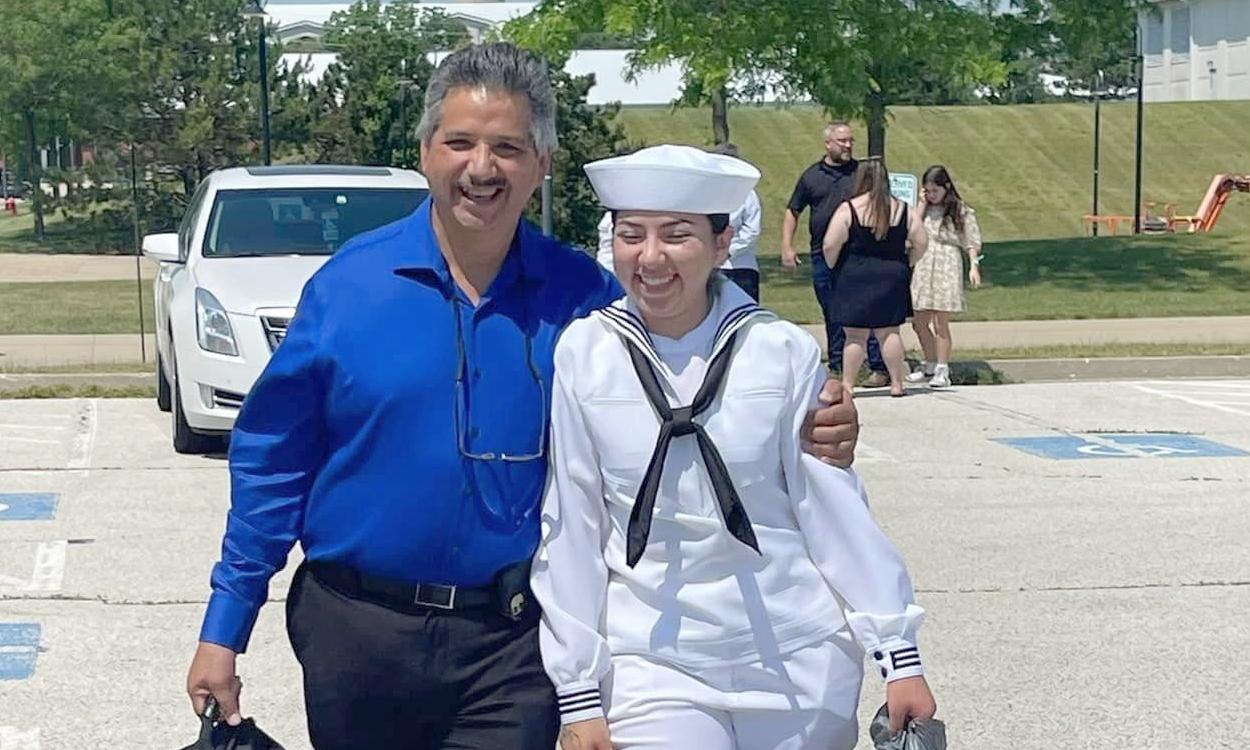
Enriquez’s family says ICE busted him when he showed up for an appointment at which he’d been led to believe he would be granted legal status because his daughter Bettsaida is a member of the United States Navy.
“That’s when he got picked up,” notes another of Enriquez’s daughters, Karibett. “Now he’s on a fast track to deportation.”
“We’re finding out stuff where it would have been better if he hadn’t gone in,” adds his wife, Karina Gonzalez. “But he was very confident, because our daughter is in the Navy.”
At present, Enriquez is in custody at Baker County Detention Center in Sanderson, Florida. The facility was formerly the Baker Correctional Institution, a federal prison that closed in 2021. Four years later, it was reopened as an immigration detention center known colloquially as “Deportation Depot.”
Colorado Connection
A native of Mexico, Enriquez came to the Denver area in 1993; he did so legally, using a tourist visa. He soon got married, but the relationship ended in what Karina characterizes as “a rough divorce.” In 1994, she reveals, Enriquez’s first wife accused him of domestic violence, which he denied committing. However, Karina and Karibett say he ultimately pleaded guilty to the charge for reasons they ascribe to a poor command of English, a lousy lawyer who didn’t show up at a key hearing, and his false belief that his wife would take him back if he declined to fight the allegation. He served a short stint on house arrest and completed a term of probation and anger management. Then, in 1997, Karina maintains that Enriquez’s ex-wife offered him a chance to visit with their son, who he hadn’t seen in years—but when he showed up, he was arrested.
This incident led to Enriquez’s deportation in 2000. But the next year, he returned to Colorado, this time without documentation, and subsequently led what both Karina and Karibett describe as an exemplary life. He made ends meet by working construction, and Karibett says he regularly volunteered on behalf of St. Cajetan’s Catholic Church, where he was an active member.
In 2008, he moved to Gillette, Wyoming, and quickly became a regular part of the St. Matthew’s Catholic Community, which later hired him to launch a Hispanic ministry.
“He got everyone together for fundraisers to help poor people at the church,” Karibett remembers. “He’s so humble and good. He would literally give you his last dollar.”
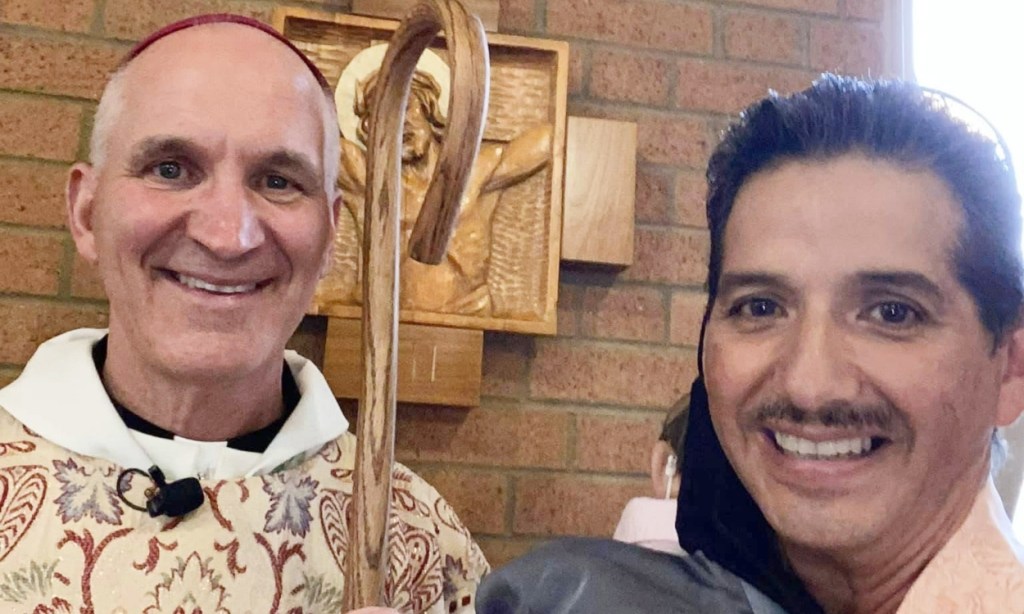
Photo courtesy of Karibett Enriquez
Enriquez and his growing family moved to Florida in 2020, settling in the community of New Port Richey two years later. Today, he and Katrina, who’ve been married for 29 years, have seven children between the ages of nine and 27, with four of them still living at home.
In the meantime, Enriquez’s family says he went through all the proper channels in order to establish his legal right to reside in the U.S., securing a lawyer to help him. He thought he found the solution after learning about a concept known as Military Parole in Place, or PIP. A U.S. Army article calls the concept “a vital support mechanism for service members and their families. … This legal designation allows PIP to be utilized for those who entered without authorization (i.e., they were not inspected and admitted by an immigration officer), providing a temporary grant of authorized stay to preserve family unity.”
Things didn’t work out that way. On July 29, Enriquez traveled to Tampa to obtain what he hoped would be a grant of military parole. Instead, he was taken into custody, and Karibett and Karina say his former brushes with the law are being used to justify his expulsion from the country. Moreover, their current attorney doesn’t practice in the jurisdiction where Enriquez is being held, and a new one who’s been recommended to them isn’t available until Aug. 7, which they fear could be too late.
“This is terrible, not just for our family and our children, but for all our friends from church in Denver, in Wyoming, in Florida,” Karina says. “Everybody is so concerned that this is happening to him. If anyone should not be going through this, it’s him. He’s not a criminal. He’s a very Christian person who has a lot of faith, especially with his daughter in the Navy and everything he was doing to legalize his situation.”
As of this writing, ICE has not responded to Westword’s inquiries about Enriquez.