
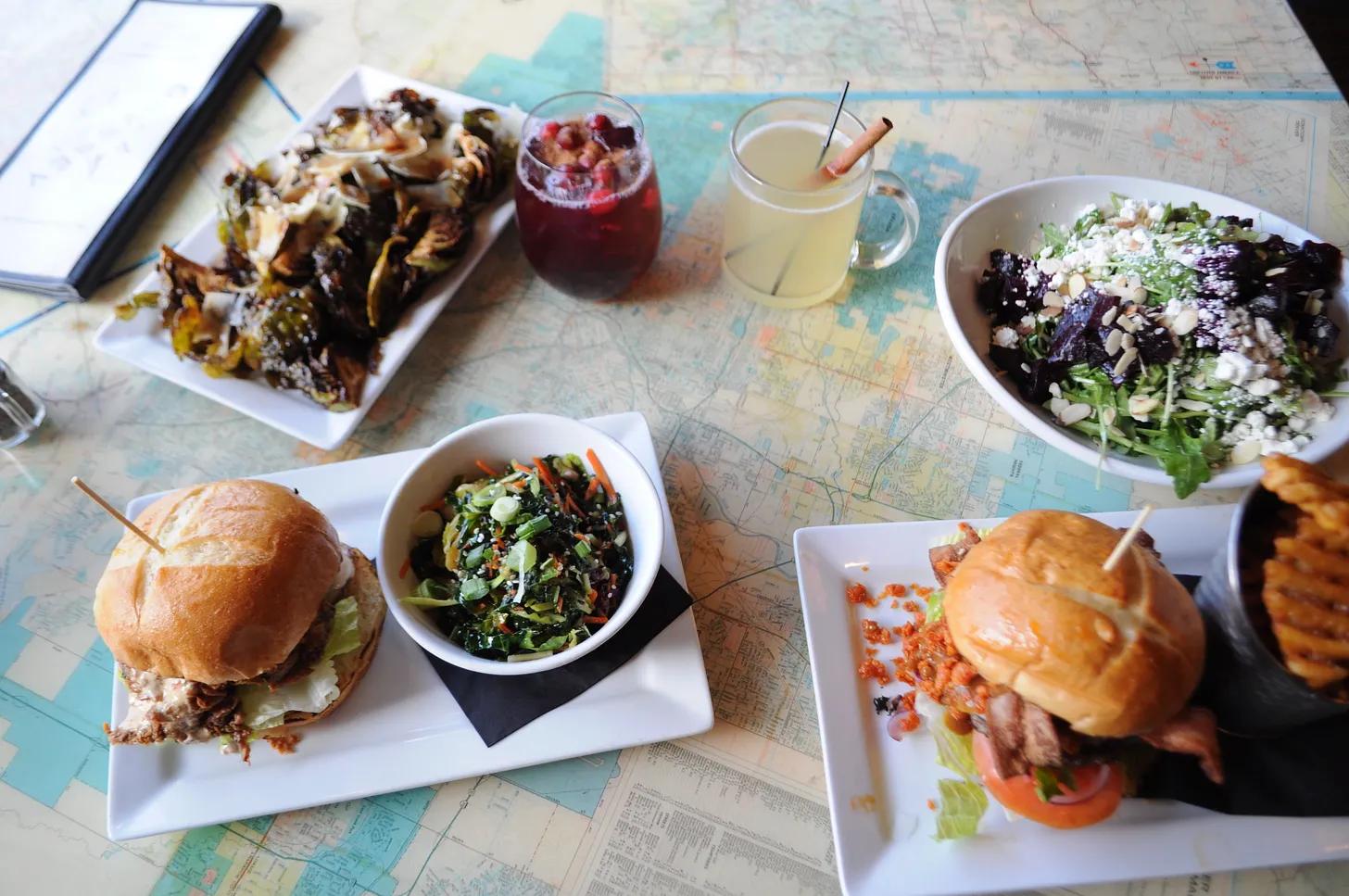
Visit Colorado Springs

Audio By Carbonatix
Independent Journalism in Denver Needs You
We need to raise $25,000 by August 9 to support the reporting our community depends on. Reader support keeps us independent and is playing a larger role in funding local journalism and shaping what comes next. If you believe independent local journalism matters, make a contribution today.
“If Colorado Springs wanted to get involved, they have to get involved.”
That’s what Tim Wolfe, Colorado Tourism Office’s director, told the New York Times back in late 2023 when commenting on which cities in our state did and did not pay to place themselves in consideration for Michelin awards.
“So while it is still true that individual restaurants can’t buy stars, tourism boards and hotel owners can buy the possibility,” explained author Julia Moskin, who noted the “costly undertaking” of Michelin’s thorough reviewing process.
Springs Top Chef Brother Luck was quoted in the article, saying, “How do you leave out the second-largest city in the state? It feels like a slap in the face.”
He later gained insight from Visit Colorado Springs on their decision, and as I reported in my write-up at the time, he came to agree that they “made the right call.”
Luck has since become an outspoken evangelist for our city to ante up and play. “This isn’t about copying another city’s food scene. It’s about giving ours the framework it deserves,” he said in a recent social media post.
In 2023, the price tag facing Visit COS would have been at least $70,000 annually with a three-year commitment. By waiting and watching — evaluating economic impact elsewhere — the Pikes Peak region’s marketing arm has surely saved money. That’s because as Michelin expands into smaller markets and more cities invest, each destination’s costs go down.
Our visitor’s bureau will not disclose exactly what they’re paying this year. I politely push, ’cuz I’m me and we have good rapport, and I tell them my readers will be asking.
Visit COS President & CEO, Doug Price, offers me this: “While we did not elect to participate in the program back in 2023, the expansion of the Michelin Guide to include the full state of Colorado has opened new possibilities. The Guide has proven to have a positive impact on the state’s restaurant industry over the last few years, and it is now more accessible for destinations like ours to be involved. We’ve committed to supporting the Michelin Guide Colorado.”
Price says that Michelin contracts are confidential, but “the program takes a shared approach to financial and marketing responsibilities that allow various destinations across the state to work together and ensure it’s a success.”
In a Visit COS press release sent to wider media — which, transparently, I am quoted in, having quietly been involved behind the scenes in conversations with Visit COS and other stakeholders for many months — the agency formally announced that it’s finally game-on for C. Springs’ culinary contention: “We are thrilled that the Michelin Guide will now consider all four corners of the state for its program,” says Price. “… we are confident the inspectors will recognize that the incredible chefs and restaurants in Colorado Springs deserve a seat at the table.”
If you wish to read Michelin and the Colorado Tourism Office’s press releases too, just click those links. Notably, Michelin’s states that “anonymous Inspectors are already in the field, making dining reservations and scouting for culinary gems throughout the state of Colorado.” And in their methodology disclosure, they note that “each restaurant is inspected several times a year” for consistency.
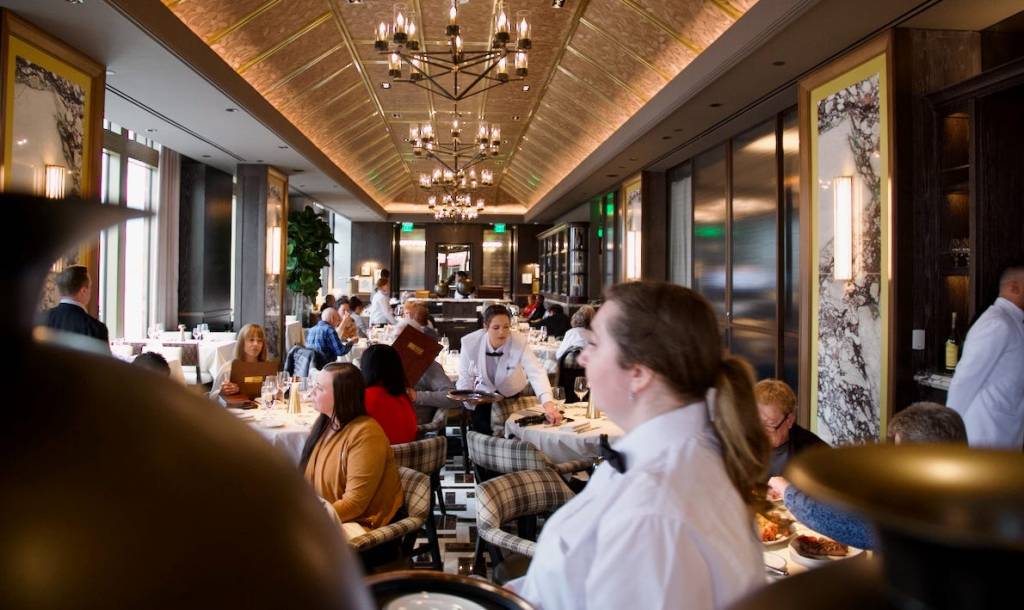
Matthew Schniper
“A huge motivator”
Visit COS’ release points to the value already provided by Michelin awards in Colorado in the past few years: “… unprecedented national recognitions like OpenTable’s Top 100 Restaurants, the New York Times’ America’s 50 Best Restaurants, 17 James Beard Foundation nominations and more.” And it cites a 2025 travel statistic that “food and cuisine is the highest travel passion category for recent or likely visitors to Colorado.”
Visit COS calls it “a huge motivator and deciding factor for visitors choosing one destination over another.” Data I was privy to earlier shows that 74 percent of frequent travelers consider Michelin restaurants as “decisive in their choice of destination.”
For its part, Visit COS makes it clear that attracting tourist dollars is the motivator, not anyone’s ego. “It’s not about a chef earning a ranking — it’s about inspiring the destination’s entire culinary scene to elevate,” Price had said in a prior meeting. He recognizes, by way of workforce development, how awarded restaurants can help attract and retain talent, which adds sustainability to the system. There’s also high value to culinary credibility, which factors in community pride and positive public perception.
By way of return-on-investment, Visit COS’ goal is to grow overnight stays in C. Springs year-round, especially during the off-season, as well as increase the average length of stay for visitors. They view Michelin attention as ideal for attracting desired “higher-spend visitors,” who have greater economic impact across all industry segments, including lodging and retail.
All of this can help us polish our image as a worthwhile food city. Visit COS researched online rankings and local social media forums, concluding that our culinary scene has a less-than-stellar reputation. (That’s a topic I tackled in my first podcast, State of Plate.) They’re well aware that we’re known for having a high ratio of chain restaurants to independents. That dates back at least 25 years, to when the Springs was prominently profiled as part of Fast Food Nation by author Eric Schlosser.
We’ve got a lot to overcome, and Michelin might help.
But nothing is guaranteed. Ponying up doesn’t mean Michelin’s inspectors will definitely award anything here. And if they don’t, it could perpetuate a negative perception of C. Springs — that we suck, and should just stick to things served with ketchup or ranch dip.
The aforementioned NYT’s article noted how chefs in many markets have begun pushing back against Michelin, even renouncing stars. Part of that factored into the true cost of trying to attain and maintain them, especially in an industry that lives on a knife’s edge and has never been able to find its footing with parity between front- and back-of-the-house staff. As much as insiders hoped that the COVID pandemic’s forced reset might offer an inflection point for restaurants to recreate how they operate, and do better, they simply didn’t. (Recall the provocative article from May 2020, “The Case for Letting the Restaurant Industry Die.”)
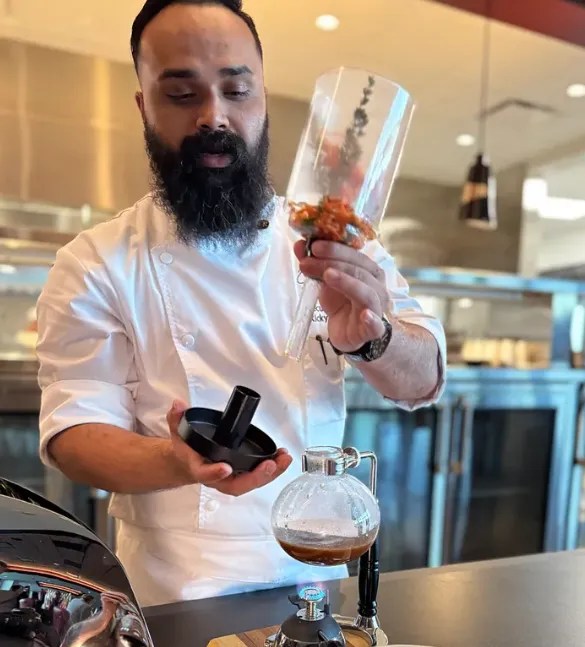
Matthew Schniper
Risky business
Beyond any one city’s, Michelin’s own image remains at stake. Again, quoting from that article: “… when thousands of vaguely recommended restaurants can call themselves ‘Michelin’ destinations, Michelin may risk diluting its brand.”
Chef Mark Henry, from Wobbly Olive/Allusion Speakeasy, says he’s against Michelin coming because he doesn’t think we’re ready for them, and worries it can affect “being genuine in our craft.” He’s partly concerned that awarded chefs elsewhere will arrive and open satellite outfits, believing this to be an easier market to earn more accolades (think: big fish, smaller pond). That could contribute to driving up what he can afford to pay his cooks, as the market might trend higher in the pursuit of awards.
Henry also points to the imposition of higher standards “that won’t truly benefit the customers, but will negatively impact staff members,” including their mental health.
On that point, Luck’s actually in agreement with him. Luck told the NYT in 2023 that he worried “chasing the validation of these standards and these stars can be dangerous.” But still, he’s now expressing support, despite the risks.
We won’t find out whether our bet has paid off until Michelin announces awards for Colorado in September, more than half a year from now.
Between now and then, I expect Michelin to stay near the forefront of town banter. Firstly, restaurants that think they have a shot at even making the recommended list (below a Bib Gourmand or Star award) will be on their best behavior, striving to be excellent every shift. Even more so than they might already be, given the pressure that KRDO’s Restaurant Roundup has added to the scene this past year.
Chefs: If you have any fucks left to give, now is the time.
I’ve talked to restaurateurs already scanning their dining rooms for reviewers, just in case all this talk of Michelin coming means inspectors are already among us. (That wasn’t confirmed until Visit COS’s press release went out, but given Luck’s prolific postings in recent months, it was suspected it was a matter of time.) The new suspicious eater for 2026 around these parts won’t be someone likely to dine-and-dash on the bill — but instead, a conspicuous solo diner, or possibly a two-top that triggers a Spidey Sense amongst the staff. (How’s paranoia factor into plating? We’ll find out.)
Inevitably, I’m going to field a lot of questions by readers, industry pals and perhaps other media. I’ll be asked to opine on whether we have a shot at awards, and if I think we should have paid to play.
Back in my formal newsroom CS Indy days, I would have had to write a separate editorial column to present an opinion safely removed from an impartial news story. But I can now proffer it here, thanks to the new-era of Substack and the slightly looser format that entrepreneurial journalism (which occasionally dabbles at the edges of advocacy or social impact journalism) affords me.
I see no reason to remain neutral and sit on the sidelines when perhaps the most impactful thing to happen to our food scene locally during my whole career is going down real-time. Any way you slice it, this is a big deal.
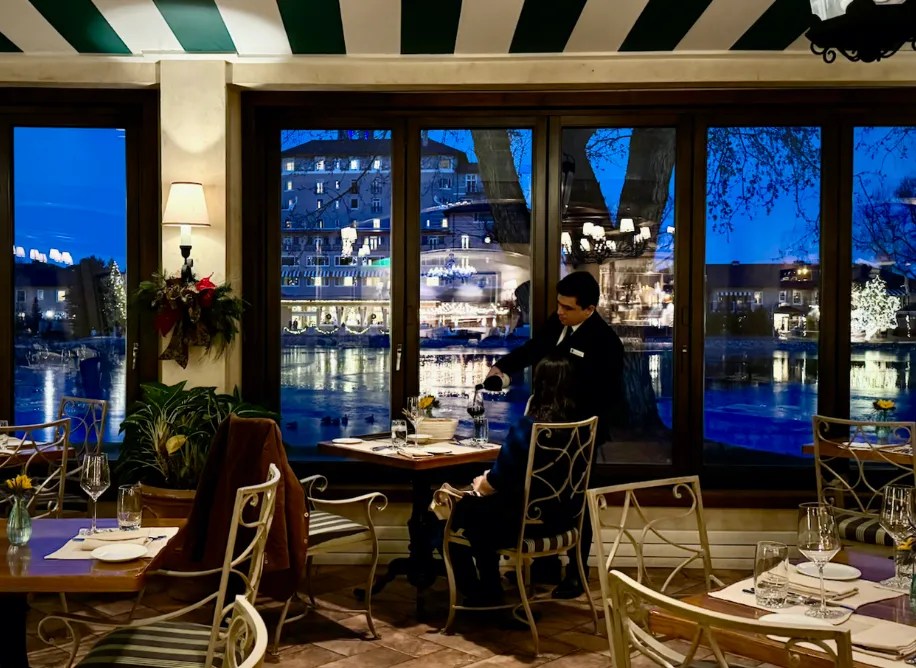
Matthew Schniper
The odds
So, do we have a chance? Shit yeah we do. I wouldn’t have chosen to be quoted in Visit COS’ press release expressing support if I didn’t believe so. And frankly, I’d be stabbing my thumb in the eye of many a talented industry friend and colleague if I pre-judged them as unfit. I’ve experienced moments of pure gustatory joy inside our restaurants just as I have in major U.S. cities and abroad. The question has always been consistency. Can you do it again, night after night, perfectly?
Sure, I just told KRCC last month that I believed our scene to be “nascent” on the whole and too-often middling. But I couched that by not wanting to detract from what we’re doing right already. I can confidently say there’s a small — call it elite — number of folks operating inside the boundaries of what could excite and warm the cockles of a Michelin critic’s heart. Which, of course, we perceive to be as frosty and sour as a citrusy sorbetto served as an intermezzo at a froofy meal.
I’m not going to prognosticate here and share my full mental list of worthy candidates, such that I can either be validated come September or embarrassed. I’m reluctant to name names, but let me offer you a few crumbs for now.
Working just from Michelin experiences I’ve had in the past couple of years, I’ve dined at an overwrought and over-priced ($600 for two) place in Portugal, and a totally impressive (at around half the cost) destination-spot in Spain. Then we undertook an effort to try several approachable spots in Denver that have earned Bib Gourmand status. My goal was to weigh modern interpretations of old-world stuffy with new-world, Instagram-era places that often lean as heavy on design and atmosphere as what’s being served.
In-part, we learned that service points, such as being greeted and seated in an overly formal versus casual manner, don’t matter too much. Location and signage and menu presentations and such can be goofy, but easily overlooked if the food and drink impress. Something bordering on mom-and-pop or dive-bar vibes is just as likely to win as an opulent place if the goods are really good.
The fact that Michelin awards street stalls and food trucks now means the proverbial bar has been lowered to everyday food instead of just fine dining for the 1 Percent. As Michelin has broadened its scope to modernize and remain viable (now that less people purchase tangible guides in the internet era), the legacy travel brand is meeting the people where they’re at.
Now that’s us, right here in humble Smallorado Springs. Look at the current Colorado Michelin list. Is it too hard to fathom that we have spots that could hang in that crowd?
I don’t think so. Neither does Top Chef Brother Luck. Or Visit COS. Their decision to say no in 2023 was about fiscal responsibility, not a down-vote of confidence in the best our scene has to offer.
So finally they’re answering the Colorado Tourism Office’s call to get involved —making an unprecedented investment in our culinary scene. Whether that’s overdue, right on time, or jumping the gun, it’s happening. Olympic City USA can no longer say it hasn’t gotten the chance to prove itself and shine.
Michelin is coming. Be ready.
This article is republished from Side Dish with Schniper with the author’s permission; read the original article.
