
Hannah Metzger

Audio By Carbonatix
A different type of Waymo vehicle has come to town, months after the autonomous ride-hailing service began deploying its self-driving Jaguars in Denver.
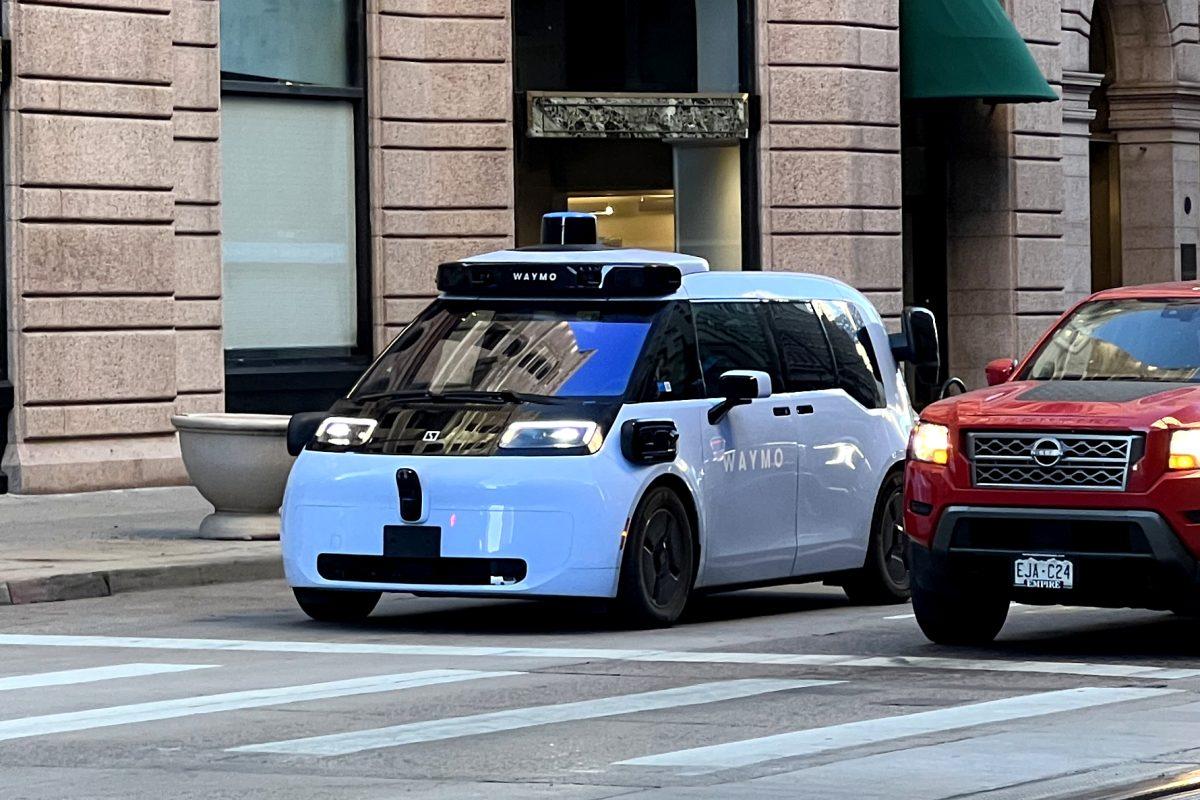
The boxy, powder-blue vans are called Waymo Ojai. The modified Zeekr-brand vehicles are fitted with the newest generation of the AI-powered Waymo Driver, designed to “sustain fully autonomous operations in more extreme winter weather conditions,” explains Waymo spokesperson Sandy Karp.
Except…they’ve hardly encountered any winter weather here. Since Waymo hit the city in September, Denver has experienced its hottest, driest winter in nearly a century. That’s given the robotaxis little time to practice maneuvering through snow and ice in Denver, which is one of the first cold-weather cities where the company has announced plans to fully operate. But the unseasonably warm weather isn’t spoiling Waymo’s mile-high plans.
“Whether or not Denver saw record accumulation this year, the Waymo Driver is constantly building its collective experience,” Karp says. “A key advantage of our technology is that what one vehicle learns benefits the entire fleet — whether that vehicle is driving through routine snowstorms in Minneapolis or record freezing temperatures in Florida.”
Waymo Driver works by first mapping the city in which it will operate, including lane markers, stop signs and crosswalks. While driving, the vehicles use 360-degree cameras, radar sensors and lidar sensors to decipher their surroundings. The AI system employs this real-time information and past experience to plan its route and to anticipate and respond to the actions of drivers, cyclists and pedestrians.
A dozen Waymo vehicles have been mapping Denver for the last five months, under the supervision of human employees in the driver’s seat.
Waymo still expects to open the robotaxis to passengers later this year, though Karp says there is no estimated launch date. In September, the company had said it planned to open to the Denver public “early in 2026.”
“This season’s variable conditions — from heavy lake-effect snow in the Midwest to freezing rain across the Northeast — have provided a rigorous, real-world environment to ensure the Waymo Driver is ready for the unique challenges these conditions bring,” Karp says. “Throughout this process, we remain dedicated to operating responsibly, prioritizing the safety of the communities we serve and the teams supporting our fleet. We closely monitor conditions in real-time in the cities we operate and adjust our operations accordingly.”
The company released a series of videos on Tuesday, March 3, showing the vehicles navigate snowy conditions in Denver, as well as in Detroit, Houston, New York City, Philadelphia and Washington, D.C.
Winter driving is challenging for autonomous vehicles because snow, ice and slush can stick to sensor housings and “blind or degrade performance,” Frances Zhu told Westword in October. Zhu is a professor at the Colorado School of Mines who researches how autonomous systems perceive their environment and make decisions in uncertain, complex and harsh conditions.
When roads and lane markings are covered with snow, autonomous vehicles must rely on maps and surrounding vehicles, Zhu explained. They struggle with inconsistent plowing and partially snow-covered roads, as AI has difficulty detecting subtle cues that human drivers use, such as curb edges and snowbanks. In addition, black ice is “nearly invisible even to advanced sensors,” Zhu noted.
The latest sixth-generation of the Waymo Driver underwent multiple upgrades intended to improve performance in various weather conditions. For example, integrating cleaning systems to keep cameras and sensors clear; using new algorithms for the radar sensors to better track objects in rain or snow; and reengineering lidar sensors and processors to penetrate weather and avoid distortion near reflective signs, according to the company.
Karp says Waymo is still working to navigate logistical impacts of winter weather, such as identifying pickup and drop-off points around snowbanks, optimizing vehicle charging cycles during freezing temperatures, and aligning operations with regional road maintenance and closures.