Courtesy of Philip Morris International

Audio By Carbonatix
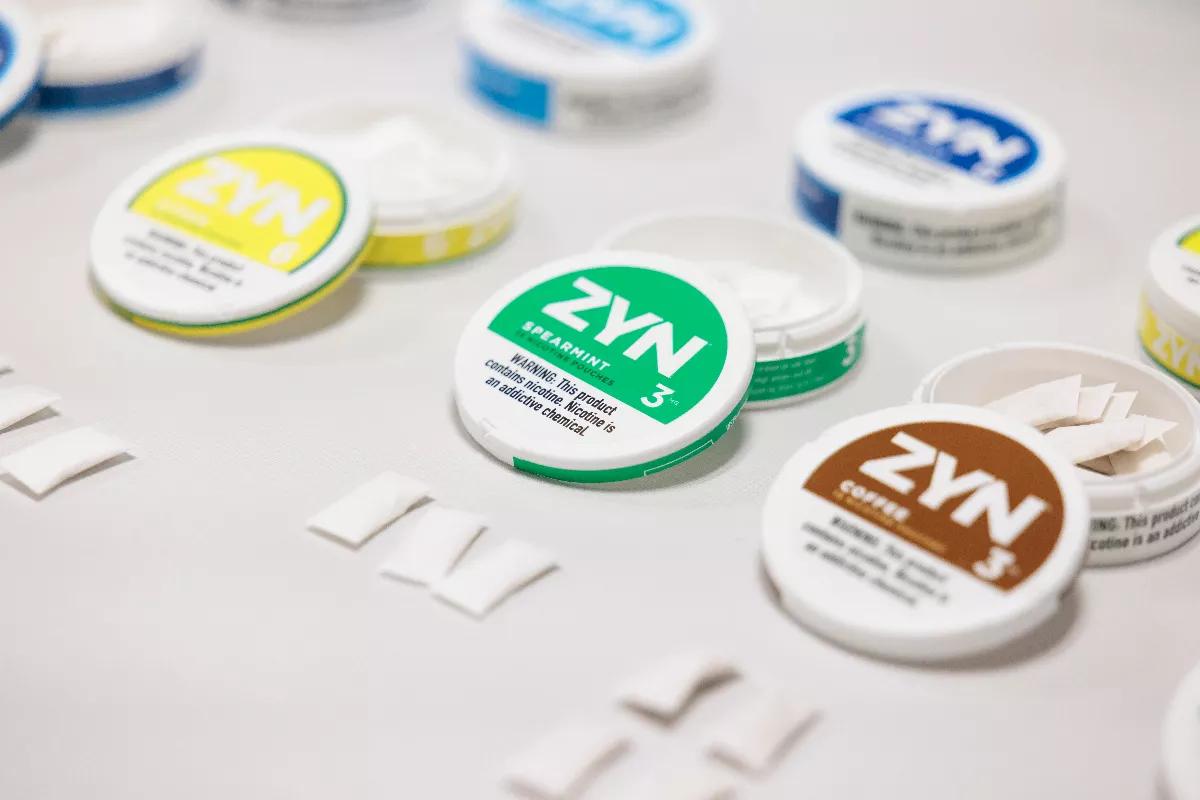
As the City of Aurora begins regulating the sale of tobacco more strictly, it’s also poised to become a major producer of the fastest-growing tobacco product in the world: little white pouches from a Swedish-based company called Zyn.
On Monday, March 9, Aurora City Council held a second and final vote, unanimously approving new rules regarding the sale of tobacco or age-restricted psychoactives, like kratom, within the city. Going forward, tobacco and kratom retailers will have to pay $500 a year to apply for a license to sell those products.
The argument behind the new rules is to set more guardrails stopping the sale of tobacco to children, similar to Denver’s voter-approved ban on flavored tobacco and nicotine but with a different approach.
In early February, Aurora started production of Zyn nicotine pouches at a $600 million factory that broke ground in December 2024. By 2030, the multinational tobacco conglomerate plans to produce billions of cans of the little white pouches around the world.
Philip Morris International has invested heavily in Zyn, its top-selling product in the United States, for the past five years as it seeks to move into what it touts as healthier and safer tobacco alternatives. Zyn, which is sold in a variety of flavors, has exploded in popularity in recent years with the help of “Zynfluencers” on social media, while celebrities like Tucker Carlson and Josh Brolin have said on podcasts that they love Zyn and even use it to fall asleep.
In a January 2025 decision, the U.S. Food and Drug Administration determined that Zyn and other nicotine pouches have “lower amounts of harmful constituents than cigarettes and most smokeless tobacco products” and “pose lower risk of cancer and other serious health conditions.” However, the FDA cautioned that this “does not mean these tobacco products are safe, nor are they ‘FDA approved.'”
“There is no safe tobacco product,” the FDA said, adding that “youth should not use tobacco products and adults who do not use tobacco products should not start.”
Having been a teenager in Aurora a decade ago, I could always rely on the same (still-standing) smoke shop to illegally sell me Swisher Sweets and Prime Time cigarillos, but the city seeks to end that era. Aurora now aims to ensure that people under 21 years old don’t get their hands on Zyn, while also helping Philip Morris International usher in a “smoke-free” age full of nicotine pillows.
Put That in Your Pipe and Smoke It
Starting on April 11, anyone who wants to sell in tobacco in Aurora will have to pay a $500 annual fee for registration, including the approximately 340 tobacco retailers already operating in the city. Most of those existing retailers, about 270 of them, are “incidental” sellers that happen to carry tobacco, like King Soopers, 7-Eleven and other grocery and convenience stores. Aurora has about 55 smoke or vape shops that are dedicated to selling tobacco and related products, along with six hookah lounges and two premium cigar lounges, according to the Aurora Licensing Division.
Existing Aurora tobacco retailers will have to apply for and secure their licenses eventually, but “there is no deadline for that as of yet,” says city spokesperson Joe Rubino.
“Our licensing department expects it will take a few months to stand up the program and be ready to accept license applications from retailers,” Rubino explains. “More information will be shared when we reach that point.”
In the meantime, a new set of requirements are awaiting anyone planning to open a tobacco-selling business. New retailers will have to set up 1,500 feet from a school and 500 feet from any existing tobacco retailer. New vape shops have to be 2,000 feet from existing vape shops, and new hookah lounges must open two miles from the six already open in Aurora (and any new ones after that).
Aurora tobacco retailers in operation before April 11 are “grandfathered” from the distance requirements, according to the ordinance, and those protections will apply to new owners if the tobacco retailers decides to sell or pass on their storefront.
Licensing fees on Aurora’s existing 340 tobacco retailers would generate $170,000 a year in revenue, but the new program will cost around $200,000 per year to oversee, city projections show.
Licensing will be enforced via biannual compliance checks as well as fines and license suspension or revocation for repeat offenders. The law breaks down penalties and fines for people caught multiple times within three years:
- First violation: Minimum $1,000 fine
- Second violation within 36 months: $2,000 fine and seven-day suspension
- Third violation within 36 months: $2,650 fine and 21-day suspension
- Fourth violation within 36 months: Revocation of license
Cities and counties throughout Colorado require similar licenses, according to Aurora councilmembers, including Denver, Thornton, Boulder, Pueblo, Golden, Northglenn, and Lake County.
Aurora’s tobacco initiative isn’t a flavor ban, like the law passed in Denver. However, Aurora did work in other “age-restricted psychoactive products” into its ordinance, including kratom, a stimulant that comes from a tree in the coffee family is often sold as a powder supplement, and age-restricted hemp products. Aurora businesses will need the new license to sell tobacco and cannabis paraphernalia, too.
Aurora’s new licensing system also requires applicable retailers have a “permanent location,” a move to more closely regulate mobile or temporary vendors. Any “sponsored event or festival” that comes to Aurora for a short duration will have to secure a permit from the city for its vendors to sell tobacco or age-restricted psychoactive products, too.
New Age on the Horizyn?
Days before Aurora’s nicotine and tobacco restrictions were approved, conveyor belts started running at the Aurora Zyn factory. The facility is a lynchpin in plans by the largest multinational tobacco company in the world, Phillip Morris International, to expand the sale of its most popular product.
The Zyn brand actually began in Colorado. The Stockholm-based company that invented Zyn pouches, Swedish Match, used to produce most of the world matches, but successfully shifted in the 2000’s into the sale of pouches filled with nicotine power, inspired by the Scandinavian invention of tucking moist tobacco, known as snus, under the lips.
Upon deciding to expand the sale of nicotine pouches in the U.S., Swedish Match branded the product as “Zyn” and launched its sale in Colorado in 2014, according to the company’s website. After Zyn pouches were “very well received” in Colorado, their sale expanded to the rest of the U.S., according to a 2016 company report from Swedish Match.
In 2018, Swedish Match sold about 13 million cans of Zyn, Axios reported. By 2025, that number increased by over 6,000 percent.
Philip Morris International, the tobacco giant that owns Marlboro, took majority ownership of Swedish Match for $16 billion in December 2022 as part of its “smoke-free journey” into a growing oral nicotine market, PMI said at the time.
In July 2024, PMI announced plans to invest $600 million into opening an 800,000-square-feet “state-of-the-art” ZYN factory in at East 48th Avenue and Harvest Road, south of the Denver International Airport, in Aurora. The facility is meant “to help meet the growing global demand from legal-age consumers for smoke-free products,” the company said at the time. Preliminary operations were expected to begin at the end of 2025, and regular operations in 2026.
The company reported in early February that the Aurora Zyn factory started producing pouches, although the factory was still under construction.
According to a full-year sales report published in February, PMI distributed about 800 million cans of ZYN last year, up from 540 million the year before and dwarfing the 13 million sold in 2018. The company reported that its smoke-free products generated $17 billion in revenue in 2025, driven largely by the sale of Zyn, and hailed nicotine pouches as “the fastest growing nicotine category” in the country.
According to PMI, the company’s net revenue was $40 billion in 2025, with expectations for smoke-free products, primarily Zyn, to account for two-thirds of its revenue stream by 2030; the Aurora Zyn factory is expected to pump $550 million a year into the Colorado economy, according to PMI.
The company hasn’t said how many pouches Aurora will produce, but PMI invested more than $230 million to expand the maximum production capacity of a Zyn factory in Owensboro, Kentucky to 900 million cans a year, which would more than double current shipments. The Owensboro facility is currently the main producer of Zyn in the U.S.