
Photo by Third Dune Productions

Audio By Carbonatix
Long before Black Cube began installing artwork across deserts, in mountain towns and on public plazas, Cortney Lane Stell was asking a basic question: Why does contemporary art almost always live inside the same kind of room?
“A lot of Colorado’s art scene is really place-based,” says Stell, Black Cube’s founding executive director and chief curator. “If you think about the museums, they’re in buildings built by well-known architects, and it’s very much about the place. Simultaneously, white cube gallery spaces were creating this homogenized way of viewing art: not just in Denver, but every white-walled museum space across the globe was showing the same kind of artists in the same kind of way, and they were paying them abysmal fees, if they paid them at all.”
Stell spent her days hanging work in one of these pristine white galleries at Rocky Mountain College of Art + Design in the early 2000s. The space provided focus and control, but it also separated art from the contexts that influenced it.
“In our early years, we were really thinking about a model that would be different from traditional institutional models for contemporary art,” Stell says. “Why not be different? Why not be sort of nomadic in our structure, moving from place to place?”
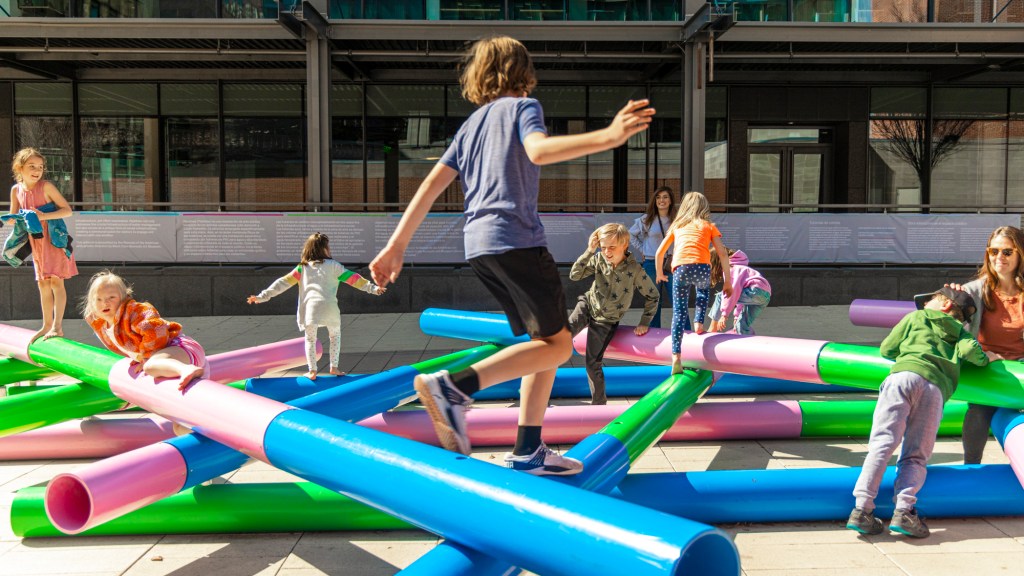
Photo by Third Dune Productions
When she helped found Black Cube in 2015, that question became the premise. Instead of building a permanent museum, the Denver-based nonprofit would commission artists to create site-specific work shaped as much by their surroundings and communities as by the artists themselves.
A decade later, that nomadic model has taken Black Cube from the tiny mining town of Gold Hill to a 160-acre earthwork in the San Luis Valley. This spring, however, the organization is turning some of that energy back toward home. Over the past few weeks, Black Cube has begun hosting a series of public programs at its headquarters in Englewood, including experimental film screenings and the return of a long-dormant community brunch series.
“It wasn’t until our tenth year that we decided to really commit to our Englewood space in the sense of engaging the public,” Stell says. “We’ve always had this deep following around the globe, but our biggest audience is definitely here in the Denver metro area.”
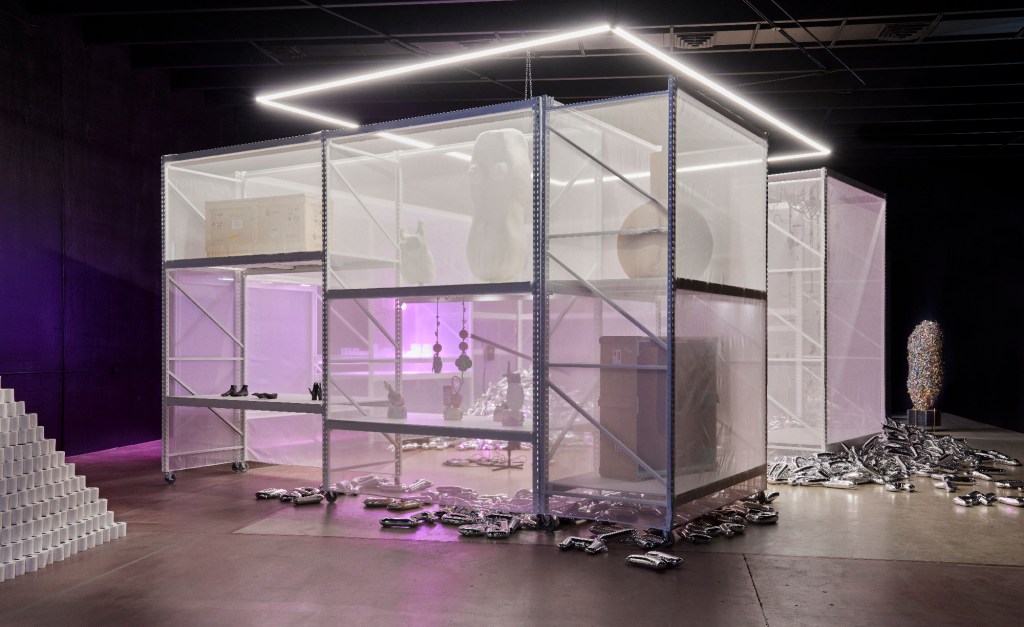
Photo by Third Dune Productions
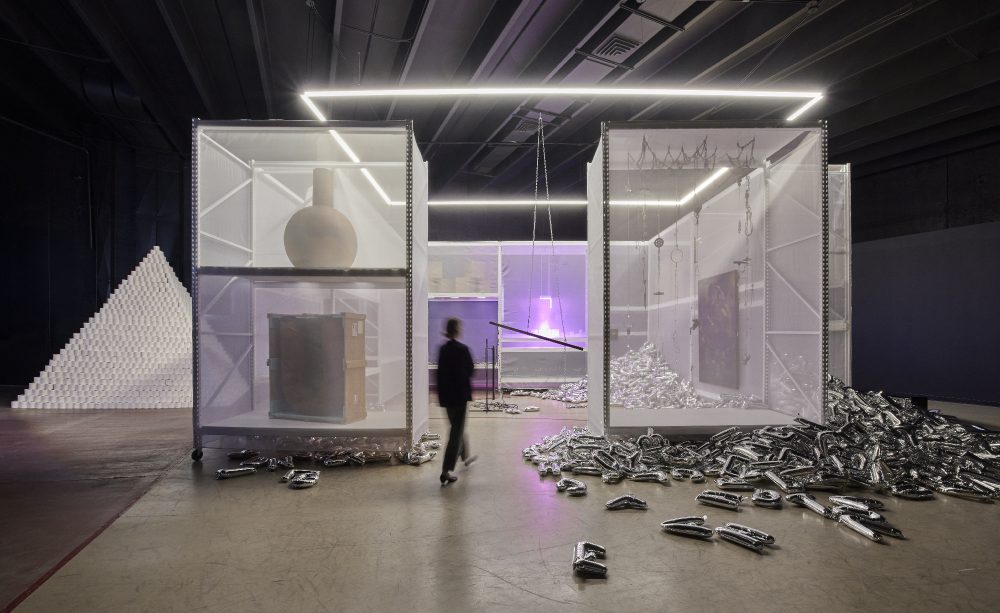
Black Cube has occupied the nearly 8,000-square-foot space since 2018, using it primarily for film shoots, sculpture production and administrative work. Converting it into a public-facing venue required navigating building codes intended for industrial storage and shipping rather than gathering audiences.
Because the building lacks a fire-suppression sprinkler system and was originally built with loading docks rather than public entrances and exits, Englewood regulations sharply limit how many people can be inside at once. Installing the full sprinkler system required for a larger occupancy would have necessitated running new water lines from the street and retrofitting the entire building, an upgrade Stell estimates would cost roughly a quarter of a million dollars.
“It didn’t make sense for an organization where most of our programming is out in the world to put that kind of money in a building,” Stell says. “So I kept talking to the city about ways that we could work around that.”
By installing a new exterior safety ramp along the south side of the building, the organization was able to obtain a permit allowing up to 49 people inside at a time. That compromise enabled Black Cube to activate the space in ways that align with its ethos: intimate, experimental and community-oriented.
Earlier this spring, the organization hosted Black Cube Shorts, a two-day program of experimental films commissioned from international artists Julie Béna, Anna Uddenberg and Alejandro Almanza Pereda. While Black Cube has produced films before, the screenings marked a first: sharing that work with a Denver audience.
“We’ve produced three films in our eleven years, but we had never screened them locally,” Stell says. “I think that was a really cool experience and a fun thing to talk to our community about. It was fun to have some of the actors there, and I think the screenings went well. We rented a super kitschy popcorn maker and had some drinks and snacks available for the guests, and the dialogue was really lively.”
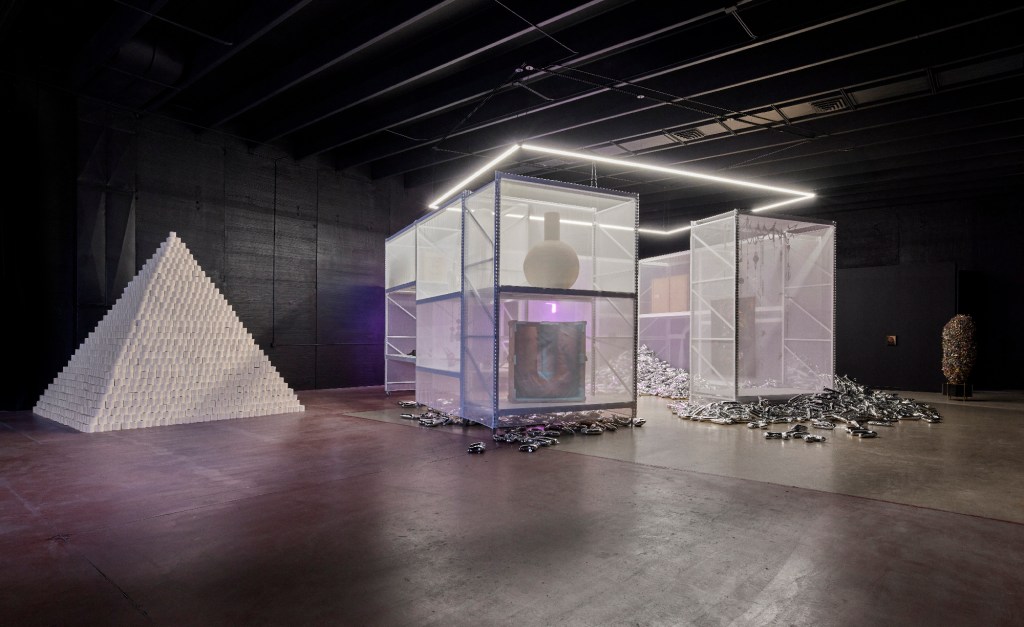
Photo by Third Dune Productions
If the film screenings leaned into Black Cube’s interest in experimentation, the return of Talk With Your Mouth Full signals a renewed investment in community building. The potluck-style brunch series invites local artists to host informal gatherings centered on food, conversation and shared activity.
“We stopped it during the pandemic, but people ask about it all the time,” Stell says. “Talk With Your Mouth Full was just really intended to help foster youth and community in a casual, convivial, food-centered, ‘I’m-not-presenting-my-art’ sort of way. It struck a deep chord with the community, so we decided to bring it back this year.”
The Englewood building itself helped shape the program’s revival. A former owner outfitted the warehouse with a full kitchen and even a half-court basketball setup, remnants of which are still visible today.
“It’s kind of like a hangout,” Stell says. “We wanted to think about how to use that kitchen as a way to give back to the community.”
Even as Black Cube builds a more consistent presence in Denver, its broader ambitions remain firmly outward-facing. The organization continues to develop large-scale, site-specific projects, including a forthcoming work in Nevada that engages with the history of atomic testing, as well as ongoing installations in upstate New York.
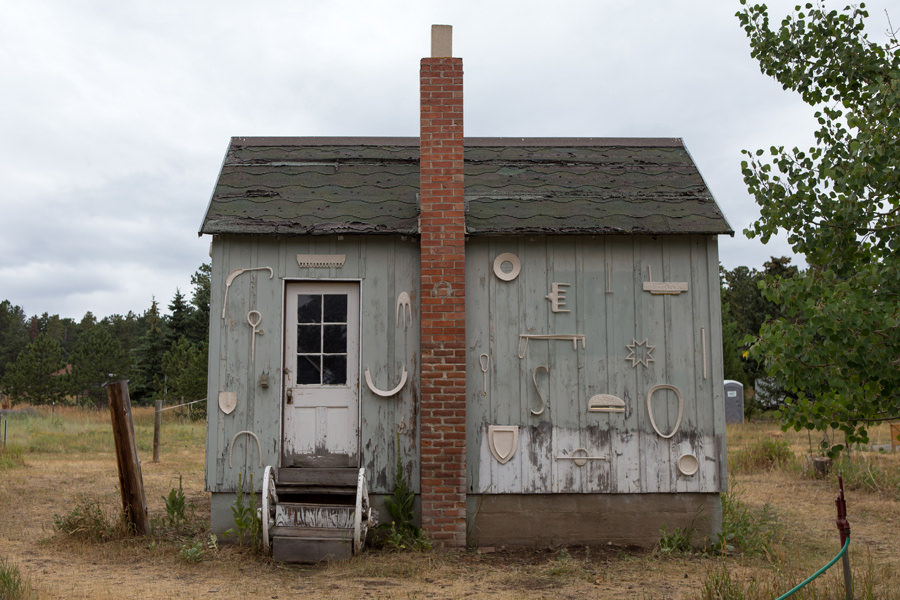
Photo by Sara Ford
Closer to home, Black Cube is also expanding into more permanent public art. This year, the organization plans to install a sculpture by Mexican artist Gabriel Rico that’s more than twenty feet tall near Union Station, incorporating augmented reality elements into the work.
“I think we’re interested in diversifying the landscape of permanent public artwork,” Stell says. “We’ve done a lot of temporary projects, but it’s interesting to see what an experimental organization can offer in a more permanent context.”
At the same time, the Englewood headquarters will continue to serve as a testing ground. This fall, the space will host a solo exhibition by Mexican artist Enrique López Llamas, designed to remain on view for several months after it opens on September 25.
The balancing act between mobility and rootedness reflects a lesson that Stell says took years to fully understand.
“I thought that we would just be like the internet or like a snowball rolling down a mountain, and we would pick up communities every time we went to Venice, Chicago, upstate New York, or to other places we’ve gone to,” she says. “In truth, we do pick up audiences there, but we’ve learned there is a reason to have a geographic sort of center.”
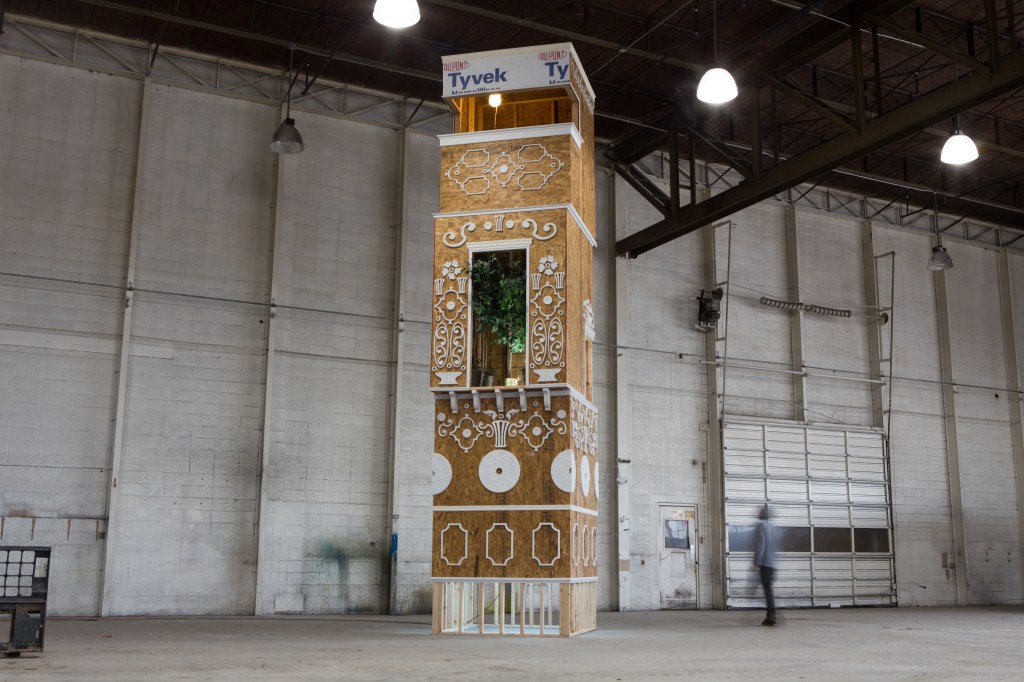
Photo by Third Dune Productions
That realization has reshaped how Stell thinks about Black Cube’s role locally.
“Why not really invest in that community?” she asks. “Even though we’re leaning into our Englewood space, Black Cube is still a very unique niche. We do much more experimental, large-scale exhibitions than other contemporary art institutions in town. We don’t run a regular program of three to eight exhibitions a year. Instead, we’ll do one exhibition that’s a chunk of the year, leave it up a very long time, and invest some money and time in something that’s really ambitious and experimental and relates to context and site.”
Even so, the organization remains intentionally small, operating with a four-person team and a structure designed to stay flexible. That nimbleness, Stell says, is essential to continuing the kind of ambitious, site-specific work that defines Black Cube.
“It’s always an uphill battle,” she says. “But I’m very excited to continue to pursue multiple directions at once. It’s never business as usual. Black Cube is a very expansive, curious organization, so I enjoy collaborating with artists in ways that allow the organization to dig deep into community and think critically about our world while also encouraging audiences’ curiosity.”
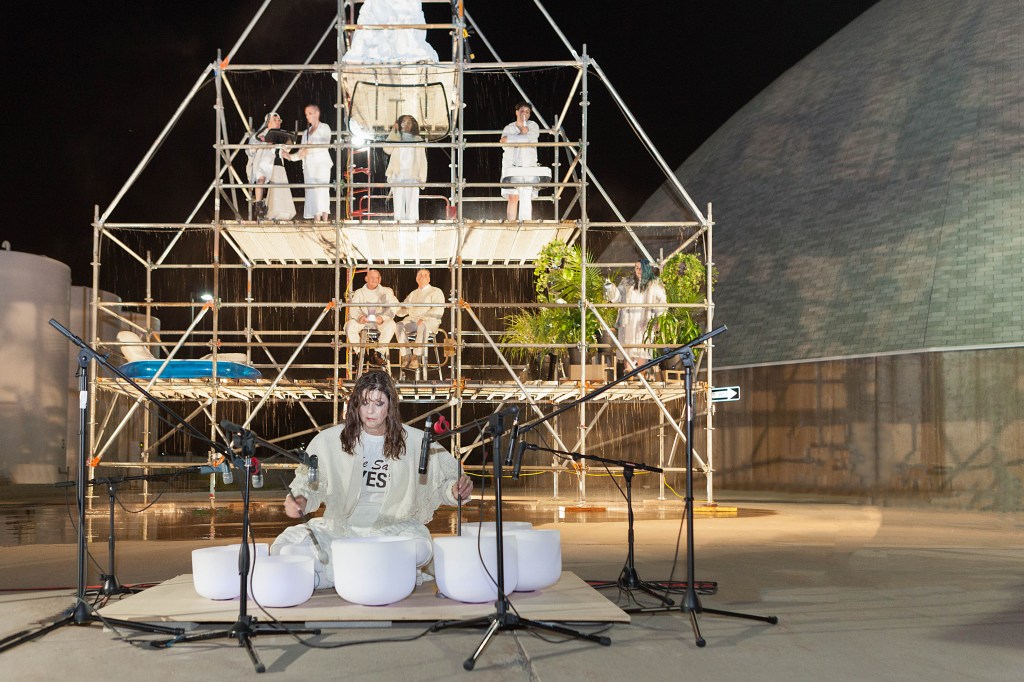
Photo courtesy of the artists and Black Cube
After more than a decade of building projects of vastly different scales in vastly different places, Stell says, the thread connecting Black Cube’s projects is not location but how people engage with them. The aim is to create environments where audiences feel open to asking questions and exploring unfamiliar ideas.
“We’re so siloed and divided and information-overloaded in our society,” Stell explains. “When you can create environments that support curiosity, people become more open. The older I get and the longer I do this, that is such a guiding star.”
Talk With Your Mouth Full potluck brunches are Sunday, April 26, May 3 and May 17 at Black Cube, 2925 South Umatilla Street, Englewood. RSVP and learn more about other events at blackcube.art.