
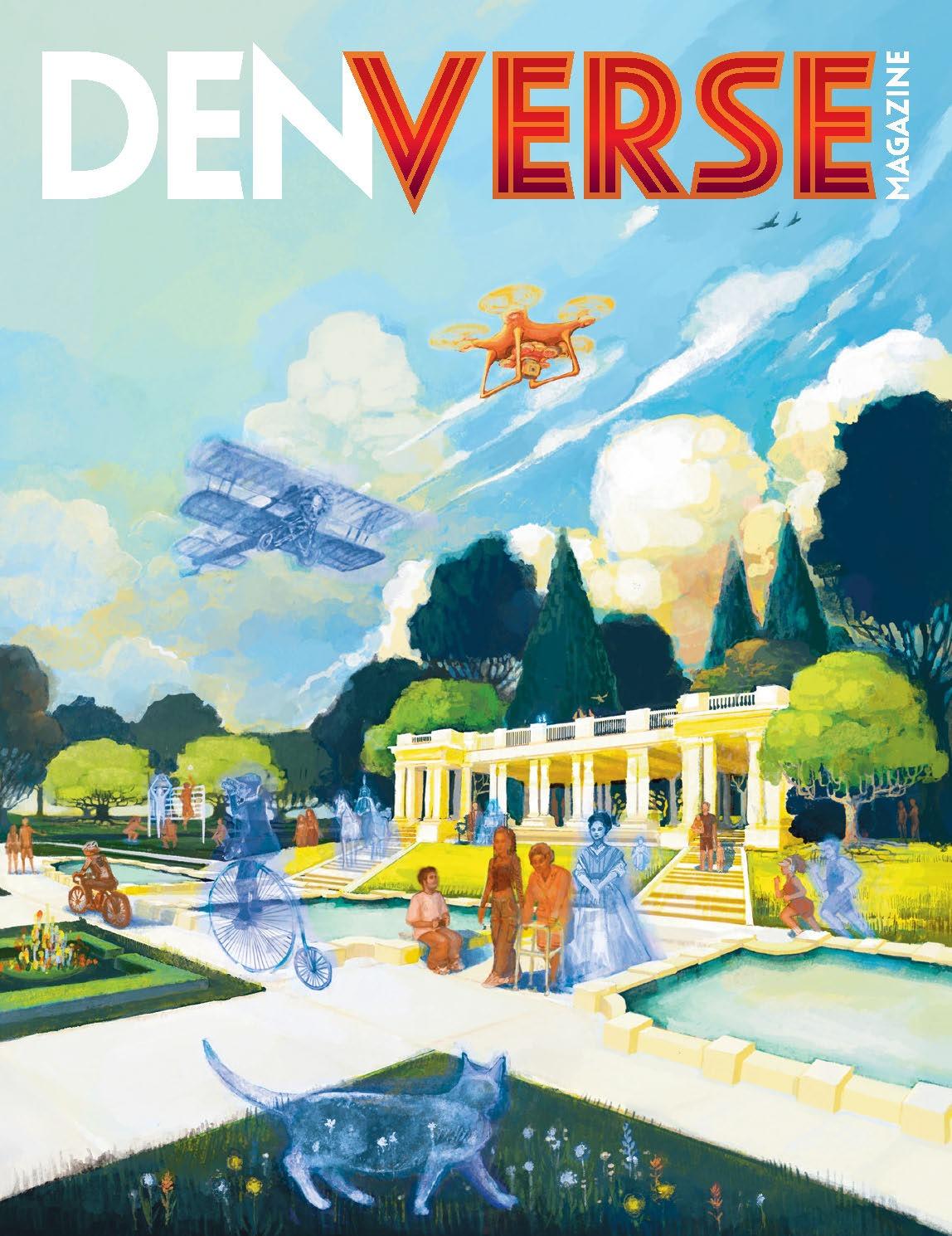
Denverse

Audio By Carbonatix
“I thought I was hallucinating when I saw that empty cage,” recalls Paul French, founder and editor-in-chief of Denverse, the quarterly arts magazine whose spring issue is now on the streets. Some of the issue, at least: French had stashed 4,000 copies in the storage space, saving them to restock distribution spots around town when they got low. But when he returned to the cage on April 18, the magazines were gone — along with the thousands of dollars he’d paid to print them.
It was a “pretty big hit,” French admits. It was also baffling. After all, the storage unit in his apartment complex in central Denver is behind a locked garage door, with security cameras, and “I never would have thought I would need another padlock,” he admits.
Because who would want to steal copies of a free magazine? A lot of copies of a seventy-page, glossy magazine, which were very, very heavy. “You’d have to park your car or van, and spend considerable minutes,” he estimates, loading what amounted to over a ton of paper.

Paul French
French reported the theft to the Denver Police Department (he hasn’t been assigned a detective yet) and returned to Publication Printers, which was sympathetic and cut a deal to print replacement copies. The printer had never heard of a similar situation, he says.
But I have. Years ago, alternative newsweeklies occasionally found that irate subjects of critical articles would head to distribution points — or sometimes the publishing plants themselves — to steal copies of the paper and keep the offending stories from the public. That’s why many of these papers, including Westword, include legal language limiting people to one copy per person. That’s how you create value for a free publication…and elevate stealing multiple copies to a crime.
Still, who would steal an arts magazine? During its two years in print, Denverse has attracted a growing cadre of faithful readers, drawn to smart stories by local creatives and journalists (including French’s piece this issue on Denver’s scooter business), as well as book reviews, poetry, photos and other artwork. It’s also attracted a growing group of faithful advertisers, and French wants to be sure those advertisers get the 10,000 copies he promised.
Fortunately, Denverse has also attracted a faithful crew of volunteers and other helpers. When he distributed that first issue in June 2024 on his own, French learned that it was “back-breaking labor” that involved not just toting all the magazines, but making sure distribution points were kept happy and tidy. “Circulation is a massive part of the business,” he says. Today, Denverse has about 300 distribution locations, with racks at thirty of them.
Although publishing Denverse remains a lot of work — and is still largely a labor of love — the theft came when it was having a “pretty profitable quarter,” French says. “This kind of reset everything.”
But he’ll soldier on, pushing the safety of subscriptions — Denverse has over a thousand subscribers, and those issues are mailed out directly from Publication Printers — and restocking all those distribution points. “This is not going to work out in their favor once people hear about it,” he says of the mysterious thieves. “It’s a fascinating story.”
Pranksters? Disgruntled critics? Saboteurs? French still doesn’t have a clue.
Whatever, he’s already planning on publishing his next issue in June. And the real story behind this caper would make a great third-anniversary piece for Denverse!
Have a tip? Send it to contact@denversemagazine.com.