
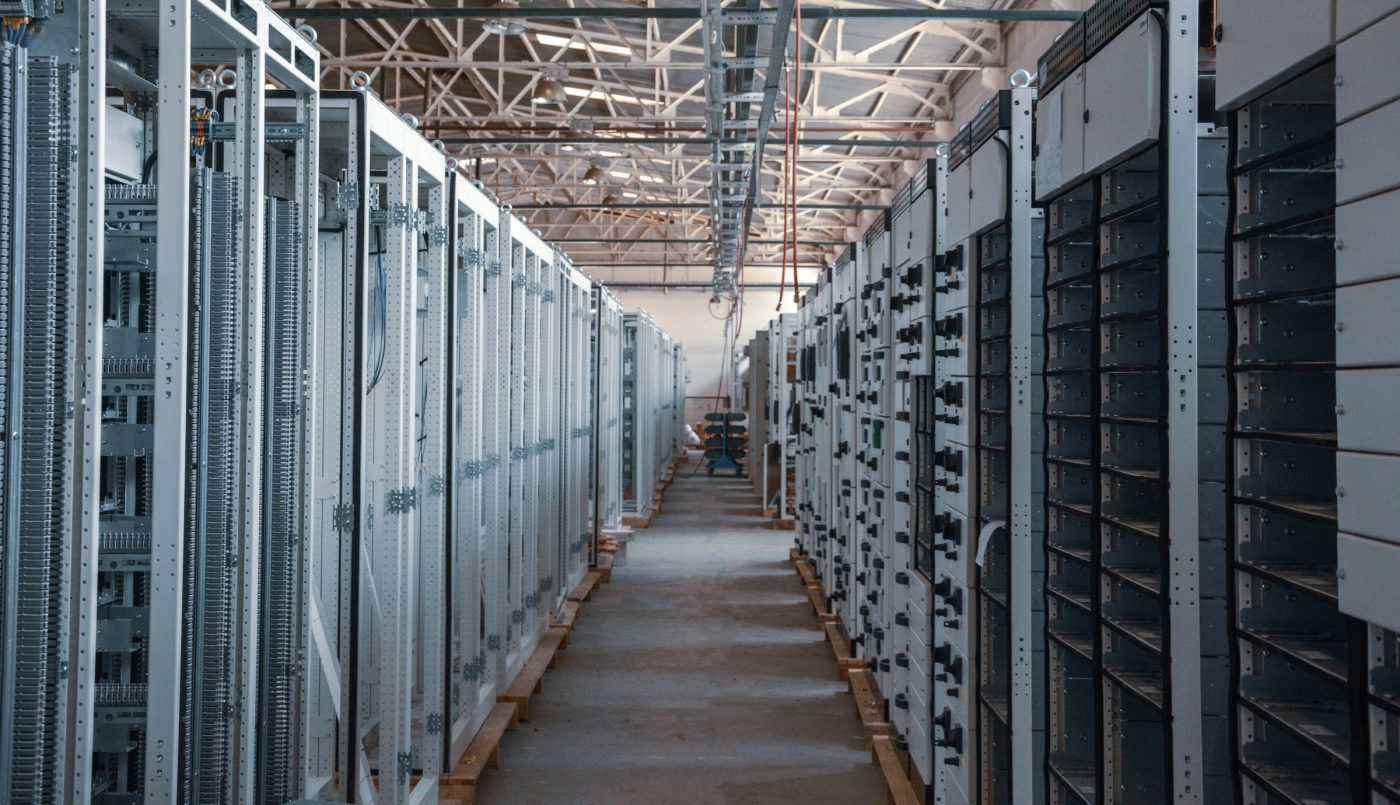
Unsplash/İsmail Enes Ayhan

Audio By Carbonatix
After nearly a year of negotiations, intense lobbying activity and many hours of public hearings at the state Capitol, Colorado lawmakers will end the 2026 legislative session having made no changes to how the state regulates the increasingly controversial data center industry.
Competing bills — one backed by business groups, and the other by consumer and environmental advocates — both failed to advance from committee in the final days of the 120-day session, and negotiations over a compromise measure didn’t produce an agreement lawmakers would accept.
The compromise would have paired economic development incentives sought by data center developers with regulations on the facilities’ locations, energy needs and water use, Sen. Cathy Kipp, a Fort Collins Democrat, told members of the Senate Transportation and Energy Committee Monday. With time running out before the Legislature’s adjournment on Wednesday, however, she said her fellow lawmakers weren’t willing to consider a so-called “strike-below” amendment that would have rewritten the entire bill.
“We really thought we were threading the needle,” Kipp said. “What we came up with … was a limited, competitive tax incentive, so that if data centers are developed in Colorado, they are developed in a way that will be the most beneficial to Coloradans. But I’ve heard from a lot of you that a big strike-below (amendment) offered today isn’t where people are.”
Kipp was the sponsor of Senate Bill 26-102, a measure that had the support of a coalition of Colorado’s leading progressive and environmental groups. But at her request, the Transportation and Energy Committee postponed the bill indefinitely in a unanimous vote Monday. The bill included a mandate that data centers source up to 100% of their electricity from renewable energy, alongside other protections for utility customers and communities impacted by development.
House Bill 26-1030, sponsored by Rep. Alex Valdez and House Majority Leader Monica Duran, both Denver Democrats, met a similar fate last Thursday, when the House Energy and Environment Committee voted 11-2 to postpone it indefinitely. The bill centered on a 100% sales and use tax exemption for data center development, accompanied by a less stringent set of renewable energy requirements, and had the support of a wide range of tech industry groups.
Industry representatives said that such tax breaks are a prerequisite for substantial data center investment, especially when it comes to the so-called “hyperscale” facilities that serve the largest artificial-intelligence and cloud-computing companies.
“Unfortunately, we have to continue with the status quo,” Valdez said before the House committee’s vote. “That’s not good for us, because that means Wyoming wins, and Texas wins.”
HB-1030 and SB-102 were among the most heavily lobbied measures of the 2026 lawmaking session, with 196 individual lobbyists registered as staking out a position on one or both of the bills on behalf of 150 clients, according to data from the secretary of state’s office.
“Nothing Gets 91%”
Amid a nationwide boom in data center construction, largely driven by investment in AI, polling shows a growing number of Americans concerned about the energy-intensive facilities’ impact on the environment, and what the surging demand for energy could do to utility rates paid by consumers.
The backlash has grown more intense in recent months, as HB-1030 and SB-102 languished on the calendar at the Colorado Legislature.
Lawmakers in at least 28 of the 38 states that previously adopted sales-tax incentives for data center companies took up legislation this year to roll them back, according to an analysis by the National Conference of State Legislatures.
Kipp said legislative efforts to better regulate data centers would return next year. She pointed to the findings of a recent poll on behalf of the environmental group Conservation Colorado, which found that 91% of Coloradans support policies to “protect ratepayers, communities, and our natural resources like air and water from unrestricted data center growth.”
“The people who commissioned the poll thought that they got the wrong numbers when they heard about this poll, because they’re like, ‘Nothing gets 91%,’” Kipp said. “That’s an amazing number. And I don’t think it’s a stretch to say that 91% of Coloradans also don’t want to write a blank check to some of the richest companies in the world, companies that have reported record profits in recent quarters.”
Sen. Lisa Cutter, an Evergeen Democrat and chair of the Transportation and Energy Committee, applauded Kipp for her efforts to reach an agreement on a compromise measure, which she said industry groups should be grateful for.
“I have received so many emails about this — it’s bordering on the most emails of any issue I’ve ever received — and people are overwhelmingly against any kind of incentives,” she said. “The fact that you all worked so hard to put some kind of incentive structure in place is really meaningful, and I hope it’s as appreciated as it should be.”
“So now no one gets incentives for data centers, but we also don’t have any guardrails for data centers,” Cutter added. “Which is really, really troubling.”
This story is republished from Colorado Newsline, a part of States Newsroom, a nonprofit news network supported by grants and a coalition of donors as a 501c(3) public charity.