
Courtesy of Intact Globa

Audio By Carbonatix
Reader support matters more than ever
We're in the final stretch of our summer campaign. Our goal is to raise $25,000 by August 9 to support the journalism our community relies on. Reader support is helping shape the future of local news.
Intact Global has set its sights on stopping circumcision for years, and now the “intactivists” are ready to make the final cut in Colorado by banning it entirely.
Intact Global, a legal nonprofit in California that is dedicated to protecting children from “non-religious genital mutilation,” worked with local plaintiffs Tristan Huff and Adam Schwartz to file a lawsuit against the State of Colorado in Denver District Court on June 9. The complaint claims that the state’s ban on female genital mutilation and the lack of a ban on male circumcisions equates to sex discrimination.
“This is all about equal protection, and who does not want equal protection for children?” Eric Clopper, founder of Intact Global, tells Westword.
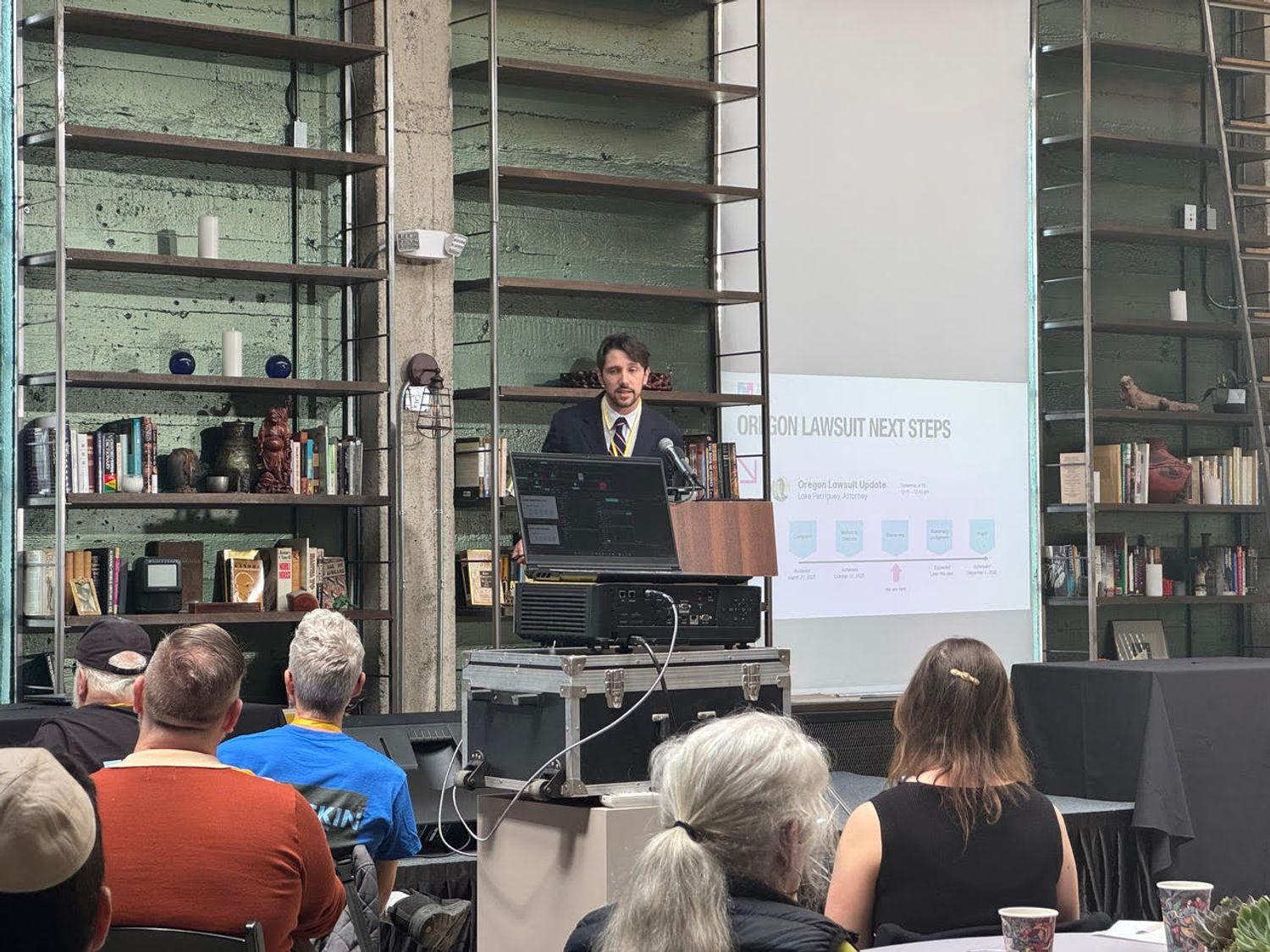
Clopper wants to flip a handful of states on the idea before heading to the federal government to achieve a country-wide ban. Last year he helped file a similar lawsuit in Oregon, where it is ongoing; Colorado is the second state on his list.
The tactic is similar to those used in legalizing women’s suffrage in the 1910s, interracial marriage in the 1960s, and recreational cannabis in the 2010s and 2020s.
Medical organizations have argued through the decades that public health benefits of male circumcision outweigh the risks. Although those recommendations aren’t as firm these days, public policy still largely follows those guidelines.
“It is a major problem,” Clopper says of circumcision, “but it’s also a major problem with the easiest solution that exists — and that’s to do nothing. It is an affirmative act of violence to sever the genital tissue of children.”
Inside the lawsuit
Huff and Schwartz’s lawsuit claims they both were circumcised without medical or religious reasons and have “lost functional genital tissue and suffered from pain, genital scarring, loss of sexual sensitivity over time and related sexual difficulties stemming from their circumcisions.”
The 11-page complaint argues that a 1999 Colorado law banning female genital cutting (FGC) but not male circumcision violates the state’s 1972 Equal Rights Amendment, which prohibits sex-based discrimination. The plaintiffs want the state to extend the FGC ban to cover male circumcisions unless required due to a health issue; this would not directly cover religious-based procedures, but Clopper says that discussion could come down the line.
The lawsuit also claims that “International medical associations — especially in Europe where male circumcision rates are in the low single digits — have long agreed circumcision is harmful and unethical. Several countries have attempted to ban male child circumcision, but their efforts have been thwarted by pressure from American interest groups.”
Clopper believes if the “barbaric” practice can get squashed in the U.S., it will spill over to the rest of the world.
Male circumcision numbers have decreased across the country in recent years, research shows. A 2025 Johns Hopkins study found that male circumcision rates in U.S. hospitals dropped from 54.1% to 49.3% between 2012 and 2022.
What medical organizations say
The World Health Organization, the American Academy of Pediatrics and the U.S. Centers for Disease Control and Prevention all recommended circumcisions for lifelong health benefits between 2007 and 2018. However, none of them explicitly recommend male circumcisions, although many health organizations, including the CDC, still argue that the health benefits outweigh other risks.
A 2014 recommendation by the CDC claims that circumcision drastically reduces chances of sexually transmitted infections. For example, three randomized clinical trials between 2005 and 2010 showed that adult male circumcision reduced HIV infection risk by 50–60% over time.
Clopper disagrees, pointing toward lower STD rates and lower circumcision rates in Europe.
He also says the established culture of cutting comes from puritan anti-sex and anti-masturbation propaganda in the 1920s.
“If you made it harder to masturbate and you inflicted pain on the sex organs, that was a win-win, right?” he says of the thought process back then. “And then, because we have a for-profit healthcare system, you also make money doing it. So win-win-win.”
Why Oregon and Colorado first?
This is the same playbook Intact Global used in Oregon. That case is going to trial in December, and Clopper says he expects it to be successful. He expects Huff and Schwartz to win in Colorado, as well.
According to Clopper, the western part of the country already has the lowest rates of circumcisions, making for the easiest path to start causing waves.
“I think that we are going to win in both lawsuits, and then we’re going to just continue to expand,” he says.
Intact Global will also hold a press conference to discuss its case outside the Colorado State Capitol Building at 10 a.m. on Mon., June 15.
And it’s not the only group gunning for circumcision bans in Colorado. The Blood Stained Men protest group has also made various appearances throughout the state, with its visceral blood-soaked pants and eye-popping signs; it protested in Thornton in 2023 and Lakewood last year. And it’s back downtown this weekend, with four days of bloody protests planned.
Clopper’s group will be more sedate. He believes that Colorado has been exposed to enough information on the issue, and thinks a jury would be willing to take an early step toward a nationwide ban.
“The best time to plant a tree is 20 years ago and the second best time is today,” he says. “And so we’re planting trees for the future.”