Hannah Metzger

Audio By Carbonatix
Denver influencer Mayor Haley isn’t a real mayor. But 100 real mayors, city council members and other government officials gathered to hear her speak on Tuesday, seeking insight on how to better engage with their constituents.
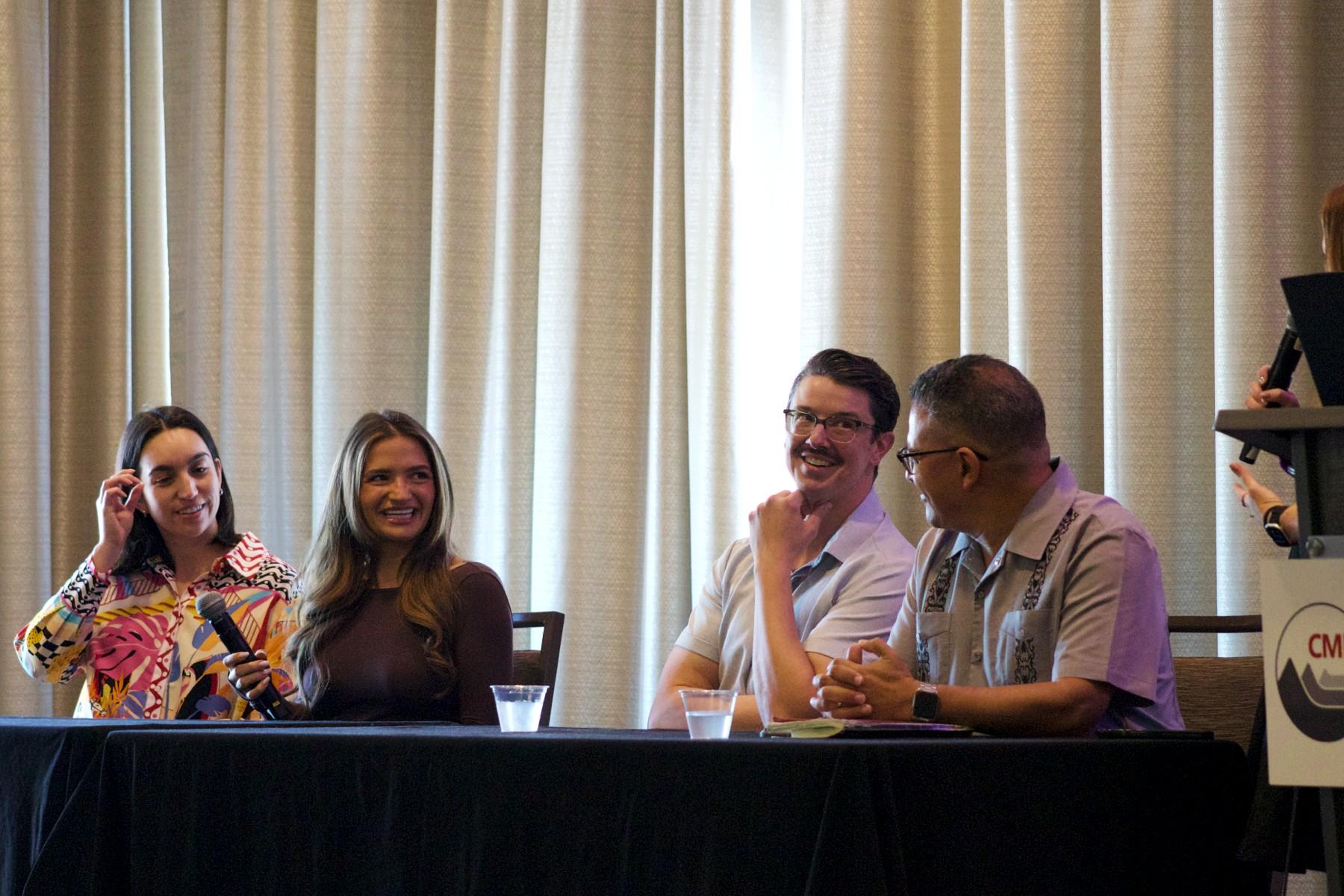
Mayor Haley (aka my sister, Haley Metzger) participated in a Colorado Municipal League panel on June 23, joining other resident social media stars, Chris Gad of Castle Rock, Rayna Kingston of Denver and Gerardo Muñoz of Denver. While the panel members lack elected office, they enjoy a wider reach than most politicians in the audience. Between the four of them, they boast nearly 1.7 million followers on TikTok and Instagram alone — more than double the population of Colorado’s largest city.
Local governments should invest in that hometown clout, argued Northglenn City Council Member Megan Burns, who led the “Who’s Influencing Your Residents?” panel.
“Government is slow, sure, but we can’t be so far behind,” Burns said. “We can no longer just put out a press release or post things on our social media. We have to work with people who already have reach and influence.”
Burns, a digital strategist outside of city council, suggested that governments allocate budgets to pay influencers to create content about local happenings, rather than sending out traditional mailers.
Elected officials from across the state filled the audience, asking the influencers for advice on how to find local creators, grab viewers’ attention and respond to online criticisms. The crowd included representatives from Berthoud, Brighton, Littleton, Lone Tree and Severance, among other municipalities.
The creators on Tuesday’s panel already use their audiences to tackle political topics, from Kingston’s posts on Colorado ballot measures, to Gad’s explainers on hot-button national issues and Muñoz’s podcast on race and education. Metzger often interviews politicians directly, filming videos with actual Denver Mayor Mike Johnston, rumored presidential hopeful Kentucky Gov. Andy Beshear, and competing Colorado governor candidates Phil Weiser and Michael Bennet.
“You really do have people’s ear online, especially young people,” Metzger said. “They don’t watch CNN, they don’t watch the news. But they’re on TikTok, they’re on Instagram. There’s a lot that we can do making this kind of content.”
Burns pointed to recent online backlash regarding government use of Flock artificial intelligence tracking cameras as an example of public officials dropping the ball.
In Denver, around 500 people attended an anti-Flock town hall in October after YouTuber Louis Rossmann, who has 2.5 million subscribers, made a video about the AI surveillance and appeared at the event. One man there, Joshua Culver, told Westword he drove to Denver all the way from Iowa to follow Rossmann’s coverage. At least two of Tuesday’s panel members have posted videos criticizing Denver’s use of AI cameras. City Council ultimately opted to replace the Flock cameras.
“I didn’t see any local governments offering up their police departments to talk about how the tech is used or what policies they have in place,” Burns said. “These people have the voice and the audience. We have the knowledge. We might not agree, and that’s fine, but giving them access is important.”
“Real power”
Gad started his social media channels, @GenericArtDad, to share his work creating sculptures, later pivoting to mental health content. But in 2024, after the second election of President Donald Trump, it was time to use his platform “for good,” he said.
Today, Gad’s videos revolve around explaining current events and complex political topics, such as tax codes, AI regulations and the war in Iran. He typically does so via comedy skits in which he plays multiple different characters, essentially debating and questioning himself. His videos have accumulated over 42 million likes and one million followers on TikTok.
“What we do is very silly, intuitively. … But this is where the media landscape is moving,” Gad said. “You don’t have a captive audience anymore. You need to captivate.”
Some local governments have begun attempting to emulate this kind of easily digestible content. The cities of Thornton and Northglenn post minutes-long video recaps summarizing hours-long city council meetings. The City of Pueblo releases a weekly podcast discussing council actions and city events.
However, the posts receive little engagement from the constituents they’re trying to reach.
“It means a lot more coming from the folks on this stage than it does from your comms director, no offense to them,” Burns said, referring to the influencers.
Kingston built her audience on promoting local events and organizations, with a goal of making Denver “less lonely,” she said. Her content has boosted struggling businesses and attracted over 142,000 followers across platforms. In 2024, she used her audience to launch the Denver Activist Women’s Group, connecting its approximately 3,000 members with local nonprofits, volunteer opportunities and advocacy efforts.
“The people in this room, we can be considered political insiders,” Kingston said. “Everyday people are craving to know what we know, but we’ve lost touch with how to talk to the everyday person. I try to take the information that I’ve received working in this sphere and make it so that any person scrolling on Instagram or TikTok can spend one minute with me and know more about what’s happening in their local communities.”
Kingston briefly sought public office herself, running in the ongoing Democratic primary for state House District 5. She ended her campaign in January after three months, saying in a video that her “real power” lies “outside of the system.”
Sitting before 100 elected officials feverishly taking notes on her words, that power was on full display.
Editor’s note: Haley Metzger is the sister of the author of this article, Hannah Metzger.