
Visit Cheyenne

Audio By Carbonatix
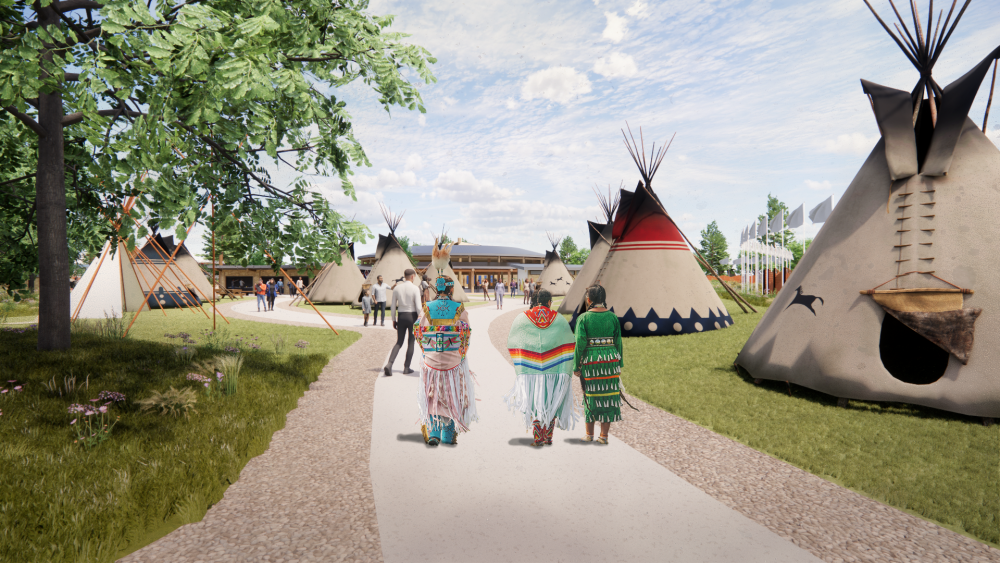
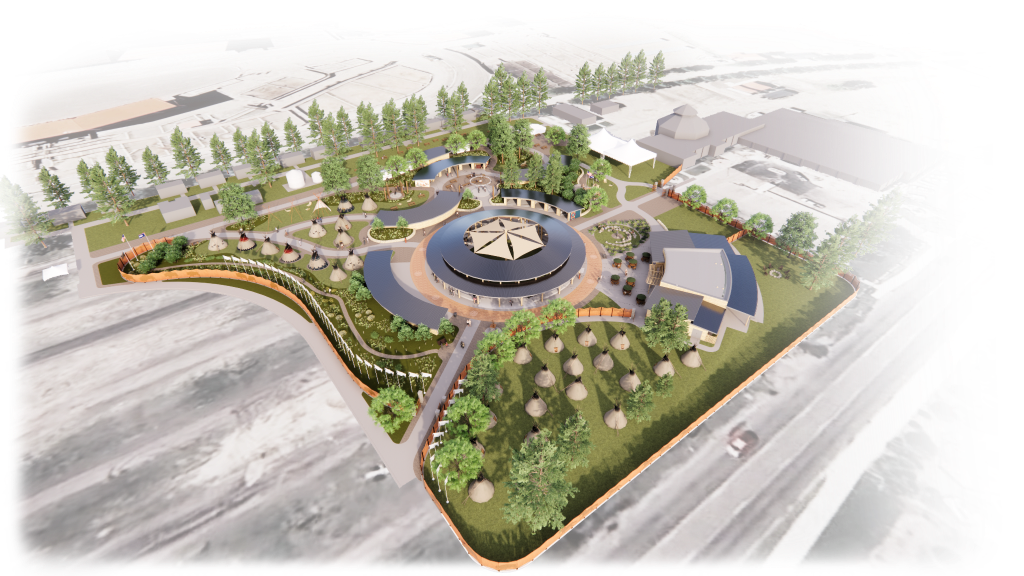
When dancers step into the new Morning Star American Indian Village during Cheyenne Frontier Days, they will enter the performance space from the east. That may seem like a minor design aspect in a project that encompasses 3.8 acres, including a sunken dance arbor, artisan booths, storytelling spaces, a permanent teepee, native plants, educational signs and a veterans memorial, but to Bill Oates, chairman of Cheyenne Frontier Days’ Indians Committee, that element speaks volumes about the thought that went into the entire project.
“The performers like to enter from the east for their performances,” Oates says. “We didn’t have that option at the old Indian Village because we were bordered by a street on the east, and we’re not going to have them come in off the street. So this go-around, we made sure that they were able to come in from the east. We listened to the people, we incorporated what we could, and that’s just one example of what we’re doing differently.”
That choice is part of the larger story behind Morning Star American Indian Village, which will debut when Cheyenne Frontier Days returns July 17-26 for its 130th anniversary. Located near the Cheyenne Frontier Days Old West Museum, the permanent cultural landmark replaces and expands the former Indian Village at Frontier Park.
Visit Cheyenne
According to Cheyenne Frontier Days organizers, American Indian performers have been a part of the event since its inception. Over time, that presence grew until the old space could no longer fully reflect the role that Native dancers, singers, storytellers, artists and vendors have played in the annual celebration.
“It is amazing,” Oates says of the new space. “It’s roughly three to four times bigger than our old Indian Village. It just represents our commitment to the Native Americans’ presence at Frontier Days and affirms that they’re valued partners.”
The opening comes as Cheyenne Frontier Days celebrates the Year of the American Indian. Morning Star is designed to be a living cultural space where visitors can experience Plains Indian dance, music, art, stories and history in an environment that is both educational and entertaining.
“It’s day and night compared to the old village,” says Renée Middleton, executive director of the Cheyenne Frontier Days Foundation. “The educational stuff over there was nonexistent. Now, for example, we have about 30 signs that discuss various aspects of Native American history that we are attempting to educate the public on.”
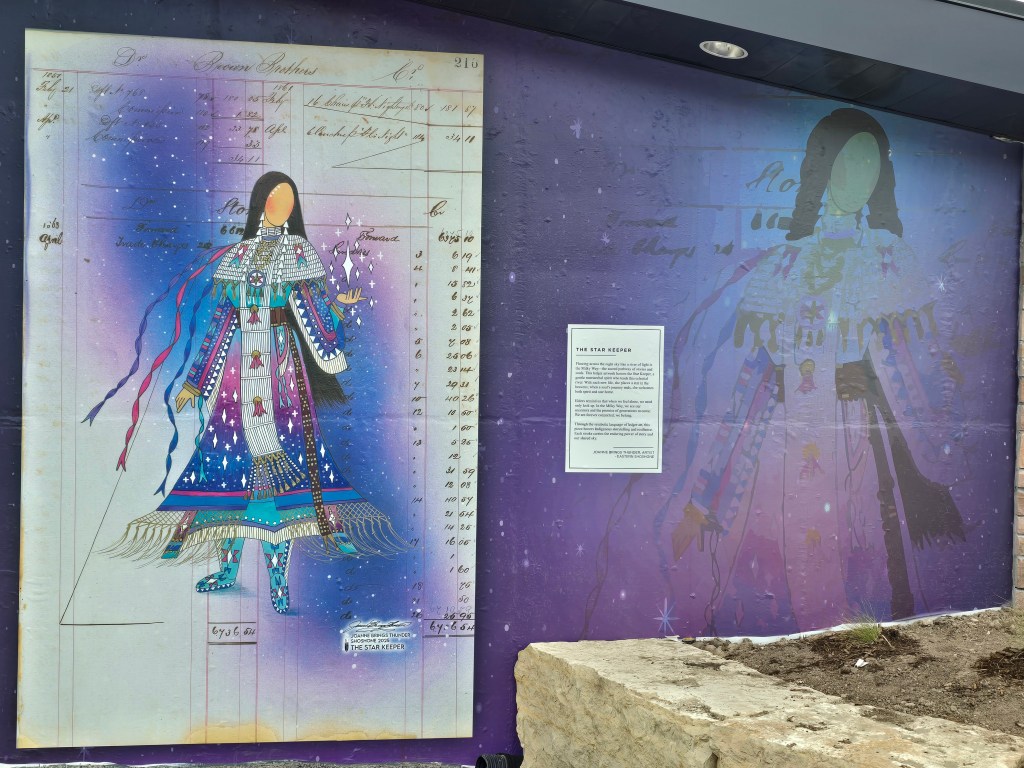
Photo by Renée Middleton
The idea of creating the new village dates back about six or seven years, Middleton says, to when she was serving on the foundation board. The Hughes Charitable Foundation, a major donor, was looking for ways to support CFD. A board member suggested investing in the expansion of the Indian Village. “The following year, we gave a simple plan for an Indian village, and they said, ‘Oh, please, think bigger,’ so we thought a lot bigger,” she explains.. “Then we pitched a $17 million village, which was too large, and then we scaled it back slightly to meet in the middle.”
Since settling on a roughly $10.1 million project, the past three years have been spent on planning, construction and, most recently, creating what she refers to as the village’s “heart and soul.” Research shaped the design: The village buildings curve and arch because of the importance of the circle in Plains cultures, and the dance arbor is round and sunken, with signage explaining the sacredness of the circle.
“Everything that’s there is there for a purpose,” Middleton says.
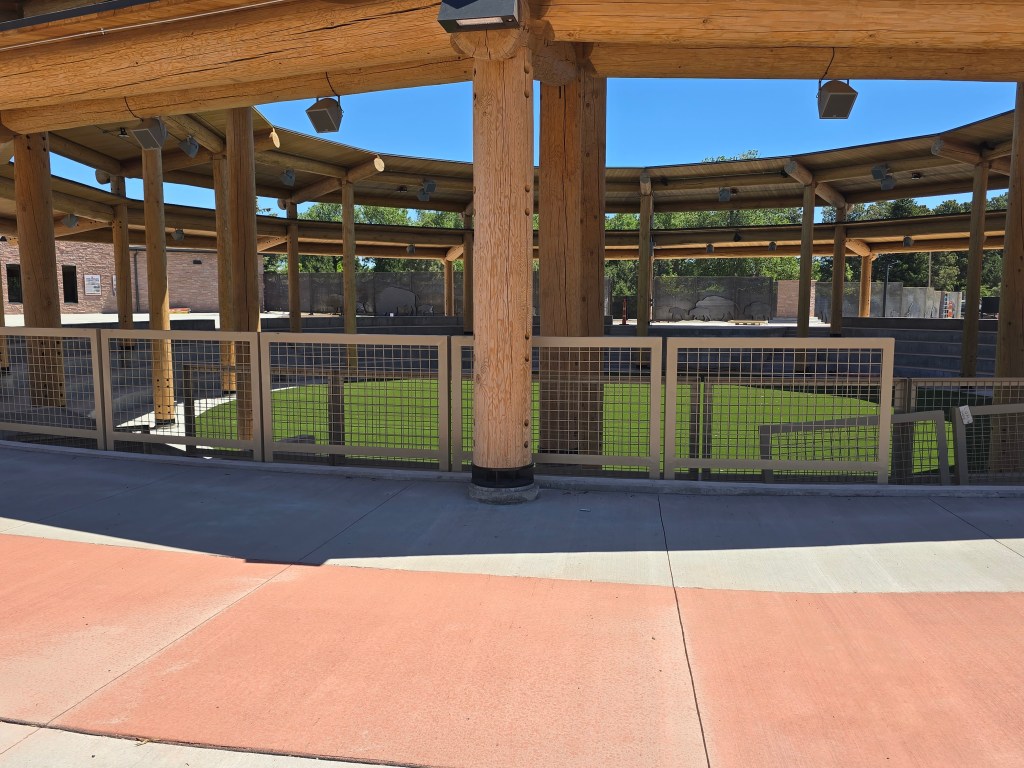
Photo by
Renée Middleton
That purpose begins with a focus on the Plains tribes connected to the region, including the Northern Arapaho, Eastern Shoshone, Lakota, Cheyenne and other Indigenous communities whose histories cross the land. This section of Wyoming was known as the Confluence of the Plains, Middleton says, and was a place people traveled through long before Interstates 25 and 80 made Cheyenne a modern crossroads.
“This ground was Indian territory,” Middleton says. “Quite honestly, there are not many places around the United States like this that are dedicated to honoring the Indigenous people who originally resided on these lands.”
CFD worked with cultural constituents, including Ivan Posey, a teacher on the Wind River Reservation, and Sandra Iron Cloud, who contracts with CFD to bring performers to the village. Mo Brings Plenty, who is Lakota, also spent time with the team and offered perspective, Middleton says.
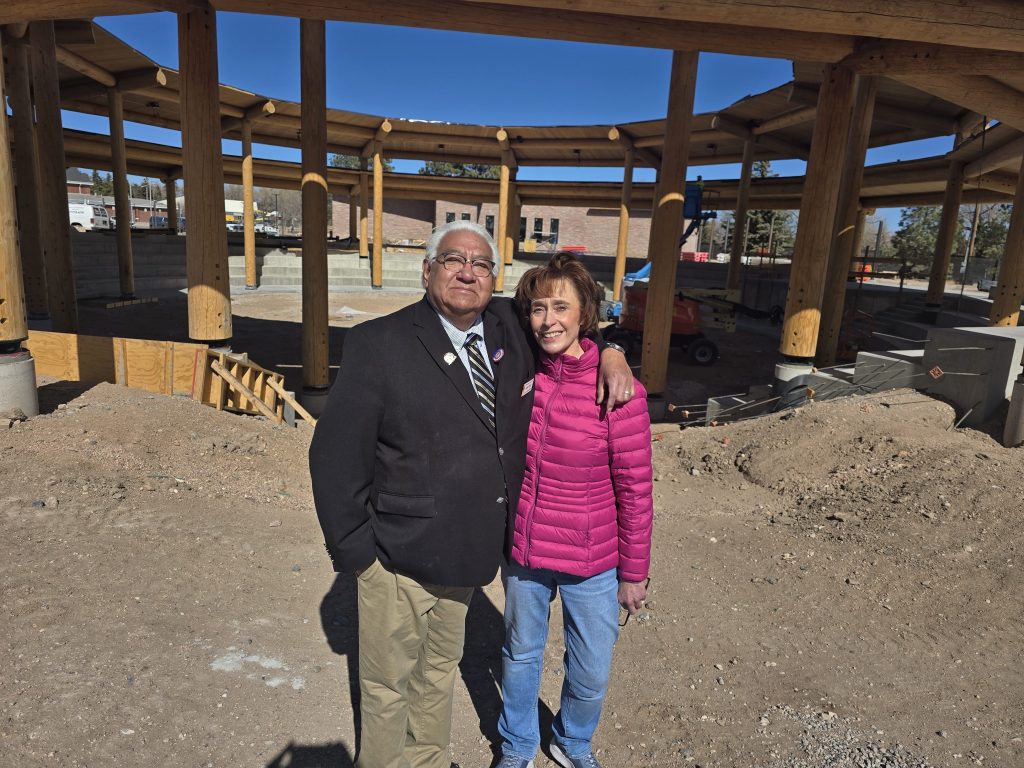
Photo courtesy of Renée Middleton
“This project is not just about new facilities — it is about thoughtfully and truthfully telling the stories of the Plains Tribes that have attended CFD since its birth through art, culture and education,” Brings Plenty wrote in a letter supporting the project. “Morning Star will be a place of pride for Wyoming, a continued living testament to the western heritage, cultural diversity that God has created and creativity of the people.”
The new site includes signs explaining cultural, historical and artistic elements, from the importance of the horse and bison to early Plains Indians to the meanings behind dances performed in the arbor. A permanent teepee will give visitors a chance to step inside and learn about its role and design. A nature path will feature Native plants, and vendor buildings will carry enlarged artwork by American Indian artists selected through an art call.
“One of the most talked-about things when people come here is the artwork,” Middleton says. “When you see it from a distance, it draws you into the village.”
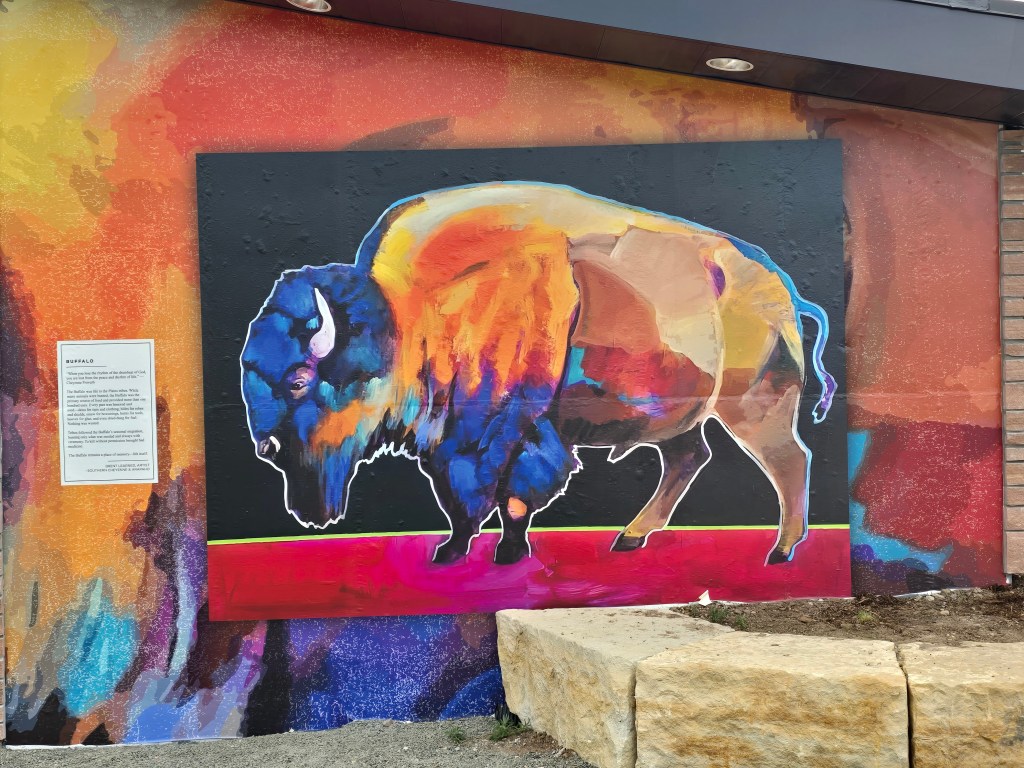
Photo by
Renée Middleton
The village also includes a memorial component honoring American Indian scouts, veterans and service members. Artist Martin Red Bear, a Nebraska-based American Indian veteran, created dozens of pieces that were used to form a mural. The exhibit is intended to broaden the way visitors think about Native military service beyond the familiar story of the Navajo Code Talkers.
“Everyone knows about the Code Talkers, but not necessarily the fact that American Indians fought in the U.S. military in greater numbers than any ethnic group and have since the Revolution,” Middleton says. “The first time I heard that, I knew it had to be a part of the educational aspect.”
For visitors who remember the old Indian Village, the most immediately visible difference will be scale. According to Oates, the former site held about 150 people for performances. The new dance arbor can accommodate 800, with shade and an integrated sound system. The village also includes three smaller stages devoted to flute playing, storytelling and artisan demonstrations, along with about 30 vendor booths that will host roughly 25 vendors.
Authenticity was an important part of that vendor selection, Oates says, adding that CFD tightened its requirements to make sure vendors are Native American and that the stages feature Native performers and artists.
“It’s not a museum,” Oates adds. “The museum’s next door. … It’s a place to immerse yourself in the rich history of Frontier Days and, more directly, the history that American Indians contributed.”
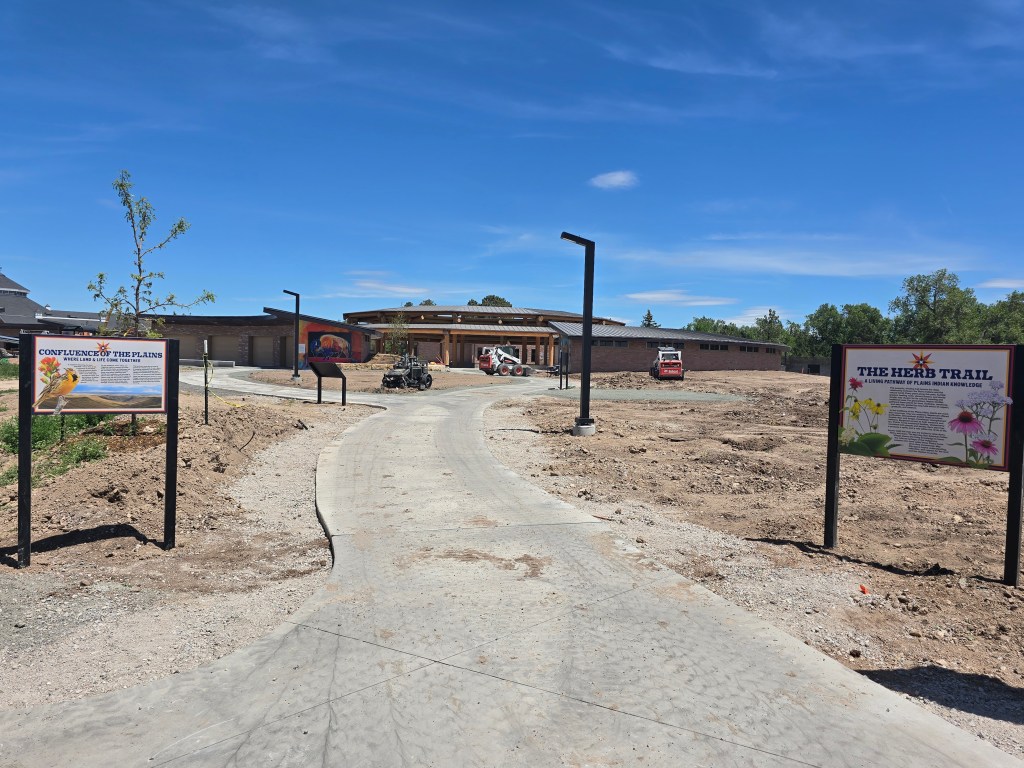
Photo by
Renée Middleton
That distinction matters to Middleton, too. She grew up in Cheyenne and saw American Indian dancers at CFD many times, often without knowing the stories behind the dances, regalia, songs or cultural practices she was watching. Working on Morning Star changed that for her.
“I’ve seen the Indians dance hundreds of times at Cheyenne Frontier Days,” Middleton says. “It was like, ‘Oh, yeah. They are dancing,’ but having been immersed in this project, I have grown so much as a person, and I wanted people to see all that I learned. In the previous village, you didn’t learn anything about the culture. I’ve been so immersed and tried to bring that out in the signage and around the village. This culture is phenomenal.”
Although Morning Star will come alive during Cheyenne Frontier Days, its future extends beyond the 10-day event. The community building can be rented for meetings, retirement parties and other gatherings; Middleton says several weddings are already booked. Organizers received permission from tribal partners to host weddings there because a wedding symbolizes a new beginning.
“That’s the whole point of this village,” Middleton says. “That’s what Morning Star means.”
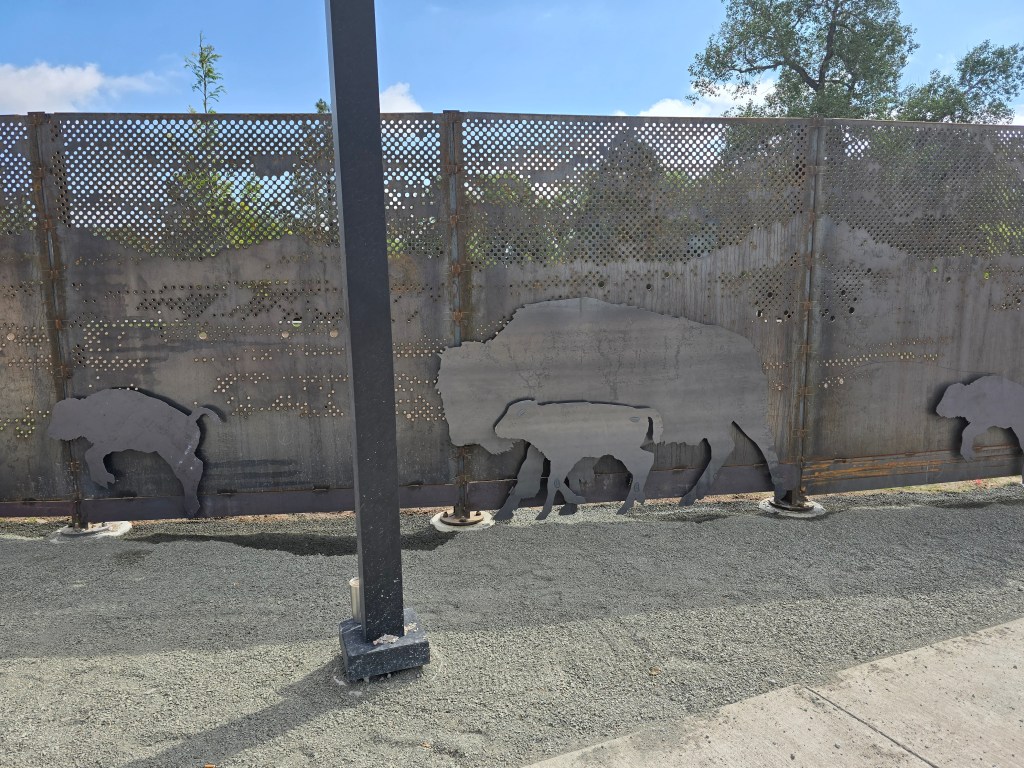
Photo by
Renée Middleton
Middleton also hopes the site will become a year-round educational resource. Wyoming fourth graders study state history, and she has developed a game that will let students explore the signage. An augmented reality component inside the teepee is already being discussed for a future phase, along with other planned additions.
“In so many ways, our country has not been very good about taking care of this story,” Middleton says. “So I’m glad that at Cheyenne Frontier Days the West has always had two partners, and they still do.”
Morning Star American Indian Village will be open daily at Cheyenne Frontier Days from 10:30 a.m. to 7:30 p.m. Native American dance performances are scheduled for 11:15 a.m., 3 p.m. and 6 p.m.; interactive cultural sharing is planned for 1 p.m. and 4 p.m.; and Native American flute performances are set for 2 p.m. and 5 p.m. Kid’s crafts will be offered July 18, 19 and 25 from 11 a.m. to 1 p.m., and a powwow is scheduled for 7 p.m. July 22. Learn more at cfdrodeo.com/event/morning-star-american-indian-village/.