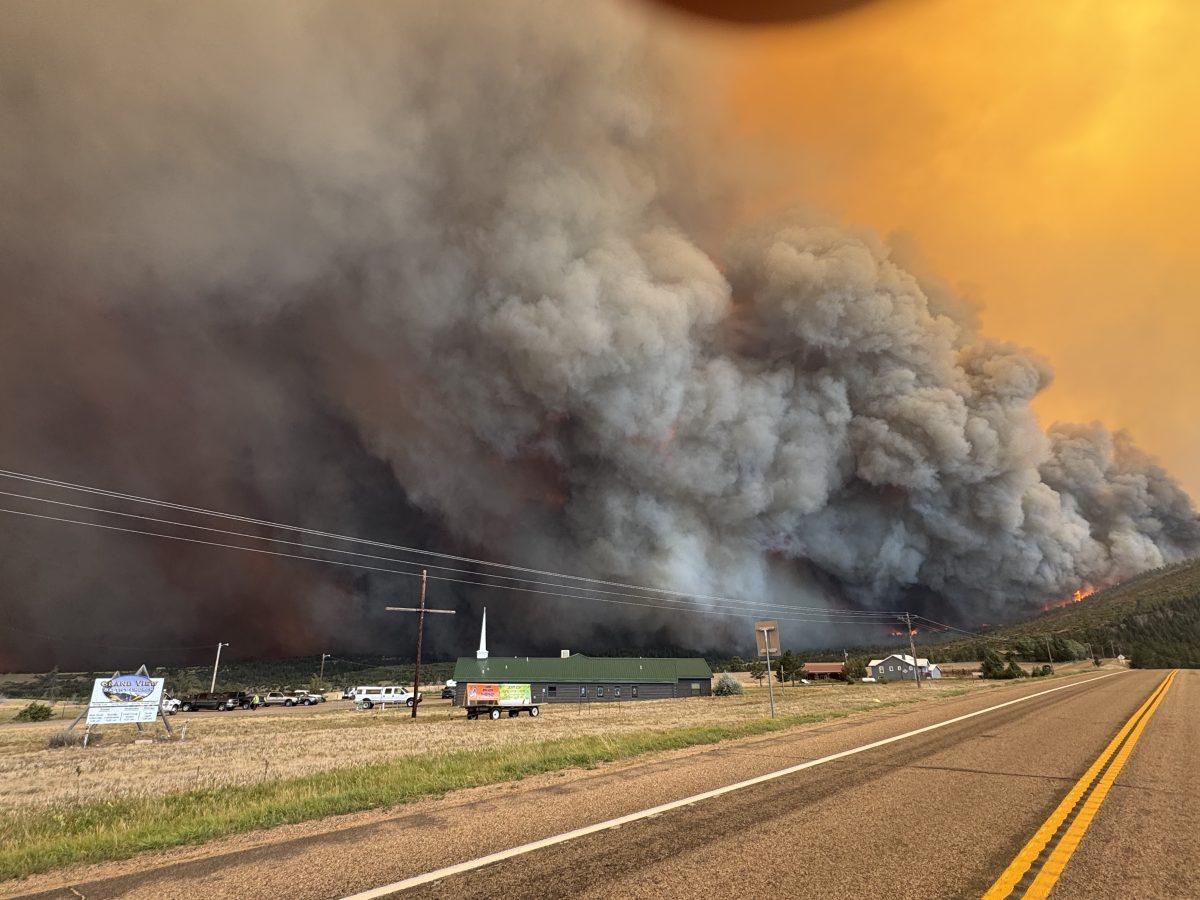
Provided by the Pueblo County Sheriff’s Office

Audio By Carbonatix
The swelling number of GoFundMe fundraisers paints a poignant picture of the tragedy scorching through Southern Colorado.
The popular fundraiser platform, GoFundMe now has a dedicated channel for “verified” posts regarding the Aspen Acres fire, with 24 separate posts listed and nearly $182,000 raised as of July 7.
“Our hearts go out to everyone impacted by the wildfires across Colorado,” Jeff Platt, spokesperson for GoFundMe, says. “We are working around the clock to ensure the community receives the support they need.”
The Aspen Acres wildfire started just southwest of Pueblo on June 29 and has already blazed its way through almost 94,000 acres by Tuesday afternoon, making it the seventh-largest fire in the state’s history. So far it has destroyed at least 263 homes — 185 in Pueblo County and 78 in Custer County — according to local officials, while businesses have also burned, making it the fifth-most destructive fire in the state’s history in terms of structures destroyed.
As of Tuesday afternoon, the fire was only at 15% containment with over 1,500 personnel working to quell it.
“This isn’t going to be a short-term event,” said Brad Washa, operations section chief for Alaska Complex Incident Management Team 1, which is now leading firefighting operations. Washa added that while forecasted thunderstorms over the next few days could help, they would not be enough to significantly impact the fires.
The need for donations has only increased as hundreds of homes have burned, countless residents have been evacuated and historic landmarks have been threatened.
Helping hands
Bobbie and Casey Blood’s Beulah home was completely destroyed during the first day of the fire, according to the family. Their fundraiser has raised over $28,000 in a week.
“This was not just a house to our family. It was a home that my parents built completely with their own two hands, pouring years of hard work, dedication and love into every part of it,” Emily Blood, daughter of the homeowners, wrote on the fundraiser’s webpage.
Tara Stosek also lost her Beulah home on June 29. The family had just held their son’s wedding there two days prior. Now they face a “heartbreaking” loss after the fire completely demolished their beloved home, according to Stosek.
Stosek said that her home was self-insured after insurance companies denied homeowners’ policies “several” years ago. So far, her GoFundMe campaign has raised $21,000.
“Because of the wildfire risk in our area, no company was willing to insure our home. We had no choice but to become self-insured, never imagining we would face a disaster like this,” Stosek said.
A 2025 report by Colorado State University’s Regional Economic Development Institute found that Colorado ranked as the sixth-costliest state for homeowners’ insurance, with the average insurance premium increasing 58% between 2018 and 2023. In 2023, the average insurance premium was $4,072 annually.
Attaining property insurance is even harder in wildfire-prone areas. During the 2021 Marshall Fire in Boulder County, 74% of damaged homes were underinsured.
“Insurance is really the first line of defense after hazard events to bolster communities to be able to recover,” wrote Caroline Conley Norris, author of the report. “Without that line of defense, it leaves the entire burden on the government to subsidize or the homeowners themselves to use their own equity, and in low-income areas that equity buffer is not going to be available.”