
Thomas Mitchell

Audio By Carbonatix
Advertising Can't Do It Alone
The challenges facing local news organizations are very real. That's why reader support matters more than ever. If you believe independent journalism matters, make a contribution today and help us reach our summer fundraising goal of $25,000 by August 9.
As communities push back against the spread of new data centers, policymakers and developers should look harder at a category of buildings hiding in plain sight: struggling or shuttered indoor marijuana grow facilities. These sites are not a complete answer to managing the data center boom. But in the right circumstances, they may offer a practical way to repurpose expensive infrastructure, reduce land-use conflict, and put distressed industrial properties back to work.
The political problem is obvious: Data centers require enormous amounts of electricity, often need significant water for cooling and typically create relatively few permanent jobs after construction. Those characteristics have made new projects a target for neighborhood opposition and local moratoriums. In Colorado, recent debate has centered on whether communities should accept large new electrical loads and water demands in exchange for limited employment gains. The same concerns are appearing across the country as artificial intelligence accelerates demand for computing capacity.
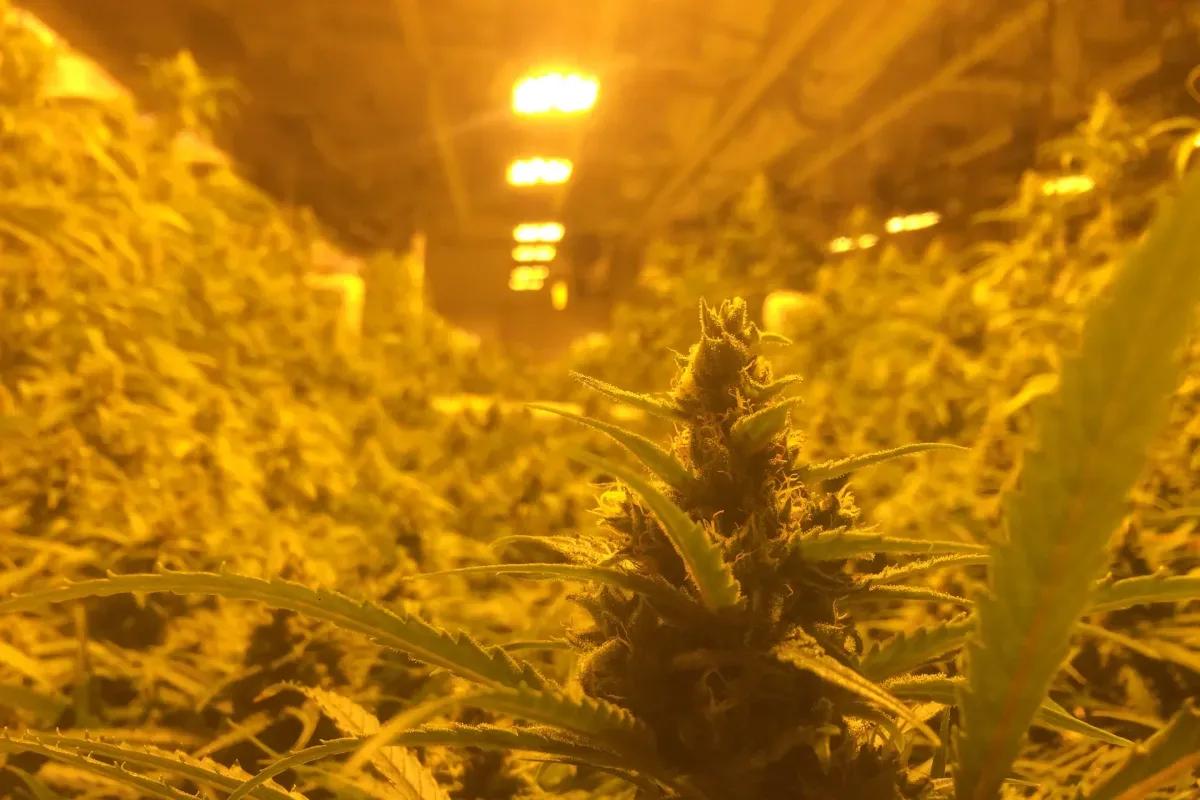
At the same time, the legal cannabis industry is going through a painful correction. Green Dragon and PharmaCann have announced that they are closing large cultivation facilities in the Denver area. Indoor cultivation facilities were built during an era of optimism, when operators assumed demand, prices and licensing advantages would keep expanding. Many invested heavily in sealed, climate-controlled buildings with high-capacity electrical service, HVAC systems, dehumidification, lighting, water delivery, security and backup power. Those were rational investments for growing cannabis indoors.
They also happen to be the same categories of infrastructure that matter to certain kinds of data centers.
The recent cannabis downturn creates an opportunity: A large indoor grow facility is already designed for continuous, power-intensive operations. Cannabis plants require carefully controlled temperature, humidity, airflow, lighting, irrigation, odor control and security. Data centers require carefully controlled temperature, humidity, airflow, power, redundancy, cooling and security. The uses are not identical, but the overlap is meaningful, and conversion should be part of the conversation.
Power is the clearest point of comparison. Although the incorporation of LED lighting systems reduced electrical draw, indoor cannabis cultivation remains one of the most electricity-intensive forms of agriculture. This need for power is driven by the need for lighting, air conditioning, dehumidification, pumps and environmental controls. A large grow facility may already have utility service measured in megawatts, along with switchgear, transformers, generators and internal distribution systems built to support high loads.
That does not mean every grow can become a hyperscale AI campus. Most cannot. But many could plausibly support smaller enterprises or specialty computing facilities with less new grid infrastructure than a greenfield project would require.
Water is more complicated, but still promising. Despite new capacities that allow indoor grows to recycle condensate from AC units and leachate from irrigation, cannabis cultivation still requires substantial water, particularly in large indoor operations. Data centers can also use significant water, depending on cooling technology, climate and scale. A converted grow facility would not automatically be low water usage. However, a small data center using closed-loop or air-cooled systems could require less water than an active cultivation operation on the same site. Where water connections, drainage, treatment capacity and local approvals already exist, reuse may be more defensible than building an entirely new industrial water user from scratch.
There is also a land-use argument: Data center fights often begin because communities see new buildings, new substations, new transmission needs, noise, diesel backup generators and limited jobs. Repurposing an existing industrial cannabis facility does not erase those concerns, but it changes the starting point. The site is already developed, the building is already industrial, and the neighbors may already be accustomed to truck traffic, security, mechanical equipment and limited public access. For local governments, adaptive reuse can be easier to justify than approving a new project on open land or in an embedded neighborhood.
The limitations should be stated plainly for policymakers. Data centers need fiber connectivity, physical security, structural suitability, fire suppression, cooling redundancy, permitting, utility agreements, and, often, far more power than even a large grow was built to handle. Some cannabis buildings may be poorly located, too small, too specialized or too expensive to retrofit. However, conversions will also create fewer jobs than cultivation did, which matters in communities already absorbing cannabis layoffs. And local oversight should not be bypassed simply because a project reuses an existing building.
Colorado needs more computing capacity, but not every data center requires a massive new campus. Communities need tools to separate reasonable projects from concerning ones. Cannabis operators and lenders need exit strategies for facilities built for a market that no longer supports them. Repurposing struggling grow facilities will not solve the data center controversy, but it could provide a useful middle path: smaller projects, existing infrastructure, less land disturbance and a second life for buildings that were designed from the beginning to consume large amounts of power and water, manage heat, control air and operate around the clock.
In a debate too often framed as build everywhere or build nowhere, empty marijuana grow facilities offer a more pragmatic question: Before communities say yes to another new data center, why not first ask whether the infrastructure has already been built?
Westword.com frequently publishes opinion pieces and commentaries on matters of interest to the Denver community; the opinions presented belong solely to the authors, not Westword. Have one you’d like to submit? Send it to editorial@westword.com, where you can also comment on this essay.