
Illustration by Kristin Bjornsen. Images provided by Wikimedia and Adobe Stock.

Audio By Carbonatix
Marc Spear likes to spend a lot of time at a “variety” of Denver parks. According to the father of one, Denver’s park system was a big reason why he moved here over two decades ago.
“When I first came to Denver, it really was this system of parks and parkways and public spaces that really made Denver stand out as a place to want to be and want to live,” Spear says.
But many of those green spaces have declined over time, according to Spear. Cheesman Park has several dead trees and weeds overtaking a picnic table. Lowry Sports Complex Park has trash “all around” the tennis courts.
“I’m saddened by it, because they were, and still are, a reason to live here,” he says.
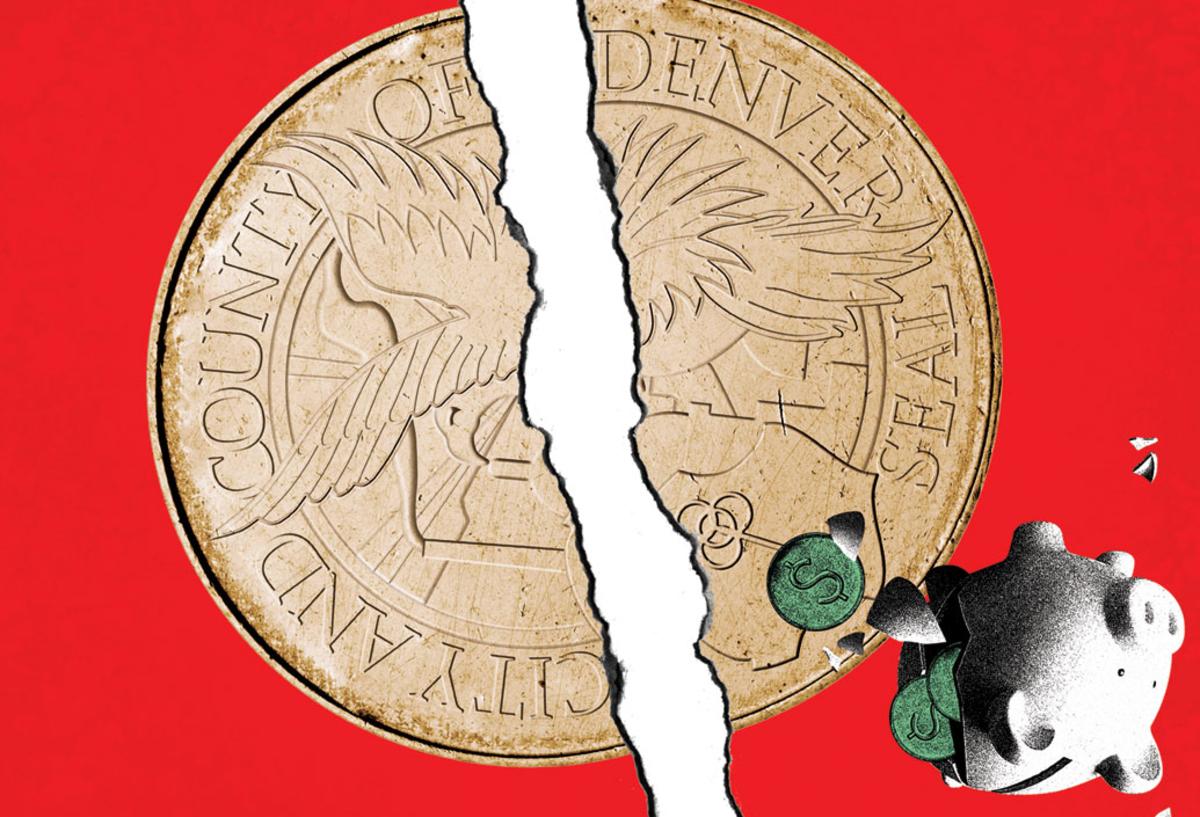
The city’s park system is vast and nationally lauded, with around 90% of Denver residents living within a 10-minute walk from a park. But Denver Parks & Recreation is one of many city departments dealing with budget cuts this year, undergoing an $11 million budget cut as part of the city’s $1.66 billion 2026 General Fund. The Parks & Recreation and Cultural Facilities Budget, which also includes the Denver Public Library, saw the second-largest of the budget cuts, which set out to fix a looming $200 million deficit.
Parks & Rec cuts included canceling cable TV at city-owned recreation centers and ending hazmat cleanup contracts at parks, but Denver City Councilwoman Amanda Sawyer recently said budget cuts have directly affected facilities and projects at parks already within the city, with residents “not getting the value for their dollar.”
“This is not okay,” she said during a council meeting on Aug. 3, pointing toward Mayfair Park in the Montclair neighborhood, which has no bathrooms and no portable toilets because Parks & Rec told her there aren’t enough funds.
Denver park-goers aren’t the only residents scorned by budget cuts, with the echoes of tough financial decisions stretching to bike lanes, law enforcement, trash services, parking tickets and beyond.
“The challenge that we know most Americans are facing is the one we just spent four months working through,” Mayor Mike Johnston said during a briefing about the budget last September. “As a part of that, you have to make the hard decisions to live within your means.”
How did we get here?
The city’s budget cuts have been hanging over departments for more than a year. First, 169 city employees were laid off and over 600 open positions were eliminated in August of 2025, the City of Denver’s largest rounds of layoffs since the Great Recession. This also led to around 70 positions being cut from city-affiliated independent agencies, such as the Auditor’s Office, and independent government branches, like the Denver County Court.
Johnston said those job reductions cut into the budget deficit by around $100 million, but there were still challenges ahead as the 2026 budget was finalized.
Juan Carlos Lopez, an associate professor in the Department of Economics at the University of Denver, says the hefty deficit comes from three different factors.
The first involves Denver’s population boom and subsequent plateauing in recent years. Denver saw a stark increase in residents in the 2010s, going from approximately 600,158 in 2010 to 715,509 in 2020, according to the United States Census Bureau. But the exponential jump slowed in the past few years, with the 2025 population hitting 740,613.
Bennito L. Kelty
Lopez says the combination of population growth, increased housing needs and rising local salaries led to a moment of economic safety. “People are going out, the economy’s good, they’re spending money, and in that they’re paying taxes. And so revenue for the city was relatively high,” he says — but more people also leads to more public services, so city spending went up.
The second factor: After an economic boom in 2018, Denver was one of the major cities most affected by price inflation.
“No matter what’s happening with our revenue, our city expenses go up every year. Your utilities go up, the cost of asphalt for your roads goes up, your service contract for hosting your website goes up, your employee salaries and benefit costs go up,” Laura Swartz, spokesperson for the city’s Department of Finance, tells Westword.
According to Lopez, the combination of a slower-growing population and worsening economy in the 2020s has led to a decline in tax revenue.
The third factor is COVID. Since the pandemic, people aren’t working or visiting downtown Denver as often as before, causing businesses to shutter and major properties to sell for fractions of what they were purchased for less than a decade earlier. And if people aren’t spending time downtown, they aren’t eating lunch, getting their hair cut or spending more money to go toward Denver tax revenues.
Around 55% of the city’s expenses are funded by the city’s 5.15% local sales tax rate. During the COVID lockdown, Denver sales tax revenue dropped by around 24% in some months, according to a Common Sense Institute pandemic analysis. Revenue rebounded around 2021 and even grew 9% in 2022, but that number has stagnated while expenses have grown, with just 1.5% growth in 2025, according to the city’s budget.
“So trying to fund the same level of public services that now cost more to produce than they used to,” Lopez explains, “and you have less revenue coming in, is sort of like a perfect storm.”
That stagnation started to rear its ugly head in late 2024, according to Swartz.
“Where we had been projecting 3% or 4% revenue growth for 2025, what we actually started to see was things were coming in much closer to flat. And it wasn’t just Denver,” she notes. “This was something happening across the U.S.”
There’s also the state Taxpayer’s Bill of Rights (TABOR), which restricts the budget process by capping how much tax revenue the city can collect and retain each year based strictly on local inflation and population growth.
Lopez says the deficit isn’t a unique problem for Denver, as other major cities grapple with similar economic challenges, but there are two ways for a city to dig itself out: cut services, or grow in population and increase tax revenue. And while the city is making big cuts, it is only seeing a small population jump. Denver is projected to have around 747,000 residents in 2026, up from 726,000 in 2023.
Some of the mayor’s initiatives to stimulate growth include the recently created Denver Jobs Agenda, which looks to use $100 million to create 10,000 downtown jobs by 2029. Mostly funded by local partners and the Denver Downtown Development Authority, the plan aims to strengthen workforce development and make downtown offices more attractive to businesses. In 2024, the Downtown Development Authority‘s jurisdiction and tax-collecting authority were expanded in an effort to generate $570 million to help revitalize the area through bonds that will be paid back with future tax revenue. And 16th Street, once a cornerstone of downtown, has been revitalized after years of construction.
Other projects around Denver should also spur the local economy, Swartz adds.
“Downtown is one of our most significant economic engines in the city,” she says. “You’re seeing things like the investments into the Broncos and Burnham Yard, the Denver Summit team, a lot of investments out in National Western Center — areas that help really drive the Denver economy. And those catalytic investments are part of our long-term plan.”
In the meantime, Denver residents are facing the reality of fewer city services and initiatives.
Transportation and infrastructure
Denver’s Department of Transportation and Infrastructure (DOTI) funding saw the biggest drop, with $21.3 million cut from 2025 to 2026, or 17.7%. The department suffered the largest number of layoffs across all city departments last summer, as well, losing 31 employees and eliminating 108 vacant positions.
“As planned, amid budget reductions and layoffs, we worked to ensure our residents did not feel the impacts. Internally, we organized ourselves to prioritize core services to minimize effects on our customers,” DOTI spokesperson Nancy Kuhn tells Westword.
Some residents still feel affected, however.
“We’ve seen that safer infrastructure keeps getting canceled and pared back and ripped out,” resident and cyclist Nolan Hahn says. “We actually just did a memorial for a kid killed at 38th and Tejon. That area was supposed to get better bike infrastructure, and it got canceled. And so he could still be alive if that project had just gone through as it was planned.”
Hahn speaks of 21-year-old Salih Koç, an international student from Turkey who was struck and killed at the intersection in July 2025. Plans for a protected bike lane in the area were canceled because of pushback from local businesses, not direct budget cuts, but both Hahn and mobility advocate Alejandra X. Castañeda see Koç’s death as a sign of less involvement by the city.
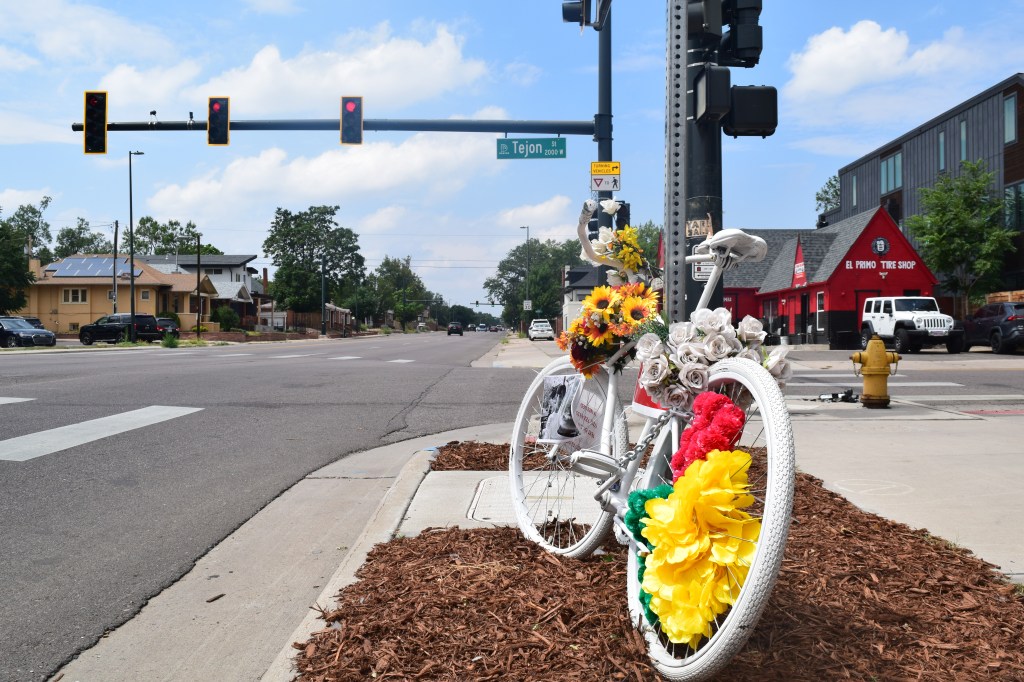
“Every time something like this happens — when a project gets pushed back, the money dries up or is used for some other purpose and then someone dies — we know what the problems are. Every time we ask for safety infrastructure, we’re told there’s not enough money. And it is just kind of a cycle,” says Castañeda, a vocal proponent for bicycle and pedestrian safety funding at the city level.
Former Mayor Michael Hancock created DOTI’s Vision Zero initiative in 2017 to eliminate all traffic-related fatalities and serious bodily injuries by 2030. This includes bicyclists and pedestrians, and has led to 27 miles of new bikeways a year between 2018 and 2023, according to Kuhn.
Still, 36 pedestrians and five cyclists were killed by vehicles in 2025. In 2017, when the plan was created, there were 14 pedestrian fatalities and one cyclist death, according to the Vision Zero dashboard.
Kuhn says the department created 20 miles of “slow and safe streets” with bike lanes in 2025 and is on track to install another 18 miles in 2026, but the lack of funds worries Castañeda going forward.
The bike lane on Tejon Street, where Koç died, will now be a painted bike lane instead of a protected bike lane; Castañeda says DOTI told her a protected lane would be too expensive. She’s upset that DOTI has removed plastic flexible poles on other bike lanes, as well, often replacing them with speed cushions and small dividers. Local bicyclists were unhappy with the move, including the Denver Bike Lobby.
“There’s never money for safety, but there’s money to remove safety things,” Castañeda says.
Castañeda is also frustrated by the movement of $8.4 million from the Transportation and Mobility Special Revenue Fund in the 2026 budget toward parking enforcement and operations. The fund was initially created in 2021 and came from the doubling of city parking meters from $1 to $2. When they were introduced, the funds were supposed to go to Vision Zero projects.
In 2026, over half of the special revenue fund went to right-of-way enforcement, parking operations and a rebuilt parking ticket dispute system, Councilwoman Shontel Lewis said during a July 27 policy meeting.
In response to an inquiry about fund allocation in 2026, DOTI sent the following statement:
“DOTI approached the 2026 budget with a focus on prioritizing its most essential services to Denver residents. Our budget delivered funding for core services such as solid waste collection, transportation, citywide infrastructure, right-of-way services and public works to ensure a minimized impact to customers while maximizing employee efficiency.”
Hahn argues that the right-of-way enforcement hasn’t improved, though. In fact, it was his biggest complaint about the budget cuts, adding another stressor for cyclists when cars are illegally parked in areas of low visibility.
“It’s frustrating, as a cyclist, to be constantly accused of breaking traffic laws all the time, and then watch people in 4,000-pound vehicles break traffic laws all the time,” he says.
And the ticketing dispute system? On Aug. 14, DOTI announced it will relaunch online on Monday, Sept. 14, but fighting a parking ticket has been a can of worms for almost a year now.
Ticket times
Blair Ilsley received a $35 parking ticket in May even though she wasn’t supposed to. Although Ilsely had parked in a two-hour-only zone, she also had a Vehicle Specific Parking Permit, or an annual pass that lets her park outside of her house despite hourly restrictions.
“I thought, ‘Oh, no big deal. This will get sorted. I have a permit. They know I have a permit,'” she says. “I was sorely mistaken.”
When Ilsely called the city’s right-of-way enforcement team, she was told to come down to Denver County Court to dispute the ticket in front of a judge, because the online program had been canceled due to budget cuts.
The permit department told her the situation was handled and apologized profusely, but the right-of-way office told her she still had to dispute it and schedule a court date, which would require taking off work to argue over a $35 ticket.
“This is just an egregious waste of resources, because they could see that I have a valid parking permit, and in no way, shape or form should this go before a judge,” she says, adding that employees also seem distraught with the constant confusion and frustration from citizens.
To Ilsely, it feels like screaming into a void.
“Moving here was a breath of fresh air. Feeling like the city was putting time, effort, and resources into the community, whether it be rec centers, whether it be them updating the roads, actually filling potholes,” she says. “This has really been the first time in which I’ve experienced what I feel like is just a total catastrophic failure to its citizens.”
Part of the reallocation from the Transportation and Mobility Special Revenue Fund is meant to rebuild the online dispute system, which is set to happen in about three weeks, according to DOTI’s recent announcement. Before then, DOTI has had “no staff” to comb through the online disputes, Kuhn said back in February, adding that “magistrates who previously reviewed online parking disputes were part of Denver County Court and were laid off by Denver County Court.”
While DOTI has been dealt the biggest financial blow, Parks & Rec’s cuts may have the most visceral effect on residents.
Parks & wrecked
Former city councilmember Jeanne Robb says that having nice parks “increases the morale of all of the citizens,” but she has noticed a downturn in park quality over the past few years.
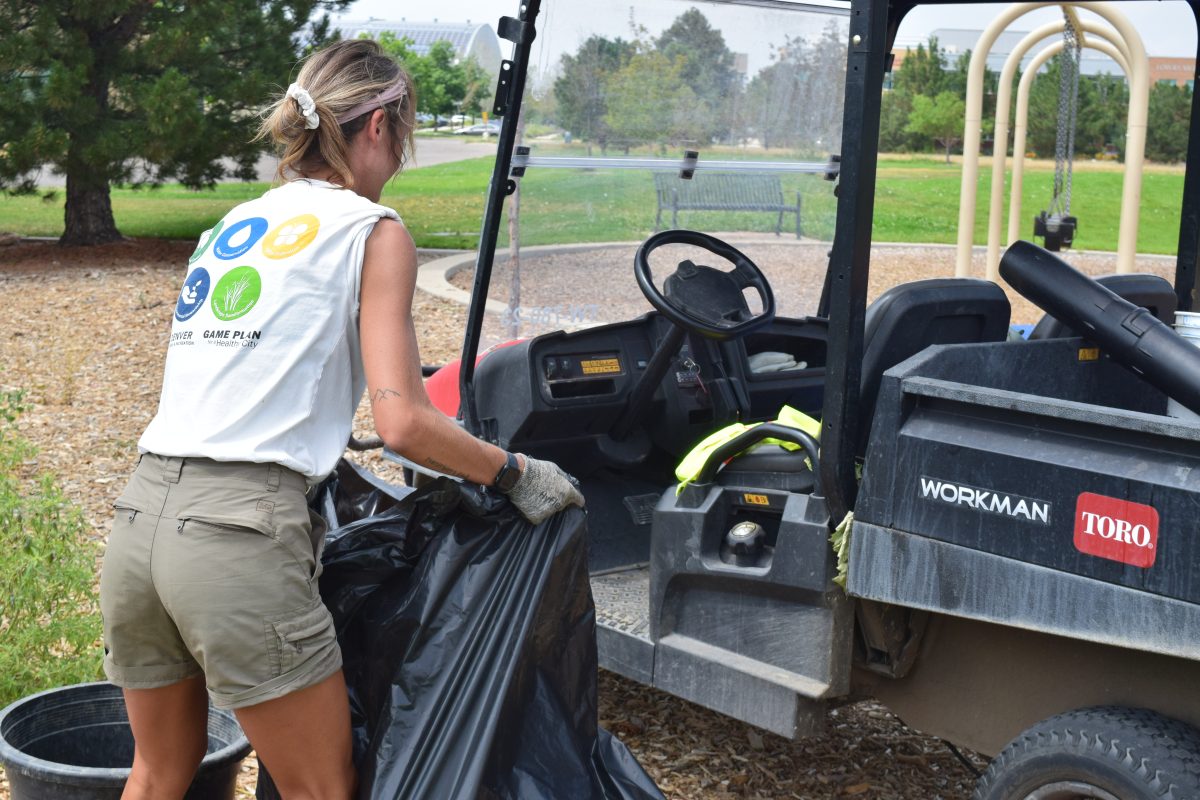
“The city is growing. We should increase our parks, but the maintenance does not keep up,” she says. “They have done a fair job of planting new trees, but there are also dead trees that are not coming down. They’ve quit fertilizing. They don’t mow as often.”
Robb admits that it’s hard to say whether the visual decline at parks is because of budget cuts or a sustained drought throughout the state, but she theorizes that the parks would fight through the drought better if they were better maintained before it began.
Sage Kelley
Spear says his family is often asked by friends to meet at suburban parks instead of those in the city.
“I understand the budgets are tight and cuts need to be made, but I just wonder if the big picture is really being considered, because when a group of families meets at a suburban park, if we go to lunch afterward, then it’s a suburban business that we’re patronizing, and that town gets the sales tax revenue on that,” he says. “I think there’s an obligation to maintain that asset as a public space. But I think they’re also an economic driver for the city.”
Spear, who sits on the 7th Avenue Neighborhood Association Board, says members of his neighborhood used to volunteer time with Parks & Rec’s horticulturalist to maintain flower beds on the 7th Avenue Parkway. Since the horticulturalist was laid off in 2025, Spear says his neighbors have no routes to officially volunteer anymore, depriving the parkway of free care.
“I don’t even know if that’s visible to the city, that they have these 10 to 15 hours of volunteer hours every week that they just lost that were helping,” he says.
Parks & Rec declined an interview with Westword, but provided a statement saying that the department “carefully managed operations to minimize impacts across our park system and recreation facilities, ensuring no single neighborhood or community bears a disproportionate share of those impacts.”
The department did note that maintenance schedules have been “slightly” adjusted over the last year.
Trash concerns
Nora Heffernan has been feeling the weight of trash pileup.
Heffernan is a garden leader for Denver Urban Gardens, a nonprofit at 13th Avenue and Colorado Boulevard. The community garden has seven black trash bins, which 64 gardeners fill with weeds and waste from planting and maintenance.
“We’ve had trash pickup since the garden’s inception in the ’90s,” she says. “And all of a sudden, a month ago, they stopped picking up our trash. No notification, no communication, no explanation, essentially.”
The organization reached out to the city’s Solid Waste Division. According to Heffernan, the division said it wouldn’t be picking up trash there anymore because it’s a commercial entity, but Urban Gardens is not a commercial entity. It’s a 501(c)(3) nonprofit.
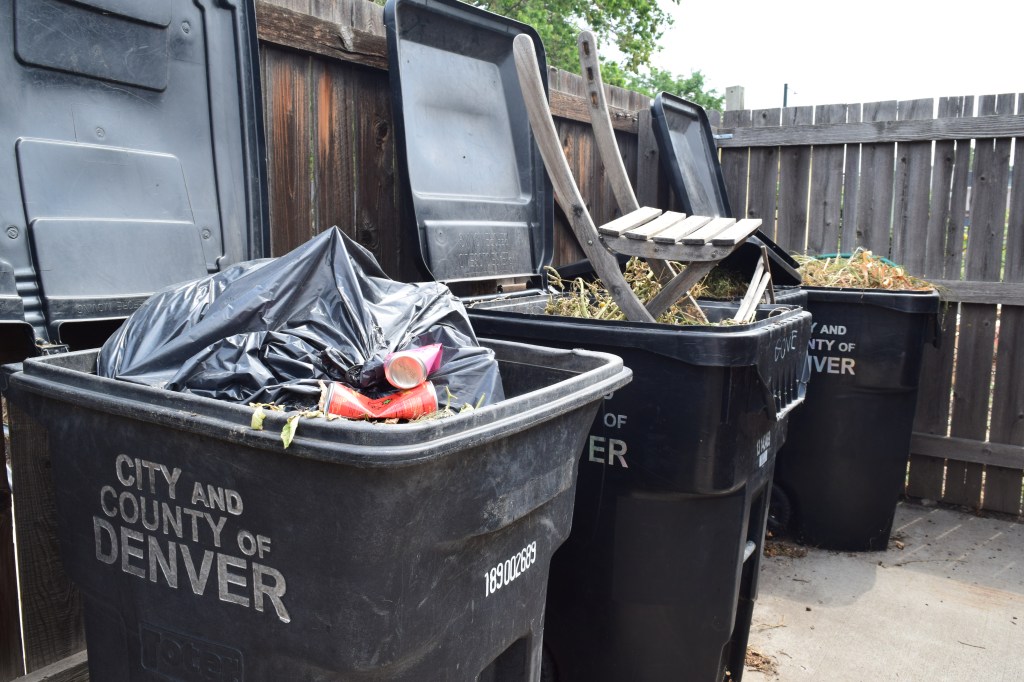
Heffernan says her messages to 311, Denver’s non-emergency number, haven’t been read and her calls haven’t been returned. And while solid waste pickup, recycling and snow removal were protected from direct cuts to DOTI’s budget, staffing was not.
“It’s, like, just a lack of caring, I guess. That’s what’s surprising,” Heffernan said.
In DOTI’s 2026 budget presentation to the city council last year, the department predicted that residents would see longer response times to 311 calls, as reported by Denver7.
“I filled out two cases to get new trash cans, because mine are cracked in half on Aug. 30, and I’ve never heard anything from DOTI,” Councilwoman Sawyer said during the Sept. 26, 2025, meeting. “How are we going to be able to address the needs of our residents and the things that they see and care about if we’ve got these longer wait times, and we’ve got less staff and kind of less ability to be responsive to it?”
Other cuts
Brent Weisberg, spokesperson for the Department of Public Safety, tells Westword that Denver 911 was protected from any layoffs during the big cut in 2025 and is operating as usual. As the team looks to the future, it will “regularly monitor and evaluate staffing needs alongside call volumes and call-answering time.”
Denver Police Department Chief Ron Thomas recently told city council that budget cuts have left the department unable to hire workers in the crime lab, records and identification bureau and fleet maintenance division.
The Denver Fire Department may now have to start subsidizing fire services in Englewood and Glendale after signing deals with the cities in 2015 and 2018. The deals locked in 3% payment increases every year, but with budgets already tight, officials told CBS News that the agreements may become burdensome.
Denver Animal Protection no longer responds to calls for “sick or injured non-rabies-vector wildlife (squirrels, rabbits, geese, and other small wildlife) or young birds or mammals that appear abandoned or injured” due to budget cuts, according to the department’s website.
When the mayor proposes his 2027 budget in September, the outlook shouldn’t be as dire.
Swartz says that due to the work the city has already done, such as eliminating vacant positions and flexing around the reduced $1.6 billion in revenue, next year’s budget should not see significant cuts as the 2026 iteration did.
“You’re looking at much smaller tweaks rather than something large and significant like last year with layoffs,” she says.