Sage Kelley

Audio By Carbonatix
Tiny homes and micro-communities were once a pillar of Denver Mayor Mike Johnston’s plan to rein in homelessness, but now it looks like they’re quietly winding down.
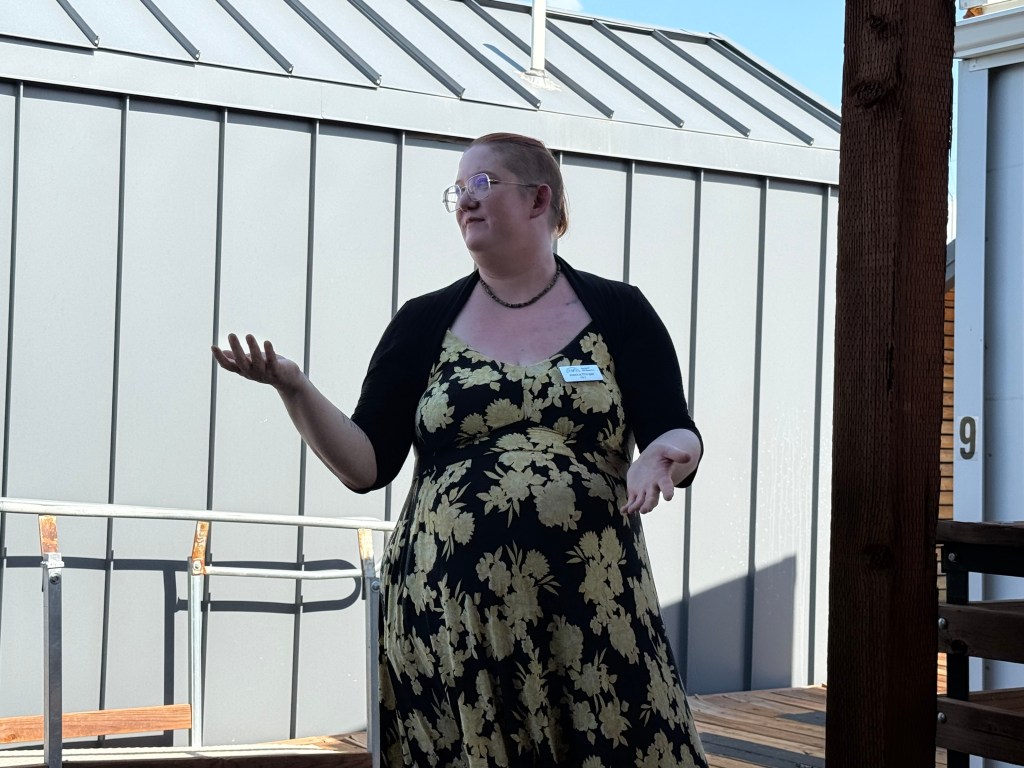
On July 21, Colorado Village Collaborative (CVC) CEO Jessica Ehinger spoke on a porch in the Monroe Tiny Home Village, CVC’s first mirco-community in the city. It was the non-profit and Monroe’s ninth birthday, but soon Monroe will be packed up into storage after the city forced the tiny homes into a move and potential hibernation. The organization is still operating two other micro-communities in the city, but the Monroe location was its first.
“This is a really bittersweet moment,” Ehinger said. “We are standing in, basically, the heart and soul of those original tiny home villages. … It is hard in moments like this when there are setbacks, when there are challenges, when things don’t go the way you want, when there isn’t an easy solution.”
The move comes directly from a city decision not to renew the community’s contract in the 2026 budget. The swath of non-renewals affected non-congregate homeless shelter sites, “including the Comfort Inn and Monroe micro-community,” according to the city’s 2026 budget. The budget document went on to say the cuts come “as we shift All in Mile High to focus intensively on housing, connecting individuals to work and street engagement for high acuity populations.” This decision saved the city $12.4 million as Denver faces a projected $200 million budget deficit for 2026.
Julia Marvin, spokesperson for the Denver Department of Housing Stability, tells Westword that they are “thoughtfully” winding down temporary shelter sites and “doubling down on housing — ensuring faster exits from shelter and long-term stability.”
“This is how we make transformational change with limited resources,” she says.
Ehinger says the Denver mayor’s office told her it would help CVC find a new location for Monroe, but that hasn’t “materialized” yet.
After years of debate, protests and promises, what does the future hold for Denver’s tiny homes? Some who were once closely tied to the communities now question their necessity, claiming the idea has fallen from what initially made it special, while proponents still believe in the idea and hope for stronger support going forward.
Measuring success
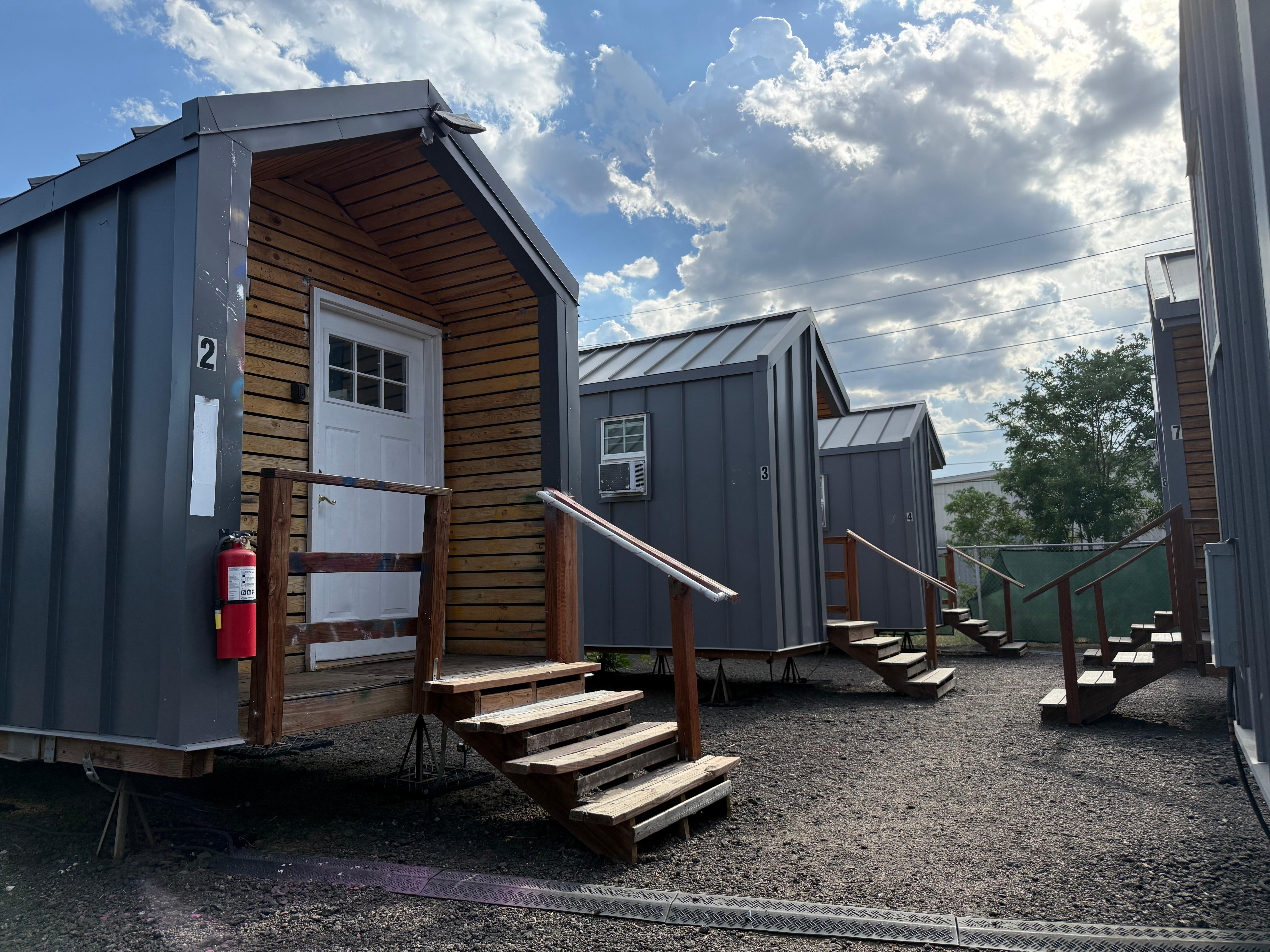
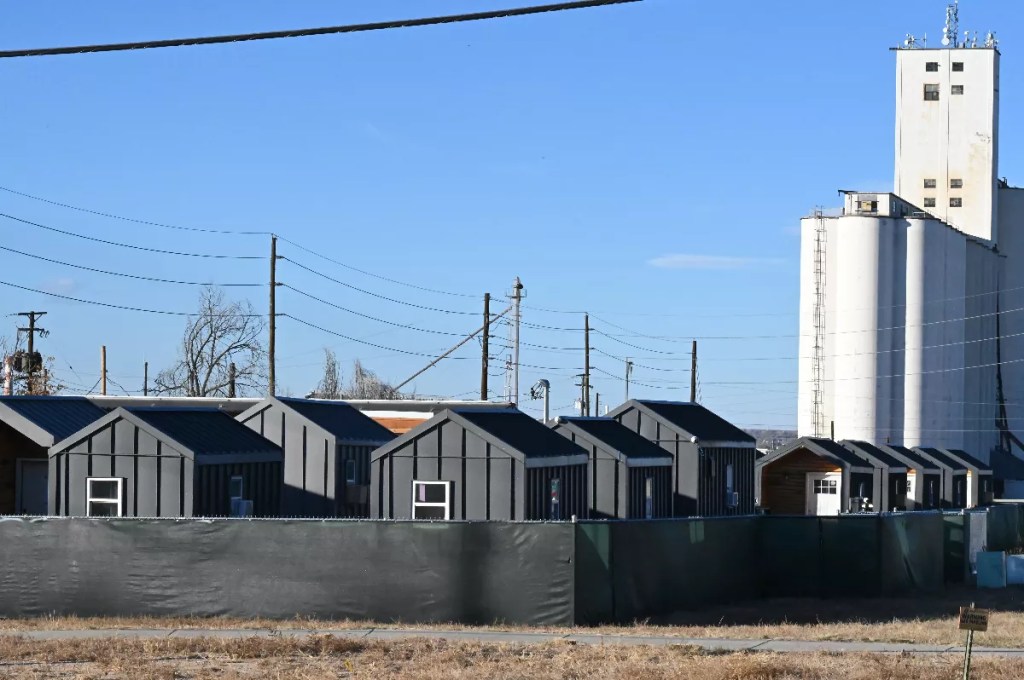
Micro-communities provide small, temporary shelters for people experiencing homelessness, and give them direct access to resources in an attempt to get them into permanent housing. This involves “tiny homes,” or private, hard-sided shelters with room for a bed and dresser. The community will often have a center, bathhouse and kitchen area.
In 2021, the Department of Housing Stability partnered with CVC through contracted funding agreements to expand its tiny homes. After Johnston took over as mayor in 2023, he declared the homeless situation in Denver an emergency and launched the House1000 initiative, which expanded the relationship with CVC. The initiative set out to get 1,000 people off the street by the end of the year. After reaching that goal, Johnston’s office launched the longer-standing All In Mile High (AIMH), which has the lofty ambition to end homelessness as a whole.
At the time, CVC was operating two separate communities at the Monroe location as well as the La Paz community on South Santa Fe Drive and the Steele Village community on 38th Avenue and Steele Street. The latter two are still open and running today. There are also two other micro-communities run by other nonprofits: the Stay Inn on East 38th Avenue, run by Bayaud Works and Elati Village near Spear Boulevard in the Golden Triangle neighborhood, run by the Gathering Place.
A zoning standard was created in 2022 that allowed these communities to operate on a site for four years before moving off of the parcel for at least four years. Monroe Tiny Home Village was the first to receive a license, set to expire this September.
As it stands, the four current villages add up to 190 beds, according to the Department of Housing Stability.
Since CVC started its first micro-community in 2017, approximately 766 different people have lived within the nonprofit’s communities. According to the organization, 60.8% of them exited to “positive” housing destinations, including other shelters, treatment facilities, temporary housing situations and permanent housing, with 277 moved to permanent living situations, 80 moved to temporary living situations (like family or friends) and 41 moved into treatment facilities or long-term care. As of July, the two remaining communities have 90 members, including some moved over from the shuttered Monroe location.
Those 766 people were part of the thousands Johnston has claimed have been moved off the streets since 2023. Overall, more than 8,500 individuals have had access to shelter and 7,700 have transitioned into permanent housing since Johnston took office, according to the city, helping lower the 1,400 people living on the streets and 4,600 in shelters during the 2023 Point in Time count to 519 people on the street and nearly 6,000 in shelters by 2026.
Ehinger argues that no matter which route the city prefers in combatting homelessness, the micro-community model has been successful, because nearly 25 other nonprofits have helped establish supportive services for people living in them.
“Once someone comes into the village, they get their own unit, they have their own front door, and then they get access to a whole range of wraparound supportive services. So, we have onsite case management, onsite peer support, onsite behavioral mental health support,” she says.
Stanley Greenemeier, a man who lived at the Monroe shelter back in 2024, has now been in permanent housing for two years. He just founded an LLC for a custom walking stick business called Sticks for People. He says the model helped change his life and expresses endless thanks for CVC.
“To have a place where people treated you with dignity and respect. You weren’t invisible,” he says. “My food stamps went further, because I was able to buy food and cook. I wasn’t spending them all at 7/11.”
But Terese Howard, founder of Housekeys Action Network Denver (HAND) and former board member for CVC, says the idea is too expensive for its level of effectiveness, arguing that the concept has strayed away from the original idea she helped create back in 2017.
“It’s sad, because it was a beautiful thing,” Howard tells Westword. “And it’s just one of those examples of how these kind of slow, dehumanized corporatized transitions happen.”
To Howard, CVC’s priorities and spending are out of whack. And while some people get into permanent housing from the communities, it’s only because they are in close proximity to services, she says. According to her, the city would save money if case managers and services were provided to people already on the street instead of building small but expensive communities to house them temporarily.
“You shouldn’t spend millions of dollars to build tiny home villages just because you don’t want to stop sweeping people,” she says.
Elizabeth Szewczyk, senior director of operations at CVC, says it would be impossible to provide all of the services that villages provide to people still living on the street.
“When a person living on the street is most focused on the immediate safety and security of themselves, their pets and belongings, it is much harder to focus on engaging with services. People may move around frequently or be ‘swept,’ making it more difficult to keep up with engagement through street teams,” she says. “Someone simply shouldn’t have to live on the street, and that shouldn’t be a prerequisite to get supportive services.”
Bennito L. Kelty
Howard’s history with tiny homes stems back to their start in Denver. She started an advocacy group called Denver Homeless Out Loud in 2012. Around 2015, the guerrilla group built their own tiny home community on city property at Sustainability Park, near the intersection of 25th and Lawrence streets. At the time, the plot was empty, but the Denver Housing Authority had just sold it off to a private developer for market-rate housing instead of creating affordable housing.
The idea didn’t last long. By October of that year, the city raided the area.
“The city called in 70 cops in riot gear and helicopters to arrest us all,” she recalls. “And, during the night, while we were all in jail, they came in with tow trucks and took all the homes that we built.”
The attempt was not in vain, though. The group continued to advocate for the idea, with Howard eventually being part of the CVC’s start in 2017. The CVC then worked to get the tiny homes communities legalized and built into zoning. The first version of Monroe included 11 homes built through volunteer labor for around $100,000, according to Howard.
In his 2023 Homeless Emergency Budget estimate, Mayor Johnston had $19.6 million going toward the tiny home communities, including building the actual shelters, running utilities and paying for support staff. Howard also notes the CVC’s total expenses in 2021 were $2,317,447.
“When we first started the village, there were four key principles that we believed in: quick, cheap, community-based and environmentally friendly. When we started, it was not perfect, but it was all of those things. Each of those things has worn away,” Howard says. “If it’s being done where it is a city cost and it’s being built to code and, therefore, meeting all of these construction standards that are racking up the insane cost, it is a better investment to be building or remodeling or vouchering in actual housing than the tiny home or micro communities.”
Even so, the Monroe community is packed up and ready to operate somewhere else, directly avoiding any construction costs.
CVC says the micro-community model is cheaper than hotel- and motel-based non-congregate shelters due to overhead and leasing costs. For example, hotels-turned-shelters cost around $7-9 million for 150-300 beds, with a “solid portion of those costs going towards ongoing maintenance and facilities costs,” according to CVC.
Micro-communities, on the other hand, cost around $2 million for 40-60 beds, with the “vast majority of the costs going to our higher staffing rates on site.”
Either way, the city seems to be moving away from both non-congregate shelter options, according to the Department of Housing Stability, which is “doubling down” on housing instead of temporary shelter models.
Community challenge
Back in 2017, the initial Monroe village had a resident council that governed itself with a slight oversight from CVC. That idea “wasn’t perfect,” Howard says, and a middle ground between self-governance and the staff formed. That eventually made its way to complete control by CVC, with Howard claiming there is no longer any control held by residents. Instead, the CVC oversees everything, including guests, when someone enters or exits the community and the enforcement of “petty offenses” that are “even worse” than other homeless shelters, Howard alleges.
Szewczyk says having a secure living space is a crucial part of the model: “Having a stable place to live means a person can ensure that not only they are completely safe, but surrounded by people that have their best interest in mind,” she says.
But Howard argues that putting people in temporary shelters, like the tiny homes, is a “sexy” option for the mayor and the city for good headlines, but permanent housing should be the main goal.
“I don’t want to belittle the fact that residents prefer it to the streets,” she says. “Most people are glad to get in, and (HAND) is constantly working with individuals who are trying to get in and trying to advocate for them to get in, because they do prefer that to the streets. But that doesn’t change the overall strategy of our use of money. People want a place with an actual bathroom.”
Finding new neighbors
Micro-communities saw their fair share of protests by neighbors in their beginning — like in the Overland neighborhood, where the La Paz community is located — but CVC says locals can come around on the idea.
Before La Paz’s construction in 2023, residents told Westword they were scared to have a group of homeless people living in the neighborhood. In July of 2025, the Overland Park registered neighborhood organization said there are still neighbors who oppose the village, but some were neutral or even in favor of it three years later.
Ehinger says that once a tiny home village is established, neighborhood concerns are usually quelled due to tight security and noticeable success.
“But once we’re actually on site, for the most part, we have really positive relationships with our neighborhoods,” she says. “I really do feel like we’re doing something different here even compared to my network, because of the focus of what makes impact, what makes change for someone experiencing chronic long-term homelessness. That is actually letting them make a change in their life. We’re not just trying to shelter them temporarily. We’re not just trying to get them into housing. We’re really trying to find a solution for them. We’re going to find them a path forward.”
Carving those paths will be harder for CVC when the Monroe community is gone, and some others may follow its demise. Ehlinger says the idea works, though, and CVC wants to continue to operate in the city as it looks to expand into other surrounding jurisdictions.
“We, in general, transition about twice the population of our villages every year. So a 30-person village will transition about 60 people a year,” she says. “So if a city is only seeing 60 to 120 people experiencing unsheltered homelessness in their jurisdiction, we could directly address that entire need.”