Bennito L. Kelty

Audio By Carbonatix
Bill Mosher is still up on downtown Denver, even after staying months longer than he’d originally intended at a job he didn’t ask for.
“It’s been an honor, being entrusted with this job by a mayor I didn’t know that well, in a system I didn’t understand,” Mosher says, as he prepares to leave his consulting role as the city’s Chief Projects Officer. “Fifty years ago, I got into the community development business. I think 50 years is a good milestone. Hopefully, I have made a difference with what I’ve done. It’s been a great experience.”
It was an experience he didn’t expect after essentially retiring from his career as a downtown booster and developer, with a resume that includes leading the Downtown Denver Partnership for almost 20 years, then spending nearly another 20 with Trammell Crow Company, overseeing development and investment activities in Colorado, before moving on to his own consulting company. But then Mayor Mike Johnston approached Mosher and asked if he’d consider taking on a new role, overseeing projects like the proposed relocation of the Denver Broncos football stadium and the revived and extended Downtown Denver Development Authority (DDA), which voters had approved in November 2024.
Mosher agreed to work as a consultant through 2025. Then, as the projects built up, he promised to stay through the first quarter of 2026 … then again through the second quarter of this year. But for the last six weeks, he’s been working with the mayor on a transition plan: Chief of Staff Jenn Ridder and Deputy Chief Projects Officer Jen Welborn will take over, with today, Aug. 14, Mosher’s last day. He’ll still be available for consultation while he travels and spends more time with family — and gets away from “the most stressful job I’ve ever had,” he says, adding that he’d never understood how challenging it is to work in the public sector, especially with the added pressure of social media commenting on everything you do … or don’t do.
The man who brought him into the public sector understands that. “When Bill joined the team, he said he wanted to help the city, the mayor and downtown. I can confidently say he has done all three,” says Mayor Mike Johnston in a statement announcing Mosher’s departure. “Bill is an amazing advocate for Denver and has forgotten more about downtown than most of us will ever know.”
Even before he took the job, Mosher knew that downtown faced immense challenges. But the ramifications of COVID — including people working remotely, and offices retooling altogether — made them bigger than anticipated. “The challenge downtown was way worse than I thought going in,” he admits. “The DDA strategy is in a pretty solid place now. But it’s got lots to do.”
So far, the revived DDA has invested $225 million in downtown, from the ill-fated Denver Immersive project that was already underway when Mosher stepped in, to the University of Colorado’s purchase of Independence Plaza for $29.75 million, finalized this week. More than a dozen other projects are in the works, with more applications coming in. Right now, Mosher estimates that the DDA could invest another $25 to $30 million by the end of next year.
That’s not the $540 million in projects touted when the DDA was going to a vote, but it’s a realistic look at what will be available through this tax-increment-based tool that depends on property and sales tax revenues.
“I reminded the mayor that’s not the amount you want to talk about, since it includes interest,” Mosher recalls. “A total of $400 million is a safer number, and we should do $250 million in the first three years.”
Denver.gov
From the start, Mosher ignored people suggesting that downtown’s empty buildings should be demolished. He also didn’t want to spread grants around “like peanut butter,” he says. Instead, he focused on a three-point strategy for the DDA: investing in 16th Street, leveraging the $175 million already poured into the renovation and rebranding of the mall, eliminating vacant space (over 1 million square feet of empty offices are being converted to residential), and activating 16th Street with street-level retail, activities and, above all, safety measures — an early DDA investment.
The strategy divides 16th Street into three physical areas. The biggest challenge is Upper Downtown, starting at Broadway, which is lined with empty storefronts and office buildings.
“Is it better off than it was five years ago, three years ago? Safer? Absolutely,” Mosher says. “But this is slow going.” That’s one reason the DDA moved fast and approved a $7 million incentive when it heard that embattled Alterra, the ski and recreation company, might be leaving the state.
“They’ve had a hell of a hard three years. When we got word that Alterra might leave Colorado, it seemed like a bad omen,” Mosher recalls. “We need to save these jobs for Colorado, we need to save these jobs for Denver. While $7 million isn’t a real reason to stay, at least it sends a message.”
The DDA delivered another message when it stepped up for CU’s purchase of Independence Plaza, “a key investment that should be a game-changer” for another section of 16th, according to Mosher.
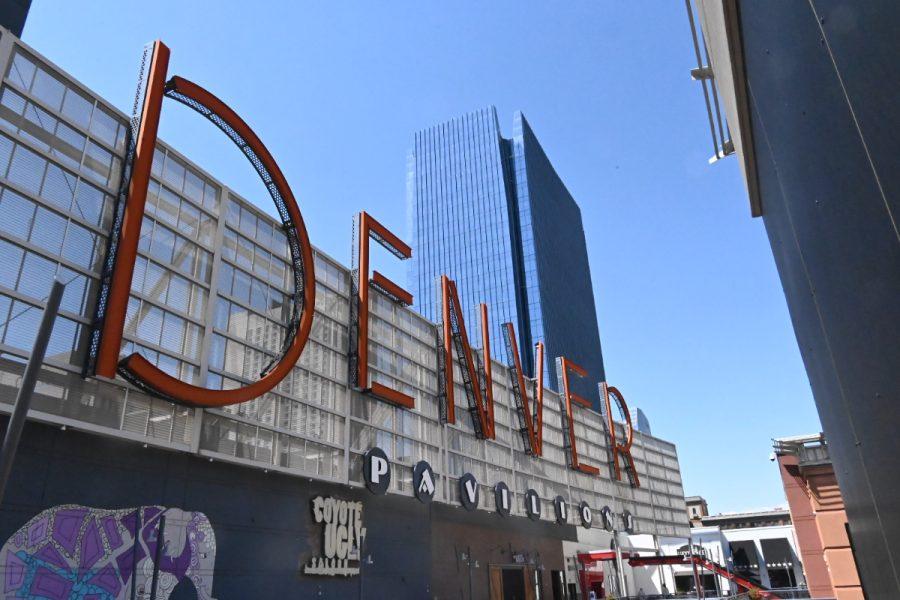
Between Upper Downtown and that stretch approaching LoDo is the area that feeds the Colorado Convention Center. It includes Denver Pavilions, where the DDA made a major investment last year, buying not just the complex but the two parking lots behind it. The Urban Land Institute came in to study that complex, with an expanded report on its recommendations due any day.
But other investments are all along the way. “When I look at the map on the DDA site, it’s a ribbon up 16th Street between Arapahoe Street and Broadway,” Mosher says.
A ribbon that has not yet tied up downtown as a pretty package, but it’s a start.
“All you’re doing is managing change, hopefully leading with some direction,” concludes Mosher. “It was an honor to be able to bring my experience and serve my hometown of Denver.”