
Danielle Lirette

Audio By Carbonatix
Like a dandelion growing in the cracked, gray cement of a sidewalk, the local creative community continued to find new ways to flourish in 2025, despite funding setbacks and societal struggles.
Over the past year, artists activated empty spaces, events grew, and creatives explored how to collaborate with and support each other, even as leadership at arts organizations changed.
Funds and Games
Cultural institutions around the country took a hit last spring when the National Endowment for the Humanities and the National Endowment for the Arts rescinded grants after the Trump administration ordered them to update their policy priorities to focus on funding projects such as efforts related to AI, the U.S.’s 250th anniversary and empowering houses of worship rather than projects rooted in DEI. As a result, Colorado arts and humanities organizations lost millions of federal dollars, leading to calls for donations and a scramble for more grassroots-level funding efforts, like the Bonfils-Stanton Foundation’s Art and Culture Rapid Response Grants.
But there were some bright spots. In 2024, Colorado ranked 46th in the nation for state arts agency legislative appropriations per capita; the operating budget for Colorado Creative Industries, part of the state’s Office of Economic Development and International Trade, hadn’t increased in a decade. This year, though, CCI was able to secure an additional $1.25 million — a 62 percent increase that moved Colorado’s ranking up to 39th.
Economic activity in the arts and attendance at Colorado’s cultural events are returning to pre-pandemic numbers, with the Colorado Business Committee for the Arts announcing that in 2024, the arts raked in $3.12 billion for Colorado’s economy. Meanwhile, the CBCA determined, cultural events accounted for three times the attendance of the combined numbers for Rockies, Broncos, Nuggets, Avalanche and Rapids games.
While Denver’s Imagine 2020 never materialized — for obvious reasons — a cultural plan for the city emerged this year with Denver Creates, a commitment to broaden access to the arts, cultivate community and support the economic vitality of the city’s cultural sector. Denver Arts & Venues surveys and interviews informed the well-intentioned but vague plan; the research indicated that residents value the city’s creative opportunities and find them relatively easy to access.
This is in part thanks to the Scientific and Cultural Facilities District, a regional tax approved by voters in 1988 that gives one penny from every $10 purchase back to cultural institutions across the seven counties of Denver, Boulder, Jefferson, Adams, Arapahoe, Douglas and Broomfield. SCFD continues to be the biggest monetary supporter of Colorado’s arts ecosystem, contributing $85 million in 2024 and this year welcoming new Executive Director Andrea Albo. Reauthorization of the tax returns to the ballot in 2028.
Filling Space
The majority of the cultural institutions in SCFD’s top tier of funding (the Denver Art Museum, the Denver Museum of Nature & Science, the Denver Botanic Gardens, the Denver Zoo Conservation Alliance and the Denver Center for the Performing Arts) are changing leaders, too.
Longtime Gardens CEO Brian Vogt died in March; after an extensive search Naples Botanical Garden CEO Donna McGinnis will take over the position next year. This month, the zoo announced that its president and CEO, Bert Vescolani, is departing after more than seven years on the job; the board will conduct a national search for Vescolani’s successor. And DMNS President George Sparks is retiring at the end of next year after serving in that role for more than 21 years; his successor has not been announced.
In October, the DCPA announced that Off-Center co-founder Charlie Miller will be leaving in March, and that it will be ending development of new immersive projects — an effort that had put Denver on the map for cutting-edge cultural projects. Meanwhile, the Denver Immersive Repertory Theater, the city’s first permanent immersive studio, won a $400,000 Downtown Development Authority grant. And Exhibition Hub Denver continues to put on big immersive showcases, such as the Titanic: Immersive Voyage earlier this year and its current exhibition, Dinos Alive.
Other major cultural organizations also saw changes at the top: Anthony Kiendl joined the Museum of Contemporary Art Denver as the Mark G. Falcone director; Platte Forum is looking for a new head.
Kristen Fiore
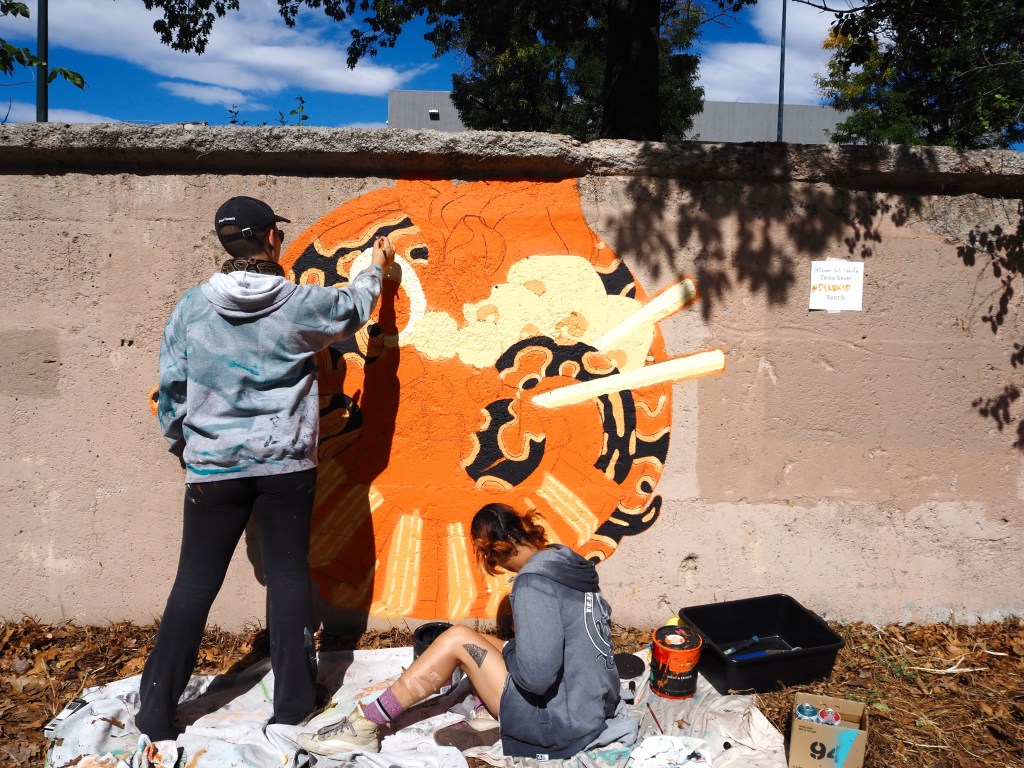
While institutions are filling empty offices, Denver artists spent the year filling empty urban spaces, from painting murals on the walls along the Cherry Creek Trail to activating vacant properties through a new RiNo pop-up program and the Leave Your Fingerprints Downtown initiative. “I think what really defines Denver as a cool place to be an artist is the collaborative nature,” Fingerprints project manager Brian Corrigan told Westword.
Taking the Reins
The past year saw a growing trend of creative collaboration and DIY efforts by local artists who are attempting to reclaim their power, from the rise in popularity of clothing upcycling and clothing swaps to artists purchasing their own buildings.
Dairy Arts Center just reclaimed ownership of its building from the City of Boulder. “The Dairy was founded by artists who envisioned a space where creativity could flourish across all disciplines,” Dairy Arts Center Executive Director Melissa Fathman says. “To once again own our building is to reclaim that founding vision in the fullest sense.”
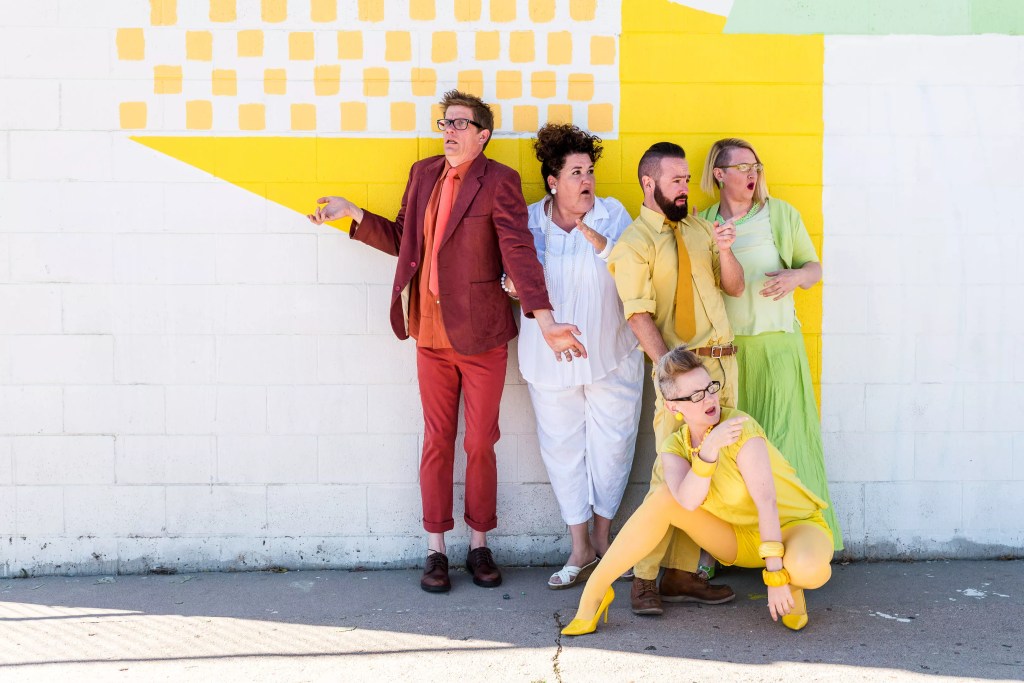
In October, company members of quirky Denver theater staple Buntport Theater announced that they would be expanding their facility and leasing to own the building where they have been renting space for more than two decades. They also promised to provide room for other artistic efforts in the community.
Denver dance institution Cleo Parker Robinson Dance, which marked its fiftieth anniversary in 2020, is on the brink of opening an expanded facility after outgrowing its retrofitted church space and winning a $4 million Community Revitalization grant from CCI.
From the Hip
Some efforts are less massive, but just as impressive. A Sunnyside couple signed a ten-year lease on the historic Yates Theater, which has been vacant for forty years. They plan to turn it into a bar, community space and cinema.
Local artist Lee Lee transformed her family home at 420 Downing Street into an art gallery, community space and temporary pop-up library for Habitat Library, a nonprofit organization started earlier this year by Jeff Lee (no relation), who was also the founder of the Rocky Mountain Land Library. The space, Galleries on Downing, has been activated as a meeting space for events, book clubs and art shows, with commission proceeds benefiting local partners and other nonprofits.
Kristen Fiore
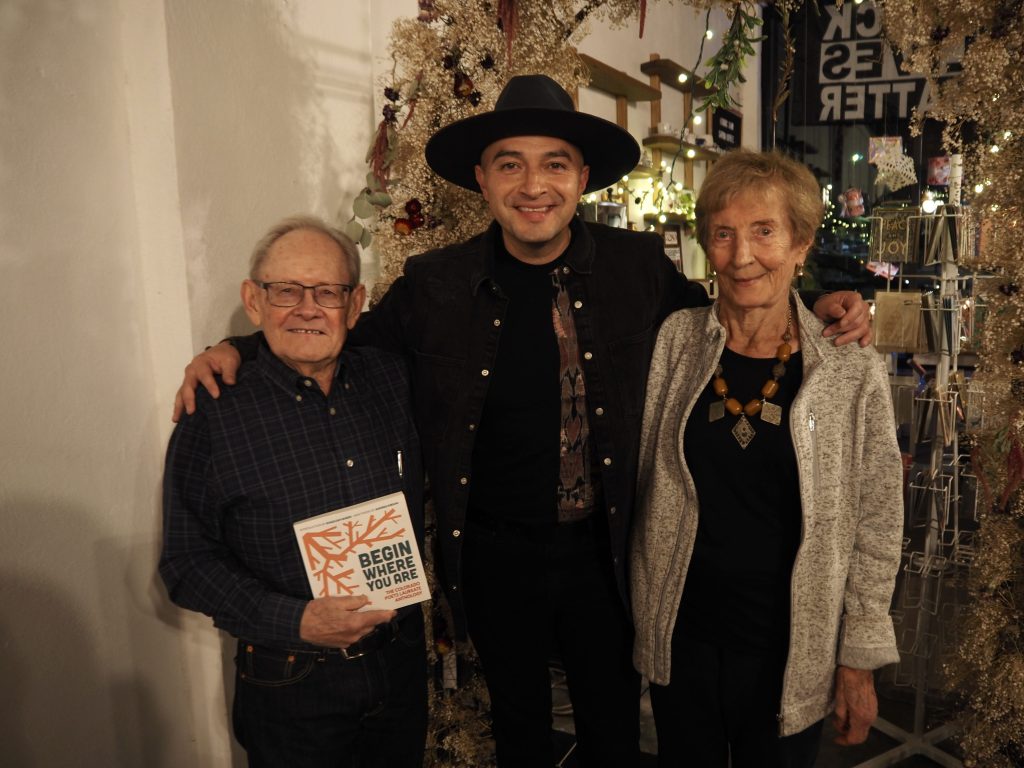
And in the ultimate collaboration, Colorado’s first anthology of poetry from all of the state’s poets laureate, Begin Where You Are, was released this month. A joint project between social entrepreneur Turner Wyatt and Colorado poets laureate Mary Crow, David Mason, Joe Hutchison, Bobby LeFebre and Andrea Gibson, proceeds from the book’s sales will support the state’s next poet laureate (who will likely be announced in January) in travels to more rural and underserved areas around Colorado.
Festival Growing Pains and Gains
This year also saw huge attendance at festivals, from PrideFest and the Denver Cherry Blossom Festival to the Denver Chalk Art Festival, as well as other events like the Cheesman Park Art Festival and the Cherry Creek Arts Festival, which was named one of the world’s best festivals by the International Festivals and Events Association for the second year in a row.
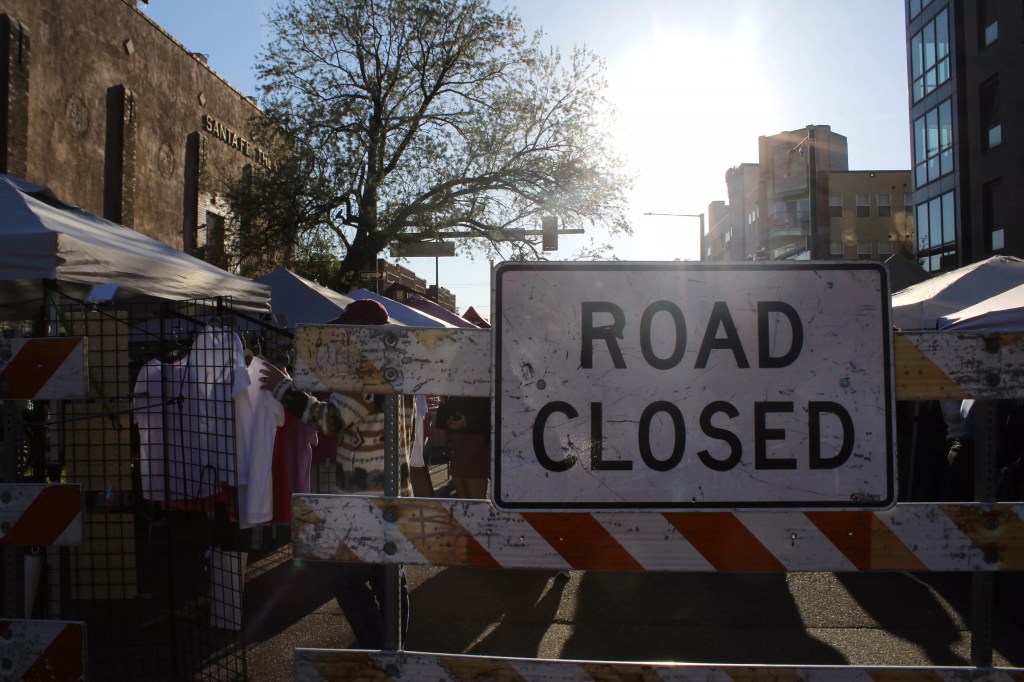
Meanwhile, as First Friday continued to increase in popularity, the Art District on Santa Fe’s monthly First Friday art walk instituted some changes after attendance grew beyond the district’s capacity, leading to issues with inaccessible sidewalks and illegal vending practices. Last spring, ADSF stepped in to permit First Friday as a special event, requiring artists to pay for a $50 vending spot not along Santa Fe Drive, but on specified side streets that would be closed to traffic. And in August, Santa Fe Drive was closed altogether to vehicular traffic on First Friday…but don’t expect that to become a regular occurrence.
Kristen Fiore
Other spaces became more problematic. With Civic Center Park now under construction, many annual events have had to move. When the Outside Festival returned to Civic Center last May for a second year, it saw twice the attendance of 2024. Now dubbed Outside Days, the festival will relocate to the Auraria Campus, at least temporarily, in 2026. No word yet on where 4/20, Cinco de Mayo and other fests will be next year.
Despite uncertainty, there’s a lot to look forward to in 2026…as well as a lot to watch for. While the form that local immersive experiences will take, what will happen with federal arts funding, and how Denver Creates will shake out have yet to be seen, one thing is clear: In times of turmoil and hardship, arts and culture are what bring communities together, transcending societal barriers and serving as a reminder of what humans have always done.
Create.