Lotan Mizrahi

Audio By Carbonatix
We’ve all experienced it. You’re at a dinner with some friends or maybe at a family reunion. Everyone’s chatting, and you hit a line that just takes hold of the room in an almost simultaneous state of hypnosis. Heads turn, smiles morph into almost pain-inducing laughter, and you’re left sitting there soaking it all in. It’s honestly the best feeling in the world. Then, it all fades away. Gone before you can even think, and you go back to nursing your drink and think nothing of it.
Now, imagine chasing that feeling every single night. Trudging through awkward silences, blank faces and the sound of throats being cleared. Searching and searching through all of that to find your diamond in the rough: A laugh. That’s exactly what comedians do every night. They even build careers out of it.
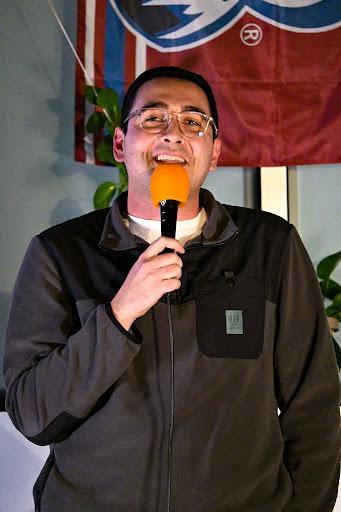
I started as a wide-eyed and bushy-tailed comic in Spokane, Washington, at the Spokane Comedy Club. It’s pretty rare for a professional club to run weekly mics, but it had a special stage putting fresh comics in front of real audiences every week. I actually started comedy to get over a fear of public speaking. Like most comics, my curiosity became an addiction. I bombed a lot on that in Spokane, but it gave me the confidence I needed to continue hitting mics in Spokane, Boston, and now Denver.
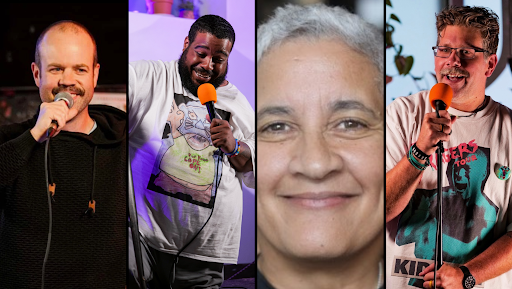
“I was hooked from the start,” says Jeremy Cash, a veteran from New York City who now performs in Denver and all across the region.
“I want to be respected and esteemed by my colleagues,” adds Drew Garland, a rising prospect who hosts shows and open-mics around the Denver metro area.
Then there are some who are trying to build more infrastructure to offer comedians more opportunities to stay local, like Jennifer Hill, who has helped build up the Rise Comedy Club in downtown Denver.
Denver has a thriving comedy community bringing together local, seasonal and touring comics into shows across town. It beats like a nicotine and energy drink-fueled heart every night in the city’s bars and breweries, backrooms and basements, offering comedians a platform to share their perspectives on life. It’s not always Netflix specials and sold-out global tours. There’s great comedy happening in our city that you need to know about. What I find more intriguing is the story behind comedians. What got them into comedy in the first place, and why they keep getting back on stage.
I still remember my first set. My wife and brother came with me because I thought, “Why not? Better to have witnesses to my embarrassment that I can’t run away from.” My set was nothing to celebrate. I got a few chuckles, mostly from my wife, who had to laugh no matter what I said. It sparked something inside me. Comedy gave me a platform where I had full control of what and how I said it.
Cash, Garland and Hill all started out through a comedy class. This is a pretty popular way to learn the fundamentals of joke writing from experienced comics, get some idea of how this industry works, and see some stage time at the end of the course. Tairee Dillard, a popular figure in the local scene, started at the Denver Improv because he knew the booker who put him on a local showcase right from the start. Whether you take a class or lose a dare, it doesn’t matter what brings you to that first open-mic. What matters is why you follow through and show up night after night, building your craft.
It’s almost like learning how to cook. You aren’t going to make beef wellington on day one. (Queue internal Gordon Ramsey voice calling you an “idiot sandwich.”) You have to overcook some eggs and burn a casserole or two to build up your skills and confidence.
When you go to an open-mic, you’ll see comedians at all levels of experience. For some, it’s their first time, and they stand up there with their hearts beating out of their chests, just trying to survive. More seasoned comics run through multiple mics in one night, perfecting their sets.
Cash is one of those seasoned comics — he’s racked up more than 11 years on stage. When I asked him how he got started in comedy, like most comedians, he stumbled on a sign for comedy classes while working at a library in New York. After his first class, he was hooked. “This is sweet. I wanna do this,” he recalls thinking. Cash started hitting mics around the city until eventually a girl brought him out west. After 11 years working night after night on stage, I asked Jeremy what his end goal was. “A job I don’t hate,” was his answer, which really stuck with me. It’s something I think a lot of comics at this level grapple with. How can you support something you love doing but aren’t ready to commit full-time just yet to be financially independent?
Jared Chandler | Raspberry Cat Productions and Dude, IDK Studios
Garland is a comedian I’ve gotten to know over the last year, seeing him grow in the scene. He might be at the beginning of his comedy career, but he is already making waves. When he’s not on stage hosting his Sunday night open-mic at Rise Comedy or a monthly show at the Barrel Room Bar and Grill in Lakewood, he’s a teacher in Denver. In the last year, he has worked his way up the comedy ladder from just performing at open-mics to hosting and producing his own shows.
Rise Comedy is a little gem in downtown Denver that offers stand-up comedy and improv shows both in its main room and The Hideout in the back. It has an intimate stage that pulls the audience in, making them feel like they are part of the show. Giving real opportunities to up-and-coming comedians, Hill is one of the visionaries pushing this venue and building up performers. She actually started taking an improv class at Rise before transitioning to stand-up. Ironically, thanks to COVID and the 6-feet-apart rule, Rise started hosting an open mic, and Hill made a leap from improv to stand-up. They might seem similar, but are rooted in very different styles. Improv is like jazz, riffing and going with the flow wherever the conversation goes. Stand-up is like a public therapy session, but with a bigger audience. In the following years, Hill started running shows and open-mics all at Rise.
Dillard is another comedian I’ve gotten to know these last few months, bringing fresh perspectives and a calm persona on stage. He also had a pretty unconventional start to his comedy career at the Denver Improv in 2016, but his passion for comedy went back farther than that. Growing up, he watched some of the legends on BET’s ComicView. He remembers an assignment in high school where he had to watch two stand-up specials. I mean, if I had that in high school, I think I would’ve finished more homework assignments. Like other comics, Dillard hit a streak of bombs at local open-mics but was convinced to keep pushing by some friends. After years of hard work, Dillard performs all over Denver and opens for some big names at the Improv. Outside of comedy, he starred and produced a comedy short film about his alter ego, “The Vigilante.” Coming out soon, “the film is about the radical act of continuing to show up when the world tells you it’s not built for you,” per his GoFundMe. Making people laugh and providing some healing is what continues to push Dillard on stage.
I’ve been doing comedy for more than four years now. I think all the late nights and anxiety have aged me like 15 years, but every single set is worth it. I’m always going to chase that feeling of blind confidence, developing my voice, and being my true, authentic self. That’s what gets me back on stage and pushes me to get better. One thing I learned from talking with comics is it’s different for everyone. I asked Cash what motivates him, and he simply said getting better. Learning from peers, seeing how others interpret the work, and building on his weaknesses. Even though Jeremy has been doing this for over 11 years, he still wants to get better. That’s a working comedian for you.
Garland had a little bit of a different take. It was really interesting to hear him talk about how all he wants to be is a dependable comic, someone people can call on to fill a last-minute spot. A reputation upheld by a standard that people know his shows will be on time and consistent. “The community really pushes me forward. I want to get funnier so I can hang with the other comics. I want to produce more shows so I can get more comics from the community on stage. I help run an open mic so that our community can grow and improve. I feel very lucky to be coming up in this scene,” Garland says.
When I asked Hill what motivated her in comedy, I found that her approach is more of a business model. After college, she moved to L.A. to be a screenwriter. Hanging out with eccentric actors and the glitz and glam, she saw something that stuck with her. Traditional producers and agents built deals for their clients and brought everyone together to make some Hollywood magic. She hopes to bring that same approach to the Denver comedy scene. Creating real and paid opportunities for comics to work with local businesses. Most importantly, this means keeping comics in Denver who would otherwise search for opportunities in larger markets like LA or NYC. “I want to be the Michael Ovitz of Denver,” she told me. Michael Ovitz famously co-founded Creative Artists Agency, one of the biggest talent agencies in the world. She hopes to take his approach of packaging different parts of an industry together and stitch something new with local talent. “You have to create a stage — so I’m trying to create stages,” she says.
The level you’ve most likely seen comedians at, polished 45-60 minute long Netflix specials, are reaching massive audiences and touring around the world. Just because someone isn’t at that level in their career doesn’t mean there isn’t something special happening in smaller clubs and back rooms. What comedians here in Denver are doing every single night is brave, honest, raw, and rooted in the same goal as those comedians at the top: Saying something funny and people laughing.
I was honestly surprised to hear all the different answers from each of these comics when it came to “what motivates you?” Hearing such commitment to the craft and building something here in our community is what makes this scene so special. My ask for you is to go out and discover this piece of our great city for yourself.
There are shows and open mics always being advertised on Facebook through the Denver Comedy Scene group. Start there, support local art, and help comedians build their craft. Here are a few weekly events to get you started:
Tag Open Mic
Sundays at 6 p.m.
Rise Comedy, 1260 22nd St.
Showcase of the Sundays
Sundays at 8 p.m.
East Fax Tap, 8001 E. Colfax Ave.
Showcase of the Mondays
Mondays at 8 p.m.
Pete’s Satire Lounge, 1920 E. Colfax Ave.
Thick Skin Bucket
Mondays at 7:30 p.m.
Comedy Works Downtown, 1226 15th St.
Pallet City at Locales Open Mic
Tuesdays at 8 p.m.
Locales Taco & Tequila Bar, 931 E. 11th Ave.
New Talent Night
Tuesdays at 7:30 p.m.
Comedy Works Downtown, 1226 15th St.
Rise Comedy Open Mic
Wednesdays at 8 p.m.
Rise Comedy, 1260 22nd St.
Pallet City at Joe Willy’s Mic
Wednesdays at 8:30 p.m.
Joe Willy’s, 1310 S. Broadway
Mutiny Comedy Open Mic
Wednesdays at 6 p.m.
Mutiny Comics and Coffee, 3483 S. Broadway, Englewood
Loose Lips Open Mic
Every other Wednesday at 7 p.m.
Fifth Coffee House, 710 E. 26th Ave.
Pallet City at Monkey Barrel
Thursdays at 7:30 p.m.
Monkey Barrel, 4401 Tejon St.