
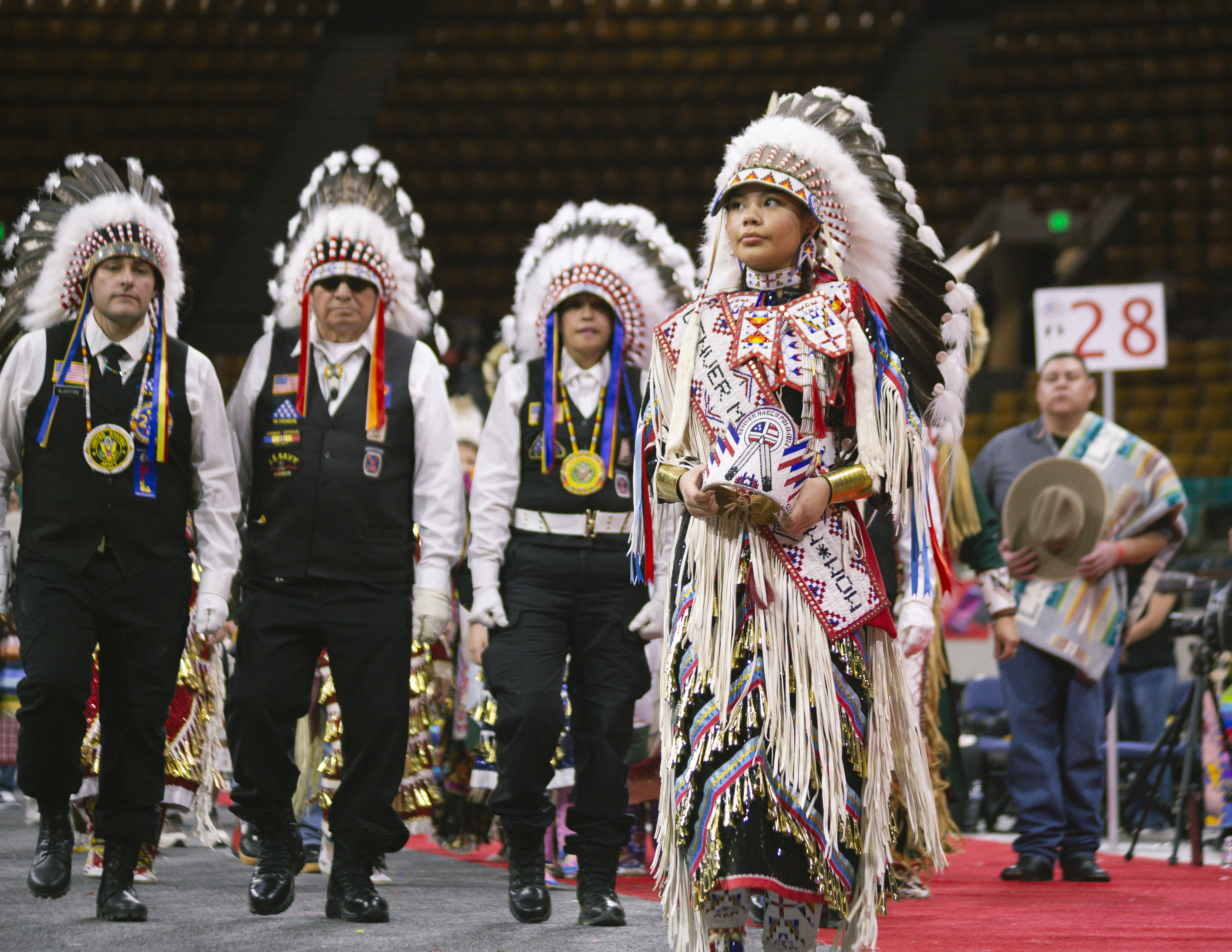
Courtesy of Denver March Powwow

Audio By Carbonatix
“It’s really a relief to make it to fifty years,” admits Grace “SwaHuux” Gillette. She has been the executive director of the Denver March Powwow for 37 years, through blizzards, economic uncertainty and, most recently, a pandemic that forced the gathering to pause for the first time in its history.
“Back in 2003, the 100-year blizzard hit the week of the Denver March Powwow,” Gillette recalls. “We just didn’t know if we could continue, because we really rely on ticket sales to do this, but we made it through. Then, in 2013, we were hit by the next big blizzard, but we somehow made it through. It took a little microbe you can’t see to cancel us for two years: COVID-19. It was a very stressful two years for everyone who had dedicated years of their lives to making this happen.”
Even though the 2020 and 2021 powwows were canceled, the powwow roared back to life in 2022. “Since the pandemic, the event has actually grown each year, which is really amazing to see,” says Larissa Evelyn No Braid, the powwow coordinator and Gillette’s granddaughter. “It’s incredible that we have this event in Denver where we can all celebrate spring and the powwow together.”
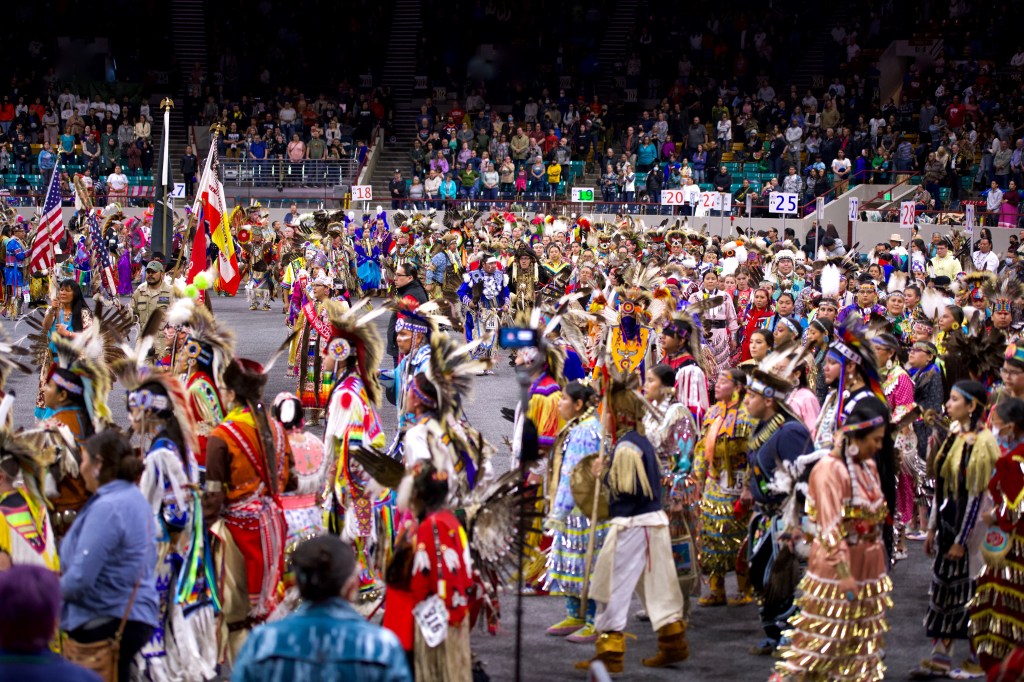
Courtesy of Denver March Powwow
This Year, the Denver March Powwow Is Celebrating Its Fiftieth Anniversary
The event returns to the Denver Coliseum from March 20 to March 22, bringing thousands of dancers, singers, vendors and spectators together for one of the largest Native cultural events in the country. For organizers, reaching the half-century mark is less of a milestone celebration than a testament to the community’s tenacity.
“There have been a lot of people who have gotten it to where it is,” No Braid says. “From people on the committee, dancers, participants, vendors and people who have served on head staff. It’s amazing that we are here today…the fact that the Denver March Powwow is still here shows the resiliency of the Native American.”
The Denver March Powwow Didn’t Begin as a Massive Cultural Festival
In the early 1970s, it started as a youth enrichment program connected to the Denver Indian Center, organized by Native students who wanted to share their traditions with classmates during spring break. “There was a group of schoolchildren who wanted to host a powwow here in town,” No Braid explains. “They wanted it to coincide with the Denver Public Schools spring break. They wanted their friends and teachers to come see them dance.”
The event quickly gained popularity, drawing participants from neighboring states. In 1984, the powwow incorporated as Denver March Powwow Inc., establishing the nonprofit organization that continues to run it today.
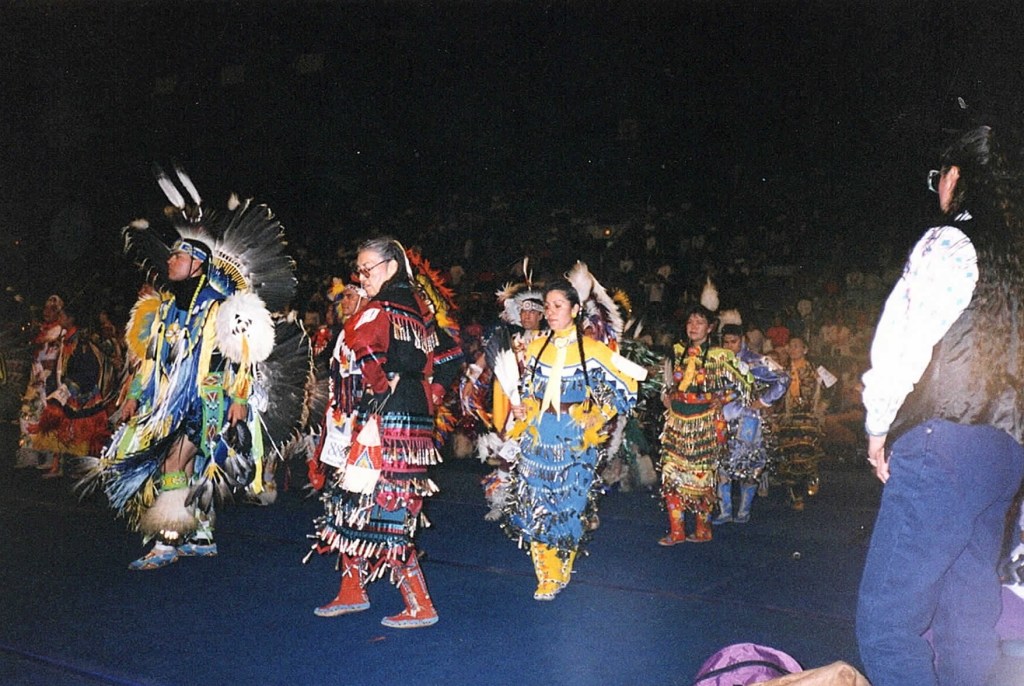
Courtesy of Denver March Powwow
As the gathering expanded, so did its venue. Early powwows were held at the Denver Indian Center before moving to the National Western Stock Show grounds. By the 1990s, the event had settled into the Denver Coliseum, where it remains today. Over time, the powwow evolved into a sprawling cultural weekend that includes competition dancing, traditional singing, storytelling and one of the largest Native arts markets in the country.
“We’ve just kind of grown over the years with our participants, our singers and dancers, and our vendors,” No Braid says. “And as it has grown, it has become something that people plan their year around.”
Today, the Denver March Powwow attracts dancers and singers from across North America, as well as thousands of people who come to watch. “We average right around 55,000,” Gillette says. “We can’t really count on the admission sold because we donate so many tickets. A lot of tickets go to human service agencies and schools, because we want people who might not otherwise have the opportunity to attend to come and experience it.”
If you have never attended the event, organizers say there is one must-see moment: the grand entry at 11 a.m. on Friday, March 20.
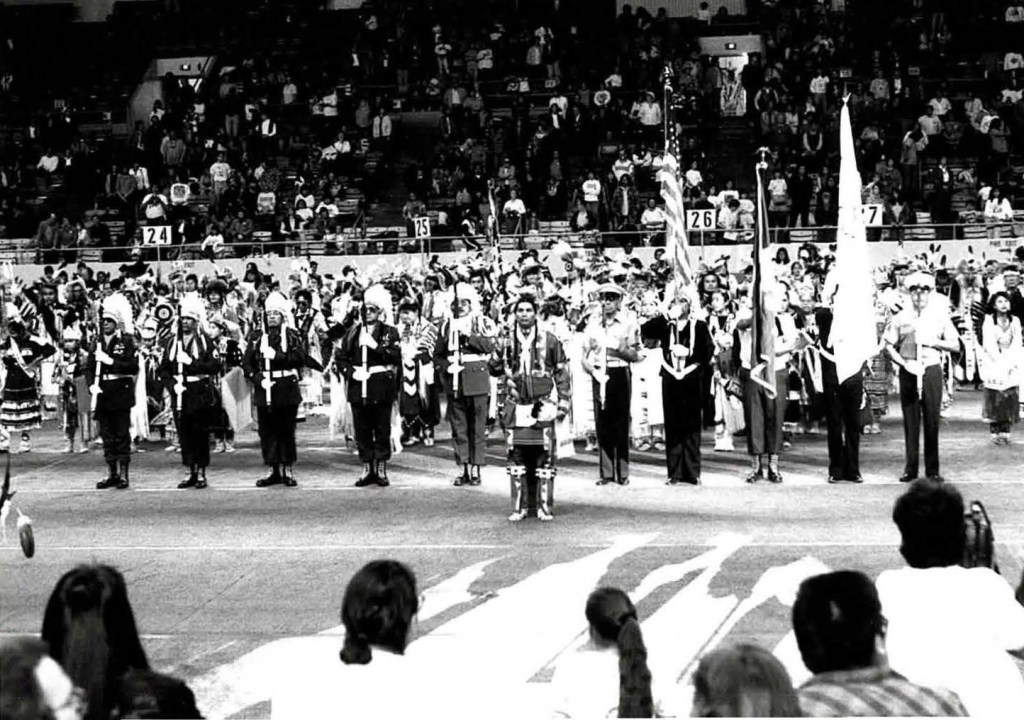
Courtesy of Denver March Powwow
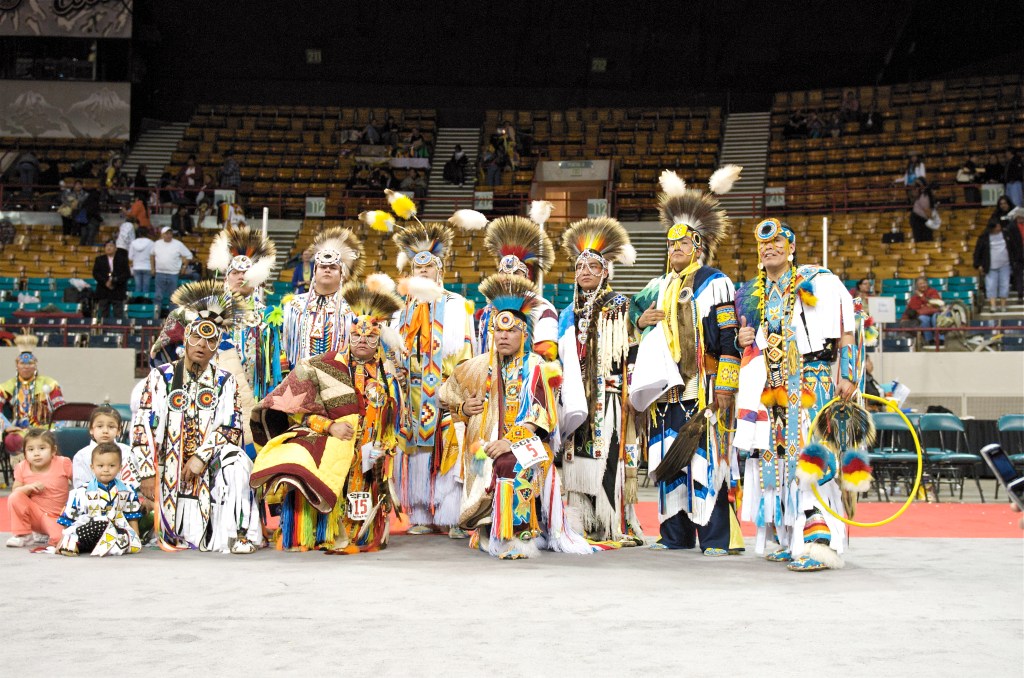
“It’s amazing to see all the dancers come in,” No Braid says. “They enter by their age category and then dance category, so it starts with the older dancers and the younger ones come in last. It’s really powerful to see the whole arena fill up like that.”
Beyond the Dance Arena, the Powwow Functions as a Cultural Marketplace
More than 185 vendors sell Native-made art, jewelry and clothing, while storytellers and presenters share traditions and knowledge.
Pulling off an event of this size might sound like the work of a large organization. In reality, the powwow operates with a surprisingly small core team. “Larissa and I are the only staff members,” Gillette says. “Two of our board members are really hands-on, but basically it’s two people. A month or two out, the board gets pretty involved, and when the event starts we have upwards of 500 volunteers.”
Over the decades, the powwow has produced moments that its organizers never expected. “I helped with a proposal during the powwow once,” No Braid says. “It was a marriage proposal, and that was pretty fun to do. The girl was completely caught off guard, and she said yes.”
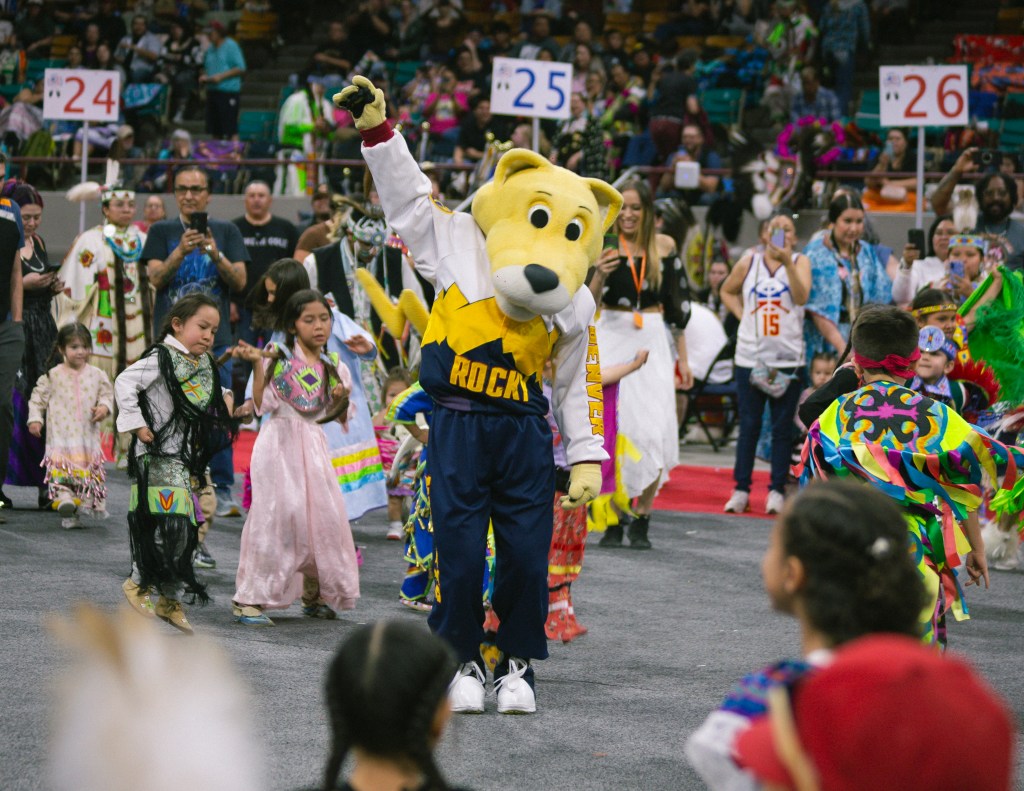
Last year’s surprise appearance by Rocky was another highlight.
Courtesy of Denver March Powwow
“As far as I know, that was the first time an NBA mascot had been at a powwow before,” No Braid says. “Everybody was excited and shocked. It was a really fun moment.”
Enduring Memories of Native American Culture and Celebration
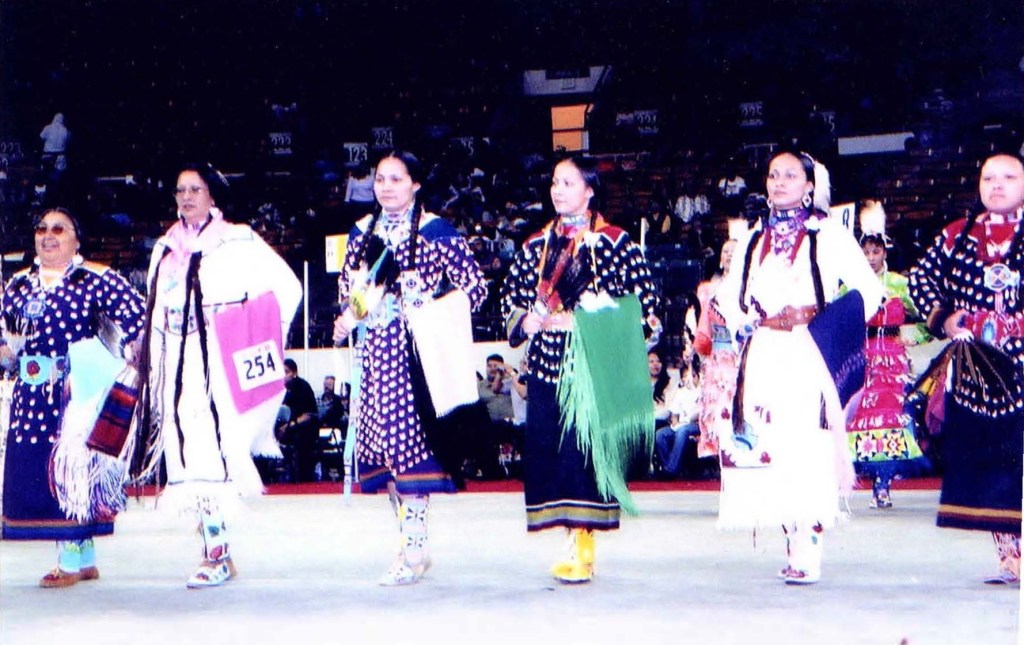
Gillette’s favorite memories stretch back decades. One came when the powwow was included in a global broadcast celebrating the turn of the millennium. “We were selected for the mountain time zone transition by the BBC on the 24-hour thing they did,” she recalls. “We did it at the Denver Performing Arts Complex in one of the bigger theaters just to have enough seats.”
Another came when the Smithsonian Institution reached out about including the powwow in its National Museum of the American Indian. “This young man kept calling me for about two and a half years,” Gillette says. “This was before email, and we kept playing phone tag. He wouldn’t tell me who he was working for, just that he was working on a project. When I finally found out it was the Smithsonian’s National Museum of the American Indian, I felt a really strong sense of pride.”
Courtesy of Denver March Powwow
Despite reaching the half-century mark, the Denver March Powwow is not planning a large anniversary celebration. “We’re not really doing anything special, marking that it’s fifty years,” Gillette says. “We’ll have some souvenir-type things with the fiftieth on them, but celebrating anniversaries like that isn’t really one of our traditions.”
She also notes that the math can confuse people. “It’s a little weird to advertise it as the 50th because the years are 1974 to 2026,” Gillette says. “People forget that we didn’t have it for two years because of COVID.”
Courtesy of Denver March Powwow
Creating an Event for Future Generations
Looking ahead, Gillette hopes the powwow can eventually move into a larger, more accessible venue, since the Coliseum limits the number of vendors; and attendees. “We turned away so many vendors that want to set up because we don’t have space,” she says. “Hopefully, in the future we’ll be in a new facility where we can have more vendors and do more things.”
That could pave the way for additional cultural programming, such as archery competitions, screenings by Native filmmakers, and other events that broaden the powwow experience. Still, Gillette wants the core spirit of the gathering to remain unchanged.
Courtesy of Denver March Powwow
“I’m winding down the board of directors that have been on for thirty-plus years and myself,” she says. “We’re looking forward to what the young Native community is going to do in the next fifty years. I’m very comfortable and thankful to have them continuing this and keeping it as close to the tradition as possible.”
Because at its heart, the Denver March Powwow is about something simple: bringing people together. And when the drums begin and the first dancers step into the arena, the purpose becomes clear.
“That first grand entry, when it starts and everything is done, it just makes me feel so good,” Gillette says. “I have chosen to live in a city, but seeing those little ones in the entry makes me feel so proud. It’s proof that we provided a safe place for young Native Americans to express their culture.”
Denver March Powwow runs Friday, March 20, through Sunday, March 22, at the Denver Coliseum, 4600 Humboldt Street. Learn more at denvermarchpowwow.com.