Death By Numbers

Audio By Carbonatix
Keep Westword Free
We’re aiming to raise $20,000 by April 26. Your support ensures Westword can continue watching out for you and our community. No paywall. Always accessible. Daily online and weekly in print.
On Valentine’s Day, 2018, a former student brought an AR-15 assault rifle to Marjory Stoneman Douglas High School in Parkland, Florida, killing 17 people and injuring 17 others. It is — so far — the deadliest mass shooting at an American high school in history. Sam Fuentes was one of those wounded in the attack.
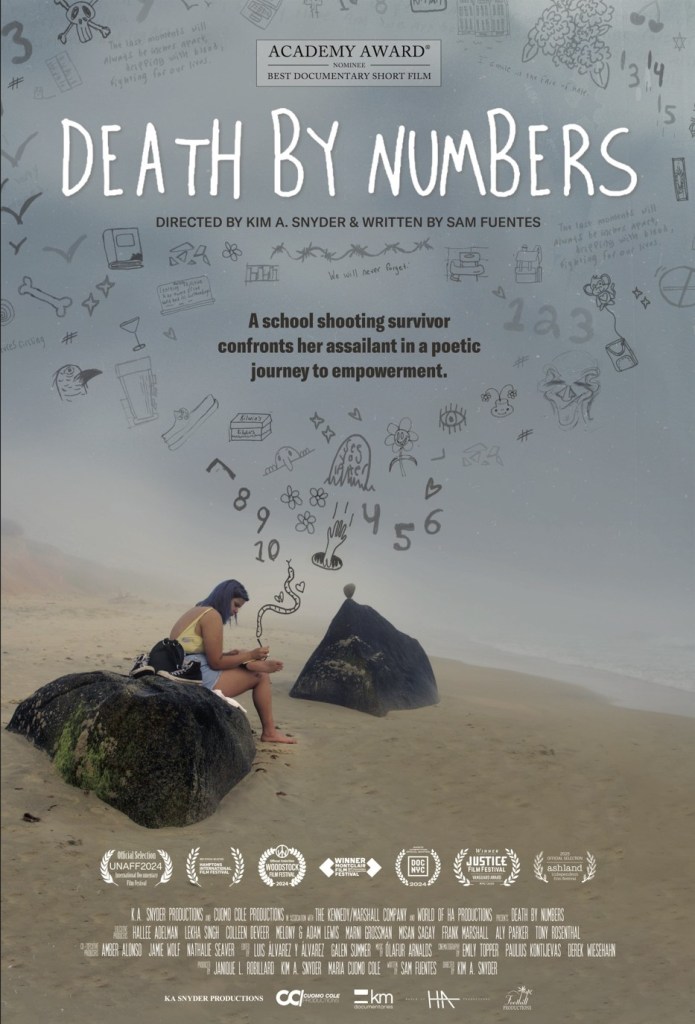
Fuentes will appear virtually at a Denver screening of her award-winning documentary Death By Numbers, which garnered national attention and several awards in its initial release, including being nominated for a 2025 Academy Award for Best Documentary Short Film. That event, co-hosted by Lighthouse Writers Workshop and the Museum of Contemporary Art Denver, takes place at 7 p.m. on Friday, March 27, at the Holiday Theater, and is preceded by a 3 p.m. writing workshop at Lighthouse on “Writing for Reclamation.”
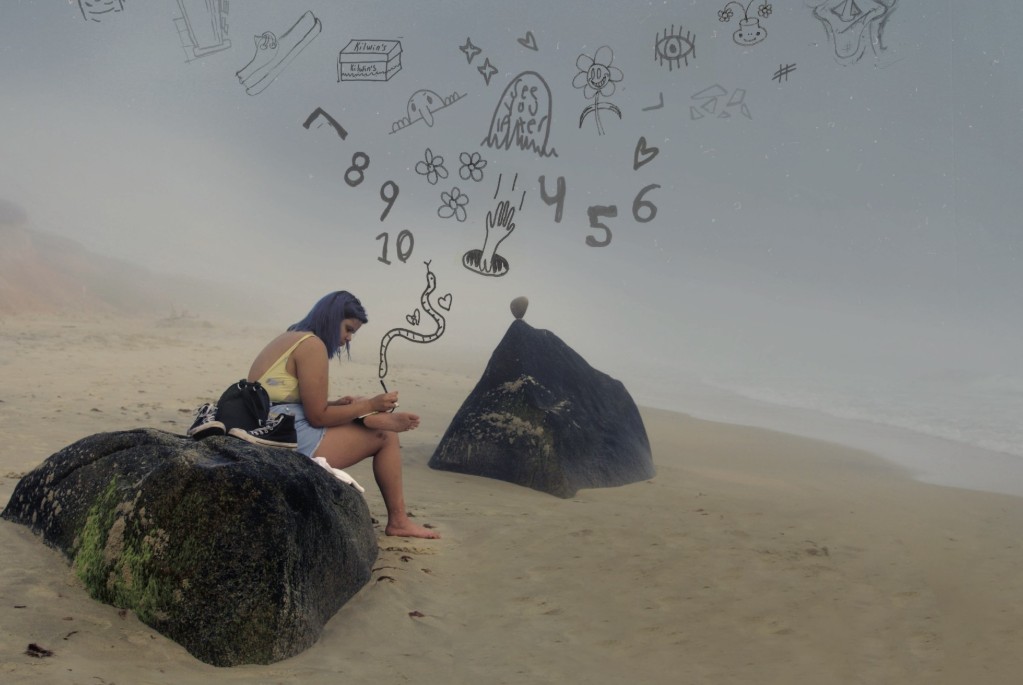
Death by Numbers is an experiment in documentary filmmaking that brings together Fuentes and a Peabody award-winning filmmaker, Kim A. Snyder. The film examines an American society increasingly inured to gun violence, apparently impervious to the cries emanating from a nation of traumatized youth, interweaving Fuentes’ poetry with her shooter’s harrowing sentencing trial that will determine whether he lives or dies.
As she prepares to confront her shooter, who left her wounded and killed classmates — in her Holocaust Studies class, no less — Fuentes and her teacher examine complex questions of collective hate and what restorative justice looks like for the victims involved. The screening will include a post-show Q&A with Fuentes and Columbine survivor Krista Hanley.
Before the screening, the public is invited to join Lighthouse Writers Workshop for a two-hour writing session inspired by the film, exploring the power of personal narrative and journaling as tools for reclaiming one’s own stories of loss, trauma, resilience, and strength. Led by licensed therapist and writer Jane Thatcher Hahn, the workshop invites participants to examine how telling, re-telling, and consciously reclaiming our stories can shift our relationship to adversity, leading to a more empowered narrative about our pasts. Participants will leave with a practical toolkit of writing exercises and prompts to return to in moments of difficulty, reflection, or change. Attendees are encouraged to view the film and attend the workshop on the same day, though participation in either stands on its own.
“When we first heard about the project, it was just a cold e-mail,” says Marissa Morrow, Lighthouse Community Engagement Manager. “When we got it, we almost just dismissed it, because it seemed too good to be true. But when we talked to them, they were really excited about what we’ve already been leaning into at Lighthouse, which is embracing different forms of storytelling. Between the work we were doing with wellness and community engagement, it was a perfect fit.”
Lighthouse staff had just hosted a film screening (R. Alan Brooks’ Always, Most of the Time), but wanted the tech side of the event to be seamless — so they reached out to the MCA Denver, which operates the Holiday Theater. “We liked the idea of having the film in a more formal theater space,” says Morrow.
Death by Numbers
One of the reasons the event seemed an example of unbelievable kismet was how well it dovetailed with the focus Lighthouse has recently put on its Writing for Wellness series. “That same week was our first Wellness class,” says Morrow, “so coming to understand that Sam Fuentes used poetry and writing to heal from her journey, and to eventually speak at the shooter’s sentencing hearing? So powerful.”
“Across all the genres at Lighthouse,” adds founder and poet Mike Henry, “the faculty kept seeing how people were using writing as a way to embrace their life experiences, whatever those were. And some of those experiences were traumatic. Once you’re able to take a life experience that’s sort of blown apart your sense of self, and maybe your sense of the world, if you’re able to contain that in some sort of narrative, you gain control over that thing which maybe before had control over you.”
Henry says it was something they kept seeing not only consistently, but also for different reasons. “Housing insecurity, chronic pain, financial issues, even just loneliness,” he lists. “Their ability to tap into that creative flow and process their stories in a safe place — it became part of what we did and why we do it.”
Equally important is providing the opportunity for others to hear those stories. “That’s as essential as the writing process; we talk to each other and discover connections. It makes us all feel less alone.
“It’s not always just about getting published,” Henry says. “Writing can be — should be — much more than that.”
The screening of Death by Numbers is at 7 p.m. Friday, March 27, at the Holiday Theater, 2644 West 32nd Avenue. Before that, Lighthouse Writers Workshop will host “Writing for Reclamation” at 3 p.m. at 3844 York Street. For tickets or more information on the Death By Numbers screening, see the MCA link. For tickets or more information on the Writing for Reclamation workshop, see the Lighthouse webpage.