Chi Hun Lai

Audio By Carbonatix
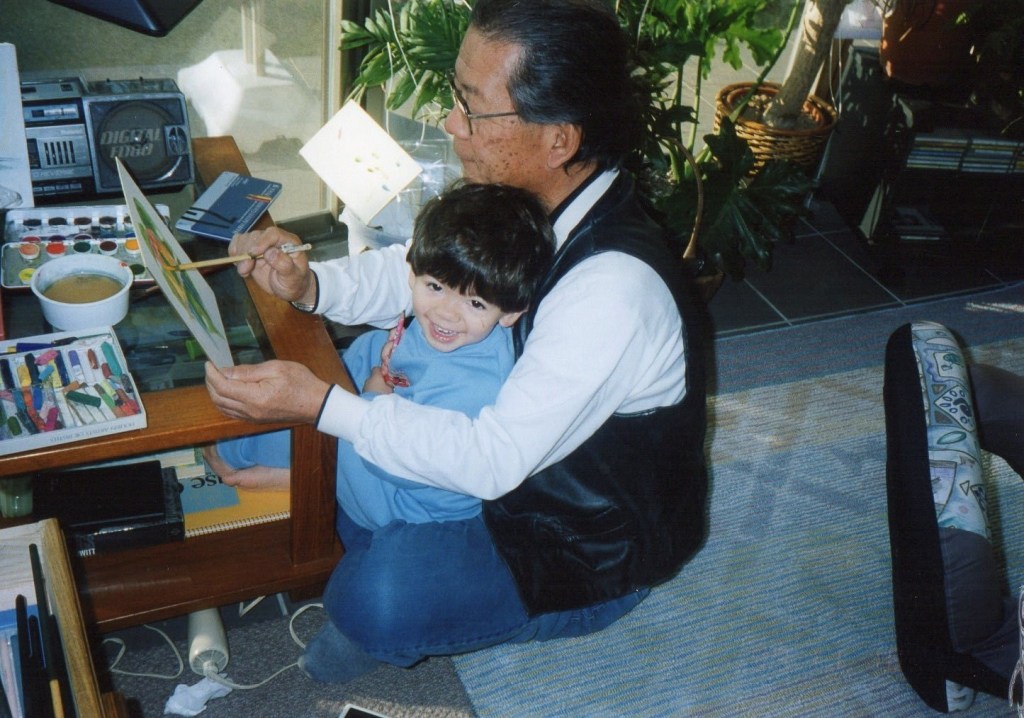
While his friends were playing tag and riding bikes as kids, Joshua Ryuju was drawing in his mother’s art studio. “I didn’t learn how to ride a bike until I was twelve, because I chose to stay inside and just draw instead. Now, as an adult, I want to make this a career, so it’s a little different, but I’ve always enjoyed drawing and doodling and painting,” recalls Ryuju, founder of the Denver-based brand Ryuju Collective.
Though he was raised in rural Kempton, Illinois (with a population under 200), he spent his summers visiting his mother’s family in Japan, where he was encouraged to explore his artistic inclinations and was introduced to Japanese fashion. Ryuju credits his lifelong love of art to his mom and maternal grandfather, who was a painter, sculptor and photographer, with a penchant for high-end Hasselblad cameras.
They may not have known it then, but those moments with his mother and her family sowed the seeds of what is now Ryuju Collective, a project that combines Ryuju’s love of fashion, art and design. With Ryuju’s handmade bespoke clothing, styling services, custom graphic design and video production, Ryuju Collective is taking Denver by storm – with no signs of slowing down any time soon.
Akiko Thorson
While idly doomscrolling one day, he fell into a rabbit hole of high-end Japanese “slow fashion” brands like Kapitol and Visvim. “I feel like I’ve always loved clothes, but it’s not like my mom was buying me these nice brands growing up,” he says. “We were going to Kohl’s and TJ Maxx, so it was always like, look as fly as I could with the budget we had.”
With his keen eye for design and a thrifting background, it was only a matter of time before Ryuju started creating his own pieces using vintage finds, which remains the core of his brand’s DNA today. Besides taking one screenprinting class in college, Ryuju hadn’t studied fashion design, so he used the COVID downtime to teach himself the basics of sewing and construction. “I was hand-stitching everything with thin machine thread,” he says. “But something clicked in my head while I was doing it like, ‘Oh, I can do this shit.’”
After college, he took a social media manager gig in the Quad Cities near the Illinois and Iowa border; he also started shooting videos for musician friends. He lost the social media gig at the start of COVID and was sleeping on a friend’s couch when he discovered Cobra Kai. Curious about working on the show, he found the casting agency in Atlanta, submitted his headshots, and he got booked to do crew and background work on the set of Cobra Kai and a few other Netflix shows, while still doing freelance videography on the side.
In 2022, he moved to Denver; he had fond memories of visiting Colorado — just a “short” ten-hour drive from his hometown, he recalls — and decided to move to the Mile High City on a whim.
While completing a speech therapy assistant program at University of Colorado Boulder, he honed his technical sewing skills working at a production studio and making costumes for the staff of Casa Bonita. He bought his first sewing machine, too, and worked independently on his own art, dressing local artists and designing and making artist merch.
He also kept doing video work. “I’ve always worked with musicians, because I’ve had this camera for years,” he says. “I started out just doing recap videos for events and music videos.” Before moving here, he’d reconnected with Jordan Burgett, a musician he’d met in Iowa. Burgett and Ryuju collaborated on some visuals, and Ryuju started to build connections with various local musicians because of his frequent presence at shows.
Aram Aghababian
But his shift from filming musicians to dressing musicians really took off once he connected with indie pop artist ego n friends. Ryuju followed ego n friends after they met at a show he was filming, and ended up reaching out to offer the artist a better wardrobe.
“I saw one of his music videos, and I was just like, ‘His outfit looks like shit,’” Ryuju says with a laugh. “So I was like, ‘Yo, I make clothes, too, and I really think my style would fit your music, shoot me a DM if you’re interested.’ Later that day, he came over, and I gave him some outfits, and he shot a lot of his visuals for are u alone? in those.”
That one message led to an ongoing collaboration between Ryuju Collective, ego n friends and Friendly Collective, a recording studio co-owned by ego n friends and Christian Hundley. It also introduced him to several other musicians that he’s since dressed for the stage, including ReSrface, Malcolm Whyz3 and DNA Picasso.
But as a one-man operation, Ryuju Collective simply can’t churn out constant new looks to style a full roster of clients, and outfit repeating is out of the question with Ryuju’s bold statement pieces. “People hit me up asking me to style them, but in the frequency that I make things, I’m not just pumping shit out. And some people have already worn my stuff, so I can’t just be like, ‘Oh yeah, you can wear this,’ when ego wore it at his show a week ago,” he acknowledges. “So I usually turn people down, unless they want to commission something.”
Jason Alfaro
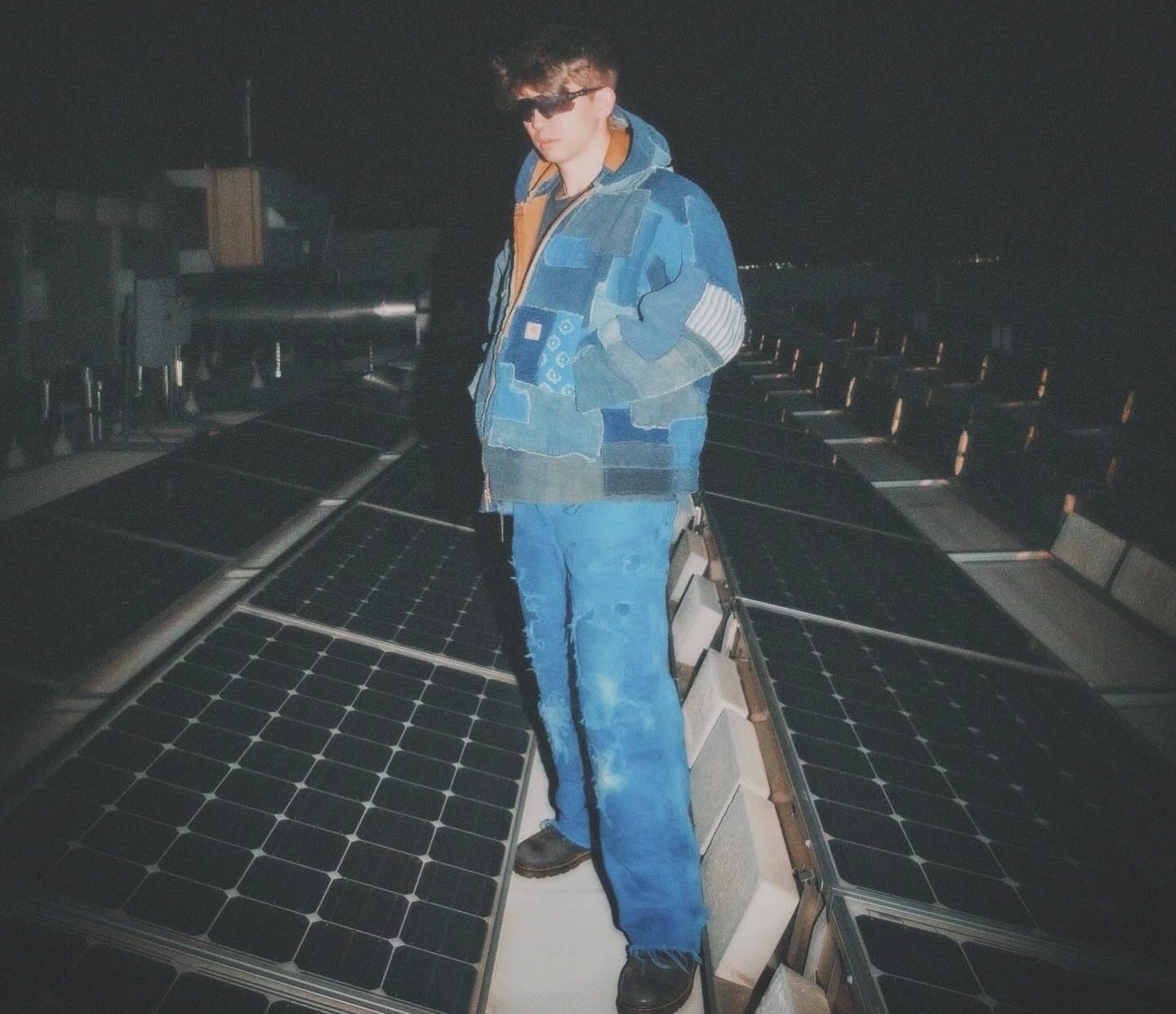
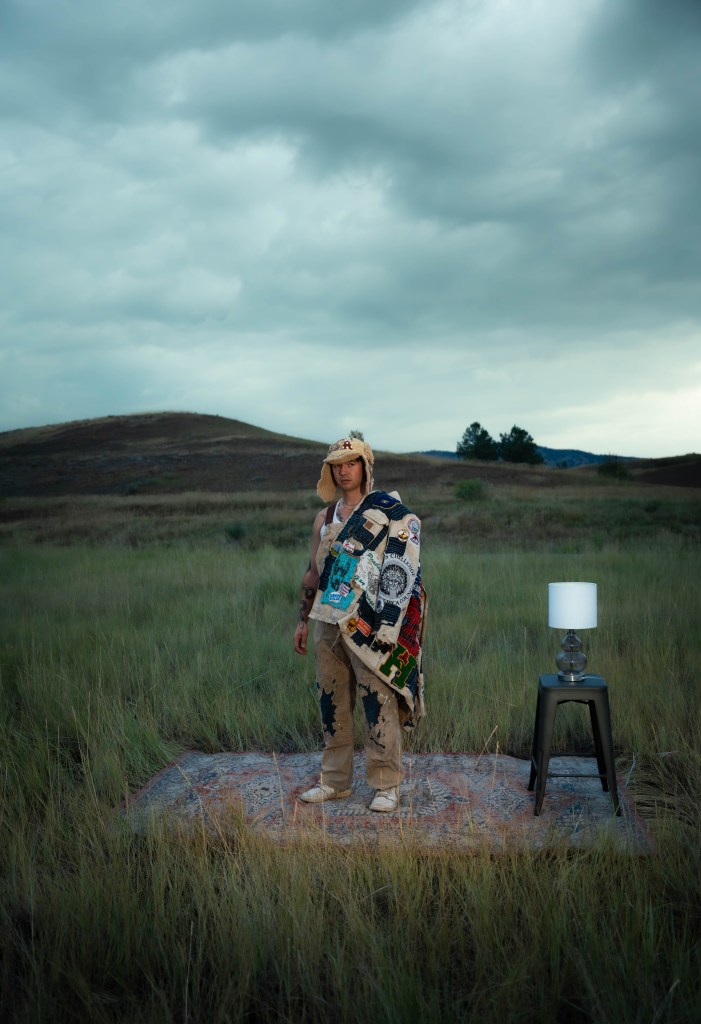
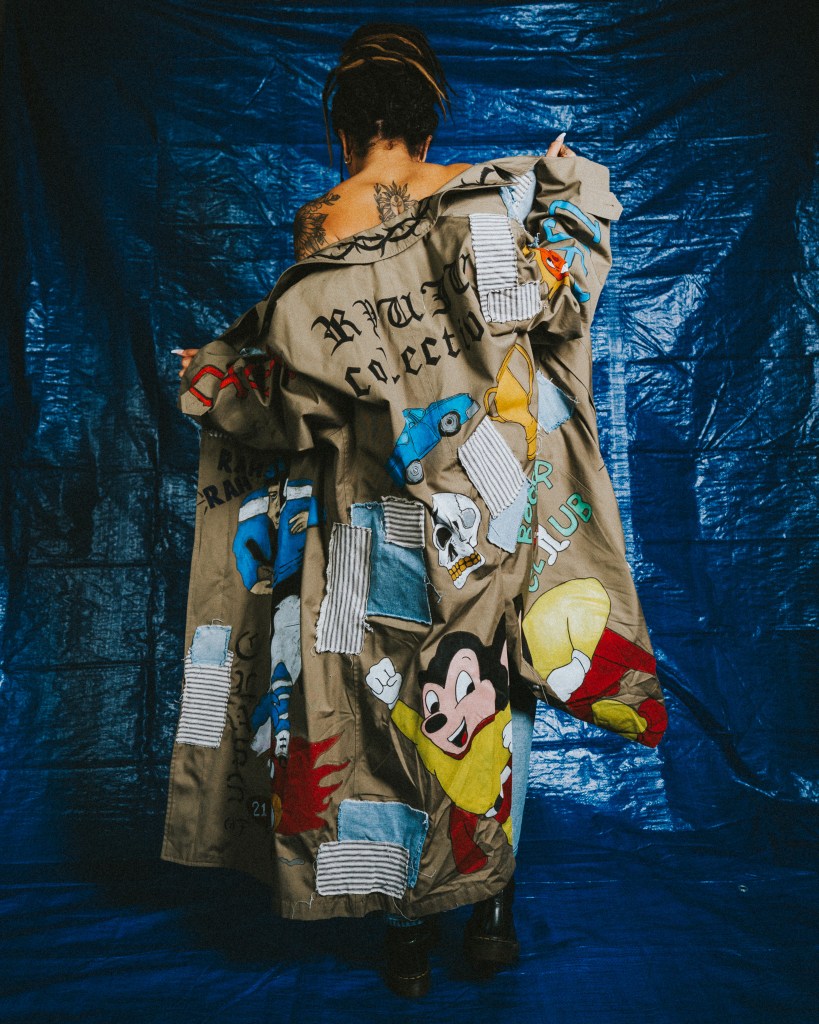
Ryuju has carved out a niche for himself with eye-catching signature design elements like oversized silhouettes, reclaimed denim, textured felt appliques, patchworking and intentional distressing. Every Ryuju Collective garment features handmade touches, like hand stitching, distressing or dyeing. His designs blend his affinity for American vintage with Japanese fashion influences, all with sustainability in mind.
“When you go to Japan, everyone is so fashion-forward. They’re like ten years ahead of the U.S. So I feel like that’s always been inspirational,” says Ryuju. The techniques and fabrics he uses are heavily inspired by Japanese sewing and stitching traditions, especially his indigo-dyed denim (he keeps a vat of dye in his backyard), and decorative patchworking, while the Japanese brands he coveted online continue to inspire his forward-thinking point of view.
Given how much waste the fashion industry notoriously produces, Ryuju is committed to making his brand as sustainable as possible. He starts with reclaimed vintage materials, typically seeking out heavy-duty workwear from long-established brands like Levi’s and Carhartt. “I don’t use anything that’s new. I can make a pair of jeans from scratch, but I choose not to because it’s an extra step that I don’t have to do,” he explains. “I can just go thrift a really dope pair of jeans. Because every single pair of pants or jacket has its own oil stain or rip or tear. It already has a pre-loved look to it, and that’s something that I appreciate.”
It also keeps fabric waste to a minimum. “Especially as of late, I truly try and make sure I use even the smallest bit of fabric,” he says.
Ryuju may not have the antidote, but at least he provides an alternative to fast fashion: “I want to use this as a way to show that I’m not part of the problem. There’s millions and millions of pounds of clothes in landfills. One person isn’t going to make a difference, but at least I’m making the attempt. That’s a huge thing.”
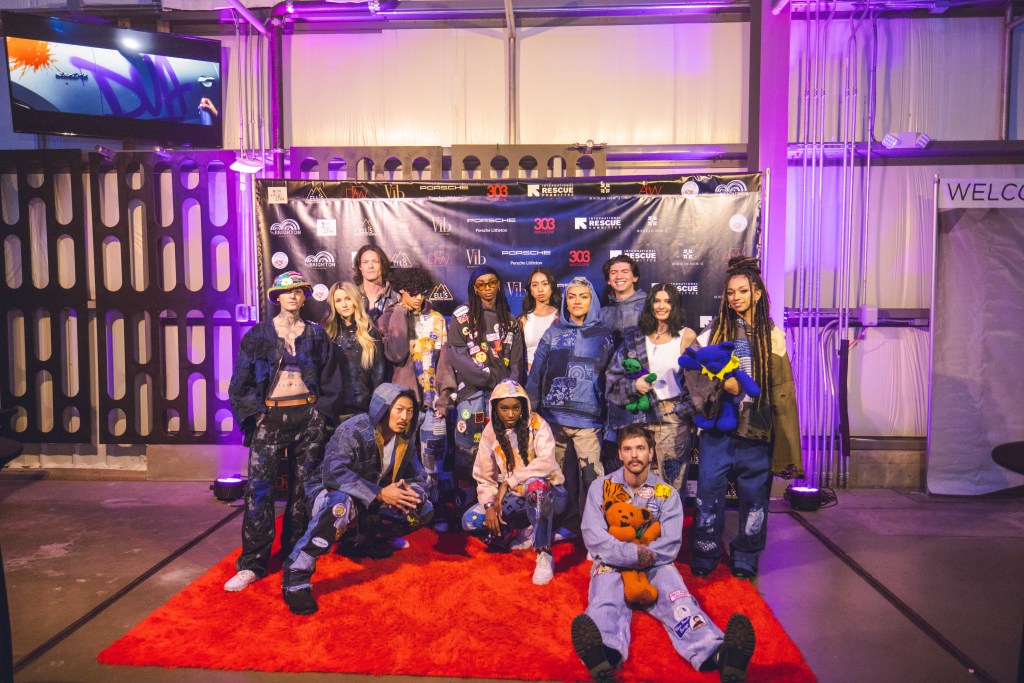
Photo courtesy of Ryuju Collective
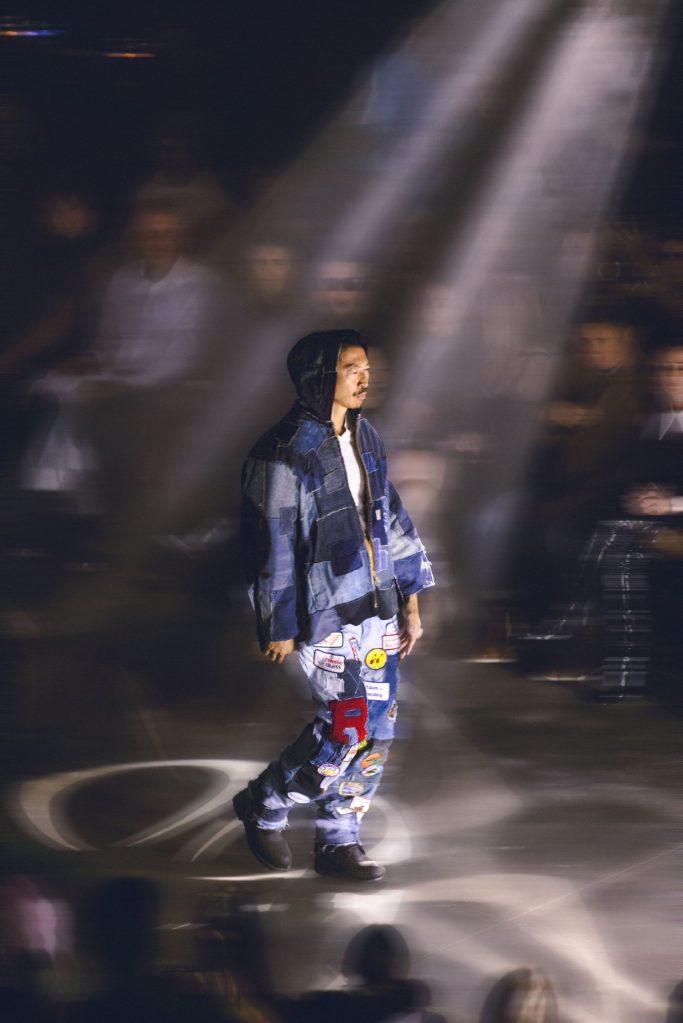
Last fall, Ryuju made his Denver Fashion Week debut during its sustainability show and realized his approach is different from that of other designers, even within the sustainable fashion realm. “A lot of them are buying clothes from thrift stores, and just using that as if they made them. Whereas for my runway show, I made thirteen top-to-bottom outfits. That kind of blew people’s minds,” remembers Ryuju. “I had some models say, ‘I do both seasons every year, and to this day, your show was my favorite.’ Because there is a lot of craftsmanship involved, but I’m also just kind of a chiller. Like, they were asking me what makeup or hair I wanted, and I remember putting in the chat, ‘Whatever makes you feel confident, beautiful, cool, whatever.’”
For Ryuju, the point is to focus on the actual clothes, rather than distracting the eye with over-the-top hair and makeup accoutrements: “In all those runway shows, they have all these hair and makeup people that make the models look so fucking crazy, and there’s nothing wrong with that, because there is an art in that, but my viewpoint is that you should let your work do the talking.”
Carson Becker
Recently, Ryuju was invited to participate in an emerging designers showcase in Cannes this May, hosted by Reich’Art Group. “I’ll be presenting six looks, and I think I’m really going to focus on the indigo blue look and make that the whole theme. If it does pan out the way I think it will, that’s just a way for Ryuju Collective to be more global, instead of just in Denver,” he says. He started a GoFundMe to crowdfund for the participation fee and travel, and while he’s confident that one day he’ll be invited to participate in shows for free, he also sees himself eventually producing his own fashion shows. “There’s going to be a point, hopefully, where I don’t even need that, where I’ll have enough funds and people that support me where I can go out to New York and have my own warehouse, have my own runway show and make it a whole production. I feel like I have the knowledge and connections to do that, but that shit ain’t cheap. I think in the next two to three years I’ll be able to do it.”
Courtesy of Ryuju Collective
For now, Ryuju plans to keep building a clientele of those in the know and consistently level up his brand. “I have a website and all this stuff, but it’s sort of an ‘If you know, you know’ type of thing, and I love that right now. I’m taking this cult following kind of route. I think with the trajectory of growth that I’ve had in the last six months, in a few years, I truly think I can be this big brand. I think you have to be ambitious, and a little bit delusional,” he says.
He’s also now reframing the Ryuju Collective brand as a fashion line rather than presenting himself as a creative jack-of-all-trades. “I don’t want the brand to be like, ‘Oh, you do everything.’ I feel like that’s what I used to do, and it was hard to really put myself in a category as a designer, because I was doing everything.”
While Ryuju is always open to commissions, he recognizes that most people aren’t splurging on bespoke pieces, and it takes a certain type of person to rock a Ryuju Collective piece. “I will take commissions, but if I don’t have commissions, it’s not like I’m not working. The thing is, I definitely work with budgets, but the prices I set for the pieces that I make on my own are so high. Also, the average Joe just doesn’t wear my stuff,” he admits.
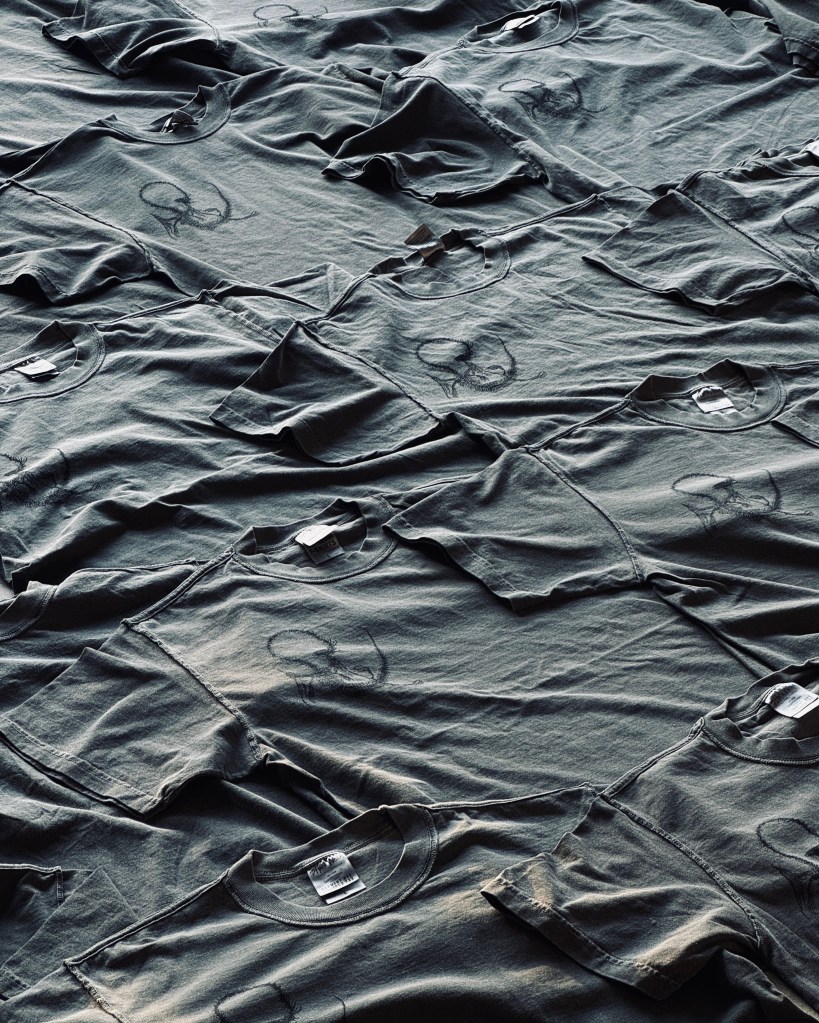
That being said, Ryuju has had so much interest from people who want to support and wear his designs that he went back to his screenprinting roots and started offering hats and T-shirts with the Ryuju Collective logo. The logo, a dragon skeleton he drew based on a fossil, is a nod to “Ryuju,” meaning “dragon tree.” It’s a reminder to himself that Ryuju Collective is his ever-evolving brainchild, and ultimately his personal artistic expression. “So many people are like, ‘I want to be the next Louis Vuitton,’” Ryuju says. “I just want to be Josh.”
Visit the Ryuju Collective website at ryujucollective.com to learn more about the brand.