Photo by Casey A. Cass/University of Colorado Boulder

Audio By Carbonatix
Keep Westword Free
We’re aiming to raise $20,000 by April 26. Your support ensures Westword can continue watching out for you and our community. No paywall. Always accessible. Daily online and weekly in print.
Between political turmoil, climate doom and the omnipresent force of AI, there’s a lot to discuss at the Conference on World Affairs this year. The 78th iteration of the annual exchange of ideas via panels, workshops and other events put on by the University of Colorado Boulder and its students, faculty and the larger Boulder community will run Monday, April 13, through Thursday, April 16.
Kicking off the conference is a pertinent debate of this thesis: “The United States is in the process of committing superpower suicide.” Former domestic policy adviser, U.S. national security adviser and U.S. ambassador to the United Nations Susan Rice will argue the affirmative, while former U.S. national security adviser and U.S. ambassador to the United Nations John Bolton will argue the negative.
“When the world feels divided and the issues before us are complex, universities have a responsibility to lead with openness and dialogue,” says CU Boulder chancellor Justin Schwartz. “Our campus is committed to being a space where difficult conversations can happen thoughtfully and respectfully.”
That’s an invaluable resource at a time when critical thinking skills seem to be ebbing away, thanks to the rampant use of AI by people of all ages. And AI itself will be viewed through many lenses at CWA, along with topics such as journalism and the free press, climate change and politics. After all, CWA has been referred to as “the Conference on Everything Conceivable.”
Rather than just airing complaints about current problems, CWA is meant to be a solutions-focused event that brings people from different backgrounds and opinions together for productive discussion.
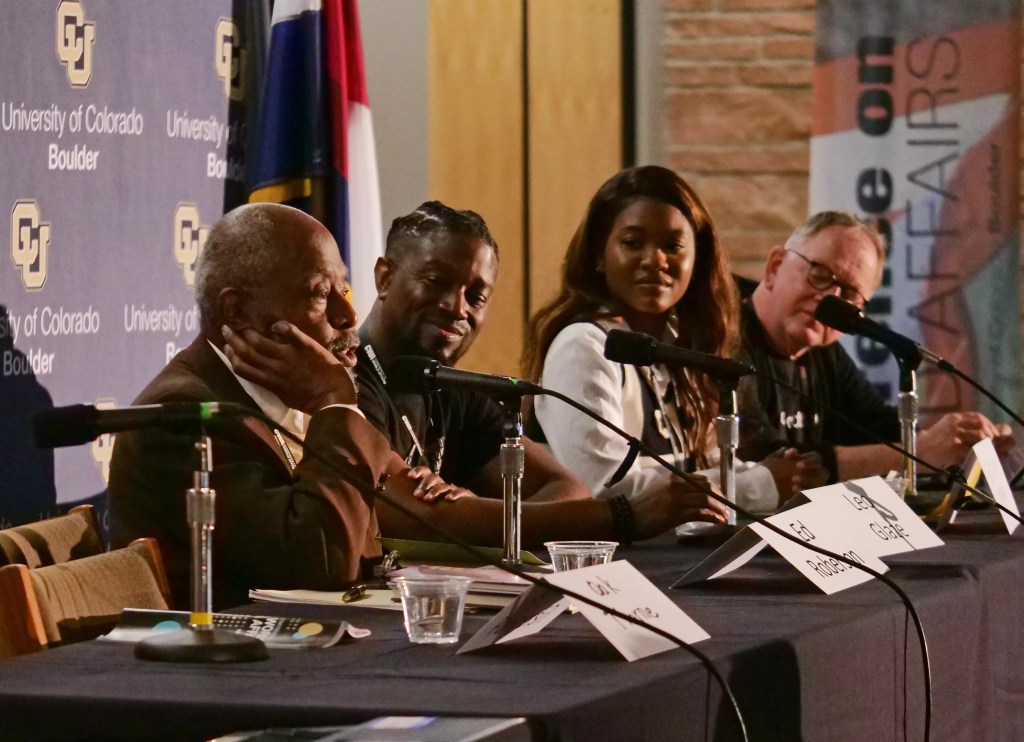
Highlights this year include “Satire as Resistance,” “Pop Girlies Are Singing What Gen Z Is Feeling,” “How to Lose a Democracy in Ten Days,” “The America of Folk Music,” “Trad Wives and the Conservative Movement” and “Sundance Is Coming to Colorado. Now What?”
University of Colorado Boulder
While all events are free, the keynote speaker is one of the only CWA events that require a ticket; past CWA keynote speakers include Eleanor Roosevelt, Amanda Gorman and Cynthia Erivo. All the tickets for this year’s program — with Malala Yousafzai — were claimed in ten minutes.
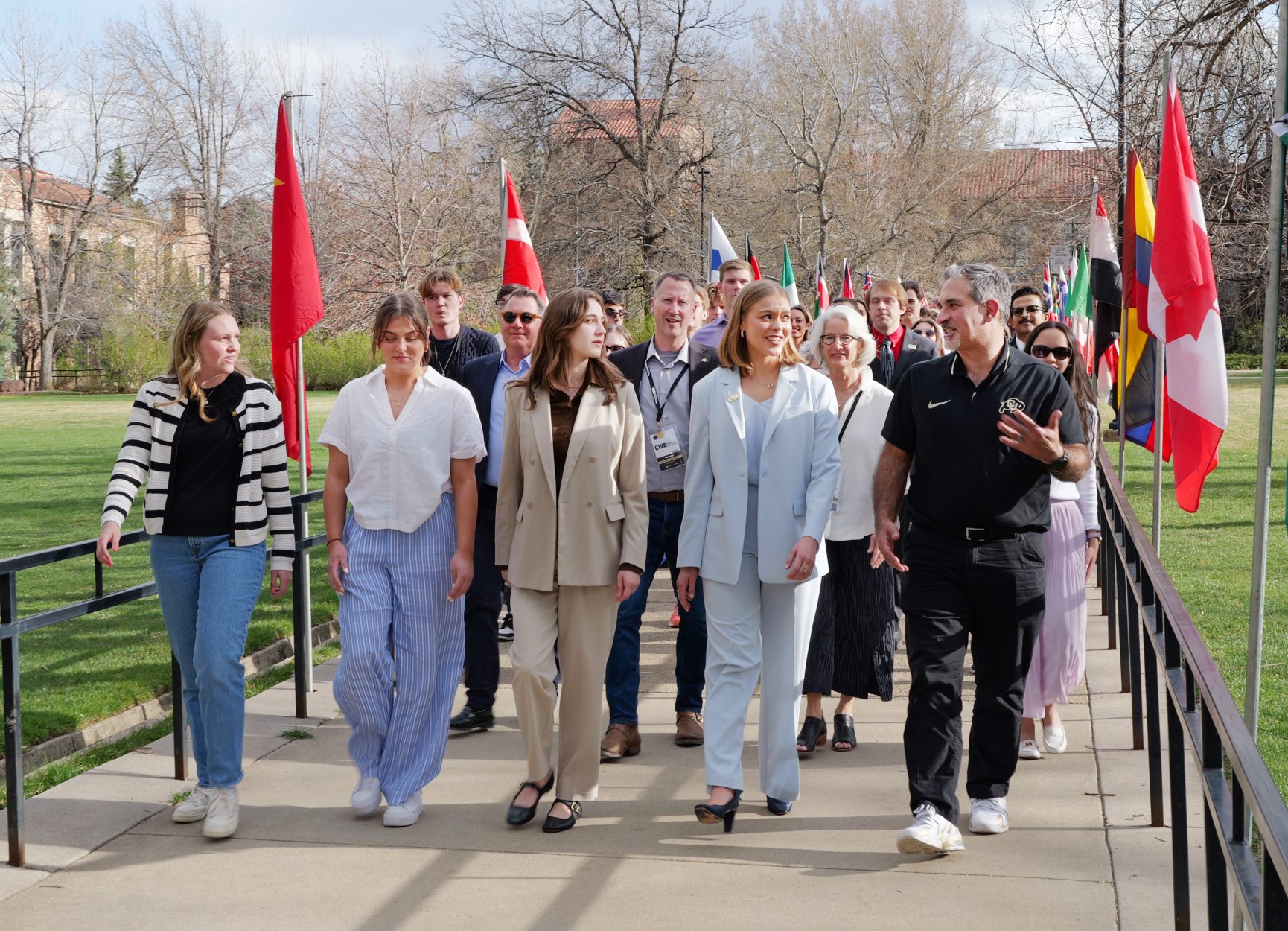
The responsibility for choosing the keynote speaker lies primarily with the executive student committee, a group of five students.
“Malala for us was someone we grew up with in our history books,” says CWA Student Community Chair Tamar Greenstreet, a sophomore double-majoring in Accounting and Finance, with minors in International Business and Spanish. “She was the celebrity of all of our classes in elementary school.”
It’s a “dream come true” to host Yousafzai, the youngest Nobel Peace Prize laureate and an advocate for girls’ education and human rights, she adds.
“We listened to our students, and that really drove our recruitment strategy that led to Malala,” says Jon Leslie, vice chancellor for strategic communications and interim CWA director at CU Boulder.
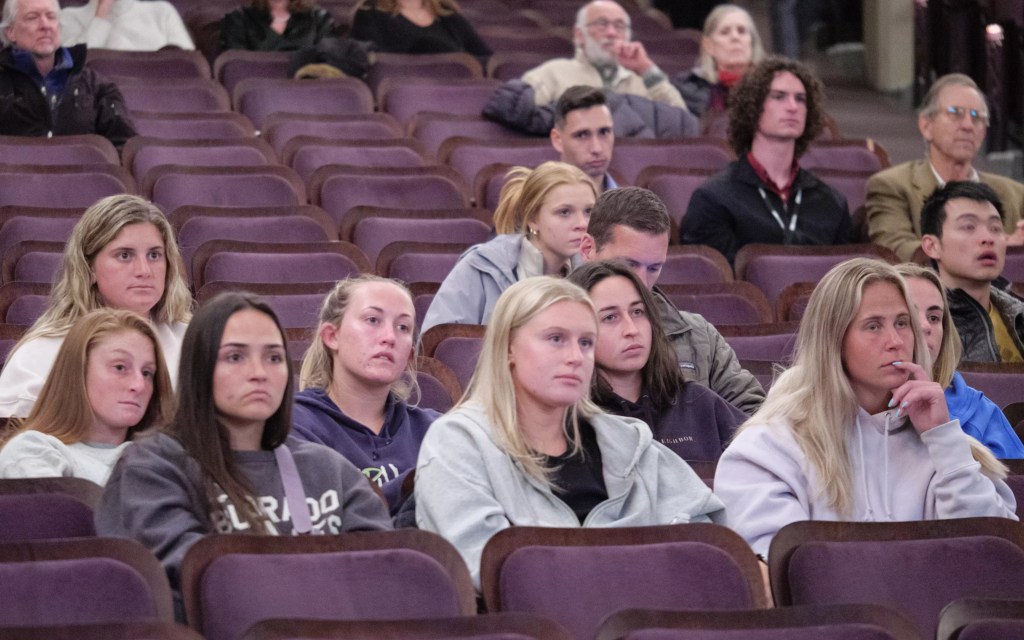
University of Colorado Boulder
Organizing the event is a highly collaborative process between volunteer students, staff and community members. “That comes with some really constructive tension that I’ve come to embrace as the secret to its success,” Leslie says. “If all of those groups are mildly frustrated with the outcome, we feel like we’ve created the kind of panels and tension that leads to really authentic conversation and a really engaged opportunity for the public to explore topics that sometimes get too wonkish if it’s faculty doing it all, or too superficial if it’s all community members. With students expanding upon and activating the knowledge they’re given in the classroom by selecting these speakers, with the input of other folks, it creates a nice balance between expertise and accessibility for a really broad range of audiences.”
And that audience might be broader than ever this year. Last year’s conference had about 4,500 registrants, but this year, Leslie says he’s anticipating somewhere in the neighborhood of 7,000 to 8,000. “It’ll be bigger than it’s been in a long time,” he says.
Most of the program is also accessible via livestream, allowing people to tune in from anywhere in the world.
“I hope it gives people the ability to broaden their minds by taking a moment to talk about what’s going on,” Greenstreet says. “It’s easy to read a news article and then go on to the next thing, but the length of our panels gives people the opportunity to come to their own conclusions as these speakers are talking. It creates community. …I remember last year, seeing different community members or students talking about a panel afterwards, and if this gets to start conversations in people’s lives, that’s really rewarding to me.”
The Conference on World Affairs runs Monday, April 13, through Thursday, April 16, at various locations on the CU campus as well as at the Limelight Hotel Boulder, 1295 University Avenue, Boulder; it’s also streaming online. Learn more and register for events here.