
Audio By Carbonatix
“Making a movie is a colossal pain in the ass,” says Ty Bradford, the writer, director and producer of Uck, a low-budget horror film shot in Colorado that’s currently in post-production. “But in the best way possible.”
For Bradford, the man behind Colorado-based OVO Films, the pleasures involved in shooting and assembling his latest opus have been profound. But he expects to experience plenty of pain even if he’s fortunate enough to shepherd Uck to a theater near you.
“Filmmakers are delusional if they think they can make a movie and just instantly get distribution,” he maintains. Indeed, securing a deal with a company capable of getting a flick before a sizable number of eyeballs “has gotten more difficult in the last five years because of the streamers and what that means for distribution,” Bradford says. “Any independent filmmaker has to be prepared for the next phase. And if you’re not ready for that battle, you might as well not make the movie.”
Fortunately, Bradford has more than enough experience to understand the obstacles still ahead of him. A Philadelphia native, he made it to Los Angeles via an internship he earned while attending New York’s Ithaca College and subsequently got the chance to work with Stuart Gordon, the writer-director of the 1985 horror cult favorite Re-Animator. Gordon subsequently entered the mainstream by co-penning the family-friendly hit Honey, I Shrunk the Kids, and thanks to its success, Bradford notes, “I worked at Disney for about five years with Stu. I was basically in charge of development — bringing in projects and scripts.”
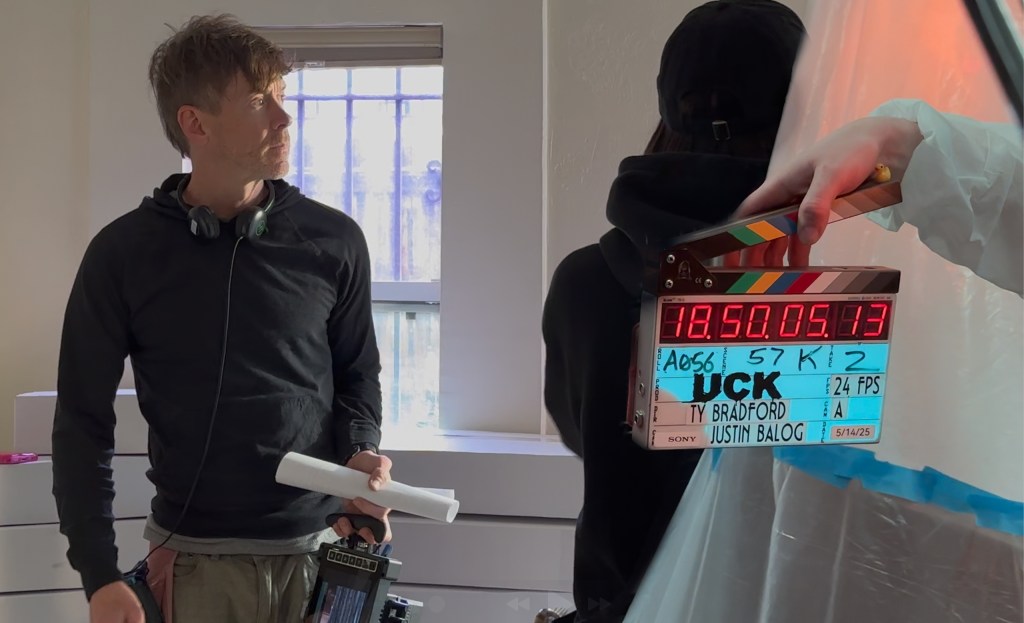
Over the years that followed, Bradford directed a handful of short films such as 1997’s Get Out There and 1998’s Polluting the Well before getting the chance to helm his first feature, 2000’s Screenland Drive, which the Internet Movie Database summarizes as the tale of “a struggling writer…torn between the girl he loves and the horror movie he is living.”
Bradford doesn’t soft-peddle the offering’s faults. “You learn a lot when you do your first movie from a storytelling perspective — about what it means to be honest and really say what you want to say. As a gay man, I think that’s where I failed in that movie.”
In the wake of Screenland Drive, Bradford relocated to Colorado mainly for the lifestyle; he admits that “there wasn’t much of a film business here.” Instead, he pivoted to advertising and ran his own firm for a decade or so. But during the COVID-19 shutdown, he had what he calls “an awakening about what I really wanted to do with my life. I realized that narrative filmmaking was in my heart and I had to do another movie.”
After recommitting himself to filmmaking, Bradford created a couple of shorts, including one about gay men coming out after age fifty, while writing screenplays. Included among the latter was Uck, which has an admittedly daffy premise: In his words, “It’s about a carpet cleaner in a small town who discovers that strange spots seeping up from underground aren’t just spots — they’re aliens.”
But he stresses that “at its core, it’s a father-son story — what fathers want from their sons and what sons don’t want from their fathers. Doing it as a horror B-movie gave me permission to be playful while dealing with important things. It’s a fun creature-feature that also gives room for an emotional story. And when I put on my producer hat, I realized I could do all of it on a budget” — around $300,000.
The script attracted a number of investors, and Bradford kicked in some of his own dough, too. But he admits that “the film wouldn’t have been made without state incentives” dispensed by the Colorado Film Commission. As a state, Colorado provides far fewer resources to producers than many other states, including neighboring New Mexico. Bradford, however, thought the tradeoff for working near his adopted home was worth it. “I could have gone to New Mexico and gotten 10 percent more,” he concedes. “But because I live here, I was able to pull in a lot of favors I couldn’t have done in New Mexico. If I’d gone there, I would have been dealing with crews I didn’t know, I’d be away from my partner and my cat, and I wouldn’t be sleeping in my own bed. Having sanity when you’re making a low-budget movie was worth that 10 percent to me.”
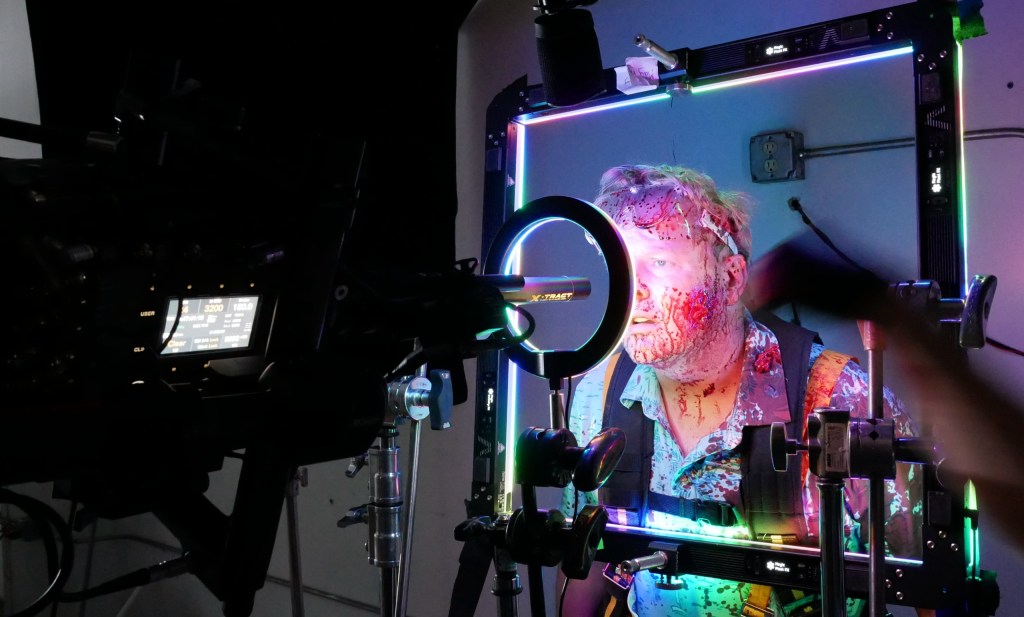
As a bonus, he discovered a wealth of talent just itching for an opportunity to show their stuff, including veterans of the Curious Theatre Company and Buntport Theater such as Brian Landis Folkins, Sam Gilstrap, Sheryl McCallum and Hannah Duggan. “I got the best of the best in Denver, which is so exciting,” Bradford says. “That extends beyond the cast to the crew.” He’s especially grateful to have gotten the chance to collaborate with Todd Debreceni, a master of makeup whose efforts can be seen in such high-profile entertainments as Die Hard 2, Contact and Captain Phillips.
“Todd wrote the bible on practical effects,” Bradford notes in references to the Debreceni how-to tome Special Effects Makeup for Stage and Screen. “And for some reason, he lived in Denver. I thought, ‘What the hell is this guy doing here?’ He’s an icon — and after I contacted him, he said, ‘Let’s do this,’ and the next thing I know, he’s working on my film. I’ve been incredibly lucky, and it’s really kind of a wonderful dream come true to meet all these people and do this together.”
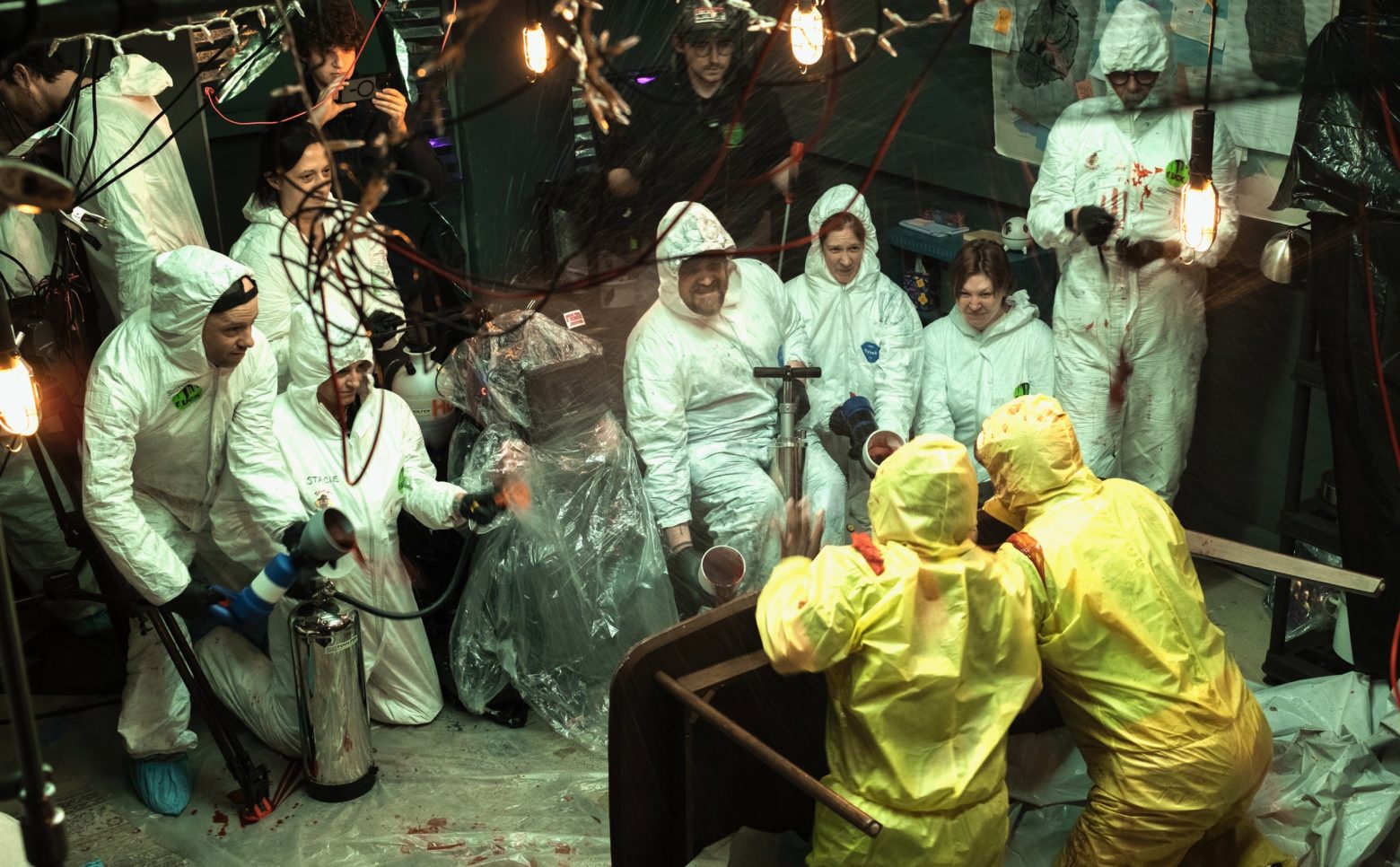
The 21-day filming of Uck got underway last April. According to Bradford, “We shot the majority of the movie in Globeville. We needed to build the sets in a facility, so we had to find a warehouse, and a business owner agreed to help us create this wonderful chaos. I think he was kind of terrified when he walked in one day and saw all this fake blood all over the floor. There were also some random exterior establishing shots elsewhere in Coloradao. Basically, whenever I would drive around, I would film some establishing shots.”
The Uck timeline calls for completion of the film by March, after which “we plan to submit to a handful of genre festivals that like this kind of movie,” Bradford reveals. “Festivals are a big part of the strategy, and waiting is definitely not in the plan. All pistons are firing here.”
In other words, now comes the hard part.